Our Top Picks

What's inside
- 1. The Cordless Drill and Impact Driver Combo (Buy This First, Buy It Well)
- 2. Cordless Reciprocating Saw: The Tool That Makes Demo Selective
- 3. Precision Cutting: Track Saw Before Table Saw
- 4. Multi-Tool, Miter Saw, and Dust Control: The Second Wave
- 5. What To Skip (Or Delay Until It Pays For Itself)
- Best Tools For Remodeling Contractors: FAQ
- The Short Version
- 1. The Cordless Drill and Impact Driver Combo (Buy This First, Buy It Well)
- 2. Cordless Reciprocating Saw: The Tool That Makes Demo Selective
- 3. Precision Cutting: Track Saw Before Table Saw
- 4. Multi-Tool, Miter Saw, and Dust Control: The Second Wave
- 5. What To Skip (Or Delay Until It Pays For Itself)
- Best Tools For Remodeling Contractors: FAQ
- The Short Version
As an Amazon Associate I earn from qualifying purchases. This post may contain affiliate links at no extra cost to you.
Most tool lists for remodelers are just price ladders. That is useless on a jobsite. A remodeling contractor does not need the cheapest impact driver, they need the tool that unlocks the next phase of work without stalling the crew. So this ranking of the best tools for remodeling contractors is ordered by purchase priority: what earns its keep on day one, then what you add once the first tier is paying for itself.
The other thing most lists ignore is that remodeling is not new construction. You are working in occupied houses, cutting into unknown walls, hauling gear up stairs, and cleaning up someone’s living room every evening. That shifts the math hard toward battery platforms, cordless dust extraction, and tools that fit through a doorway. Framing crews can afford to be brutal. You cannot.
| Priority | Tool | Job It Unlocks | Typical Spend |
|---|---|---|---|
| 1 | Cordless drill/driver + impact combo | Everything. Demo screws, cabinets, blocking | Entry to mid |
| 2 | Cordless recip saw | Selective demo, plumbing and stud cuts in place | Mid |
| 3 | Track saw or high-end circular | Straight cuts in finished material, sheet goods | Mid to high |
| 4 | Oscillating multi-tool | Flush cuts, undercuts, trim surgery | Entry to mid |
| 5 | Cordless miter saw + stand | Trim, casing, base, on-site punch work | High |
| 6 | Dust extractor (HEPA) | RRP compliance, occupied-home work | High |
| 7 | Rotary hammer | Tile, concrete, masonry anchors | Mid to high |
| 8 | Laser level + layout kit | Cabinets, tile, framing that stays square | Entry to mid |
1. The Cordless Drill and Impact Driver Combo (Buy This First, Buy It Well)
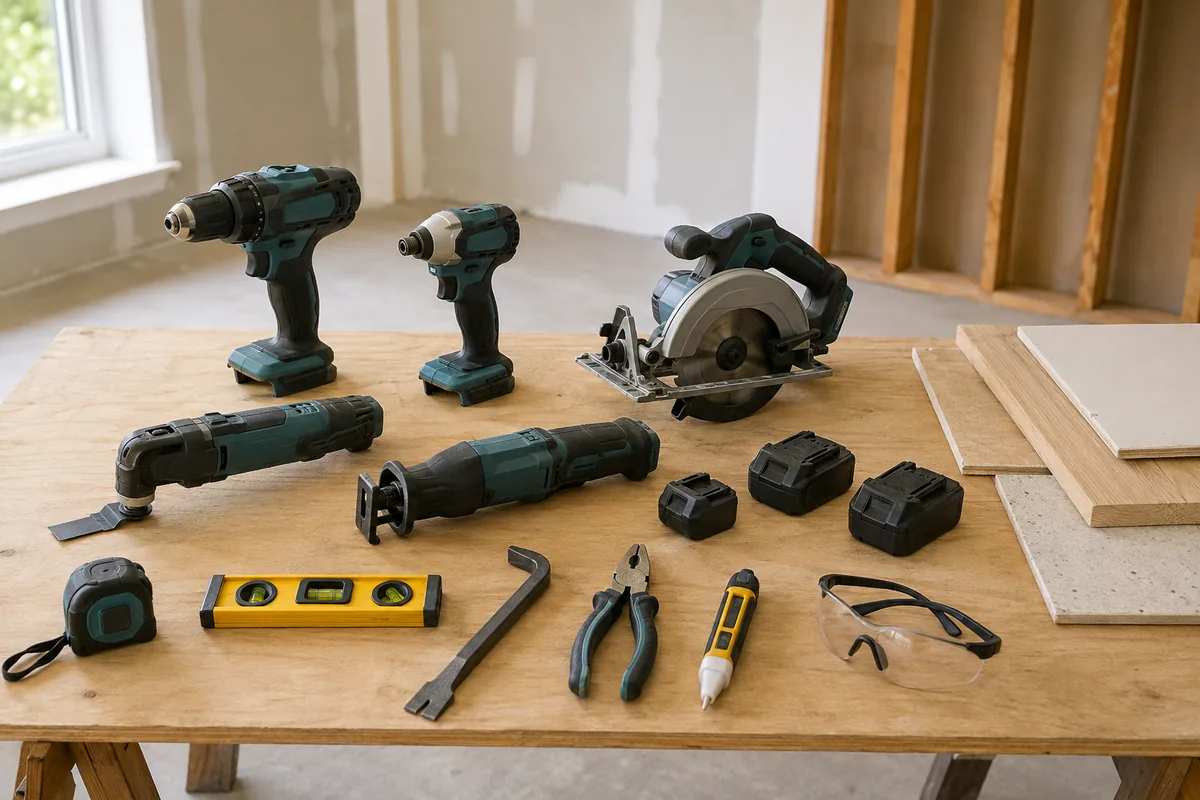
This is not an exciting pick, and it is still the correct first purchase. A remodeler touches a driver more than any other tool: pulling cabinet screws, running ledgers, drilling for wire, setting subfloor, breaking down the day’s mess. Two tools, two batteries, one charger. The combo kit is the single best dollar-per-use item in the trade.
The real decision here is not brand, it is platform. Whatever badge you pick becomes the socket you plug the next ten tools into, so treat the first kit as a twenty-year commitment. DeWalt’s 20V MAX XR line, Milwaukee’s M18 FUEL family, and Makita’s 18V LXT ecosystem all have deep enough catalogs that you will never hit a wall. Brushless motors are standard now at any serious price point, so if you are looking at a brushed kit to save money, keep looking.
What actually matters on a remodel: a compact drill body that fits inside a base cabinet, a driver with at least two or three speed modes so you stop stripping cabinet screws, and battery sizes that match how you work. Compact 2.0Ah packs for overhead and cabinet work, one or two high-capacity packs for the tools that drink power later in this list.
Cordless Drill and Impact Driver Combo Kit
Buy the brushless combo one tier above the homeowner bundle, and choose the battery platform before you choose the tool. The kit is cheap relative to the ecosystem it locks you into. If the listing does not say brushless and does not include at least two batteries, it is not a contractor kit.
2. Cordless Reciprocating Saw: The Tool That Makes Demo Selective
Second because demo comes second, right after you can drive a screw. A recip saw is what separates surgical removal from wrecking a room you have to rebuild. Plumbing out of a wall, a joist notched for a new drain, nails behind a jamb, a window sash coming out without touching the siding.
Go cordless and go one-handed if you can afford both. Corded recip saws are fine but the cord is genuinely dangerous in demo, where you are backing out of tight spaces blind. The compact one-hand models are worth adding later specifically for overhead and in-cabinet cuts, but your first recip should be a full-size unit with a tool-free blade clamp and an orbital setting.
Blades matter more than the saw here. A cheap saw with the right bi-metal or carbide-tooth blade will outwork a premium saw with a dull wood blade every single time. Buy blades by the pack, sort them by material, and throw them out when they stop cutting instead of leaning on the trigger.
3. Precision Cutting: Track Saw Before Table Saw
This is where remodelers and shop woodworkers part ways. In an occupied house, a table saw is a liability: it needs floor space, infeed and outfeed room, and a helper for sheet goods. A track saw does 90 percent of the same work against a wall, produces a finish-ready edge, and connects to a vacuum so you are not sanding drywall dust out of someone’s rug.
Rank it third because it unlocks paid work directly. Cabinet fillers, closet systems, stair skirts, plywood underlayment, scribed countertops. If a track saw is out of budget this quarter, buy a genuinely good sidewinder or worm-drive circular saw and a clamp-on straightedge guide, and upgrade later. Do not buy a bargain track saw with a flexy rail; the whole point of the category is a repeatable straight line.
- ✔ Splinter-free cuts in finished material without a shop
- ✔ Works flat against walls in tight rooms
- ✔ Pairs with a vacuum for near-dustless cutting
- ✔ Replaces a portable table saw for most remodel tasks
- ✘ Higher entry cost than a circular saw
- ✘ Rails and accessories add up fast
- ✘ Slower for repetitive narrow rips
- ✘ Cross-brand rail compatibility is inconsistent
4. Multi-Tool, Miter Saw, and Dust Control: The Second Wave
An oscillating multi-tool ranks fourth because nothing else does what it does. Undercutting a door jamb for new flooring, notching drywall around an outlet, cutting a nail flush behind casing, trimming shims. It is slow and it is loud, but it is the only tool that reaches those cuts. Buy a mid-tier cordless model with tool-free blade changes and spend the savings on a variety pack of blades.
The cordless miter saw comes fifth and it is a real budget jump. Justify it on trim and finish phases, where you are making hundreds of cuts and moving the saw room to room. A 7-1/4 inch cordless handles base, casing, and shoe easily; step up to 10 or 12 inch sliding if you are cutting crown, wide baseboard, or stair treads. Pair it with a real stand. A miter saw on the floor costs you accuracy and your back.
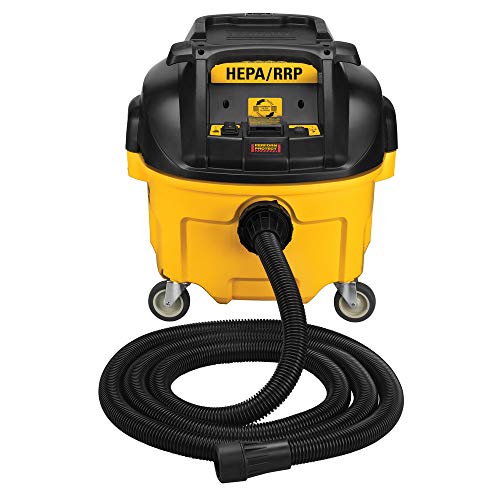
Sixth, and non-negotiable if you touch pre-1978 housing: a HEPA dust extractor. The EPA’s Renovation, Repair and Painting rule is a compliance issue with real teeth, and beyond the legal side, dust control is the difference between a referral and a complaint. A HEPA-rated extractor with automatic tool start pays for itself in clean-up labor and repeat clients. Shop vacuums with a HEPA filter bag are a stopgap, not an equivalent.
HEPA Dust Extractor for Remodeling
Look for genuine HEPA filtration, an automatic tool-start outlet, and a hose diameter that matches the tools you already own. This is the one purchase where the contractor-grade version is clearly worth the premium over a big-box shop vac, because it changes what jobs you can legally and comfortably take.
5. What To Skip (Or Delay Until It Pays For Itself)
A jobsite table saw, early on. It is heavy, it eats floor space, and a track saw plus a miter saw covers most of what you would use it for. Buy one when you start doing enough on-site cabinet or deck work to justify the footprint.
Cordless framing nailers, if you own a compressor. They are excellent and they are expensive. For remodel volumes, a small pancake compressor and pneumatic nailers cost a fraction and rarely slow you down. Cordless finish and brad nailers, on the other hand, are worth it early because you carry them everywhere.
A second battery platform. Chasing a deal on a different brand’s tool means a second charger, second batteries, and a bag full of dead packs. Stay on one platform until a tool genuinely has no equivalent.
Thermal cameras and moisture meters, at pro-grade prices. Useful for diagnostics, but an inexpensive pin-type moisture meter answers most remodel questions. Rent or subcontract the high-end inspection gear.
Giant combo kits with seven tools. They look like value and usually bundle two tools you need with five you will use twice. Buy tools in the order above, individually or as two-tool kits.
Best Tools For Remodeling Contractors: FAQ
How much should I budget to start out as a remodeling contractor? Plan on tiers rather than one number. The first tier, a solid brushless combo kit, a recip saw, a multi-tool, blades, and layout basics, is a modest investment relative to a single job’s revenue. The second tier, cordless miter saw, HEPA extractor, track saw, and a rotary hammer, is several times that. Fund tier two from completed jobs instead of financing it up front, and buy each tool the week before the job that requires it.
Is it worth mixing brands to get the best individual tool? Rarely. Battery, charger, and case standardization saves more time and money than any single tool’s performance edge. The exceptions are categories where one brand has a clear structural advantage, such as certain track saws and dust extractors, and those tools often run on their own ecosystem anyway.
Corded or cordless for demo and heavy cutting? Cordless for anything you carry between rooms or use in awkward positions, which is most remodel work. Keep corded for long stationary sessions like extended concrete drilling, big grinding tasks, or when you would otherwise burn through four battery packs. Modern high-output batteries have closed most of the power gap, but runtime is still the deciding factor on heavy demo days.
The Short Version
Buy in phases tied to the work you are actually selling. Drill and impact first, recip saw second, precision cutting third, then multi-tool, miter saw, and dust control as your trim and occupied-home jobs grow. Skip the second battery platform, delay the table saw, and put the savings into blades, bits, and a real dust extractor. That order gets a remodeling crew productive faster than any list sorted by price.
Check prices on Amazon →