What's inside
- Top 3 Picks
- Quick Comparison
- How We Chose
- 1. SHSCLY 2-Pack XL Twist-Loop Microfiber Car Drying Towels – Best for Budget Two-Towel Coverage
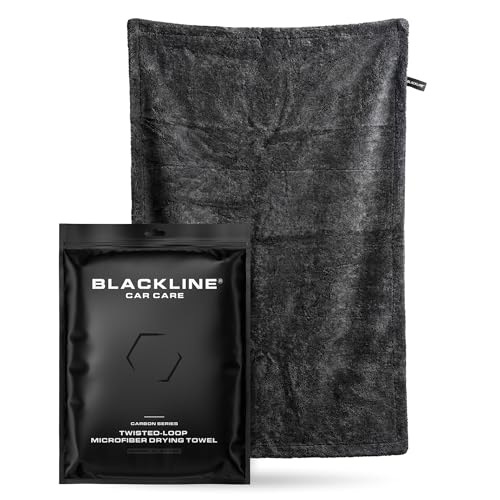
- 2. Blackline Microfiber Car Drying Towel 24″x36″, 1300GSM Twisted Loop – Best for High-Density Single-Towel Drying
- 3. Singrune 2 Pack XL Car Drying Towel – Best for a Two-Towel Premium Workflow
- 4. McKillans Extra Large Dual-Color Car Drying Towel XL – Best Overall for Large Vehicles
- 5. Devil Dog Microfiber XL Car Drying Towel for Trucks – Best for Trucks, Vans, and SUVs
- 6. The Mob Chemist Boss XL Car Drying Towel – Best for Maximum Fiber Density per Dollar
- 7. Veco 3-Piece Car Drying Towels – Best for a Complete Wash-Day Kit
- 8. ExoForma Mega Car Drying Towel – Best for a Published Absorbency Figure
As an Amazon Associate I earn from qualifying purchases. This post may contain affiliate links at no extra cost to you.
The best XL twisted loop microfiber drying towel for most people is the McKillans Extra Large Dual-Color XL, 36″ x 28″, 1200 GSM. It offers the largest single-towel surface area in the 1200–1300 GSM group covered here — about 1,008 square inches, or roughly 7 square feet — and it is edgeless, so there is no stitched border to drag across a panel while you work. If you would rather buy two full-size towels at the lowest tier, the SHSCLY 2-Pack XL Twist-Loop, 33″ x 29″ covers about 13 square feet combined and is the value play. If you want the most widely recognized premium name, the Chemical Guys Megalodon, 24″ x 36″ is the conservative choice. Those three cover the majority of buyers, but the right answer changes once you factor in vehicle size, how much water you leave behind after a rinse, and whether you fold a towel or wrap it. Everything below compares dimensions, fiber density in GSM, absorbency in practical terms, and edge construction, because those four variables decide whether a towel dries a full-size truck in one pass or simply pushes water around and leaves streaks. Two hair-towel products are included at the end because they surface in the same search results; they are for hair, not paint.
Our Top Picks
 Singrune 2 Pack XL Car Drying Towel24 inches x 36 inches36 x 24 x 0.2 inches4.1 poundsCheck on Amazon
 McKillans® Extra Large Dual-Color Car Drying Towel XL36 inches x 28 inches36 x 28 x 0.2 inches1.8 poundsCheck on Amazon



Top 3 Picks
Best Overall: McKillans Extra Large Dual-Color XL (36″ x 28″, 1200 GSM)
The largest towel in the roundup at the density most owners can still wring out comfortably, with an edgeless finish that removes the single most common source of fine scratches during drying. Its 36-inch width means one fold covers a hood or windshield in a single swipe rather than three overlapping passes.
Best Budget: SHSCLY 2-Pack XL Twist-Loop (33″ x 29″)
Two full-size twisted-loop towels for roughly the cost of one premium towel. The 33″ x 29″ footprint is close to a bath towel, which makes it easy to drape over a roof or a rear window, and having a second towel lets you dedicate one to paint and one to glass, jambs, and wheels.
Best Premium: Chemical Guys Megalodon Twisted Loop (24″ x 36″)
A known quantity in the detailing world, sold in a size that fits standard 5-gallon buckets and most towel storage bins. It is the pick if you want a brand you can reorder easily and you do not need the absolute largest surface area.
Quick Comparison
Every towel below is judged on the same four variables: published dimensions, published fiber density (GSM), what the listing says about absorbency, and edge construction. Price tiers are relative to the group, not to the market as a whole.
| Product | Best for | Key specs | Price tier |
|---|---|---|---|
| McKillans Extra Large Dual-Color XL | Best overall for large vehicles | 36″ x 28″ (~1,008 sq in / ~7.0 sq ft), 1200 GSM, edgeless, dual-color | Mid-range |
| SHSCLY 2-Pack XL Twist-Loop | Budget buyers who want two towels | 33″ x 29″ each (~957 sq in / ~6.6 sq ft), twisted loop, gray, 2-pack | Budget |
| Devil Dog Microfiber XL | Trucks, vans, and SUVs | 24″ x 45″ (~1,080 sq in / ~7.5 sq ft), 1200 GSM, edgeless, twisted loop | Mid-range |
| The Mob Chemist Boss XL | Maximum fiber density per dollar | 24″ x 36″ (~864 sq in / ~6.0 sq ft), 1400 GSM, twisted loop | Budget |
| Blackline Microfiber Car Drying Towel | High-density single-towel drying | 24″ x 36″ (~864 sq in / ~6.0 sq ft), 1300 GSM, twisted loop | Premium |
| Singrune 2 Pack XL Car Drying Towel | Two premium towels at once | 24″ x 36″ each, 1300 GSM, twisted loop, ultra-absorbent, 2-pack | Premium |
| WEST BROS Extra Large Car Drying Towel | Long-reach premium drying | 40″ x 24″ (~960 sq in / ~6.7 sq ft), 1300 GSM, gray | Premium |
| Chemical Guys Megalodon | Recognized premium brand | 24″ x 36″ (~864 sq in), twisted loop; GSM not published in the listing | Premium |
| Veco 3-Piece Car Drying Towels | A complete wash-day kit | 1300 GSM, 70/30 twist-loop blend, gray, 3 pieces; dimensions not published | Mid-range |
| ExoForma Mega Car Drying Towel | Published absorbency figure | 1200 GSM, holds up to 9 lbs of water (~1.08 gal); dimensions not published | Budget |
| BEoffer 2 Pack Microfiber Hair Towel XL | Hair drying, not paint | 41″ x 24″ (~984 sq in), fast-dry, soft, absorbent, 2-pack | Budget |
| Kitsch XL Microfiber Hair Towel Wrap | Wrap-style hair drying | Terracotta checkered wrap, XL; dimensions not published | Mid-range |
How We Chose
Selection was based on published specifications and category reasoning, not on physical evaluation of the products. Each towel had to publish at least two of the four variables that actually govern drying performance — dimensions, fiber density in GSM, absorbency claims, and edge construction — and it had to be sold in an XL footprint suitable for drying a whole vehicle rather than a single panel. We weighted dimensions first, because coverage per pass is what determines how many times you lift the towel off the paint, and edge construction second, because a stitched or tagged border is the most common way a drying towel introduces fine marring. Fiber density came third: higher GSM generally means more water held in the pile and less pushed across the surface, but past roughly 1400 GSM a towel becomes heavy and hard to wring one-handed. We also considered category fit, which is why two hair towels are listed separately with a clear warning that they are not paint-safe tools, and upgrade path, so a budget buyer can see exactly what a mid-range or premium towel adds. Price tiers reflect relative position within this group only.
1. SHSCLY 2-Pack XL Twist-Loop Microfiber Car Drying Towels – Best for Budget Two-Towel Coverage
As an Amazon Associate we earn from qualifying purchases at no extra cost to you.

The SHSCLY 2-pack is the most straightforward budget answer to the question of how to dry a large vehicle without spending much: you get two full-size twisted-loop towels, gray in color, each 33 inches long by 29 inches wide. That footprint is unusual in a good way. Most XL drying towels are 24 inches by 36 inches, which is a long, narrow rectangle; the SHSCLY is closer to a bath towel shape, so it drapes over a roof or a windshield instead of being folded into a narrow strip. For anyone drying a crossover, a minivan, or a full-size sedan, that shape means fewer repositioning moves per panel.
- Size: 33″ L x 29″ W each, about 957 square inches or 6.6 square feet per towel
- Combined coverage: roughly 13.2 square feet across the two towels
- Construction: twisted-loop microfiber pile
- Color: gray, which hides dirt and water spotting better than white or light blue
- Quantity: two towels
- Edge construction: not stated in the listing name — inspect the border before first use on paint
- Price tier: budget
The practical strength here is redundancy. A single drying towel has to handle paint, glass, door jambs, and often wheels, which means it picks up grit and loses absorbency as it goes. With two towels you can keep one exclusively for painted surfaces and dedicate the second to glass and lower panels, which is the single easiest habit change that reduces swirl marks. Gray is also the right color for a working towel, because it does not visually age the way a white towel does after it has absorbed road film.
Twisted-loop pile, sometimes called twist-loop or twist pile, is the format most detailers prefer for drying. The fibers are twisted into strands rather than left as a tall plush nap, which gives the towel two useful properties: it releases water when you wring it out, so it can be reused several times in one session, and it drags less across the surface than a deep plush towel that can catch on trim edges. A twisted-loop towel also tends to pick up less lint than a fluffy towel of similar quality.
The trade-offs are worth stating plainly. The listing does not publish a GSM figure, so there is no way to compare its fiber density numerically against the 1200–1400 GSM towels in this roundup; treat it as a mid-density twisted-loop towel rather than a high-density one. The edge construction is also unspecified. If the towel arrives with a sewn or folded border, that border is the part most likely to contact paint at speed, so fold the towel so the edges are tucked inward before the first pass. Finally, because the towel is 29 inches wide rather than 36, folding it into quarters gives you a working pad of roughly 16.5 inches by 14.5 inches — perfectly usable, but narrower than the pads you get from a 36-inch towel.
Pros
- Two XL towels for roughly the price of one mid-range towel
- 33″ x 29″ shape drapes over roofs and windshields more easily than a narrow 24″ x 36″ towel
- Twisted-loop pile wrings out and can be reused within a session
- Gray color hides dirt and does not show water spotting
- Lets you separate a paint towel from a glass-and-jambs towel
Cons
- No published GSM figure, so density cannot be verified before purchase
- Edge construction is unspecified; inspect the border before paint contact
- Wider, shorter shape gives a smaller folded pad than a 36-inch towel
- No published water-capacity claim, so absorbency has to be judged in use
Compared with The Mob Chemist Boss XL, the SHSCLY gives up published density — the Boss lists 1400 GSM — but it gives you two towels and a larger footprint. Compared with the Veco 3-piece set at the mid-range tier, the SHSCLY is one towel short but costs less per towel and publishes its dimensions, which the Veco does not. If your priority is maximum coverage per dollar, the SHSCLY wins. If your priority is knowing exactly what density you are buying, step up to a towel that publishes its GSM.
2. Blackline Microfiber Car Drying Towel 24″x36″, 1300GSM Twisted Loop – Best for High-Density Single-Towel Drying

The Blackline towel is the classic premium single-towel format: 24 inches by 36 inches, twisted loop, and a published 1300 GSM. It suits the owner who wants one towel that does the whole car, is comfortable wringing it out, and cares more about how much water the towel holds than about having a spare. The 24″ x 36″ size is the most common XL drying towel dimension for a reason — it folds into quarters to make a manageable 12-inch by 18-inch pad, and it fits neatly in a standard storage bin alongside a wash mitt.
- Size: 24″ x 36″, about 864 square inches or 6.0 square feet
- Fiber density: 1300 GSM
- Pile: twisted loop
- Approximate dry fiber mass at 1300 GSM: roughly 725 g, or about 1.6 lb
- Edge construction: not stated in the listing name — verify before paint contact
- Price tier: premium
That dry-mass number matters more than it first appears. GSM means grams per square meter, so a 24″ x 36″ towel at 1300 GSM carries roughly 725 grams of fiber before it absorbs a single drop. The practical consequence is that a high-GSM towel holds a lot of water in the pile itself rather than smearing it across the panel. When you lay it flat on a wet hood and pull it toward you, the water transfers into the towel instead of trailing behind it, which is the difference between one pass and three.
The second consequence is weight. A 725-gram towel that has absorbed water can approach two to three times that mass, and wringing a saturated 1300 GSM towel one-handed takes real grip strength. Owners with smaller hands or reduced grip often prefer a 1200 GSM towel in the same dimensions, or a smaller towel they can fold and wring in halves. This is not a defect — it is the direct cost of higher density, and it is the reason density and size should be chosen together rather than separately.
Twisted-loop construction also gives the Blackline towel a longer useful life than a plush towel in most workflows. Plush pile mats down and loses its loft after a few dozen washes, at which point it stops holding water and starts pushing it. Twisted strands keep their structure longer because the fiber is already compacted, and they release trapped grit more readily in the wash, which reduces the chance that last week’s road film becomes this week’s scratch. The main care requirement is the usual one: never use fabric softener or dryer sheets, because the coating they leave behind destroys absorbency in a single cycle.
Pros
- Published 1300 GSM, so density is known before purchase
- 864 square inches covers a hood or roof in a single pass
- Folds into a 12″ x 18″ quarter pad, the most manageable working size for hand drying
- Twisted loop resists matting and releases grit in the wash
- Standard size fits most storage bins and bucket setups
Cons
- Heavy when saturated; harder to wring one-handed than a 1200 GSM towel
- Premium tier — you pay for density rather than for quantity
- Edge construction not specified in the listing
- Only one towel, so paint and glass share the same tool unless you buy a second
The nearest alternative is the Singrune 2-pack, which publishes the same 24″ x 36″ size and the same 1300 GSM but gives you two towels. If you dry a full-size truck and regularly need a second towel mid-session, the Singrune math is better. If you dry a sedan or crossover and want the lowest total spend for a single high-density towel, Blackline is the more direct purchase. The Mob Chemist Boss XL is the third comparison point: same 24″ x 36″ footprint, higher published density at 1400 GSM, but at a budget tier rather than premium, which shows how loosely GSM and price correlate in this category.
3. Singrune 2 Pack XL Car Drying Towel – Best for a Two-Towel Premium Workflow

Singrune sells the same specification that premium single-towel buyers want — 24 inches by 36 inches, 1300 GSM, twisted loop, ultra-absorbent pile — but packages two of them together. That makes it the natural pick for anyone who has already decided that a 1300 GSM towel is the right density and simply wants enough of them to work through a large vehicle without stopping to wring. Two towels at 864 square inches each gives roughly 12 square feet of working surface before you ever touch a wringer.
- Size: 24″ x 36″ each, about 864 square inches or 6.0 square feet per towel
- Combined coverage: roughly 12.0 square feet
- Fiber density: 1300 GSM per towel
- Pile: twisted loop
- Absorbency claim: ultra absorbent (listing wording; no pound or gallon figure published)
- Quantity: two towels
- Price tier: premium
The workflow advantage of two premium towels is bigger than it sounds. A typical drying sequence goes top-down: roof, glass, hood, upper panels, lower panels, then jambs. The lower panels and rocker areas carry the most abrasive grit, so a towel that touches them should not return to the roof. With two towels you can run one for upper surfaces and one for lower surfaces and jambs, and the grit never travels upward. That single rule prevents more marring than any difference in pile type or density.
At 1300 GSM the towels are dense enough to absorb standing water quickly but not so dense that wringing becomes a two-hand job for most adults. If you compare the dry fiber mass, each towel carries roughly 725 grams of fiber, and the pair together carries about 1.45 kilograms. That is a meaningful amount of material, and it is why two 1300 GSM towels feel substantially heavier in the hand than two generic plush towels of the same dimensions.
The care routine for a pair like this is worth building into your wash day. Wash both towels together, separate from cotton towels and anything with zippers or hooks, in warm water with a dedicated microfiber detergent or a fragrance-free liquid detergent. Skip softener and dryer sheets entirely. Tumble dry on low or air dry, and store them folded in a covered bin rather than loose in a garage where they can pick up sawdust or grit. A pair that is washed correctly will keep its absorbency far longer than a single towel that gets washed with the family laundry.
Pros
- Two 1300 GSM towels at the same size as premium single-towel options
- Enough surface area to dry a full-size truck without a mid-session wash break
- Lets you keep an upper-panel towel and a lower-panel towel separate
- Dense pile transfers water into the towel rather than pushing it across paint
- Consistent, matched pair — no need to guess whether a second towel will behave the same way
Cons
- Premium tier, so the upfront spend is higher than a budget 2-pack
- No published pound or gallon absorbency figure to compare numerically
- Edge construction is not specified in the listing name
- Two dense towels take more storage space and more wash capacity
Compared with the Blackline towel, Singrune offers the same 24″ x 36″ size and the same 1300 GSM, so the decision comes down to quantity versus unit cost. Compared with the SHSCLY 2-pack, Singrune buys you a verified density figure and roughly 725 grams of fiber per towel instead of an unpublished density, at a higher tier. If you are choosing between the two 2-packs, the question to ask is whether you would rather have two mid-density towels or two high-density towels — for a full-size truck or a dark-colored daily driver, the higher density is usually worth the step up.
4. McKillans Extra Large Dual-Color Car Drying Towel XL – Best Overall for Large Vehicles

The McKillans XL is the best overall pick in this roundup because it combines the largest surface area in the 1200–1300 GSM class with an edgeless construction, and those two features address the two biggest causes of slow, scratch-prone drying: too many passes and a stitched border. At 36 inches by 28 inches it covers about 1,008 square inches, or roughly 7 square feet, in a single towel. The dual-color design also gives you a simple visual cue for which side or which face of the towel has touched the ground or the lower panels.
- Size: 36″ x 28″, about 1,008 square inches or 7.0 square feet
- Fiber density: 1200 GSM
- Construction: twisted-loop microfiber, dual-color
- Edge: edgeless — no sewn border to contact paint
- Absorbency claim: ultra soft and absorbent (listing wording)
- Approximate dry fiber mass at 1200 GSM: roughly 780 g, or about 1.7 lb
- Price tier: mid-range
Start with the size, because it is the reason this towel wins. A 36-inch width means that when you lay the towel across a hood and pull it toward you, you clear the panel in one motion instead of two or three. Fewer passes means less opportunity for a trapped particle to be dragged back and forth. On a windshield, a single 36-inch sweep covers most of the glass, which is where a narrow towel usually leaves a streak that then needs a second wipe and a second chance to scratch.
Edgeless construction is the second differentiator. A conventional microfiber towel has a folded or sewn border, and that border is thicker, stiffer, and often made from a different thread than the pile. When a towel is pulled flat across paint, the border is the part that runs at the highest contact pressure, which is exactly the condition that turns a single grain of grit into a visible line. An edgeless towel has the pile running to the very edge with no separate border, so every part of the working surface is the same soft material. That does not make the towel incapable of scratching — nothing is, if it is dirty — but it removes the most predictable scratch mechanism.
At 1200 GSM the towel carries roughly 780 grams of dry fiber, which is slightly more material than a 1300 GSM towel in the smaller 24″ x 36″ format. In other words, choosing a larger towel at a slightly lower density gives you more total fiber and more coverage at the same time, which is a better trade than chasing the highest GSM number in a smaller footprint. The lower density also makes the towel easier to wring than a 1400 GSM towel of similar size, which matters once it is saturated and heavy.
Pros
- Largest single-towel area in the 1200–1300 GSM group at about 7.0 square feet
- Edgeless finish removes the stitched-border scratch risk
- 1200 GSM is dense enough to absorb quickly but still wrings out one-handed for most users
- Dual-color design helps you track which face has touched dirty panels
- Mid-range tier rather than premium, despite the size
Cons
- 28-inch width is shorter than a 36-inch towel, so it is less efficient on very long panels
- Only one towel per purchase
- No published water-capacity figure in pounds or gallons
- Large size needs more storage space and takes longer to dry fully
The closest alternative is the Devil Dog Microfiber XL at 24″ x 45″, also 1200 GSM and also edgeless. The two towels have almost the same area — 1,008 square inches versus 1,080 — but they distribute it differently. The Devil Dog is longer and narrower, which is better for reaching across a truck roof or down the length of a van; the McKillans is wider and shorter, which is better for hoods, windshields, and side panels on passenger cars. If your vehicle is tall, the Devil Dog’s 45-inch reach is the deciding factor. If your vehicle is wide and low, the McKillans covers more per stroke.
5. Devil Dog Microfiber XL Car Drying Towel for Trucks – Best for Trucks, Vans, and SUVs

The Devil Dog XL is built around reach. At 24 inches by 45 inches it is the longest towel in this roundup, and that extra 9 inches over a standard 24″ x 36″ towel is exactly what makes a difference on a lifted truck, a full-size van, or a tall SUV where the roof sits above comfortable shoulder height. The listing specifies 1200 GSM twisted-loop microfiber and an edgeless finish, so it matches the McKillans on density and edge construction while beating it on length.
- Size: 24″ x 45″, about 1,080 square inches or 7.5 square feet
- Fiber density: 1200 GSM
- Pile: twisted loop
- Edge: edgeless
- Listing claims: scratch-free drying for trucks
- Approximate dry fiber mass at 1200 GSM: roughly 835 g, or about 1.8 lb
- Price tier: mid-range
The physics of a 45-inch towel are simple. A drying towel removes water through contact and capillary action, so every additional inch of length is an additional inch of contact per stroke. On a crew-cab pickup roof, a 24-inch towel requires two or three passes per section and a step stool for the center; a 45-inch towel draped over the roof can be pulled from one side to the other in a single movement. That reduces both time and the number of times a dirty towel edge re-enters the paint surface.
Length has a cost, though. A 45-inch towel folded in half is still 22.5 inches long, and folding it into quarters gives a working pad that is long and narrow rather than square. Some owners find that a long towel is harder to control on vertical panels, where it wants to swing or drop. The usual technique is to fold it into thirds rather than quarters for side panels, which produces a more compact pad while keeping the edge folded inward, and to use the full length only on horizontal surfaces.
At 1200 GSM the towel carries about 835 grams of dry fiber, the second-highest total fiber mass in this group after the McKillans and the WEST BROS towels. That is a useful number because it shows why length can matter more than density: a 45-inch towel at 1200 GSM contains more fiber than a 36-inch towel at 1300 GSM. If you are choosing between two towels with the same GSM, the larger one will generally hold more water and cover more area per pass.
Pros
- Longest towel in the group at 45 inches, ideal for tall vehicles
- Edgeless construction removes the stitched-border scratch risk
- Roughly 7.5 square feet of coverage — the largest in this roundup
- 1200 GSM keeps it wringable despite the large size
- Explicitly positioned for trucks, which matches the size and use case
Cons
- Long, narrow shape is harder to control on vertical panels
- Requires more storage length than a 24″ x 36″ towel
- No published absorbency figure in pounds or gallons
- Single towel per purchase at a mid-range tier
Against the McKillans XL, the Devil Dog trades width for length at nearly identical area. Against the WEST BROS 40″ x 24″ at 1300 GSM, the Devil Dog is 5 inches longer but 100 GSM less dense, which means the two towels hold a comparable total amount of fiber — roughly 835 grams versus 805 grams. The choice between them comes down to whether you want the highest density at a slightly shorter length or the maximum reach at a slightly lower density. For a truck or van, reach usually wins.
6. The Mob Chemist Boss XL Car Drying Towel – Best for Maximum Fiber Density per Dollar

The Mob Chemist Boss XL publishes the highest fiber density in this roundup at 1400 GSM, in a standard 24″ x 36″ footprint, at a budget tier. That combination is unusual enough to be worth calling out on its own: in this category, GSM and price frequently move in opposite directions from what shoppers expect, and the Boss is the clearest example. If your goal is to get the densest twisted-loop towel available for the least money, this is the one to look at first.
- Size: 24″ x 36″, about 864 square inches or 6.0 square feet
- Fiber density: 1400 GSM — the highest published figure in this roundup
- Pile: twisted loop
- Listing claims: ultra absorbent drying towel
- Approximate dry fiber mass at 1400 GSM: roughly 780 g, or about 1.7 lb
- Edge construction: not specified in the listing name
- Price tier: budget
Here is the arithmetic that makes the density claim concrete. At 1400 grams per square meter and 864 square inches of area — about 0.557 square meters — the towel carries roughly 780 grams of dry fiber. That is the same total fiber mass as the much larger McKillans towel, packed into a smaller footprint. The practical effect is a towel that feels noticeably denser and heavier per square inch than a 1200 GSM towel of the same size, and that holds more water per unit of surface area.
The trade-off is weight and wringability. A 1400 GSM towel absorbs more but also becomes heavier when saturated, and the same density that makes it effective at lifting standing water makes it harder to wring out with one hand. On a large vehicle, that means you may end up wringing more often or switching to a two-hand wring over a bucket. Owners who dry a compact car or a crossover in a single pass will not notice; owners drying a full-size truck may prefer a 1200 GSM towel and a second towel instead of one very dense one.
Because the listing does not specify edge construction, the usual caution applies: check the border when the towel arrives. If there is a sewn or folded edge, fold the towel so that edge stays on the inside of the fold during the first passes on paint, and reserve the towel for lower panels if the border feels stiff. Twisted-loop pile in this density class also benefits from a proper wash routine — warm water, no softener, no dryer sheets — because a coated towel loses most of the absorbency advantage that the extra GSM was supposed to provide.
Pros
- Highest published density in this group at 1400 GSM
- Budget tier despite the top-end density figure
- Standard 24″ x 36″ size folds into a comfortable 12″ x 18″ pad
- Roughly 780 grams of dry fiber in a compact footprint
- Twisted-loop pile resists matting and releases grit in the wash
Cons
- Heavier and harder to wring when saturated than a 1200 GSM towel
- Edge construction not specified
- No published pound or gallon absorbency claim
- Only one towel, so a full-size vehicle may need a second
Compared with the Blackline towel, the Boss offers the same 24″ x 36″ size with 100 more GSM at a lower price tier, which makes it the more aggressive value pick on paper. Compared with the ExoForma Mega towel, the Boss publishes density while ExoForma publishes water capacity, so the two answer different questions. If you want to know how densely the towel is built, buy the Boss. If you want a stated figure for how much water it can hold, the ExoForma claim is more directly useful.
7. Veco 3-Piece Car Drying Towels – Best for a Complete Wash-Day Kit

The Veco set approaches the problem from the kit side rather than the single-towel side. You get three towels, all specified at 1300 GSM with a 70/30 twist-loop microfiber blend, in gray. Three towels at a mid-range tier means the per-towel cost lands below most single premium towels, and it gives you enough material to run a full wash day — paint, glass, jambs — without reusing a contaminated towel on a clean panel.
- Quantity: three towels
- Fiber density: 1300 GSM each
- Blend: 70/30 twist-loop microfiber (70% polyester, 30% polyamide)
- Color: gray
- Dimensions: not published in the listing name — confirm the size before buying
- Price tier: mid-range
The blend ratio is the detail worth understanding here. Microfiber is measured as a ratio of polyester to polyamide, and a 70/30 blend contains more polyamide than the more common 80/20. Polyamide is the component that makes microfiber soft and gives it much of its water-holding and particle-trapping ability, while polyester provides the structure and scrubbing strength. A 70/30 towel generally feels plusher and absorbs more readily than an 80/20 towel of the same weight, and it tends to be gentler on soft paint. The trade-off is that a higher polyamide share can wear slightly faster if the towel is used on rough surfaces, which is why a 70/30 towel belongs on paint rather than on wheels.
Because the listing does not publish dimensions, the honest approach is to treat the size as unknown and plan around the 1300 GSM figure and the three-piece count. In practice, three-piece drying sets in this class typically include one or two large drying towels plus one or two smaller towels for glass or interior use, but you should confirm the actual measurements before you buy if size is the deciding factor for you. What the listing does establish is density and blend, and both are above the budget baseline.
Three towels also solve a workflow problem that two towels only partly address. With three, you can assign one to upper painted surfaces, one to lower panels and rockers, and one to glass and door jambs. That separation is the cheapest way to reduce the chance that abrasive grit from a rocker panel ends up on a roof, and it is why detailers tend to own towels in sets rather than singly. Keep the three color-coded or physically separated in storage so you do not mix up their roles after a wash.
Pros
- Three towels in one purchase at a mid-range tier
- 1300 GSM density matched to premium single-towel options
- 70/30 blend is softer and more absorbent than the common 80/20 mix
- Enough towels to separate upper panels, lower panels, and glass
- Gray color hides dirt and water spotting
Cons
- Dimensions are not published, so size is a genuine unknown before purchase
- Higher polyamide content wears faster if used on rough surfaces
- No published absorbency figure in pounds or gallons
- Three towels require more wash capacity and storage space
Against the Singrune 2-pack, the Veco set gives you one more towel and a published blend ratio, but it gives up a published size, which the Singrune listing states clearly at 24″ x 36″. If you need to know exactly what you are buying dimensionally, Singrune is the safer pick. If you want a complete set and are comfortable confirming dimensions with the seller, the Veco set covers more of the wash day for a similar tier.
8. ExoForma Mega Car Drying Towel – Best for a Published Absorbency Figure

ExoForma takes a different approach to marketing than most towels in this group: instead of leading with