Our Top Picks
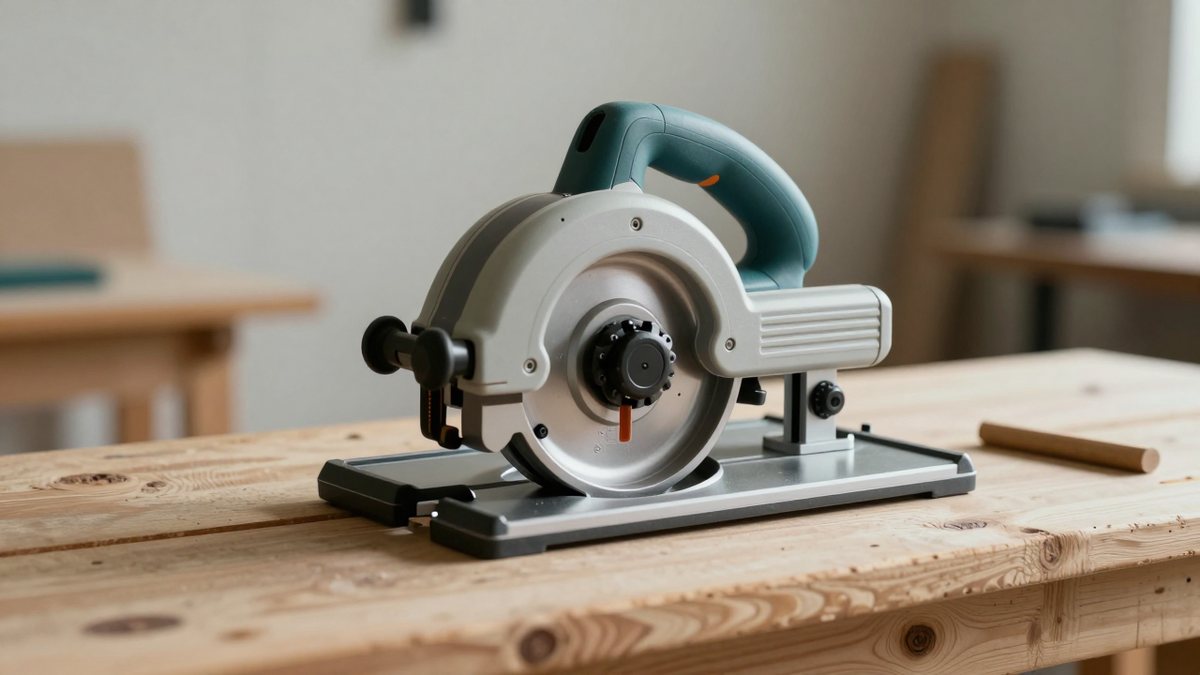
 Hoteche 7-1/4-Inch Miter Saw 7.5A Compound Single Bevel7.5in Sliding Single Bevel1 x 1 x 1 inchesCheck on Amazon
What's inside
As an Amazon Associate I earn from qualifying purchases. This post may contain affiliate links at no extra cost to you.
The best miter saw for most home workshops and trim jobs, judging by the listings alone, is a 10-inch compound model with a clear bevel range and a decent blade, and the SKIL 10-inch dual bevel sliding saw is the one in this set that pairs sliding reach with dual-bevel tilt at a mid-range tier. For a tight budget the Metabo HPT is the lightweight 10-inch option, and the DEWALT DWS780 is the high-end choice for pros who need a 12-inch double-bevel machine.
All details below come from listing titles, published specifications and buyer reviews. Treat them as seller claims until you confirm them on the listing and in the manual.
Top picks at a glance

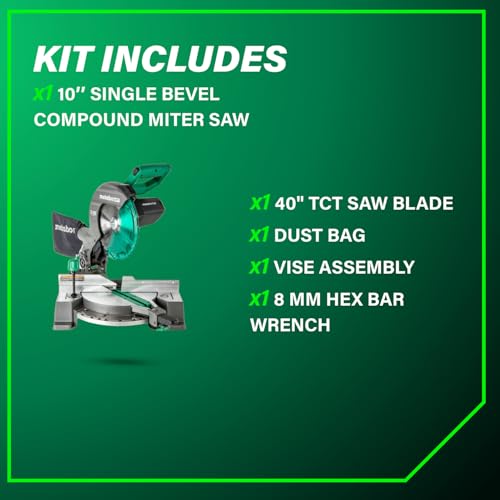
Metabo HPT 10-Inch Compound Miter Saw, 15-Amp, Single Bevel, C10FCG2 | 24T TCT Blade Included, Precision Angle Cuts, Positive Stops, Large Work Table, Lightweight Portable Design




As an Amazon Associate we earn from qualifying purchases. Product prices and availability are accurate as of the date/time indicated.

Marvtool 10-inch Compound Miter Saw, 5000RPM, 15 Amp, Single Bevel 0-45° with Extension Table, 36T Blade, Power Saw for Metal, Plastic, Wood, Laminates


As an Amazon Associate we earn from qualifying purchases. Product prices and availability are accurate as of the date/time indicated.

DEWALT 12-Inch Miter Saw, 15-Amp, Single Bevel, Compound (DWS715)


As an Amazon Associate we earn from qualifying purchases. Product prices and availability are accurate as of the date/time indicated.

SEESII 8-1/4" Compound Miter Saw with Laser 4900RPM Single Bevel 0-45°


As an Amazon Associate we earn from qualifying purchases. Product prices and availability are accurate as of the date/time indicated.
Hoteche 7-1/4-Inch Miter Saw 7.5A Compound Single Bevel Chop Saw with Laser and Blade for Wood and Metal Working


As an Amazon Associate we earn from qualifying purchases. Product prices and availability are accurate as of the date/time indicated.

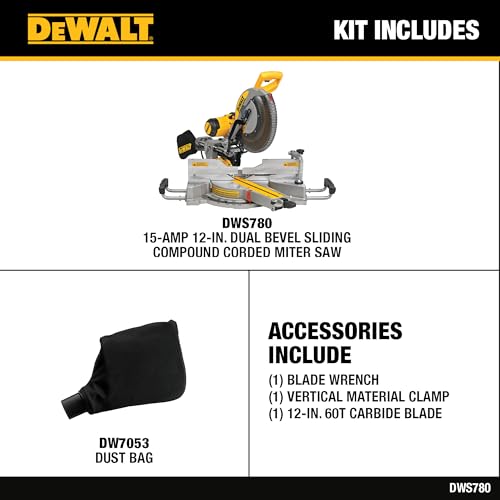
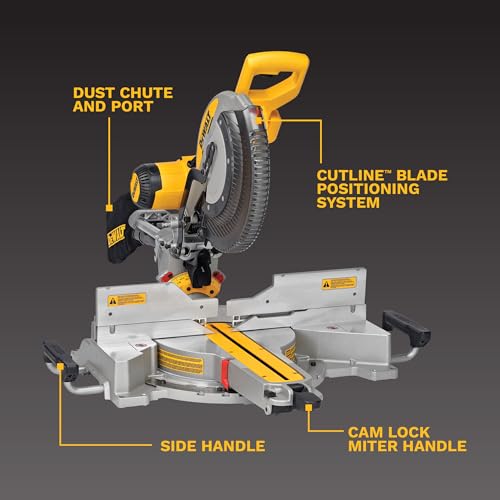
DEWALT 12-inch Double Bevel Miter Saw (DWS780) | XPS LED Shadow Light System, Includes Blade Wrench, Material Clamp and Dust Bag


As an Amazon Associate we earn from qualifying purchases. Product prices and availability are accurate as of the date/time indicated.

DEWALT Miter Saw, Single Bevel, Compound, 10-Inch, 15-Amp (DWS713)


As an Amazon Associate we earn from qualifying purchases. Product prices and availability are accurate as of the date/time indicated.
| Model | Key point from title | Price tier | Best for |
|---|---|---|---|
| DEWALT DWS780 | 12-inch double bevel, XPS LED shadow light | Premium | Professional trim and framing |
| DEWALT DWS715 | 12-inch, 15-amp, single bevel compound | Mid-range | Wide stock, straightforward cuts |
| DEWALT DWS713 | 10-inch, 15-amp, single bevel compound | Mid-range | General carpentry |
| SKIL MS6305-00 | 10-inch dual bevel sliding compound | Mid-range | Wide boards, trim work |
| DOVAMAN 10-inch | Sliding, 3 blades, laser, 9 positive stops | Mid-range | Mixed-material hobby work |
| Evolution R185SMS+ | 7-1/4-inch sliding, multi-material | Mid-range | Wood, plastic and metal in small stock |
| Metabo HPT C10FCG2 | 10-inch, 15-amp, lightweight, 24T blade | Budget | Portable, entry-level carpentry |
| Marvtool 10-inch | 5000 RPM, 15-amp, extension table, 36T blade | Budget | Light mixed-material jobs |
| SEESII 8-1/4-inch | Laser, 4900 RPM, single bevel | Budget | Small projects and trim |
| Hoteche 7-1/4-inch | 7.5-amp, laser, wood and metal | Budget | Very light-duty tasks |
How the miter saw market is shifting
Three changes show up across current listings. The first is price spread. A decade ago, a basic corded saw and a premium one were separated by a clear gap in brand and features. Now several unfamiliar brands list sliding designs, lasers and extra blades at prices near the entry-level offerings of long-established tool makers. That is good for budgets but makes the spec sheet harder to read, because the same words (sliding, compound, positive stops) can mean saws of very different build quality.
Second, multi-material claims are everywhere. Titles in this set mention metal, plastic and laminates alongside wood. In general, cutting anything other than wood on a miter saw needs a suitable blade, a setup the manufacturer approves and extra precautions for sparks and chips, so treat these claims as marketing until the manual confirms them.
Third, lasers and LED shadow lights are spreading, as visual cut guides in place of old-fashioned pencil lines. They can help, but they depend on calibration, and many pros still use a square and a scrap cut to confirm. Cordless saws are also growing in the market; if you want one, our guide to DeWalt battery miter saws covers that branch, while this roundup sticks to corded models.
The result is a market where size and bevel type are more reliable shopping filters than headline RPM, because no-load speed says little about cutting quality on its own. Treat any specific number with some skepticism and weigh it against the blade, the fence and the base.
How we picked these saws
We compared listing titles, published specifications and buyer-review themes across ten corded models, then sorted them by blade size, bevel type, sliding ability and price tier. Nobody on the team used or measured these units. Anything that comes from a seller title, such as RPM, laser guides or cut capacity, is labeled as a claim. Price tiers are relative within this set only, so “Budget” means low compared with the other nine. Several listings share near-identical wording, and two have titles that say little (the SKIL and the DEWALT DWS713), so we mark those gaps rather than guess. We also note that the Hoteche and the SEESII are smaller-blade saws and a weaker class for general carpentry than the 10 and 12-inch models.
The ten saws, one by one
DEWALT DWS780 12-inch double bevel miter saw
The title names a 12-inch double bevel saw with an XPS LED shadow light system, blade wrench, material clamp and dust bag, and it sits alone in the premium tier. Double bevel means the head tilts both left and right, which saves flipping long pieces for mirror-image cuts. The title does not state whether the saw slides, so check the listing for crosscut capacity before you count on wide boards.
It suits a trim carpenter or serious DIYer who does enough crown, base and casing to value less repositioning. In a typical job, you would set the bevel once for a run of matching cuts and keep working. Because the title also names a shadow light, expect help lining up the blade path with a mark, but still confirm with a scrap cut. At the top of the price range, the buying logic is time saved over many jobs, not a one-off project.
- Pros: 12-inch blade; double bevel; included clamp and dust bag.
- Cons: far above the rest in cost; heavier and larger than 10-inch saws, as a class.
Check the listing: sliding or not, maximum cut sizes, weight, and the amperage. Question to ask: do you cut stock wide enough to justify a 12-inch saw?
DEWALT DWS715 12-inch single bevel compound saw
This listing names a 12-inch miter saw, 15-amp, single bevel, compound. It is the larger blade option among the mid-range choices and pairs the bigger size with simpler tilt. That is the trade: you get the 12-inch capacity but have to flip the board for opposite bevels.
It suits someone who cuts wide, thick lumber for decks, fences or shelving, and does not need the dual-bevel convenience. Think of a weekend deck build where the cuts are mostly square and simple miters. Since the title includes few extras, confirm what comes in the box; a stand, a clamp or a dust bag may not be included. If you later move into trim work, the lack of dual bevel is the limit you will feel first.
- Pros: 12-inch blade; 15-amp motor; single bevel is simple to use.
- Cons: no dual bevel; the title gives no mention of sliding, clamp or dust bag.
Check the listing: included blade, cut capacities at 90 and 45 degrees, and weight. Question to ask: if you could only own one saw, would flipping stock for bevels annoy you?
DEWALT DWS713 10-inch single bevel compound saw
The DWS713 is a 10-inch, 15-amp, single bevel compound miter saw. It trades blade size for portability and sits in the mid-range tier alongside the 12-inch DWS715. The title is short on extras, so the model number is your pointer to the manual.
It suits a homeowner doing baseboards, door casing and picture frames, where 10 inches is plenty and a lighter tool is easier to carry to the work. The saw could sit on a folding stand during a bedroom trim project and then go back in the garage. Because it shares a brand family with the 12-inch DWS715, the choice is mostly about size: pick this one if your widest board is narrow and you value a lighter tool, and the other if you need capacity.
- Pros: 10-inch size is easy to handle; 15-amp; single bevel is simple.
- Cons: smaller capacity than 12-inch saws; single bevel only.
Check the listing: what ships in the box, since the title mentions no blade or accessories. Question to ask: is the price gap to the 12-inch DWS715 worth giving up its capacity?
SKIL 10-inch dual bevel sliding compound saw (MS6305-00)
SKIL’s title describes a 10″ dual bevel sliding compound miter saw, model MS6305-00. On paper this is the most flexible 10-inch layout in the set: the slide extends crosscut width, and dual bevel avoids flipping stock. It sits in the mid-range tier.
It suits a woodworker who builds shelving, cabinets or window trim, where wide boards and mirrored angles both come up. A sliding saw needs space behind it for the rails, so measure your bench depth. A weekend project such as built-in shelving would show off the layout: wide shelf boards cut square, then mirror-image trim pieces cut without flipping stock. The title is short on numbers, so the listing is where you confirm the real cut capacity.
- Pros: sliding and dual bevel; 10-inch size; mid-range tier for that feature set.
- Cons: title gives no motor rating, blade or capacity; sliding rails need clearance.
Check the listing: maximum crosscut width, amperage and included blade. Question to ask: does your bench have enough depth for the slide?
DOVAMAN 10-inch sliding miter saw with three blades
The DOVAMAN title lists a 10-inch sliding miter saw, multi-material, 2-speed, 15A, with 3 TCT blades, a laser guide, 0-45 degree bevel, a stated maximum cut of 3.5 x 13.4 inches and 9 positive stops. The three blades are the headline: they suggest separate blades for wood and other materials, though the title does not say which.
It suits a hobbyist who wants one saw for wood and the occasional plastic or aluminum profile. The 3.5 x 13.4 inch figure is a seller number, so read it as a cut-size claim and check it against what you plan to cut. Treat the two-speed claim and the multi-material wording cautiously: speed settings and blade choice change how a saw behaves on non-wood material, and the manual, not the title, tells you what is allowed.
- Pros: three blades included; slide; laser; nine positive stops.
- Cons: a 0-45 degree bevel range suggests tilt in one direction only; the brand is less familiar, so support is worth checking.
Check the listing: which blade is for which material, warranty and blade guard design. Question to ask: do you need metal-capable setups, or would one good wood blade serve you better?
Evolution R185SMS+ 7-1/4-inch sliding multi-material saw
Evolution’s listing describes a 7-1/4-inch sliding miter saw with multi-material cutting, a 45 degree bevel, a 50 degree miter, a 210 mm slide and a blade included, for wood, plastic and metal. A smaller blade on a slide is the unusual combination: compact, but with reach.
It suits a small shop or van where space is tight and the work includes occasional mild steel or aluminum alongside wood. The title says the blade is included but not what it is; since the saw claims multi-material use, confirm the blade and the manufacturer’s rules for metal. A scenario: cutting aluminum trim and PVC conduit one afternoon and pine the next, with the slide giving reach beyond what a fixed 7-1/4-inch saw could manage.
- Pros: sliding action in a compact size; multi-material claim; wider miter range stated.
- Cons: smaller blade limits depth of cut; metal cutting needs the right setup and extra care.
Check the listing: maximum cut height and width, and dust and chip control. Question to ask: will 7-1/4 inches be enough for the lumber you cut?
Metabo HPT 10-inch compound miter saw (C10FCG2)
The Metabo HPT title lists a 10-inch compound saw, 15-amp, single bevel, C10FCG2, with a 24T TCT blade included, positive stops, a large work table and a lightweight portable design. It is the budget-tier listing with the most details stated, including the included blade.
It suits a homeowner or small-job contractor who wants a lightweight, carry-anywhere saw for framing and rough carpentry. A 24-tooth blade is generally a rough-cut choice, so you may want a finer blade for trim. It could live in a truck bed or garage corner and come out for deck boards, fence rails or stud cuts, where speed beats polish. A weight figure is not in the title, so read the listing before assuming it is easy to lift.
- Pros: lightweight; stops for common angles; large table.
- Cons: 24T blade is not ideal for fine finish work; single bevel.
Check the listing: actual weight, table size and bevel range. Question to ask: will you buy a second, finer blade for trim?
Marvtool 10-inch compound saw with extension table
Marvtool’s title lists a 10-inch compound saw at 5000 RPM, 15 amp, single bevel 0-45 degrees, with an extension table and a 36T blade, described as a power saw for metal, plastic, wood and laminates. It sits in the budget tier and offers more teeth on the blade than the Metabo.
It suits someone who wants a simple low-cost saw for shelves, laminate flooring and light projects. The extension table helps support longer boards. Think of laminate flooring or a run of shelf boards where the stock overhangs the base and needs support. Compare it with the Metabo HPT: more teeth on the blade here, but a less detailed title on weight and stops.
- Pros: 36T blade; extension table; low price tier.
- Cons: metal claim needs checking; unfamiliar brand, so support is uncertain.
Check the listing: what blade is approved for which material, the fence height and the warranty. Question to ask: will it hold alignment after a few months of use?
SEESII 8-1/4-inch compound saw with laser
SEESII’s listing is an 8-1/4 inch compound miter saw with a laser, 4900 RPM and single bevel 0-45 degrees. It sits in the budget tier and offers a middle size between the 7-1/4-inch and 10-inch saws. The title mentions no amperage.
It suits small crafts, picture frames and thin trim where a compact saw is easier to store. The laser helps line up marks, but verify with a square. One use is cutting small frame stock and thin base shoe in a hobby room. Because the title omits amperage and blade, those details decide whether it is a serious tool or a craft saw.
- Pros: compact; laser; low price tier.
- Cons: smaller cutting capacity; no amperage or blade type in the title.
Check the listing: max cut dimensions, amperage and included accessories. Question to ask: are you sure thin trim is all you cut?
Hoteche 7-1/4-inch compound chop saw with laser
Hoteche lists a 7-1/4 inch miter saw rated 7.5A, compound, single bevel, a chop saw with laser and a blade for wood and metalworking. At 7.5 amps, it is the lowest-powered saw in the set, and it sits in the budget tier.
It suits light tasks: small moldings, craft projects, thin stock. Given the power rating, it is a poor match for heavy framing or thick hardwood, and its metal claim deserves the strongest scrutiny. If you are building birdhouse parts or thin picture-frame moldings, the lighter motor is not a problem; for anything bigger, it will likely feel underpowered.
- Pros: light and compact; laser; lowest cost here.
- Cons: lowest amperage; smallest blade; metal claim needs caution.
Check the listing: cut capacities, blade guard and warranty. Question to ask: will a 7.5A motor struggle with the boards you plan to cut? If so, step up to a 10-inch saw.
Buying guide: matching a saw to your work
Blade size and cut capacity
Blade diameter sets the thickness and width a saw can cut. Most listings here are 10-inch; two are 7-1/4-inch, one is 8-1/4-inch and two are 12-inch. A bigger blade can cut larger stock at an angle, but the saw is heavier and costs more. Check the listing for the maximum cut at 90 degrees and at 45 degrees, because capacity drops as the angle increases.
Sliding, compound and bevel types
A compound saw tilts the blade for bevel cuts as well as swinging for miters. A sliding saw adds rails so the head can travel forward and back, which widens the crosscut. Dual-bevel saws tilt both ways and save flipping the board. For baseboard and basic casing, a non-sliding compound saw is often enough. For shelving and wide panels, the slide earns its footprint.
Motor, speed and blades
Fifteen amps is the common corded rating for 10 and 12-inch saws; the 7.5A Hoteche is much lower. RPM figures such as 5000 or 4900 are no-load speeds. They say little about finish quality, so look at the blade. Tooth count matters: a 24-tooth blade cuts fast and rough, while 36 teeth or more gives a cleaner cut. For fine trim, plan on a finer replacement blade.
Stops, fence and table
Positive stops snap the saw to common angles such as 0, 15, 22.5, 31.6 and 45 degrees, which speeds up repeat cuts. Look for a tall, flat fence to support crown molding and an extension table or support wings for long boards. A flimsy fence or loose detents will undermine every cut. Check how the stops are engaged and whether the listing mentions an adjustable fence, because a fence that cannot be squared to the blade makes every miter wrong.
Lasers, lights and dust
A laser or shadow light helps align a mark, but a square and a scrap cut remain the real check. Dust collection on miter saws is generally modest, so plan on a shop vacuum or a dust bag and a mask. Wear eye and ear protection, clamp the work, keep hands clear of the blade path and unplug the saw before changing blades, following the manufacturer’s instructions.
Portability and storage
Weight is rarely in the titles. A saw moved between rooms or loaded in a car is easier at the lower end of the size range, and a stand, a bench or a purpose-built miter saw table makes cutting safer and more accurate than working on the floor. Look at the base footprint, the handle position and the cord length on the listing.
Warranty and support
Brand familiarity differs widely in this set. Read the warranty term, find out how to get replacement blades and guards, and weigh buyer comments on after-sales support. A cheaper saw is a bargain only if you can keep it aligned and supplied with parts.
Worked example
Assume a homeowner is installing 120 feet of baseboard and casing, using stock about 3-1/2 inches wide, with roughly 40 inside corners and 40 outside corners. These are illustrative numbers. A 10-inch compound saw has enough capacity; a dual-bevel model avoids flipping boards on about half the corner cuts; a sliding rail adds nothing for 3-1/2-inch stock. A finer blade of 60 teeth or more is a sensible add-on. If the same person later builds 14-inch-wide shelves, a sliding saw like the SKIL becomes more attractive. Another point: if the same room needs 40 outside corners cut in crown molding, a dual-bevel saw halves the board flipping, so the extra cost could pay for itself in time.
| Spec concept | What to look for | Why it matters |
|---|---|---|
| Blade diameter | 10-inch for general work, 12-inch for wide stock | Sets maximum board size |
| Bevel type | Single or dual | Dual saves flipping boards |
| Slide | Rail system and stated crosscut width | Needed for wide panels |
| Blade teeth | 24T rough, 36T and above finer | Controls cut quality |
| Fence and table | Tall fence, extension support | Holds long and crown stock |
| Power | 15A on most full-size corded saws | Prevents bogging in thick stock |
For odd jobs outside what a miter saw does well, such as metal rods, rebar or trim in tight corners, a different tool may be safer. See our notes on M18 cut-off saws for metal and masonry, or oscillating saws for flush cuts.
Mistakes buyers make
Buying the biggest blade. A 12-inch saw is heavier and costs more. Pick the blade size from the widest stock you actually cut.
Trusting the RPM number. No-load speed is not a quality score. Judge the blade, the fence and the base.
Assuming multi-material means metal-ready. Cutting metal needs the right blade and the manufacturer’s approval, and it throws sparks and sharp chips. Read the manual.
Skipping a blade upgrade. Stock blades on entry-level saws are often rough-cut blades. A finer blade can improve trim work.
Ignoring bench space. Sliding saws need room behind them for the rails.
Forgetting about dust. Miter saws throw a lot of sawdust. Plan on a vacuum connection or bag, a mask and a clear work area.
Not clamping the work. Loose stock can kick back or shift. Clamp it, keep hands clear and wear eye and ear protection.
Verdict by use case
Best all-round on paper: SKIL 10-inch dual bevel sliding saw.
Best for professional trim work: DEWALT DWS780, if the cost is justified by volume.
Best for wide lumber: DEWALT DWS715 with its 12-inch blade.
Best for general carpentry: DEWALT DWS713, or the Metabo HPT on a tighter budget.
Best for mixed materials: DOVAMAN or Evolution, with the manual checked before cutting metal.
Best to skip for heavy work: the Hoteche, because of its 7.5A rating and small blade, and the SEESII, which has a smaller capacity than the 10-inch saws.
Lightest-duty options: SEESII and Hoteche, for small projects only; the 7.5A Hoteche is the weakest-powered saw in the set.
Miter saw questions buyers ask
Is a 10-inch or 12-inch miter saw the better buy?
A 10-inch saw is lighter, cheaper and handles most trim, baseboard and common framing lumber, which is why most listings here are that size. A 12-inch saw can cut wider or thicker stock at a given angle, but the saw itself is larger and heavier. Choose by the widest board you cut at an angle, and by how much weight you are willing to carry to a jobsite, not by the number on the box.
Do I need a sliding miter saw?
Only if you regularly cut wide boards, such as shelving, stair treads or wide panels, that exceed a fixed saw’s crosscut width. A sliding saw adds a rail system that takes up more bench depth and has more parts that need to stay clean and aligned. For narrow trim and standard framing, a non-sliding compound saw is often enough, and it leaves more room on a small bench.
Single bevel or dual bevel: does it matter?
A single-bevel saw tilts one way, so cutting the mirror-image angle means flipping the board. A dual-bevel saw tilts both ways, which saves repositioning on crown molding and compound angles. If you mostly make square and simple miter cuts, single bevel is fine. For lots of trim carpentry, such as crown molding or complex corners, dual bevel is a real convenience, though it is not essential.
Can a miter saw cut metal?
Some listings here name metal in their descriptions, usually with a specific blade. Others do not. Cutting metal needs a blade and setup the manufacturer approves, throws sparks and creates sharp chips, and is a poor idea on a saw intended for wood only. Read the manual, wear eye and ear protection, clamp the work and clear sawdust from the area first. If the listing is silent on metal, assume wood only.
How accurate are the built-in laser guides?
A laser line is a convenience for lining up a pencil mark, not a replacement for a square and a test cut on scrap. Lasers can drift if the saw is knocked or the blade is changed. Check the cut against a combination square, and adjust the saw or the laser according to the manufacturer’s instructions. Treat a laser as a helper for repeat cuts, since dust and vibration can dull the line over time.
What safety steps should I follow with a miter saw?
Wear eye and hearing protection and a dust mask, clamp the work when the saw’s clamp is available, keep hands well clear of the blade path, and unplug the saw before changing blades or making adjustments. Let the blade stop fully before lifting it out of the cut. Follow the manufacturer’s instructions and local rules for your jobsite, and never remove or defeat the blade guard.