What's inside
As an Amazon Associate I earn from qualifying purchases. This post may contain affiliate links at no extra cost to you.
Cabinet installation puts different demands on a cordless drill platform than framing or deck building. You need controlled screw driving, a compact tool that fits inside cabinets, and enough battery capacity to work through a kitchen without frequent charging. The platform matters most when it affects those basics—or when you already own batteries and chargers that can do the job.
Start with the work, not the battery voltage
Most cabinet screws are driven into wood or cabinet hardware, not thick structural lumber. A compact 12V drill can handle pilot holes and many installation screws; an 18V or 20V-class drill offers more reserve for larger holes, longer screws, and other work around the house. Those labels describe nominal voltage classes, not a guarantee that one tool will be more useful in every situation.
For a typical kitchen, a 12V drill with a clutch and a good 2.0Ah battery is often enough. Consider an 18V/20V platform if you also expect to drill larger holes, install long screws regularly, or use other higher-demand tools. A more powerful drill is not automatically better for cabinets: extra weight and a larger head can make overhead work and tight interior corners harder.
Features that matter on a cabinet job
Prioritize a variable-speed trigger, a working clutch, a comfortable grip, and a short enough head to reach inside cabinet boxes. The clutch helps limit the risk of burying a screw, stripping a hinge screw, or pulling a face frame out of alignment. Start with a low setting and test on scrap from the same material; clutch numbers are not standardized across brands.
A drill with two mechanical speed ranges is useful: the low range gives better control for driving, while the high range suits smaller drilling tasks. A bright work light and a belt hook are convenient, but neither should outweigh fit and balance. If you install cabinets frequently, a compact 12V drill-driver can be easier to handle than a heavier full-size drill.
For repeated screw driving, an impact driver can save time, but it is easier to overdrive fasteners and damage cabinet material. Use it at a gentle trigger speed and finish carefully, or use the drill’s clutch for the more delicate work. You do not need both tools for a one-time installation.
Battery size and runtime
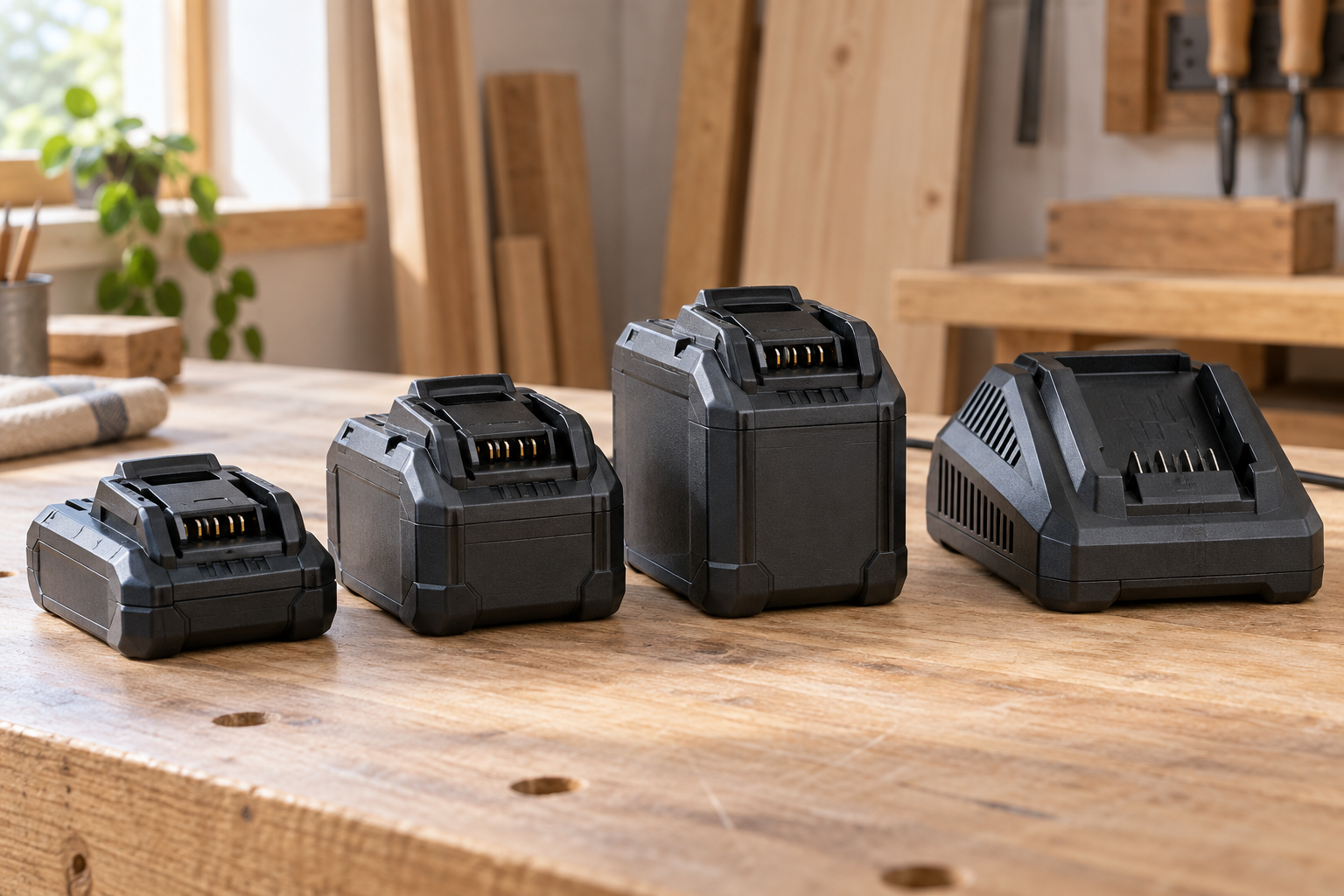
Battery capacity is measured in amp-hours (Ah). At the same platform voltage, a 2.0Ah battery is lighter than a 4.0Ah battery, while the larger pack generally runs longer. Actual runtime varies with the tool, material, screw size, and technique, so capacity is a comparison aid—not a reliable promise of a specific number of screws.
For cabinet work, a small pack often makes the tool less tiring and less bulky. One 2.0Ah battery may be adequate for a small vanity or a few cabinets; a second battery is useful for a full kitchen, especially if you cannot charge during the job. A 4.0Ah pack can extend runtime, but it may make a compact drill noticeably more cumbersome.
Do not choose a platform based only on the largest battery advertised. Check whether the battery actually fits the drill without blocking your grip or making the tool awkward inside a cabinet. If you already own compatible batteries, confirm the exact platform and generation: batteries and tools that look similar are not always interchangeable.
Choosing a platform for cabinet installation
| Option | Best fit | Trade-off |
|---|---|---|
| 12V platform | Small kitchens, light drilling, compact work | Less reserve for larger holes and sustained heavy work |
| 18V/20V-class platform | Cabinet work plus general home or shop tasks | Often heavier, especially with larger batteries |
| Existing compatible platform | Anyone who already owns sound batteries and a charger | May limit choice of compact tools or future additions |
Battery platforms make the most sense as a system. If you already own several batteries and a charger from a platform with a suitable compact drill, staying with it is usually cheaper than buying a new ecosystem for one installation. If starting from scratch, compare the available drill, battery, and charger kits—not just the bare tool price. A bare drill is a poor bargain if you then need a battery and charger at full retail price.
Look at the other cordless tools you are realistically likely to buy over the next few years. A useful platform might include a compact drill, work light, and small vacuum, but a long list of tools is not valuable if you will never use them. For an occasional cabinet project, a basic drill kit with battery and charger may be a better buy than investing in extra batteries and tools you do not need.
Account for the charger and kit
Chargers vary in size and charging speed. A fast charger can reduce downtime, but it is rarely essential for a one-day cabinet job if you have a second battery. Check what is included: some kits bundle a small battery and basic charger, while others sell the tool alone. Compare the complete price of the setup you need, including any second battery, rather than comparing headline tool prices.
Cheap third-party batteries can appear to offer more capacity for less money, but fit, protection circuitry, and real capacity may vary. A poor-fitting pack can interrupt work or fail to lock securely. For a tool used regularly, use a battery and charger intended for that platform. For a short project, borrowing a compatible battery or choosing a complete kit can be cheaper and simpler than buying an extra pack.
Avoid common buying and installation mistakes
Do not use drill size as a substitute for control. Too much torque can strip a screw, crush a cabinet panel, or pull a hinge out of position; too little may leave a fastener loose. Drill pilot holes where appropriate, use the correct bit, and finish with the clutch rather than leaning hard on the trigger. Follow the cabinet maker’s instructions, especially for particleboard and thin panels.
Before buying, handle the tool if possible. Check the grip with the battery installed, test whether the head reaches a representative cabinet corner, and see whether the trigger is easy to feather. For most DIY cabinet installations, a compact drill, one small battery, and a spare if the job is large are enough. Spend more on a larger platform when its added capacity will serve other work—not just because the voltage number is higher.
Related guides
- Longest Lasting Lawn Mower Battery: AGM vs Lithium vs Flooded Lifespan and Cost per Season
- Duralast Gold Lawn Mower Battery Review: U1 Fit, CCA and When to Pay for AGM
- Greenworks Pro 80V 21-Inch Mower Review: Runtime Math, Push vs Self-Propelled and Yard Fit
- Bosch High Pressure Washer Gun Replacement: Fittings, Adapters and What Fits Your Model