What's inside
As an Amazon Associate I earn from qualifying purchases. This post may contain affiliate links at no extra cost to you.
The Cub Cadet rear-tine tiller, best known as the RT 65, is a solid choice for breaking new ground or tilling a large vegetable garden. It pairs an engine of roughly 200-210cc with a tilling width of about 18 inches and tines that can turn either way. It is heavy, slow to turn and more machine than a raised-bed gardener needs, but for clay, sod and plots of a few thousand square feet it does the job a front-tine tiller struggles with. This review covers what the design does well, the specs that matter, how it compares with other tiller types, and what owning one involves.
As an Amazon Associate we earn from qualifying purchases at no extra cost to you.

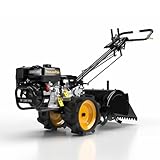
What you are buying
Cub Cadet’s rear-tine tillers follow the classic layout: the engine sits over a pair of powered wheels, and the tine assembly is at the back, behind the wheels. The wheels pull the machine forward at a controlled pace while the tines dig in. That is why rear-tine tillers feel steady in hard soil; you guide them rather than wrestle them.
The RT 65 is the model most buyers mean when they search for this tiller. Its headline features:
- A Cub Cadet-branded four-stroke OHV engine in the roughly 208cc class, recoil start.
- A tilling width of around 18 inches and a tilling depth that can reach about 10 inches in workable soil.
- Dual-direction tines. Counter-rotating mode for breaking hard, untilled ground; standard (forward) rotating mode for cultivating soil that is already broken.
- Powered wheels with forward and reverse, plus a depth bar or depth adjustment at the rear.
- Large pneumatic tires, typically in the 13-inch class, for traction on loose soil.
Model names, engine suppliers and minor specs change between production years, so the numbers here are the typical range for the current-style machine rather than a single fixed spec sheet.
Rear-tine vs. front-tine vs. mid-tine: where the Cub Cadet fits
| Spec | Front-tine tiller | Cub Cadet rear-tine (RT 65 class) | Heavy-duty rear-tine (pro class) |
|---|---|---|---|
| Engine size | 140-212cc | About 200-210cc | 250-300cc+ |
| Tilling width | 16-24 in (adjustable) | About 18 in (fixed) | 18-20 in |
| Max tilling depth | 6-11 in | Up to about 10 in | Up to about 10-12 in |
| Weight | 70-130 lb | About 180-240 lb | 250-350 lb |
| Drive wheels | Tines pull the machine | Powered wheels, forward/reverse | Powered wheels, often multi-speed |
| Best plot size | Up to about 1,500 sq ft, prepared beds | 1,000-10,000 sq ft, new ground | Market gardens, very heavy clay |
| Price range | A few hundred dollars | Roughly $1,000-$1,500 | $1,500-$3,000+ |
Strengths
Breaking sod and clay
Counter-rotating tines spin against the direction of the wheels, so they chop down into the ground instead of trying to climb over it. On a lawn-to-garden conversion or compacted clay this is the single biggest advantage over a front-tine tiller, which tends to bounce and skip on hard ground.
Less operator fatigue
Because the powered wheels set the pace, you can often steer with one hand on loosened soil. The machine’s weight keeps the tines in the ground without you pushing down on the handlebars.
Reverse gear
Reverse makes backing out of corners and fence lines much easier. On a tiller that weighs around 200 pounds, this is not a minor convenience.
Weaknesses
- Turning. Rear-tine tillers are long and heavy. Turning at the end of a row means lifting the tines out by pushing down on the handlebars and pivoting on the wheels. Plan rows that are long and straight.
- Not for small beds. In raised beds or tight borders an 18-inch fixed-width machine of this size is clumsy. A mini cultivator or front-tine tiller is better there.
- Transport. You will want a ramp and a helper, or a trailer, to move it between properties.
- Storage footprint. Expect to give it roughly 2 by 5 feet of floor space.
Decision guide
| Your garden | Is the Cub Cadet rear-tine a good fit? |
|---|---|
| Turning a 30 x 40 ft lawn area into a vegetable plot | Yes, this is its core job |
| Annual spring tilling of an established 2,000-5,000 sq ft garden | Yes, quick and steady |
| Rocky or root-filled ground | Usable, but go slowly; consider clearing large rocks first |
| Raised beds or a garden under 500 sq ft | No; buy a cultivator |
| Commercial plots or very heavy clay every week | Look at heavier pro-class rear-tine tillers |
How to use it well
- Check soil moisture. Squeeze a handful. If it forms a sticky ball, wait; tilling wet clay creates hard clods. If it crumbles, go.
- Start shallow in sod. Use counter-rotating mode with the depth bar set shallow for the first pass, then go deeper on later passes.
- Overlap passes by a few inches so you do not leave untilled ridges.
- Switch to forward rotation for final passes to leave a finer, fluffier seedbed.
- Keep feet clear of the tine area, especially when engaging reverse. Never clear jams with the engine running.
Ownership and maintenance
- Engine oil. Check before each use and change after the first few hours, then roughly every 50 hours or each season.
- Transmission and tine gear case. Some models use a sealed gear case, others have a fill or check plug. Follow the manual’s interval; low lubricant is the most expensive thing to neglect.
- Tines. Tines wear and bend, faster in sandy or rocky soil. They are replaceable; inspect them for rounded or bent tips each spring.
- Belts. Drive belts stretch over time; slipping under load is the usual sign.
- Fuel. Use fresh gas with stabilizer, or run the tank dry before winter storage. Stale fuel is the most common reason a tiller will not start in spring.
- Cleaning. Knock clay off the tine shaft and remove wrapped roots and twine after each session.
Verdict
The Cub Cadet rear-tine tiller is a good value for gardeners who need to break new ground or work a medium-to-large plot every year. The dual-direction tines, powered wheels and reverse are the features that justify the step up from a front-tine machine. It is not the right tool for small beds or tight spaces, and its weight is a real consideration for storage and transport. If you are converting lawn to garden, or your soil is heavy, it is one of the more sensible mid-priced rear-tine options.
Related guides
- Longest Lasting Lawn Mower Battery: AGM vs Lithium vs Flooded Lifespan and Cost per Season
- Duralast Gold Lawn Mower Battery Review: U1 Fit, CCA and When to Pay for AGM
- Greenworks Pro 80V 21-Inch Mower Review: Runtime Math, Push vs Self-Propelled and Yard Fit
- Bosch High Pressure Washer Gun Replacement: Fittings, Adapters and What Fits Your Model