What's inside
As an Amazon Associate I earn from qualifying purchases. This post may contain affiliate links at no extra cost to you.
Drive size is only one part of an impact wrench’s capability. A 1/2-inch anvil is the most useful choice for many automotive jobs, but it does not guarantee enough torque to loosen a rusty axle nut. A 3/8-inch wrench is easier to handle in tight spaces; a 1/4-inch tool is generally for small fasteners, not suspension work. Choose by the fasteners you actually service, the space around them, and the wrench’s tested performance—not by anvil size alone.
What drive size means
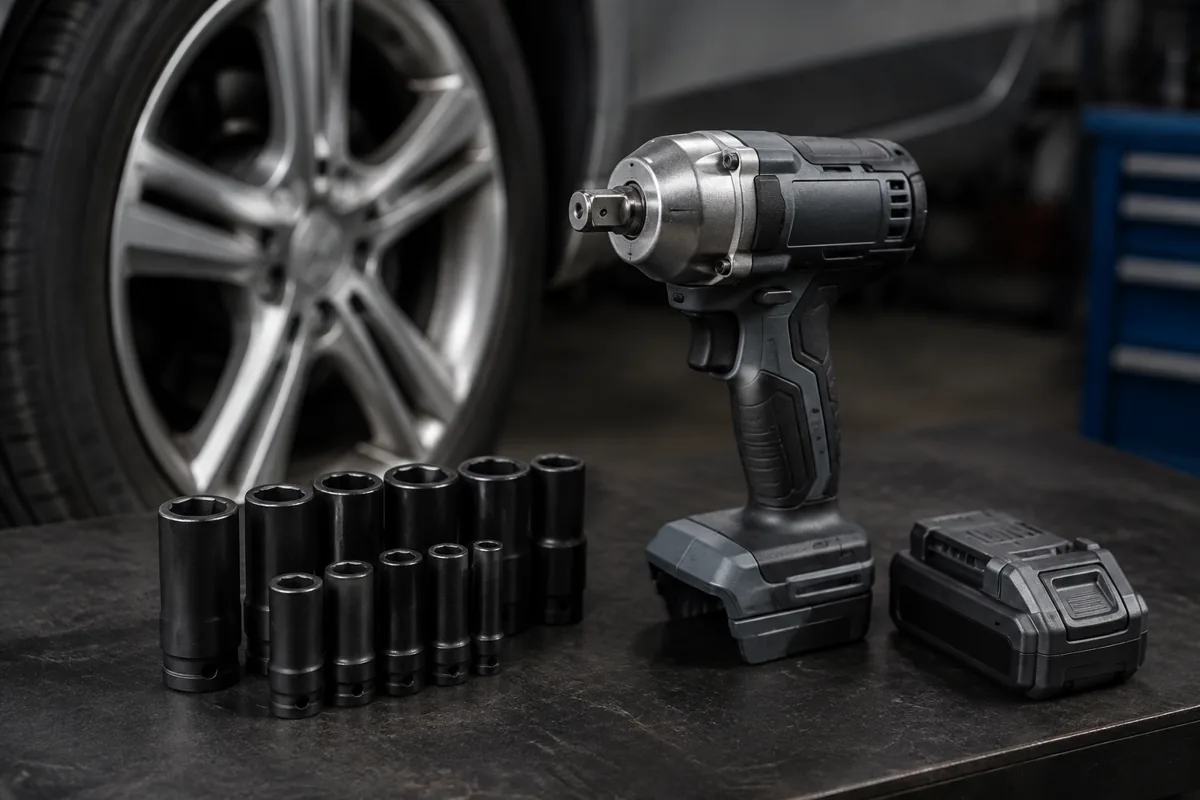
The drive is the square anvil that accepts an impact socket. Common cordless impact wrench sizes are 1/4, 3/8, and 1/2 inch. The size affects socket compatibility and usually reflects the tool’s intended workload, but it is not a direct torque rating. Two 1/2-inch wrenches can differ substantially in power, length, weight, and battery requirements.
Use impact-rated sockets with an impact wrench. They are designed to handle repeated blows; ordinary chrome hand sockets can crack or break. Match the socket drive to the wrench, or use a properly rated adapter when necessary. Adapters add length and can become a weak point, so avoid them when a direct-fit socket is available.
Match the drive to the job
| Drive size | Good fit | Limitations |
|---|---|---|
| 1/4 inch | Small, light-duty fasteners and compact access | Not the right choice for wheel lugs or most suspension fasteners |
| 3/8 inch | Engine-bay work, smaller brackets, and general service where access matters | May struggle with seized fasteners; check tested breakaway performance |
| 1/2 inch | Wheel lugs, many chassis fasteners, and higher-torque work | Often larger and heavier; can be awkward around crowded components |
A compact 3/8-inch wrench is a sensible pick if you mostly remove smaller bolts and work in tight engine bays. For occasional wheel changes, it may still work if the manufacturer’s performance claims are credible and your vehicle’s lug nuts are not badly corroded. But a 1/2-inch wrench gives you a wider choice of automotive impact sockets and more headroom for stubborn fasteners. For a single tool intended to cover wheels and general car maintenance, start by comparing 1/2-inch cordless impact wrenches.
Torque numbers and real-world performance
Check the tool’s fastening and breakaway torque specifications separately. “Nut-busting” or breakaway torque describes a test of removing a fastener under particular conditions; it is not a promise that the wrench will remove every rusted bolt. Test methods vary between manufacturers, so figures are not always directly comparable. A wrench advertised at several hundred foot-pounds may still fail on a seized axle nut, especially with a small battery or a long, worn extension.
Battery size matters. A high-output wrench paired with a small, low-capacity pack may deliver less sustained performance than it does with the battery recommended by its manufacturer. Larger packs can improve runtime and, on some platforms, output, but add weight. If you already own batteries, verify compatibility within the brand’s cordless platform and check whether the tool is sold as a bare tool or in a kit.
For wheel lugs, choose a wrench with enough reserve to remove fasteners in your conditions, but do not use impact torque to set the final tightness. Start threads by hand, then tighten with a torque wrench to the vehicle maker’s specification. A powered wrench can over-tighten or damage studs, especially at full power.
Fit, control, and access
Compare tool length and weight with the battery installed. A short 3/8-inch wrench can reach between components where a bulkier 1/2-inch tool cannot. A compact 1/2-inch model may bridge that gap, though compact tools generally trade some maximum power or runtime for size. If you can, hold the tool with the battery you expect to use; a comfortable bare tool can feel nose-heavy once fitted with a large pack.
Speed settings and a controlled fastening mode are useful for reassembly, but they do not replace a torque wrench. Reverse-stop features can help prevent nuts from flying off when loosened. A friction-ring anvil makes socket changes quick; a pin-detent setup can retain sockets more securely but may be slower to swap. These details matter more in regular shop work than in occasional tire changes.
Sockets, adapters, and common mistakes
Budget for impact sockets in the sizes your vehicle uses. If you choose a 3/8-inch wrench for tight work, you can still buy a separate 1/2-inch wrench or breaker bar for heavier fasteners. A 1/2-inch impact socket set is a practical addition when wheel and chassis work are on the list. Avoid stacking adapters and extensions to reach a fastener: each connection adds flex and can reduce effective impact at the socket.
Do not assume a longer handle or extension always increases loosening ability. Extensions can absorb some impact energy, and a universal joint can make the socket angle unstable. If a fastener will not move, confirm the socket is fully seated, use the correct direction, and consider penetrating oil and safe manual methods. Never use an impact wrench on a fastener if the tool or socket is not rated for that application.
Which drive size should you buy?
Choose 1/4 inch only for light-duty, small-fastener tasks; it is not a substitute for an automotive lug-nut wrench. Choose 3/8 inch if compact access and lower weight matter most and your work rarely involves heavily seized hardware. It is the cheaper, easier-to-handle option that can be entirely adequate for routine maintenance when paired with realistic expectations.
Choose 1/2 inch for the broadest automotive coverage, especially if you regularly remove wheels or work on suspension and chassis fasteners. Compare tool dimensions, battery requirements, warranty, and credible torque testing within your existing battery system before buying. If your jobs include unusually stubborn truck or axle fasteners, a high-output 1/2-inch wrench may be worth the cost; for light car maintenance, paying for the most powerful model is often unnecessary. Browse 3/8-inch cordless impact wrenches if access and a lower tool weight are your priorities.
FAQ
Which drive size should you buy?
Related guides
- Longest Lasting Lawn Mower Battery: AGM vs Lithium vs Flooded Lifespan and Cost per Season
- Duralast Gold Lawn Mower Battery Review: U1 Fit, CCA and When to Pay for AGM
- Greenworks Pro 80V 21-Inch Mower Review: Runtime Math, Push vs Self-Propelled and Yard Fit
- Bosch High Pressure Washer Gun Replacement: Fittings, Adapters and What Fits Your Model