What's inside
As an Amazon Associate I earn from qualifying purchases. This post may contain affiliate links at no extra cost to you.
Milwaukee’s M12 CP and XC batteries use the same 12-volt platform, but their different sizes change how a tool feels in your hand. CP means compact; XC means extended capacity. In practice, a smaller CP pack often makes a drill or installation tool easier to steer, while an XC pack adds runtime and can improve balance on tools with a heavy head. The better choice depends on the tool, the job, and how long you work between charges—not just the amp-hour number on the label.
As an Amazon Associate we earn from qualifying purchases at no extra cost to you.


What CP and XC mean
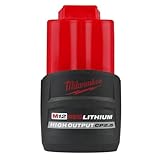
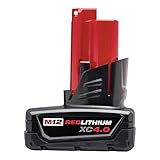
Milwaukee uses CP and XC to describe M12 battery pack sizes, not separate tool platforms. CP packs are compact and generally have lower capacity; XC packs are larger and typically provide more amp-hours. Exact capacity varies by battery generation, so check the rating printed on the pack rather than assuming every pack with the same label is identical.
More amp-hours usually means more work per charge, but it also means extra weight and bulk. The battery does not make a tool’s motor stronger by itself; the tool and pack’s electrical capabilities matter. For balance, the important differences are the pack’s mass, where that mass sits, and how those factors change the tool’s center of gravity.
How pack size changes balance
An M12 battery attaches at the bottom of the grip. A larger XC pack adds mass there, which can counterbalance a tool with a heavy chuck, head, or gearbox. That can make a front-heavy drill feel less nose-heavy, especially when you hold it one-handed. On a tool with a compact head and already well-centered weight, the same pack may simply make the whole tool heavier.
Extra weight becomes more noticeable during repetitive overhead work or when holding a tool at arm’s length. A CP pack can help reduce fatigue and makes it easier to fit a tool into tight spaces. But balance is personal: some users prefer the planted feel of an XC pack, while others find its larger base awkward in a pouch or crowded cabinet.
Runtime and practical trade-offs
Capacity is measured in amp-hours (Ah). If one compatible pack is 2.0 Ah and another is 4.0 Ah, the larger one has roughly twice the rated capacity under comparable conditions. That does not promise exactly twice the working time. Load, battery temperature, tool condition, and how often the motor runs all affect runtime.
A compact pack is a sensible choice for intermittent fastening, light drilling, service calls, and tasks where you already have a charged spare. An XC pack is more useful for extended drilling, repeated driving, or other demanding work where stopping to swap batteries costs time. On a saw or other high-draw tool, check the tool’s guidance and pack compatibility; a larger-capacity pack is not a substitute for selecting a battery suited to the tool.
CP vs XC at a glance
| Consideration | CP pack | XC pack |
|---|---|---|
| Size and weight | Smaller and lighter | Larger and heavier |
| Runtime | Less capacity per charge | More capacity per charge |
| Tool balance | Helps keep compact tools light | May counterbalance a front-heavy tool |
| Tight access and storage | Usually easier to maneuver and stow | Can add bulk below the grip |
| Best fit | Short jobs, overhead work, frequent battery swaps | Longer or heavier-use jobs, fewer interruptions |
Choose by tool and job
For a compact drill or driver used in cabinets, overhead, or close to a wall, start with a CP pack. Less weight can matter more than maximum runtime when you reposition the tool dozens of times. For longer drilling sessions, a larger pack may reduce battery changes and can make a front-heavy tool feel steadier. If you are unsure, try the tool with both pack styles before buying a second battery.
For small installation tasks, a CP battery is often enough; you can compare M12 compact batteries by their printed capacity and included accessories. For a full day of drilling or driving, an M12 XC battery is worth considering if its added runtime offsets the bulk. Keep in mind that buying a larger pack for every tool can make a compact kit unnecessarily heavy.
If you own several M12 tools, a mixed set often makes more sense than standardizing on one pack size. Keep CP packs on tools used overhead or in tight spots, and reserve XC packs for jobs that drain batteries quickly. A spare compact pack can also be more practical than one large pack if quick swaps are easy and you have access to a charger.
Charging, heat, and battery wear
Long, demanding runs can warm a battery, particularly when a tool draws hard under load. If a pack feels hot, let it cool before charging, and follow Milwaukee’s instructions for storage and charging. Avoid leaving batteries in a hot vehicle for extended periods. Heat and poor storage conditions can shorten battery life regardless of whether the pack is CP or XC.
Do not keep pushing a tool after performance drops or the battery protection system stops it. Forcing the job can overheat the tool or pack. Swap batteries, clear a bind, or reduce the load instead. If a tool repeatedly stops under ordinary work, check for a dull bit or blade, an unsuitable accessory, or a pack that is worn or poorly charged before assuming a bigger battery will solve the problem.
A straightforward buying decision
Choose CP when low weight, compact handling, and access matter more than long stretches of uninterrupted runtime. Choose XC when you need more capacity or when extra weight at the grip improves the feel of a front-heavy tool. The cheaper CP option is fine for light, intermittent work—especially if you already have spare batteries. Pay extra for XC when fewer swaps make a real difference, not just because a higher Ah number sounds better.
Related guides
- Longest Lasting Lawn Mower Battery: AGM vs Lithium vs Flooded Lifespan and Cost per Season
- Duralast Gold Lawn Mower Battery Review: U1 Fit, CCA and When to Pay for AGM
- Greenworks Pro 80V 21-Inch Mower Review: Runtime Math, Push vs Self-Propelled and Yard Fit
- Bosch High Pressure Washer Gun Replacement: Fittings, Adapters and What Fits Your Model