What's inside
As an Amazon Associate I earn from qualifying purchases. This post may contain affiliate links at no extra cost to you.
Choosing a drill battery for overhead work is not just a matter of buying the biggest one. A larger battery can run longer, but it also adds weight at the end of your arm, where even a few extra ounces matter. The right choice depends on the drill, the task, how long you’ll work between breaks, and whether you can use a lift or reposition the work to avoid holding the tool overhead.
Start with the drill and its battery platform
Use only a battery approved for your drill’s platform and voltage. Batteries from different brands—or different voltage families within one brand—are not interchangeable just because they look similar. Check the drill manual and the battery label, and make sure the battery locks firmly into place. A loose fit can interrupt power or let the pack detach while you’re working.
Battery capacity is usually listed in amp-hours (Ah). On the same voltage platform, a higher Ah rating generally means more stored energy and longer runtime, but it usually also means a larger, heavier pack. Capacity does not tell you the drill’s maximum power on its own; the tool, battery design, and workload all affect performance. If you’re replacing a pack, compare its weight as well as its Ah rating.
Match the battery to the overhead task
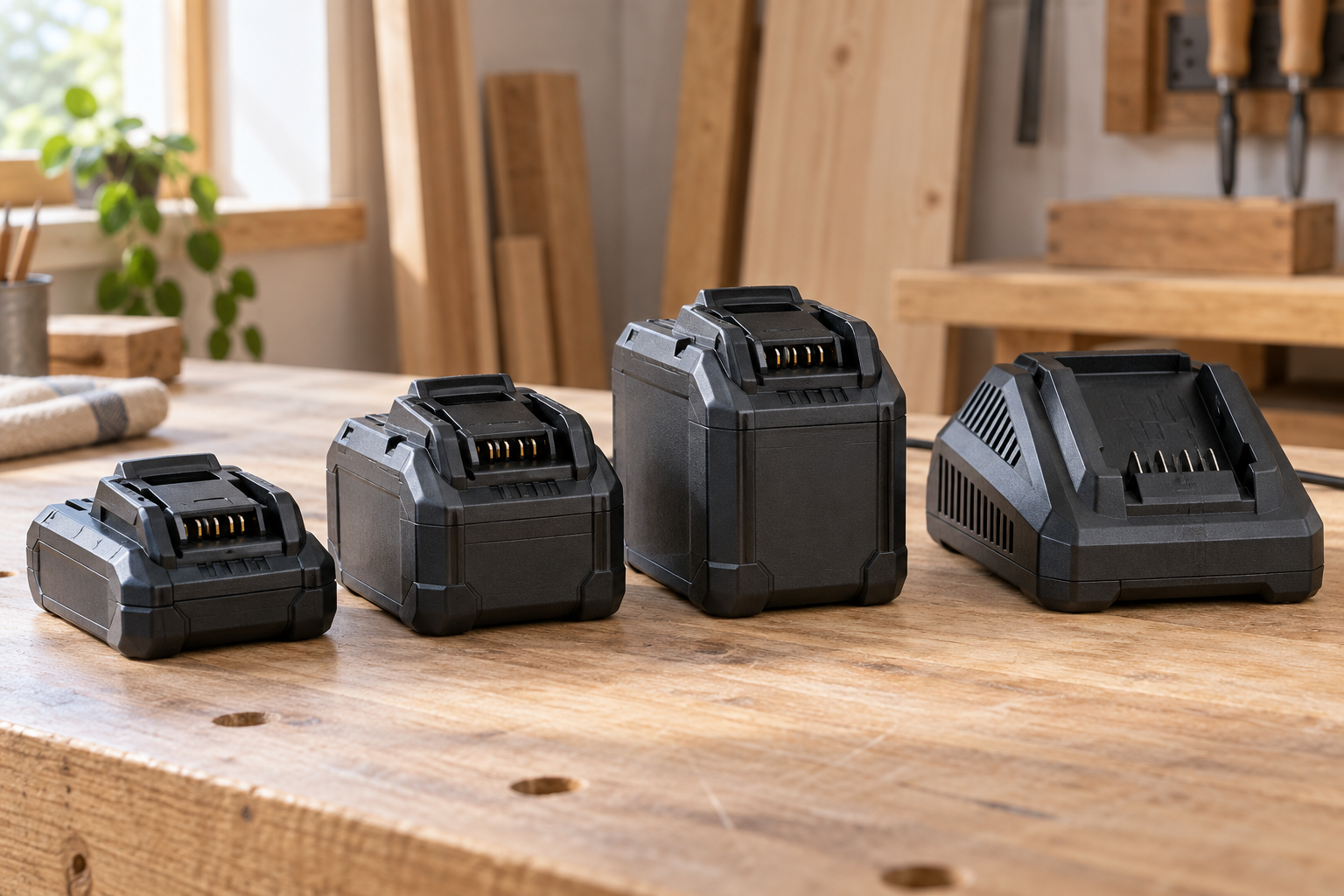
For occasional pilot holes, small fasteners, or brief fixture work, a compact battery is often the better choice. A typical 1.5–2.0 Ah pack may be enough for short sessions, though actual runtime varies with the material, bit, drill settings, and battery condition. A compact pack is easier to control and less tiring to hold overhead.
For repeated drilling or larger holes, a mid-capacity pack—often around 3.0–5.0 Ah on common cordless platforms—can be a practical balance. It gives you more work between swaps without the full weight penalty of a large pack. A high-capacity pack can make sense for sustained heavy work when changing batteries would interrupt the job, but it is a poor default if you’ll be holding the drill above shoulder height for long stretches.
For long overhead sessions, consider having a second compatible battery ready rather than putting the heaviest pack in the drill. Swapping packs during a planned break can be easier than fighting fatigue with a bulky battery. If the job is demanding, use a lift or stable work platform where appropriate; a lighter battery does not make an awkward stance safe.
Compare battery choices
| Battery type | Best fit | Trade-off overhead |
|---|---|---|
| Compact, about 1.5–2.0 Ah | Short tasks, small holes, light fasteners | Less runtime; frequent swaps on demanding work |
| Mid-capacity, about 3.0–5.0 Ah | Mixed work and repeated drilling | More runtime, but added weight and bulk |
| High-capacity pack | Long or heavy work where runtime is critical | Can tire your arm sooner; may make the drill less balanced |
These ranges are guides, not guarantees: brands use different pack designs, and two batteries with the same Ah rating can differ in weight and size. Check the manufacturer’s published weight and, if possible, handle the drill with the battery attached before buying. The pack should not make the drill feel tail-heavy or force you to grip harder than necessary.
Avoid the common overhead failures
A battery that runs out mid-hole is inconvenient, but a pack that overheats or cuts out under load can stop work unexpectedly. Dense timber, large bits, long drilling, and high trigger speed can draw more current than light fastening. If the battery or drill becomes unusually hot, stop and let it cool. Don’t cover a hot pack, leave it in direct sun, or keep forcing a stalled bit; use the correct bit and drill setting, and clear chips when needed.
Cold batteries may deliver less usable power, while old or heavily cycled packs may have reduced capacity even if the label still shows the original Ah rating. If a pack’s runtime has dropped sharply, compare it with a known-good battery under the same task before buying a replacement. Stop using a battery with a cracked case, damaged contacts, swelling, leaking, or a burning smell. Follow the manufacturer’s instructions for storage, charging, and disposal.
For overhead drilling, also plan for falling debris and tool control. Wear eye protection, keep your footing stable, and avoid overreaching. If the drill binds, the reaction can twist your wrist or shoulder. A side handle, if supplied and suitable for the task, can improve control. A heavier battery may not prevent binding and can make recovery more difficult.
Choose and buy without overbuying
Before buying, check the battery’s compatibility, weight, capacity, and charger requirements. A fast charger can reduce downtime, but it cannot make a heavy pack comfortable to hold. If you already own compatible batteries, buying another pack in the same platform may be cheaper and more useful than starting a new ecosystem. For a first purchase, compare the total cost of the battery and charger, not just the bare pack.
For brief overhead work, look at compact cordless drill batteries compatible with your tool. If you need a balance of runtime and handling, compare mid-capacity drill batteries in the correct platform. Don’t rely on a search result’s voltage or connector photo alone; confirm compatibility using the tool maker’s battery chart or manual.
A cheaper compact pack is fine when the job involves a few holes and you can recharge between sessions. Pay more for extra capacity when the task is repeated, the material is demanding, or battery swaps would cost time. For overhead use, buy the smallest pack that reliably gets through a reasonable work interval—not the largest pack your drill can accept.
Related guides
- Longest Lasting Lawn Mower Battery: AGM vs Lithium vs Flooded Lifespan and Cost per Season
- Duralast Gold Lawn Mower Battery Review: U1 Fit, CCA and When to Pay for AGM
- Greenworks Pro 80V 21-Inch Mower Review: Runtime Math, Push vs Self-Propelled and Yard Fit
- Bosch High Pressure Washer Gun Replacement: Fittings, Adapters and What Fits Your Model