What's inside
As an Amazon Associate I earn from qualifying purchases. This post may contain affiliate links at no extra cost to you.
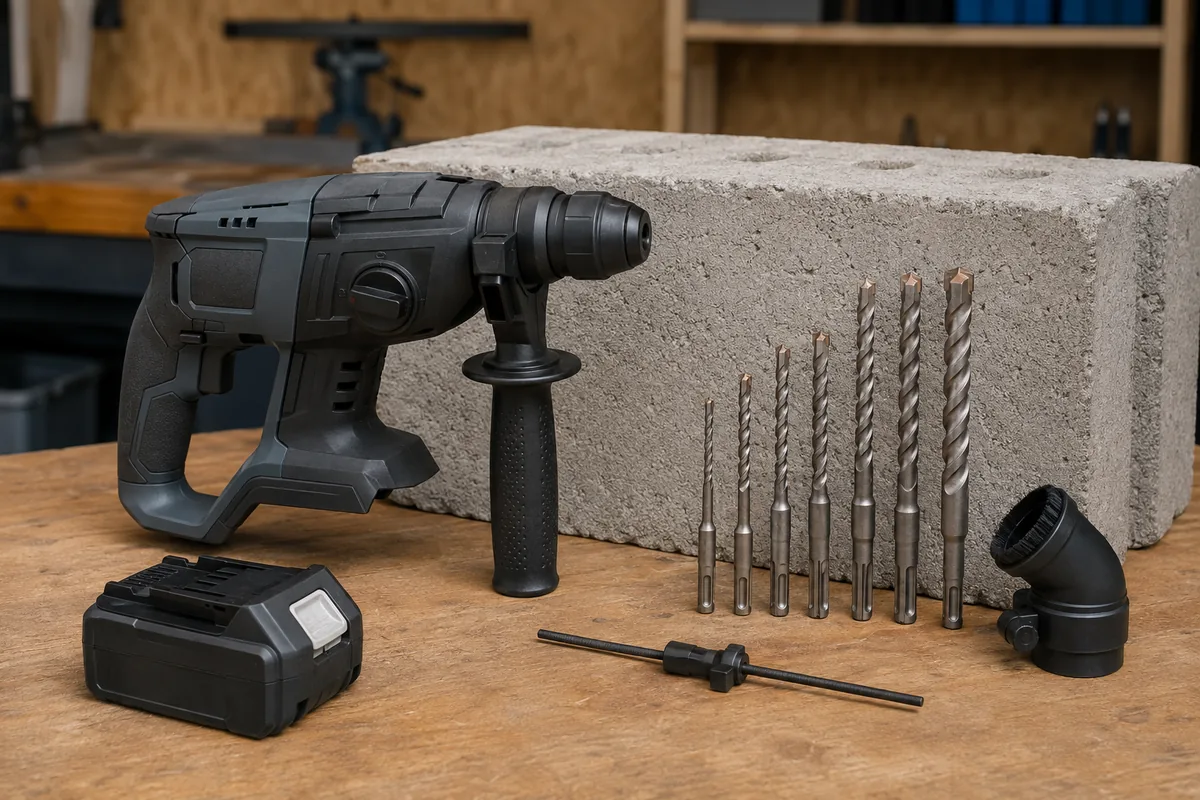
Choosing between a cordless SDS-Plus and SDS-Max rotary hammer is mainly a question of hole size, drilling volume and battery capacity. SDS-Plus covers most anchor holes and general renovation work. SDS-Max is built for larger bits, deeper holes and sustained heavy drilling—but its tool, batteries and bits are bigger and cost more.
As an Amazon Associate we earn from qualifying purchases at no extra cost to you.


The practical difference
SDS refers to the bit-shank system, not a measure of motor power. SDS-Plus bits have a 10 mm shank; SDS-Max bits have an 18 mm shank. The larger SDS-Max shank holds larger bits securely and is common on hammers designed for heavy concrete work.
Most SDS-Plus hammers are comfortable drilling holes around 6–16 mm for anchors, with many capable of larger diameters depending on the tool and bit. SDS-Max models are a better fit for frequent holes around 20 mm and up, large-core work within the tool’s rating, and chiseling that would bog down a lighter hammer. These ranges overlap: check the manufacturer’s stated capacity, particularly for core bits.
SDS-Plus vs SDS-Max at a glance
| Factor | Cordless SDS-Plus | Cordless SDS-Max |
|---|---|---|
| Typical work | Anchor holes, small-to-medium fixings, occasional light chiseling | Large holes, deep drilling, heavy chiseling and repeated high-load work |
| Bit system | 10 mm shank; smaller and generally cheaper bits | 18 mm shank; larger bits for higher-load applications |
| Handling | Lighter and easier to control overhead or on ladders | Heavier and bulkier; tiring for small holes and overhead work |
| Battery demand | Usually easier to manage with smaller packs | Heavy drilling can drain large packs quickly |
| Best reason to buy | Most everyday concrete drilling | Regular work that exceeds SDS-Plus capacity or productivity |
When SDS-Plus is the better buy
For installing shelves, handrails, conduit clips and typical masonry anchors, an SDS-Plus hammer is usually enough. It is also the sensible choice if your holes are mostly below about 16 mm, you drill in short bursts, or you need to work overhead or from a ladder. Lower weight matters: a tool that is easier to position can make a row of holes faster and safer than a heavier hammer with more impact energy.
Do not buy SDS-Max just because it sounds more powerful. If your largest regular bit is a modest masonry bit, a Max tool adds bulk without solving a real problem. SDS-Plus bits are widely available, and the platform is usually cheaper to buy into. Compare bare-tool prices only if you already own compatible batteries; otherwise include the required battery and charger in the total.
For a typical home or light trade workload, consider a cordless SDS-Plus rotary hammer. Look at its stated drilling range, impact energy, weight with battery and vibration rating—not just the largest hole figure in the listing.
When SDS-Max earns its keep
SDS-Max makes sense when larger holes are routine, not a rare exception: for example, repeated drilling for substantial fixings or openings, or frequent demolition with a chisel. Its heavier mechanism can keep working where a smaller hammer slows, overheats or makes poor progress. It also accepts larger bits, which can be more practical than trying to push an SDS-Plus tool beyond its intended range.
The trade-off is real. A heavy tool is harder to steady, and big bits increase kickback risk if they bind. Large-diameter drilling can also use battery capacity quickly. A high-capacity pack may be needed for productive work, but it adds weight and cost. For all-day drilling, access to spare charged packs or a corded option can matter as much as the tool’s rated output.
If large holes and heavy chiseling are frequent parts of the job, compare cordless SDS-Max rotary hammers by drilling capacity, tool weight, battery system and service support. A large maximum capacity does not mean the tool will drill that size quickly in every concrete mix.
Check the battery platform, not just the tool
With cordless hammers, battery compatibility can determine the real cost of ownership. If you already have a brand’s batteries, check whether the hammer uses the same platform and whether your packs are suitable for high-draw tools. A compact battery may fit but deliver shorter runtime or less consistent performance under heavy load than a larger pack. The exact difference depends on the tool and battery design.
Also check the charger’s charging time and whether a bare tool is being sold without a battery. If you are starting from scratch, compare the price of the hammer kit, a spare pack and any charger you need. SDS-Max is particularly likely to make you reconsider pack size because the tool and work demand more from the battery.
Avoid common drilling failures
Use a bit intended for rotary-hammer drilling and match the shank to the chuck. SDS-Plus and SDS-Max bits are not interchangeable. A bit that is too small for the job may make painfully slow progress; forcing a large bit through a light-duty hammer can cause overheating, excessive vibration or a stalled motor. Stop if the tool repeatedly bogs down, and let the bit clear dust rather than leaning harder on it.
For deep holes, withdraw the bit periodically to clear dust. Dust packed in the hole slows cutting and can overheat the bit. In reinforced concrete, a bit may strike rebar; do not keep hammering blindly. Check the site rules and drawings, and use a suitable method for the obstruction rather than risking damage to the bit, tool or embedded services.
Finally, use the side handle and keep a firm stance, especially with large bits. A bit that catches can twist the tool suddenly. For repeated large holes, a stand or a more suitable drilling setup may be safer and faster than trying to control a heavy handheld hammer by force.
Related guides
- Longest Lasting Lawn Mower Battery: AGM vs Lithium vs Flooded Lifespan and Cost per Season
- Duralast Gold Lawn Mower Battery Review: U1 Fit, CCA and When to Pay for AGM
- Greenworks Pro 80V 21-Inch Mower Review: Runtime Math, Push vs Self-Propelled and Yard Fit
- Bosch High Pressure Washer Gun Replacement: Fittings, Adapters and What Fits Your Model