What's inside
As an Amazon Associate I earn from qualifying purchases. This post may contain affiliate links at no extra cost to you.
Comparing cordless tool ecosystems is less about picking the brand with the biggest catalog and more about matching batteries, tools and charging to the work you actually do. A platform with a low-priced drill may become expensive if its batteries are undersized for a saw, or if you need to buy a second charger and several packs to keep working.
Start with the work
List the tools you expect to use over the next few years, then sort them by workload. A drill, impact driver and work light draw power differently from a circular saw, grinder or outdoor tool. The latter group can drain a small battery quickly, so battery capacity and the availability of higher-output packs matter more.
For occasional home repairs, a compact drill and one or two small batteries may cover most jobs. If you regularly cut sheet goods, drill large holes or work away from an outlet all day, compare larger batteries, charging speed and the cost of adding packs. Buying a platform for a single tool you use twice a year is usually a poor reason to switch ecosystems.
Compare the real cost
Compare the price of a useful starter setup, not just bare-tool prices. Add up the tool, batteries, charger and any accessories you need. A bare tool can be a good deal when you already own compatible batteries; for a first purchase, a kit may be cheaper than assembling the same parts separately.
| What to compare | Why it matters | What to check |
|---|---|---|
| Starter kit | Sets the entry price for a new platform | Included tool, battery capacity, charger and warranty terms |
| Extra battery | Determines how much uninterrupted work you can do | Price and capacity of packs suited to your tools |
| Charger | Affects downtime between jobs | Charge time for the battery size you plan to use |
| Tool range | Reduces the need for a second battery system | Availability of the specific tools you will actually buy |
| Service and warranty | Matters if a tool or pack fails | Coverage, repair process and local service options |
As a rough planning exercise, compare the cost of a kit plus one spare battery against the cost of a bare tool plus two batteries and a charger. Check current prices and included items carefully: promotions change, and similarly named kits can contain different battery capacities. A cordless drill kit with two batteries is worth considering if you are starting from zero, but do not pay extra for a second battery you are unlikely to use.
Battery capacity and runtime
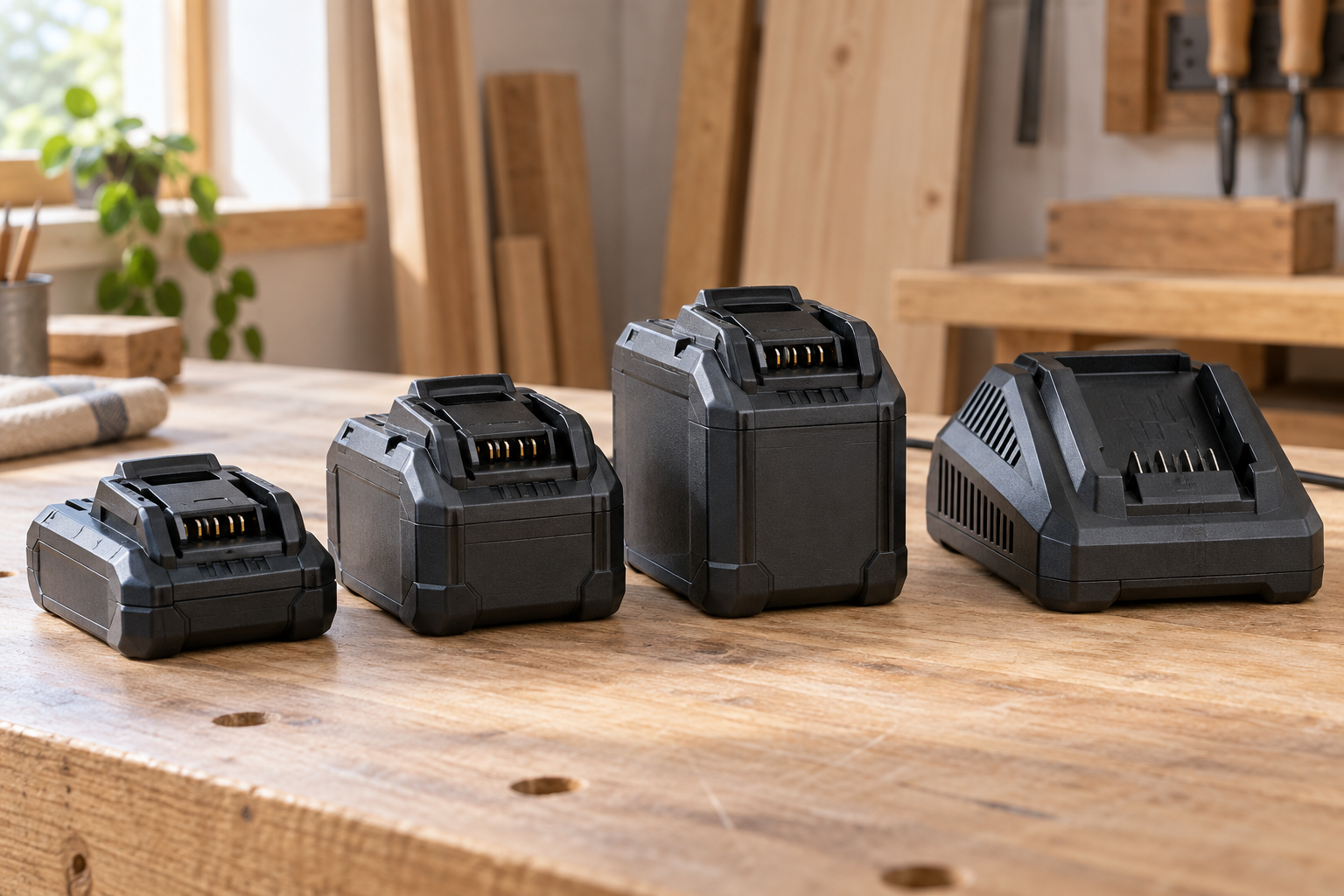
A battery’s amp-hour (Ah) rating is a measure of capacity, not a direct promise of runtime. In the same tool and conditions, a 5Ah pack generally stores more energy than a 2Ah pack, but it is also heavier and may cost more. Different battery voltages make direct Ah comparisons misleading; consider the pack’s watt-hours if you need to compare stored energy across voltage classes. Watt-hours are calculated as nominal volts multiplied by amp-hours.
Runtime also changes with the task. Driving small screws into softwood is easier on a pack than repeated large-diameter drilling or cutting dense material. If a tool feels weak, the cause may be a nearly empty pack, a hot battery or an undersized pack for a demanding task—not necessarily a defective tool. For all-day work, having a charged spare can matter more than buying the largest, heaviest battery available.
Compare the maker’s current battery compatibility information before buying. Packs within a brand may not fit every tool line, and an adapter can introduce fit, performance and warranty complications. Do not assume that a battery advertised for a brand works with every tool carrying that brand name.
Chargers and downtime
Check charger time using the battery capacity you intend to own. A charger that is adequate for a compact pack may leave a high-capacity battery charging for much of a work break. For one tool used occasionally, a basic charger is usually fine. For several tools used daily, a faster charger and two or more batteries can prevent waiting around—but only if the extra packs are cheaper than the downtime they save.
Heat is another practical issue. Hard use can warm a battery, and some charging systems pause until it cools. Avoid leaving packs in a hot vehicle or charging them while they are unusually hot. Follow the maker’s storage and charging instructions, and use a charger made for the battery rather than an unverified substitute.
Ecosystem fit and tool selection
Make a shortlist of the tools you will genuinely need: perhaps a drill, impact driver, saw and light. Compare those exact categories across platforms. One brand may offer a better fit for your preferred saw or grinder, while another may have the right compact tools. A long catalog is not valuable if it is full of tools you will never buy.
Pay attention to tool size, balance and control as well as headline power. If possible, hold the bare tool and test its grip, trigger and weight with the battery attached. A larger battery can shift the balance and add fatigue overhead. For a cordless circular saw, for instance, compare blade size, cutting depth, guard movement and visibility—not just the platform’s battery rating.
Keep the cheaper option in the running when the tool is for light, occasional use and the platform covers your needs. Paying more for a professional range is hard to justify if the tool will only assemble flat-pack furniture or make a few cuts each year. Conversely, a low kit price is less attractive if the battery system lacks a suitable pack or replacement charger for frequent work.
When to switch platforms
Staying with a platform you already own is often the least expensive choice, particularly if you have working batteries and a charger. Switching can make sense if the tools you need are unavailable, the existing system no longer meets the workload, or a new kit offers better value than adding another tool and battery to the old one. Price both paths, including the cost of keeping two chargers and separate spare batteries.
Before buying, verify battery fit, included kit contents, warranty coverage and the price of a replacement pack. Then compare the complete setup against the work schedule: one battery may be enough for a weekend project, while a crew using several tools continuously will need more packs and charging capacity. Choose the platform that covers those needs at a sensible total cost, rather than one that wins a single spec or sale price.
Related guides
- Longest Lasting Lawn Mower Battery: AGM vs Lithium vs Flooded Lifespan and Cost per Season
- Duralast Gold Lawn Mower Battery Review: U1 Fit, CCA and When to Pay for AGM
- Greenworks Pro 80V 21-Inch Mower Review: Runtime Math, Push vs Self-Propelled and Yard Fit
- Bosch High Pressure Washer Gun Replacement: Fittings, Adapters and What Fits Your Model