What's inside
As an Amazon Associate I earn from qualifying purchases. This post may contain affiliate links at no extra cost to you.
The lightest battery that can run an impact driver is not always the best one to keep on the tool. A compact pack makes overhead work and repeated fastening less tiring, but a larger pack can deliver more sustained power and avoid interruptions on demanding jobs. For most users, a 2.0Ah or 2.5Ah battery is the practical starting point; choose capacity based on the work, not on the largest number printed on the label.
As an Amazon Associate we earn from qualifying purchases at no extra cost to you.


What “lightweight” means in practice
Battery weight varies by brand and design, so compare the actual pack weights for your platform. As a rough guide, compact 18V/20V-class packs around 1.5–2.0Ah often weigh roughly 1–1.5 pounds; higher-capacity packs may add several tenths of a pound or more. The impact driver itself can weigh about 2–3 pounds without a battery, so that difference is noticeable when driving screws overhead or using the tool one-handed.
Amp-hours describe stored charge, not power by themselves. Voltage and cell design also matter, and two packs with the same Ah rating can behave differently under heavy load. Check your tool maker’s compatibility information: voltage platforms are not interchangeable, and some brands’ high-output packs are intended to improve performance in particular tools.
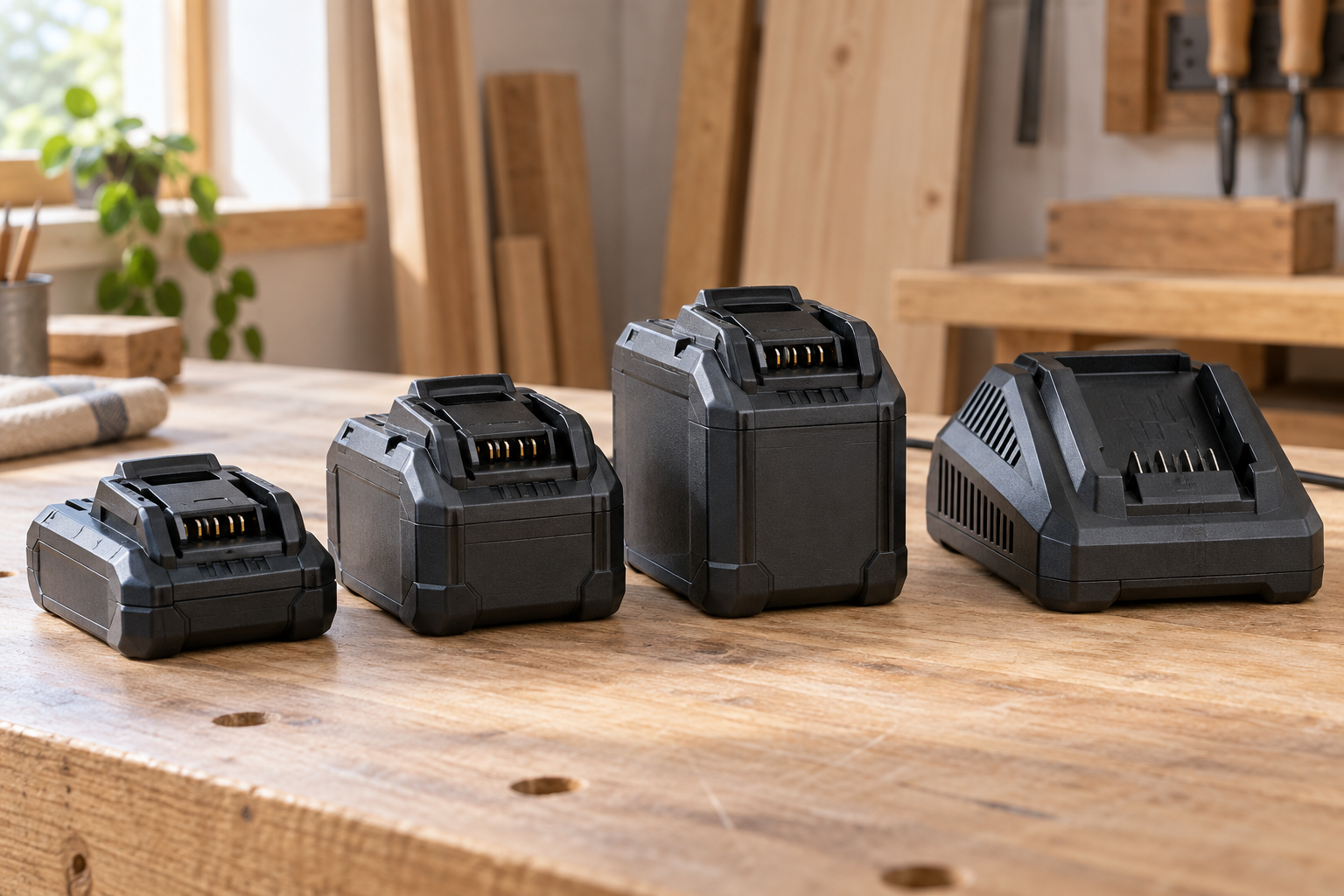
Battery size comparison
| Pack type | Typical capacity | Best fit | Main trade-off |
|---|---|---|---|
| Compact | 1.5–2.0Ah | Cabinet work, small repairs, overhead fastening | Less runtime; may feel strained during long runs of large fasteners |
| Mid-size | 2.0–3.0Ah | General DIY and routine installation | A little more weight, usually a useful runtime gain |
| High-capacity | 4.0Ah and up | Repeated heavy fastening or fewer battery changes | More bulk and wrist fatigue; often unnecessary for light work |
Capacity is not a reliable fastener count. Screw length, material, bit condition, driver settings, and how often the tool runs all change consumption. Treat published runtime claims as comparisons under test conditions, not a promise for your project.
Choose the pack for the job
For shelves, furniture assembly, small deck repairs, and occasional electrical work, a compact pack is usually the comfortable choice. It keeps the tool balanced and is easier to carry up a ladder. If you already own a platform, start by checking whether the maker sells a compact 2.0Ah battery for your platform. Confirm the exact voltage and battery series before buying; a similar-looking pack from another platform will not fit safely.
For general household use, a 2.0–3.0Ah pack is a sensible middle ground. It offers more reserve without making the driver feel top-heavy. If you work in bursts, keeping a second compact pack charged can be more comfortable than using one heavy battery all day. That approach only works if your charger can keep up with your pace.
Choose a larger pack when the tool will drive many structural screws, lag screws, or other long fasteners into dense material. A small battery may trigger its protection circuit, heat up, or deliver reduced performance during sustained high load. Those symptoms do not automatically mean the battery is defective. Let a hot pack cool, use a sharp, correctly sized bit, and avoid forcing the driver to run continuously when the fastener is binding.
Runtime, charging, and common problems
In normal use, an impact driver runs in short bursts, so a small pack can last longer than expected. Still, bring a spare for a full day of installation. A basic charger may take a few hours to refill a depleted pack, while faster chargers can reduce downtime, but charging speed depends on the battery and charger combination. Use a charger approved for that battery family rather than a generic adapter.
Cold conditions can reduce available output and runtime. A pack stored in a cold vehicle may seem weak; bring it indoors and let it warm naturally before judging its condition. Avoid leaving batteries in direct sun or beside a heater. If a pack repeatedly cuts out on light work, inspect the contacts for dirt or damage and check that it is fully seated. Do not open a battery case or try to bypass its protection electronics.
What to check before buying
First, identify your exact battery platform and tool voltage. Then compare the weight, capacity, and price of genuine compatible packs. If you own only one cordless tool, a bare battery may be poor value if a kit with a charger costs only slightly more. If you already have several compatible tools and batteries, buying another compact pack can be the cheaper and more useful option.
For a light-duty kit, look for a cordless impact driver kit with a compact battery and check whether it includes a charger. For demanding work, compare a 4.0Ah battery in your existing platform against buying a second compact pack. The larger battery is not automatically the better purchase: if you mostly drive short screws, its extra weight may cost more in comfort than it returns in runtime.
Avoid judging packs by unusually low prices alone. Verify the seller, warranty, compatibility, and stated capacity. Counterfeit or poorly made batteries can have unreliable protection and may not deliver the advertised runtime. For occasional household fastening, a genuine compact pack is generally enough. Step up in capacity when the job is consistently heavy, runtime is genuinely limiting, or changing batteries is costing more time than the added weight is worth.
Related guides
- Longest Lasting Lawn Mower Battery: AGM vs Lithium vs Flooded Lifespan and Cost per Season
- Duralast Gold Lawn Mower Battery Review: U1 Fit, CCA and When to Pay for AGM
- Greenworks Pro 80V 21-Inch Mower Review: Runtime Math, Push vs Self-Propelled and Yard Fit
- Bosch High Pressure Washer Gun Replacement: Fittings, Adapters and What Fits Your Model