What's inside
As an Amazon Associate I earn from qualifying purchases. This post may contain affiliate links at no extra cost to you.
What a pilot hole does
A pilot hole is a small hole drilled before a screw goes in. It gives the screw a path, helping prevent wood from splitting and making it easier to drive the fastener straight. It is especially useful near board ends, in hardwood, and when fitting larger screws. The right hole is not necessarily as small as possible: too small, and the screw can bind or snap; too large, and the threads may not grip.
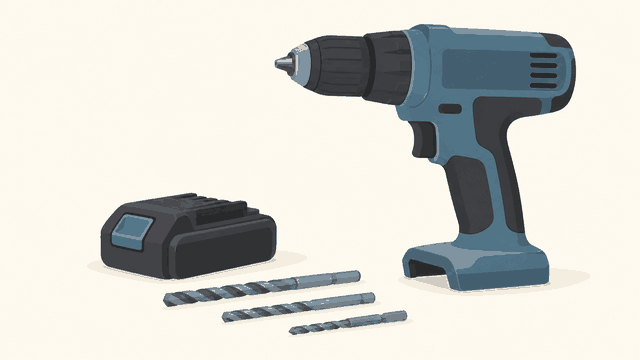
A cordless drill is enough for most pilot holes. A fresh bit, a suitable speed, and a steady hand matter more than buying a high-torque drill. If you already own a drill in a battery platform, start with that and spend on bits suited to the materials you work with.
Choose the right bit
For wood screws, size the pilot hole to the screw’s solid core, not the full outside diameter of its threads. A bit close to the core diameter lets the threads bite while removing enough material to reduce splitting. Screw sizes and wood vary, so treat a sizing chart as a starting point, then test on scrap from the same stock.
For a simple rule of thumb, use a bit roughly the diameter of the screw’s shank in hardwood. In softwood, a slightly smaller bit often works. If the screw has a smooth shank section, a clearance hole through the top piece can help the boards pull together; the pilot hole in the lower piece should still suit the threaded section.
A wood drill bit set is a sensible buy for common household work. A basic set is fine if you drill occasionally; choose bits with clearly marked sizes and replace dull or bent ones rather than forcing them through.
Set up the drill and workpiece
Mark the hole with a pencil, then make a small indentation with an awl or a nail point. This helps keep the bit from skating, especially on smooth wood. Clamp the workpiece when practical. If it is too small to hold securely, do not try to steady it with your free hand close to the bit.
Set the drill to its low-speed range if it has a two-speed gearbox, and use a moderate trigger pull. High speed can be fine for small bits in wood, but it gives you less control at the start and can burn the bit in hardwood. Keep the drill as close to perpendicular to the surface as you can. A small combination square or drill guide can help when accuracy matters.
Use the clutch only if it helps you control the drill; drilling usually calls for the drill setting rather than a low clutch number. Keep the battery charged enough that the drill does not slow noticeably under load. You do not need a larger battery for a few small holes, but an undersized, depleted pack can make a compact drill feel weak.
Drill with control
Seat the bit in the mark and start slowly. Apply steady pressure, not body weight. Let the cutting edges do the work; pushing hard can bend a thin bit, widen the hole, or cause the drill to twist when the bit catches. Back the bit out once or twice during a deeper hole to clear chips. If the bit starts smoking or the hole smells scorched, stop: reduce pressure, clear the chips, and check whether the bit is dull.
Choose depth based on the screw. The pilot hole should usually reach at least as far as the threaded portion will go, and it should not break through the far side. A piece of tape around the bit makes a quick depth marker. For a blind hole, confirm the depth on scrap first; tape is a guide, not a physical stop.
When the hole is drilled, drive the screw at a controlled speed. Stop if it becomes unusually hard to turn. Back it out and check the pilot size rather than leaning harder on the drill. A screw driven into an undersized hole can split the wood, strip its head, or snap below the surface.
Pilot holes by material
Wood is forgiving, but metal, masonry, and plastic need different bits and methods. Do not use a wood bit as a universal choice: it may wander on metal, overheat, or make a ragged opening in plastic. For metal, center-punch the mark and use a bit made for the metal. For masonry, use a masonry bit and the drill’s hammer mode only if the material and tool call for it. Plastic can crack under excessive pressure, so use a sharp bit and a slow start.
| Material or situation | Starting approach | Common failure |
|---|---|---|
| Softwood and small screws | Use a bit slightly smaller than the screw’s core; test on scrap | Oversized hole leaves weak thread grip |
| Hardwood or near an edge | Use a bit close to the core diameter; keep the hole centered | Undersized hole splits wood or stalls the screw |
| Thin metal | Center-punch, use a metal-rated bit, and start slowly | Bit skating creates an off-center hole |
| Plastic | Use a sharp bit with light pressure and low speed | Heat or force cracks the material |
When a drill upgrade helps
If your current drill makes clean holes without bogging down, there is little reason to upgrade for pilot holes alone. A compact drill is easier to control for small fasteners, and it is often lighter overhead. A larger drill can be useful for frequent work, larger bits, or long sessions, but added weight is a trade-off.
If you are buying into a cordless platform, compare battery availability, charger cost, and the other tools you expect to use. A cordless drill-driver kit with a battery and charger can be better value than a bare tool when you have no compatible batteries. If you already own batteries in a brand’s system, a bare tool may cost less, but check that the voltage and battery mount match your packs.
A clutch is useful for driving screws, not a substitute for choosing the right pilot size. Likewise, hammer mode is for suitable masonry work, not for making wood holes faster. For occasional furniture repairs, a basic drill and a sharp bit set are enough. For repeated, accurate work, consider a drill guide before paying for a heavier drill.
Related guides
- Longest Lasting Lawn Mower Battery: AGM vs Lithium vs Flooded Lifespan and Cost per Season
- Duralast Gold Lawn Mower Battery Review: U1 Fit, CCA and When to Pay for AGM
- Greenworks Pro 80V 21-Inch Mower Review: Runtime Math, Push vs Self-Propelled and Yard Fit
- Bosch High Pressure Washer Gun Replacement: Fittings, Adapters and What Fits Your Model