What's inside
As an Amazon Associate I earn from qualifying purchases. This post may contain affiliate links at no extra cost to you.
Cast iron is a tough job for a cordless reciprocating saw. The pipe is thick, brittle and often cramped against a wall or buried in a trench. A saw with enough power helps, but blade choice, access and control matter just as much. For occasional repairs, a compact saw can be the sensible buy; for repeated cuts in heavy pipe, prioritize a full-size model with a strong battery platform and effective vibration control.
As an Amazon Associate we earn from qualifying purchases at no extra cost to you.


What matters when cutting cast iron
Cast-iron soil pipe is commonly around 3 inches in diameter, with larger sizes used in some buildings. Its hard, brittle walls punish ordinary wood-cutting blades: teeth can dull quickly, snag, or break. Use a carbide-grit blade made for cast iron, or a carbide-tooth demolition blade specifically rated for the material. Check the blade maker’s guidance, including pipe diameter and cut type. A longer blade can reach around a pipe, but an unnecessarily long blade flexes and is harder to control.
Reciprocating saws are also prone to vibration and blade deflection. A tool with a long stroke, a firm shoe and useful speed control makes it easier to hold a steady cut. Anti-vibration features can reduce fatigue, but they do not make a rough cut safe or prevent a blade from binding. If the pipe is loaded, supported poorly or holding waste, secure it before cutting. Cast iron can crack suddenly; do not assume a partly cut section will stay in place.
Best saw type for the job
| Saw category | Best for | Trade-off |
|---|---|---|
| Full-size 18V/20V reciprocating saw | Repeated cuts and larger pipe | More weight and bulk in tight spaces |
| Compact 18V/20V reciprocating saw | Plumbing repairs with limited access | Less power reserve; may cut more slowly |
| Corded reciprocating saw | Long sessions near an outlet | Cord management; outside the cordless category |
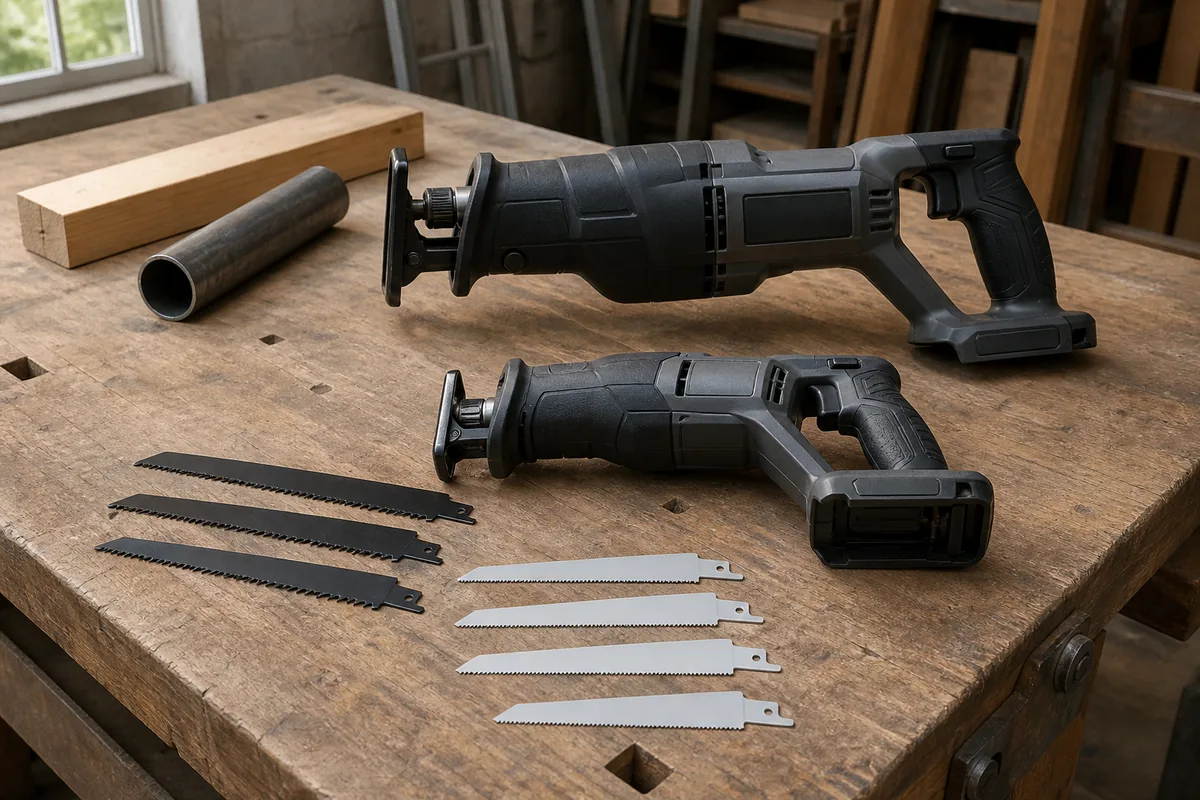
For a general-purpose cordless choice, compare full-size 18V cordless reciprocating saws. A full-size saw is the safer default if cast-iron cutting is more than an occasional task. Look for a shoe that pivots and can be adjusted, variable-speed control, and a tool-free blade clamp that is easy to operate with gloves.
If the pipe is close to a joist or wall, a compact model may fit where a full-size saw cannot. The smaller tool is usually easier to position overhead and in a crawlspace, but it can bog down sooner on thick sections. A compact cordless reciprocating saw makes sense when access is the main constraint and cuts are occasional. It is not automatically the best choice just because the pipe is small.
Battery platform and runtime
Use a battery that suits the tool’s demands. A higher-capacity pack, such as a 5.0Ah battery where the platform offers one, generally gives more runtime than a 2.0Ah pack, but adds weight. That extra weight can be tiring when cutting above shoulder height or reaching under a sink. If you already own batteries and a charger from a major cordless platform, buying a bare tool can be cheaper than switching ecosystems. If you are starting fresh, compare the kit price, charger speed and availability of batteries for your other tools, not just the saw price.
For a one-off repair, a smaller battery is often adequate if it is charged and healthy. For several cuts in old, thick pipe, bring a spare charged pack. Cold temperatures and aged batteries can reduce performance, and a saw that slows noticeably under load may need a fresh battery, a sharper or more suitable blade, or a slower feed. More voltage alone does not guarantee a better cut; tool design, blade and battery condition all matter.
Blade and cutting technique
Buy the right blade before choosing the saw. A carbide-grit reciprocating-saw blade for cast iron is a practical option for controlled cuts. Carbide-tooth blades can cut faster, but teeth are vulnerable to impact and poor alignment. Keep the shoe pressed firmly against the pipe or a stable surface, start at a low speed, and let the blade work. Forcing the saw raises heat and vibration and can damage the blade or make it jump.
Support the section on both sides of the cut where possible, and plan how the separated piece will be removed. If the pipe is under tension or cannot be secured, stop and reassess rather than trying to control a falling section with the saw. Wear eye protection, hearing protection, gloves and a suitable respirator when dust or debris is possible. Keep hands clear of the blade path and check for nearby wiring, plumbing and combustible material before cutting.
How to choose
For one or two accessible cuts, an existing cordless saw and a proper cast-iron blade may be enough; there is little reason to buy a premium tool solely for a single repair. If you are buying specifically for repeated pipe work, choose a full-size saw on a battery platform you already use, and budget for good blades and a spare battery. Pick compact only when access outweighs cutting speed and runtime. Whichever saw you choose, do not treat it as a substitute for pipe support, safe access or the right blade.
Related guides
- Longest Lasting Lawn Mower Battery: AGM vs Lithium vs Flooded Lifespan and Cost per Season
- Duralast Gold Lawn Mower Battery Review: U1 Fit, CCA and When to Pay for AGM
- Greenworks Pro 80V 21-Inch Mower Review: Runtime Math, Push vs Self-Propelled and Yard Fit
- Bosch High Pressure Washer Gun Replacement: Fittings, Adapters and What Fits Your Model