What's inside
As an Amazon Associate I earn from qualifying purchases. This post may contain affiliate links at no extra cost to you.
A cordless tool that seems to empty its battery unusually fast may have a worn pack, a tool fault, a difficult job, or simply a battery that was not fully charged. A useful test separates those causes before you buy a replacement. You’ll need a known-good battery if possible, a charger, and a repeatable task. A basic voltmeter can help, but it cannot measure battery capacity by itself.
Check the battery and tool first
Use a battery made for the tool’s platform and voltage. Check its charge indicator, if fitted, and charge it fully with the correct charger. Let a warm pack cool before charging; many chargers pause when a battery is too hot or cold. Inspect the contacts for dirt, corrosion, or damage, and check that the pack locks firmly into the tool.
Look for obvious sources of extra load. A dull saw blade, a binding drill bit, clogged ventilation, or a grinder wheel pressed too hard can raise current draw substantially. Remove the battery before inspecting or cleaning the tool. Do not open a lithium-ion battery pack or try to bypass its protection electronics. Stop using a pack that is swollen, cracked, leaking, unusually hot, or smells strange.
Run a repeatable test
Choose a task the tool can do comfortably, rather than deliberately stalling it. For a drill, use the same bit to bore several holes in the same material. For a blower, run it at one speed in a clear area. For a work light, use the same brightness setting. Record the starting charge indication, the number of holes or minutes of operation, and any change in performance.
Repeat the test with a second, fully charged battery of the same voltage and similar capacity, if available. Keep the material, accessory, speed, and technique as consistent as you can. A difference of a few minutes is not meaningful if the workload changed; a repeated result where one pack runs for half as long is worth investigating. Battery indicators are coarse estimates, so compare actual work time or output as well as the bars.
For a more controlled check, time a steady, low-to-moderate load until the tool’s low-voltage cutoff stops it. Don’t keep restarting the tool after cutoff: that can stress the pack and does not provide a useful measurement. Let the battery cool, then recharge it fully and note how long charging takes. Charge time alone is not a capacity test, since charger rate, temperature, and pack electronics affect it.
Compare likely causes
| What you observe | Likely explanation | What to check next |
|---|---|---|
| One battery runs much shorter in the same tool | That pack may have lost capacity or developed a weak cell group | Repeat with a fully charged pack; check the older pack’s age and condition |
| Two known-good batteries both drain quickly | Heavy workload, poor accessory, or tool fault is more likely | Try a sharp accessory, lower speed, easier material, and a second tool if available |
| Tool stops under load, then works again after resting | Battery protection may be tripping from heat, voltage sag, or excessive current | Check pack temperature, tool vents, accessory binding, and whether the pack is undersized for the job |
| Battery loses charge while stored | Normal self-discharge may be mistaken for tool drain; a connected tool may also draw standby current | Store the pack removed from the tool and compare over several days |
Put runtime in context
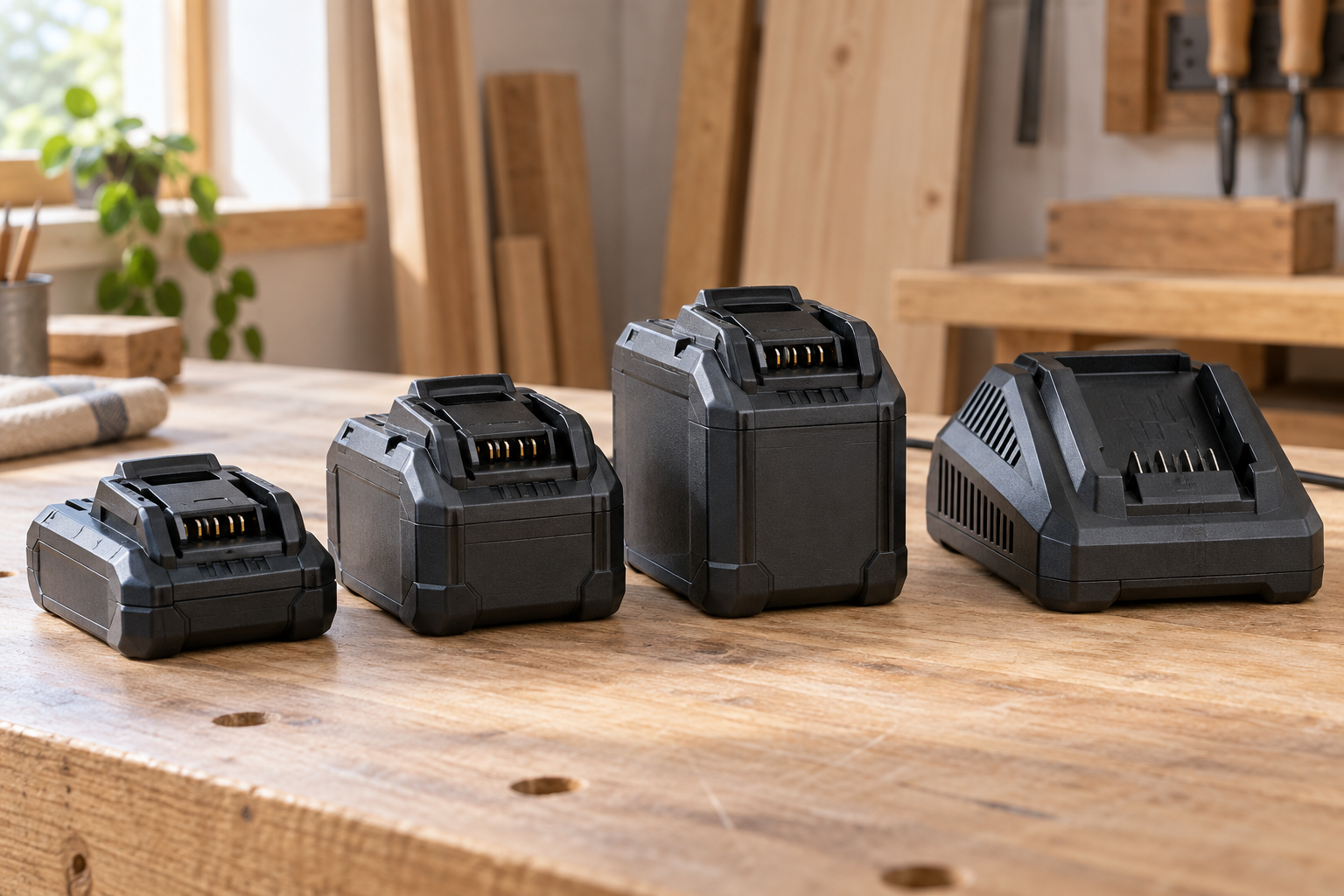
Battery capacity, usually marked in amp-hours (Ah), is a guide to stored energy, not a promise of runtime. A 4.0Ah pack often lasts roughly twice as long as a 2.0Ah pack in the same tool under the same conditions, but temperature, pack design, and workload change the result. High-draw tools such as grinders and circular saws can drain a pack much faster than a radio or light. Cold weather also reduces available performance until the battery warms.
Compare like with like: same platform voltage, similar pack capacity, same tool, and same task. If you need longer runtime, an additional compatible pack may be a better purchase than replacing a tool that is working normally. A compatible replacement battery can make sense when the tool is sound and the old pack consistently performs poorly. Verify the exact platform and voltage before buying; batteries from different brand systems generally do not interchange without an adapter, and adapters may not preserve all safety features.
Check for a tool fault
If multiple good batteries behave badly, inspect the tool’s accessory and ventilation before blaming its electronics. A motor that smells burnt, sparks heavily, makes new grinding noises, or runs hot at light load needs service. So does a tool that cuts out with a charged battery during an easy task. Brushless tools can have electronic faults that are difficult to diagnose at home; a battery swap test is more useful than taking the tool apart.
A charger’s status lights can help identify a pack that is too hot, too cold, or not accepting charge, but light patterns differ by brand. Check the manual for your charger rather than guessing from another platform. If the charger repeatedly reports a fault on one pack while charging another normally, the pack is the stronger suspect. A replacement charger for the same battery platform is worth considering only when the charger itself shows symptoms across multiple known-good packs.
Decide what to replace
Replace the battery when it repeatedly delivers much less work than a comparable pack, has physical damage, or is rejected by a known-good charger. Replace or service the tool when several healthy batteries all run down unusually fast under a light, consistent load, or when there are signs of heat or motor trouble. If the test is inconsistent, repeat it on another day at a moderate temperature before spending money.
For occasional home use, a lower-cost compatible battery can be adequate if it is from a reputable seller, clearly lists the correct platform, and includes appropriate safety protections. The trade-off is less certainty about cell quality, warranty, and long-term capacity than with an original-brand pack. For daily work or high-draw tools, the manufacturer’s battery is usually the safer choice. In either case, avoid packs with vague compatibility claims, implausibly high capacity for their size, or no clear return policy.
Related guides
- Longest Lasting Lawn Mower Battery: AGM vs Lithium vs Flooded Lifespan and Cost per Season
- Duralast Gold Lawn Mower Battery Review: U1 Fit, CCA and When to Pay for AGM
- Greenworks Pro 80V 21-Inch Mower Review: Runtime Math, Push vs Self-Propelled and Yard Fit
- Bosch High Pressure Washer Gun Replacement: Fittings, Adapters and What Fits Your Model