What's inside
As an Amazon Associate I earn from qualifying purchases. This post may contain affiliate links at no extra cost to you.
A mobile carpentry business needs tools that work away from the shop, fit in a vehicle and can be put back into service quickly. Choosing one battery ecosystem affects more than the drill: it determines what batteries you carry, how many chargers you need and which cordless tools you can add later. The right choice is usually the platform that covers your routine work with the fewest workarounds—not the one with the longest catalog.
Map the work before comparing brands
List the cordless tools you actually use in a typical week: drill/driver, impact driver, circular saw, finish nailer, oscillating tool, work light and vacuum, for example. Separate daily tools from occasional ones. A platform with a cordless trim router may be useful if you use it often; it should not outweigh reliable batteries and a good saw if routing is rare.
Estimate how much of the day you work away from an outlet. A crew fitting cabinets in a finished home may have access to power, while a framing or repair crew may spend hours outdoors. That distinction affects battery capacity and charger needs more than a small difference in advertised tool features.
Choose battery size for the load
Voltage labels can make platforms look more different than they are. For carpentry, compare the tools’ real job performance, weight and runtime rather than assuming a higher voltage automatically means a better tool. Compact batteries keep drills and impact drivers lighter. Larger batteries are more useful on saws, vacuums and other tools that draw power continuously.
A battery marked 5 amp-hours stores more energy than a 2 amp-hour battery of the same voltage, but it also adds weight and cost. Carrying a large pack on a drill all day can be tiring; running a small pack on a circular saw can mean frequent swaps. A practical starting point is two compact packs for light tools and two higher-capacity packs for saws or other demanding tools, then adjust after tracking actual use.
Battery capacity does not guarantee a specific number of cuts or fasteners. Material, blade sharpness, tool settings, temperature and technique all change runtime. Keep a spare charged, and avoid leaving batteries in a hot vehicle or in freezing conditions for long periods; temperature can reduce output and charging may be restricted until the pack warms or cools.
Compare ecosystems by job fit
Make a shortlist of two or three platforms sold locally, then check availability for the tools on your work list. Tool selection varies by region and changes over time, so verify that the exact tool you need is available on the battery family you plan to buy. The table is a screening guide, not a ranking of brands.
| What to compare | Why it matters on the job | What to check |
|---|---|---|
| Core tool coverage | Missing a key saw or nailer can force a second battery system. | Confirm the exact cordless tools you use are available and stocked nearby. |
| Battery options | One pack size rarely suits both a drill and a saw. | Compare compact and high-capacity packs by weight, price and availability. |
| Charging speed | A slow recharge can leave a tool unused during a short break. | Check charging time for the pack sizes you will carry, not just the smallest pack. |
| Service and replacement | Downtime costs more than a small purchase-price difference. | Look for local repair options, warranty terms and replacement batteries in stock. |
| Tool balance and controls | Awkward tools slow repeated cuts and increase fatigue. | Handle the saw, drill and nailer you expect to use most. |
Buy the first kit around useful batteries
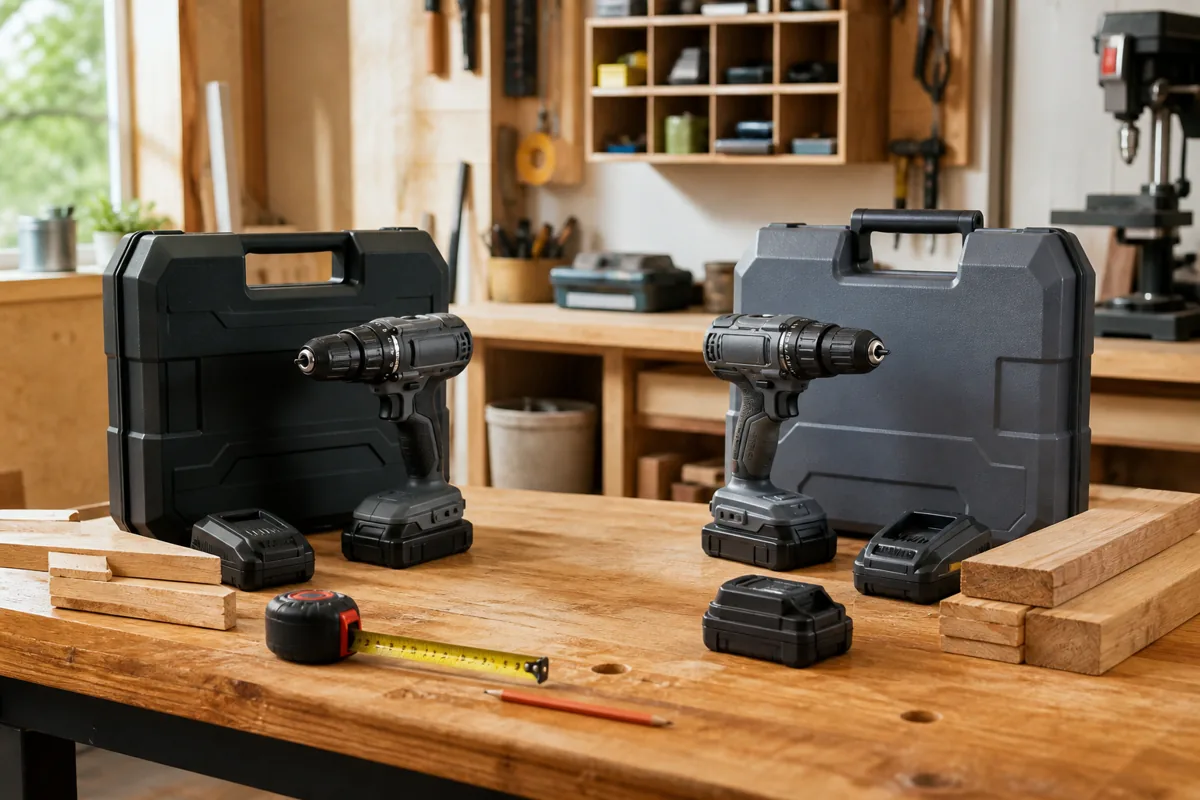
A starter kit can be good value when it includes tools you need, two batteries, a charger and a case. It is poor value when most of the price goes toward tools that will sit unused or batteries too small for your saw. Compare the kit price with buying the core tools and packs separately, and check whether the included charger handles the battery sizes you plan to add.
For a first setup, a drill and impact-driver combo kit with batteries and charger is often a sensible base if those are daily tools. Add a saw only after checking its cut capacity, guard action, visibility and balance in person. A cordless circular saw on the same battery platform is convenient, but the cheapest saw is not a bargain if it bogs down on the material you regularly cut.
Plan charging around the workday
For one worker, one charger may be enough if batteries rotate between tools and there is reliable power at the shop or jobsite. For a two-person crew or a full day of heavy sawing, a second charger can prevent a bottleneck. A rapid charger is useful only when it can replenish the packs you use; compare its charging times across pack sizes and account for heat-related delays.
In a vehicle, secure batteries so they cannot be crushed or shorted by loose metal. Keep terminals protected from screws and offcuts, and store packs in a dry case rather than loose in a tool bag. Do not assume a vehicle USB outlet can charge tool batteries: use the manufacturer’s compatible charger and power source. If you work where mains power is unreliable, a compatible rapid charger may help, but it will not solve a shortage of charged packs on a long shift.
Avoid common platform traps
Do not choose a system solely because a bare tool is discounted. The real cost includes batteries and chargers, and batteries are generally the least convenient part to replace after you commit. Also check whether a tool uses the same battery family as your main tools; some manufacturers sell multiple voltages or specialized packs that are not interchangeable.
Third-party adapters can appear to bridge ecosystems, but they may interfere with fit, protection circuits or warranty coverage. They can also leave a tool without the communication or safety features designed into its original battery. For business-critical tools, use compatible packs and chargers from the tool’s platform unless you have verified the adapter’s limitations and accept the risk.
Make the decision with a working kit
Before committing, handle the platform’s drill, saw and one tool used overhead or for repeated cuts. Check trigger control, blade visibility, guard return and how the battery changes with gloves on. Then price a realistic package: two compact batteries, two larger packs, one or two chargers, and the tools you will use in the first year.
Choose the ecosystem that meets those needs with dependable local supply and tolerable carry weight. If one occasional tool is missing, renting it or keeping a separate corded tool may cost less than maintaining a second battery system. A second platform makes sense when it solves a recurring job problem—not simply because a promotion makes one bare tool look cheap.
Related guides
- Longest Lasting Lawn Mower Battery: AGM vs Lithium vs Flooded Lifespan and Cost per Season
- Duralast Gold Lawn Mower Battery Review: U1 Fit, CCA and When to Pay for AGM
- Greenworks Pro 80V 21-Inch Mower Review: Runtime Math, Push vs Self-Propelled and Yard Fit
- Bosch High Pressure Washer Gun Replacement: Fittings, Adapters and What Fits Your Model