What's inside
As an Amazon Associate I earn from qualifying purchases. This post may contain affiliate links at no extra cost to you.
For plumbing repairs, “cordless soldering tool” can mean two very different things: a battery-powered heat gun or soldering iron, or a portable fuel torch. Only the second category is normally suitable for sweating copper pipe. Battery soldering irons are useful for wires, small terminals, and control boards, but most do not deliver enough heat to warm a 1/2-inch or 3/4-inch copper fitting evenly.
The right choice depends on the repair, the battery platform you already own, and whether you work indoors. A portable fuel torch is usually the most capable option for pipe soldering. A cordless heat gun is cleaner and safer around some materials, but it is generally a specialty tool rather than a direct replacement for a torch.
As an Amazon Associate we earn from qualifying purchases at no extra cost to you.


What works for copper pipe
Soft-soldering copper requires the joint and fitting to reach roughly 450°F to 500°F, depending on the solder and flux. The tool must heat the entire fitting quickly enough for solder to flow around the joint before the flux burns away. That is why plumbing torches use a concentrated flame or a high-output induction system.
Most battery-powered soldering irons are designed for small electrical joints. Their tips may reach 600°F to 900°F, but the tip has little thermal mass and cannot transfer enough heat into a copper fitting. Holding one against a plumbing joint usually produces a cold joint: the solder melts at the tip but does not wick into the fitting.
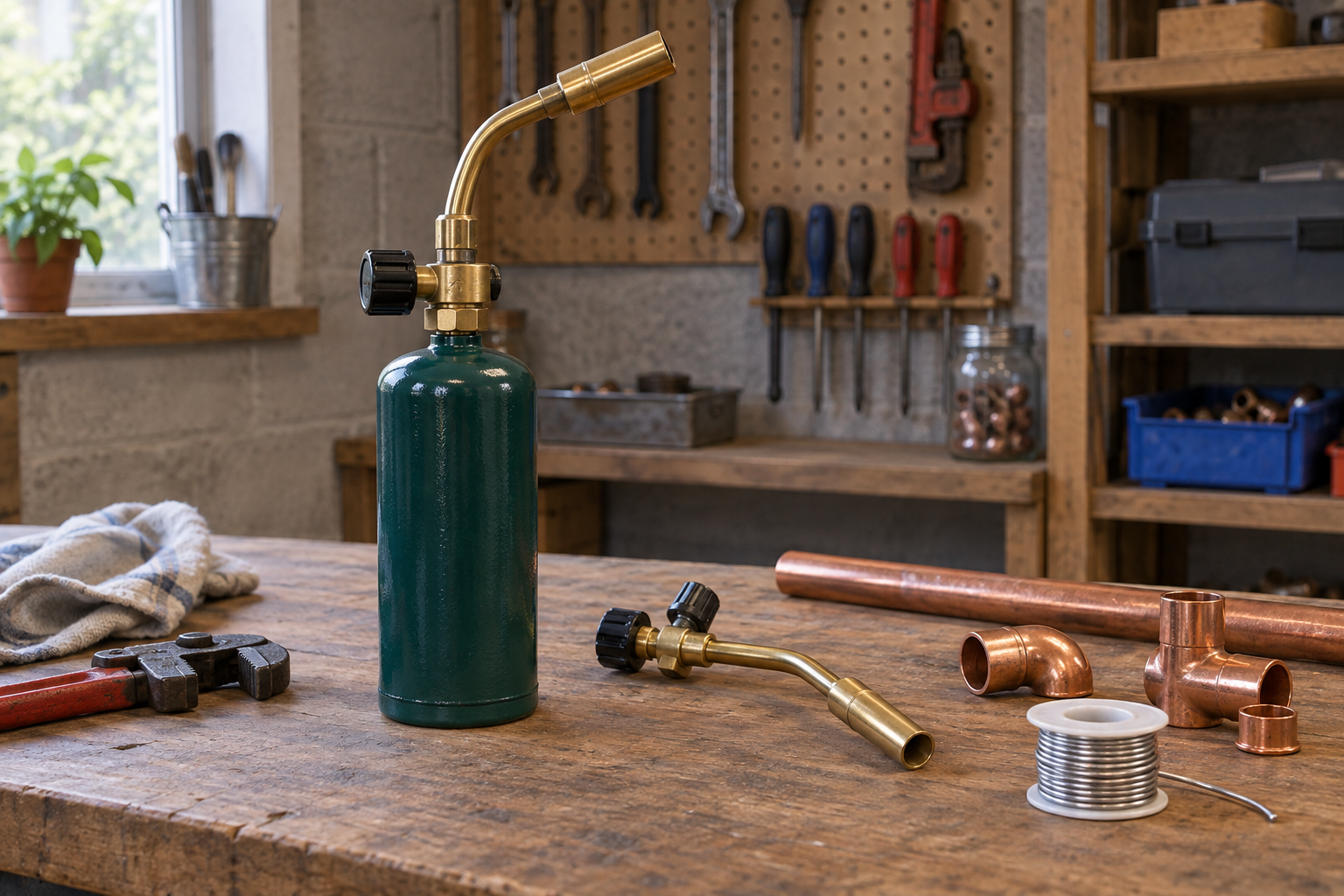
A cordless butane torch for plumbing soldering is the practical portable choice for most copper repairs. It needs no battery, heats pipe quickly, and works with common lead-free plumbing solder. The trade-off is an open flame, hot surfaces, fuel refills, and more concern about wood, insulation, and wall cavities.
Battery-powered options and their limits
Cordless heat guns can be useful for shrinking tubing, softening plastic pipe, removing labels, thawing a frozen exposed line, or warming a joint before disassembly. They typically run for a limited time on a compact battery, and airflow reduces the effective temperature at the workpiece. They are not normally the first tool to buy for copper sweating.
A battery soldering iron makes sense if your plumbing work includes low-voltage wiring, pump controls, thermostat leads, or appliance repairs. Choose one with adjustable temperature, a replaceable tip, and a stand or automatic shutoff. For pipework, however, spend the money on a proper torch rather than buying a more powerful-looking electronics iron.
If you already own a major battery platform, a cordless heat gun compatible with your battery system can be a convenient addition. “Tool only” versions are cheaper when you have batteries and a charger, but the battery adds noticeable weight at the end of the tool. A 4Ah or larger pack usually gives more usable runtime than a small compact pack, though it can make overhead work tiring.
| Tool type | Best use | Main limitation | Typical buying advice |
|---|---|---|---|
| Butane plumbing torch | Copper pipe soldering and small brazing jobs | Open flame and fuel handling | Best value if you need to sweat fittings |
| Cordless heat gun | Heat-shrink tubing, plastic work, thawing exposed lines | Buy into your existing battery platform | |
| Cordless soldering iron | Wires, terminals, and control wiring | Cannot heat normal plumbing fittings evenly | Useful only for electrical portions of a repair |
| Induction heating tool | Flameless heating of metal joints | High cost and limited availability | Worth considering for frequent professional work |
Battery platform buying decisions
For occasional homeowners, the cheaper option is often fine: a small butane torch, a basic heat gun, and no new battery ecosystem. Do not buy an entire 18V or 20V platform just to power one heat tool unless you also need drills, lights, fans, or other cordless equipment.
For regular maintenance work, staying within one platform is more important than chasing the highest advertised temperature. One charger and several interchangeable packs are easier to manage than separate chargers for every tool. Look for a platform with readily available batteries, a warranty that covers the tool, and a heat gun with a clear temperature rating and replaceable nozzle.
A rechargeable cordless soldering iron is a sensible low-cost choice for wiring repairs. It is not a substitute for a torch. Check warm-up time, battery capacity, tip availability, and whether the tool shuts off automatically. A tool that reaches working temperature in under a minute is more convenient for intermittent repairs than one that requires a bench power supply.
How to solder copper without creating a failure
Shut off the water and drain the pipe completely. Even a small amount of trapped water can keep the joint below soldering temperature and cause a porous, leaking connection. Cut the pipe square, deburr both parts, and clean the outside of the pipe and inside of the fitting until they are bright. Apply a thin coat of compatible plumbing flux, then assemble the joint fully.
Heat the fitting rather than aiming all the heat at the solder. Touch solder to the opposite side of the joint; when the copper is hot enough, solder will melt on contact and draw around the fitting. A 1/2-inch joint may take only a few seconds with a suitable torch, while a larger fitting, damp pipe, or heat-sinked valve takes longer. Do not keep heating after solder has flowed all the way around.
Common failure modes include incomplete cleaning, movement while the solder cools, overheating the flux until it turns black, and failing to protect nearby materials. Wipe excess flux from the finished joint because active residue can corrode copper. Let the joint cool naturally before pressurizing and inspect for a continuous solder bead around the circumference.
When flameless heat is worth considering
Use a flameless system when an open flame is unacceptable near finished walls, insulation, or combustible construction. Induction tools heat compatible metal fittings through an electromagnetic field and can produce clean, controlled results. They are expensive, and the correct coil or accessory is required for each fitting size. For one or two household repairs, hiring a plumber or using a carefully controlled torch is usually cheaper.
For most buyers, the sensible kit is a quality butane plumbing torch for copper, a cordless heat gun only if the existing battery platform already supports one, and a small rechargeable soldering iron for wiring. Matching each tool to its actual heat-transfer job prevents cold plumbing joints and avoids paying for a battery ecosystem that the repair never needed.
Related guides
- Longest Lasting Lawn Mower Battery: AGM vs Lithium vs Flooded Lifespan and Cost per Season
- Duralast Gold Lawn Mower Battery Review: U1 Fit, CCA and When to Pay for AGM
- Greenworks Pro 80V 21-Inch Mower Review: Runtime Math, Push vs Self-Propelled and Yard Fit
- Bosch High Pressure Washer Gun Replacement: Fittings, Adapters and What Fits Your Model