What's inside
As an Amazon Associate I earn from qualifying purchases. This post may contain affiliate links at no extra cost to you.
What a service-bay vacuum needs to do
A cordless vacuum in a vehicle service bay is best for quick cleanup: crumbs from a footwell, dust around a seat rail, or debris from a workbench. It is not a replacement for a shop vacuum when you need to collect a large volume of liquid, metal chips, or heavy grinding dust. Choosing for those jobs usually means a small bin, short runtime, and a clogged filter.
For routine interior work, prioritize usable suction, a sealed filter, a hose or crevice tool that reaches under seats, and a bin that is easy to empty without spreading dust. Check the stated capacity and weight, but treat runtime claims as best-case figures: suction mode, filter condition, and the battery’s amp-hour rating all matter. A compact vacuum may be easy to carry but require frequent emptying; a larger unit can be awkward around pedals and seat tracks.
As an Amazon Associate we earn from qualifying purchases at no extra cost to you.


Choose a form factor for the cleanup
Handheld vacuums are the easiest to grab for a quick interior pass. They suit dry debris and tight spaces, but their small bins and short hoses can make a whole-vehicle clean slow. Backpack and box-style cordless vacuums typically offer more capacity and a longer hose, which helps for repeated work across multiple vehicles. They cost more and take up more storage space.
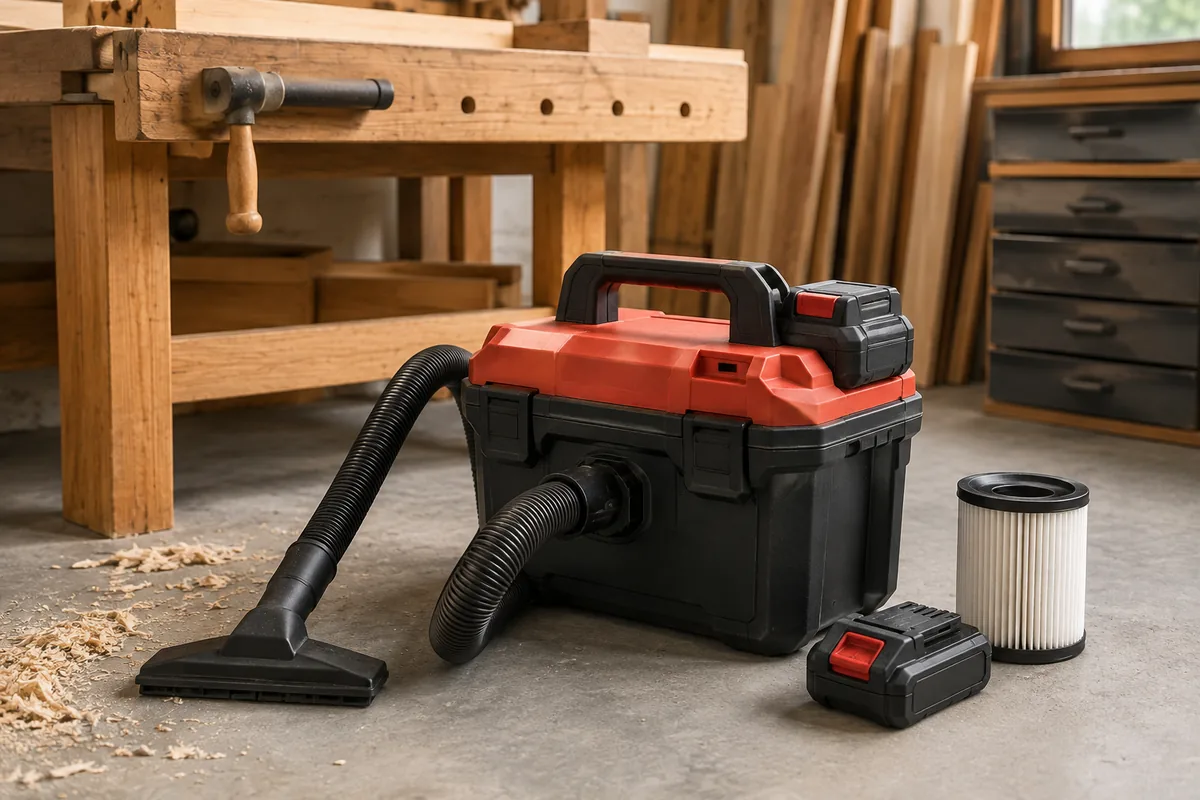
If technicians already use a cordless tool platform, a bare-tool vacuum can be an economical addition. The shared battery and charger may matter more than a small difference in advertised suction. Start by checking which batteries the vacuum accepts; some tools work only with specific battery families or require an adapter that may not be approved for the tool. If there is no compatible battery on hand, include the cost of a battery and charger before comparing prices.
For a dedicated interior-cleaning setup, compare cordless handheld car vacuums with cordless backpack vacuums for tool batteries. Confirm battery compatibility and whether the listed price includes a battery before ordering.
Comparison by job
| Vacuum type | Best fit | Advantages | Trade-offs |
|---|---|---|---|
| Compact handheld | One-off crumbs and light dust | Fast to grab; easy to store | Small bin; limited reach and runtime |
| Tool-platform handheld | Small cleanup jobs where batteries are already available | Uses the shop’s battery ecosystem; replaceable battery | Battery adds weight; bare-tool price can be misleading |
| Backpack or larger portable unit | Repeated interior cleaning across several vehicles | More capacity; hose reaches farther | Higher cost; bulkier to store and carry |
| Corded wet/dry shop vacuum | Large messes, liquids, and long cleanup sessions | No battery-runtime limit; often better suited to bulk pickup | Needs an outlet and cord management |
For routine work, capacity and access are practical measures, not minor details. If a bin holds only a few cups of debris, expect to empty it often when cleaning several cars. A longer hose can save time reaching rear footwells, but a loose or narrow hose can reduce airflow or clog on larger scraps. Inspect the supplied attachments and check whether replacement filters are readily available.
Battery runtime and charging
Battery capacity is commonly given in amp-hours (Ah). Within a compatible voltage platform, a 5 Ah battery generally stores more energy than a 2 Ah battery, but it is also heavier and may take longer to charge. That does not translate directly into a guaranteed cleaning time: high suction can drain a pack quickly, while a partially blocked filter makes the vacuum work harder. Look for runtime information tied to a stated battery size and operating mode, and treat it as an estimate rather than a promise.
For occasional spot cleaning, a smaller battery is often enough, especially if the crew has charged spares. For several vehicles in a row, a second pack can be more useful than chasing a higher suction figure. Check the charger’s charge time for the battery size you plan to use. A single charger shared with saws and impact wrenches may leave the vacuum waiting during a busy shift.
If the platform is not already chosen, compare the vacuum, battery, and charger as a package. A bare-tool cordless shop vacuum makes sense when the shop already owns compatible batteries; otherwise, a kit or a corded unit may deliver better value. Verify voltage and battery-family compatibility rather than relying on a brand name alone.
Filters, dust, and liquids
Fine dust is a common failure point. A basic filter can load quickly with sanding dust, reducing airflow and making a vacuum seem weak. Use the filter type specified for the tool, and clean or replace it as directed. Do not vacuum fine dust or liquids unless the manufacturer says the vacuum and filter are suitable for that material. A wet/dry label does not mean every cordless handheld can safely collect water.
Keep sharp metal chips out of small vacuums when possible. They can damage a filter, scratch the bin, or lodge in the airflow path. For large quantities of chips, coolant, or debris from a repair bay, a properly rated shop vacuum is the safer, less frustrating choice. Never pick up flammable liquids or hot ash with a general-purpose vacuum.
A practical buying checklist
Before buying, confirm the battery platform, bare-tool versus kit pricing, bin capacity, hose reach, filter type, and availability of replacement filters and attachments. Check the weight with a battery installed, not just the tool-only figure. In a service bay, a vacuum that is uncomfortable to hold for ten minutes may get used less, even if its peak suction is higher.
Spend more when several technicians will use the vacuum daily, when the hose and capacity save repeated trips to the bin, or when the shop needs multiple cleanups between charges. Choose a lower-cost handheld if the job is occasional crumbs and light dry debris, and batteries are already on the shelf. For sustained cleaning, liquid pickup, or heavy debris, buy the right shop vacuum instead of asking a small cordless unit to do work it was not built for.
Related guides
- Longest Lasting Lawn Mower Battery: AGM vs Lithium vs Flooded Lifespan and Cost per Season
- Duralast Gold Lawn Mower Battery Review: U1 Fit, CCA and When to Pay for AGM
- Greenworks Pro 80V 21-Inch Mower Review: Runtime Math, Push vs Self-Propelled and Yard Fit
- Bosch High Pressure Washer Gun Replacement: Fittings, Adapters and What Fits Your Model