What's inside
As an Amazon Associate I earn from qualifying purchases. This post may contain affiliate links at no extra cost to you.
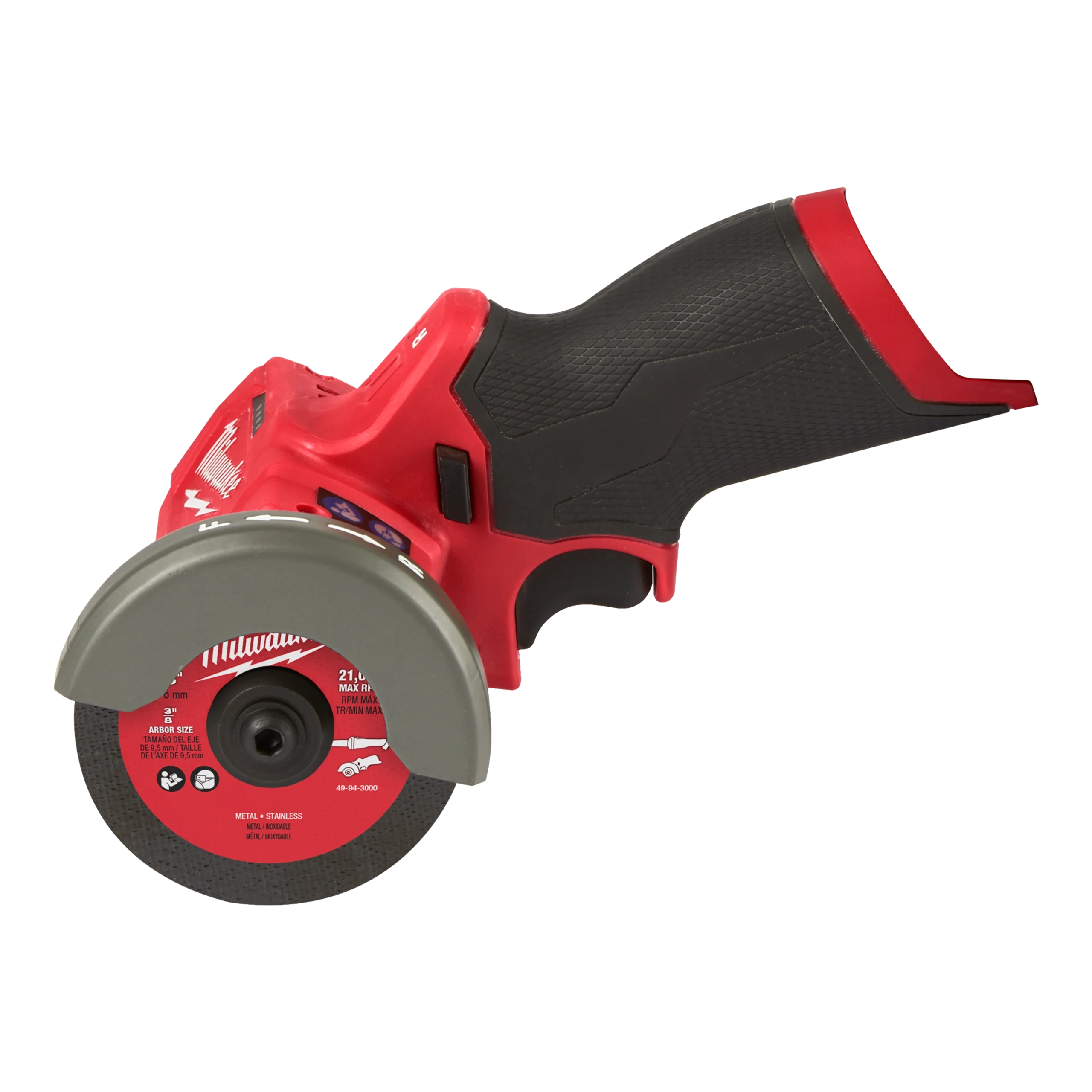
Cutting electrical conduit and sheet metal is easy to do badly with a cordless cutoff tool. The right machine makes fast, square cuts; the wrong one produces a warped edge, overheats thin stock, or throws abrasive dust into every opening in the work area.
For most electricians and installers, the best choice is a compact cordless metal-cutting tool that accepts 3- to 5-inch wheels. A larger 6- or 7-inch grinder cuts deeper, but it is heavier and less pleasant for overhead conduit work. Before buying, choose the battery platform you already use whenever possible. The tool is only part of the cost; batteries and a charger can add $100 or more.
As an Amazon Associate we earn from qualifying purchases at no extra cost to you.


What to Look For
For 1/2-inch through 2-inch EMT, a 3-inch or 4-1/2-inch cutoff tool is usually enough. A 4-1/2-inch wheel offers roughly 1-1/4 inches of practical cutting depth, depending on the guard and wheel diameter. That covers common conduit and most light-gauge sheet metal, but not a large stack of angle iron or thick plate.
Look for a brushless motor, a tool-free or easily adjustable guard, a spindle lock, and a two-stage trigger or lock-off. Electronic brake and overload protection are useful when a wheel binds. Variable speed is less important for ordinary steel conduit, but it helps when cutting thin aluminum, stainless steel, or plastic-compatible accessories. A paddle switch gives good control but can be awkward with gloves; a slide switch is easier for continuous cuts but is less convenient to shut off quickly.
Battery size affects handling more than many buyers expect. A compact 2.0Ah or 3.0Ah pack keeps the tool light for overhead work. A 5.0Ah pack runs longer and usually maintains power better under load, but it makes a small cutoff tool noticeably more tiring. For repeated conduit work, two mid-size batteries are often more useful than one very large pack.
The Best Cordless Tool Types
| Tool type | Best use | Main advantage | Main drawback |
|---|---|---|---|
| Compact 3-inch cutoff tool | EMT, MC cable armor, thin sheet metal | Light, controllable, easy in tight spaces | Shallow cut depth and smaller wheel selection |
| 4-1/2-inch cordless angle grinder with cutoff guard | Regular conduit work and occasional heavier stock | More power and broader accessory availability | Heavier; more temptation to use the wrong guard |
| Dedicated cordless metal-cutting saw | Repeated straight cuts in conduit and sheet | Cleaner, faster cuts with better work support | Bulky and less useful in cramped installations |
| Cordless band saw | Many conduit cuts, strut, threaded rod, and tubing | Minimal sparks and controlled cutting | Costs more and does not handle broad sheet well |
A compact cutoff tool is the practical all-rounder for service work. Search for cordless 3-inch metal cutoff tools if you work mostly in panels, junction boxes, and finished spaces.
A 4-1/2-inch grinder is the better buy for a mixed tool collection. It can use cutoff wheels, grinding wheels, flap discs, and wire wheels, so it earns its space on a truck. However, it must have the correct cutoff guard for cutoff wheels. Never use a grinding guard as a substitute, and never use a cutoff wheel for side grinding.
Choosing the Battery Platform
The cheapest tool is often the one that uses batteries you already own. Platform compatibility matters more than a small difference in advertised voltage. A contractor already invested in a 20V-class or 18V-class ecosystem should usually buy the matching bare tool, assuming the platform has a brushless cutoff tool or grinder.
For a first cordless system, compare more than tool price. Check the cost of a starter kit, replacement batteries, charger speed, and whether the platform has compact packs. A high-output 5.0Ah battery can reduce bogging in thick conduit, but a compact pack may be the better choice for dozens of overhead cuts. If you need all-day production, a fast charger and three batteries can matter more than peak motor specifications.
Cheaper brushed tools are fine for occasional home projects: cutting a few pieces of EMT, trimming flashing, or installing a small shed panel. Expect more noise, shorter runtime, and brushes that eventually wear. For daily electrical work, the extra cost of brushless electronics is easier to justify because the tool runs cooler and generally handles repeated starts better.
Wheels and Accessories
Use thin abrasive cutoff wheels rated for the tool’s maximum RPM. A 0.040-inch wheel cuts sheet and thin-wall conduit quickly but is easier to bend or break. A 0.045- or 0.060-inch wheel lasts longer and tolerates rougher handling, though it removes more material and creates a wider kerf.
For galvanized EMT, expect sparks and a sharp burr. For stainless steel, use wheels specifically intended for stainless and avoid contaminating the cut with ordinary steel particles. Aluminum usually cuts better with a blade or accessory designed for aluminum; a standard abrasive wheel can load up and grab. For a selection of compatible accessories, compare thin metal cutoff wheels by diameter, thickness, and RPM rating rather than package count alone.
Keep a file or deburring tool beside the cutoff tool. A cut that looks clean can leave a burr large enough to damage wire insulation. On conduit, deburr both the inside and outside edge, then install the proper bushing or fitting. Do not rely on tape as a substitute for deburring.
A Safer Cutting Method
Clamp or firmly support the work, mark the cut, and let the wheel reach full speed before touching the metal. Keep the wheel in line with the cut and use light pressure. Pinching is the common failure mode: unsupported conduit closes on the wheel, the wheel binds, and fragments can eject toward the operator.
For sheet metal, support both sides of the cut and avoid twisting the tool. Cutting a long free edge without support makes the sheet vibrate and can grab the wheel. Wear eye protection plus a face shield for abrasive wheels, hearing protection, gloves that do not have loose cuffs, and nonflammable clothing. Control sparks, especially around insulation, sawdust, solvents, and occupied buildings.
Before cutting installed conduit, verify that it is de-energized and identify hidden wires, gas lines, and plumbing. A cordless tool avoids an extension cord, not the need for a lockout and voltage test. For frequent clean cuts in occupied or spark-sensitive areas, a cordless portable band saw is often the smarter upgrade despite its higher purchase price.
Related guides
- Longest Lasting Lawn Mower Battery: AGM vs Lithium vs Flooded Lifespan and Cost per Season
- Duralast Gold Lawn Mower Battery Review: U1 Fit, CCA and When to Pay for AGM
- Greenworks Pro 80V 21-Inch Mower Review: Runtime Math, Push vs Self-Propelled and Yard Fit
- Bosch High Pressure Washer Gun Replacement: Fittings, Adapters and What Fits Your Model