Our Top Picks
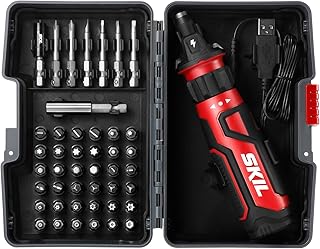
 SKIL Rechargeable 4V Cordless Screwdriver with Circuit SensorOne Size6.89 x 4.72 x 2.8 inches1.7 PoundsCheck on Amazon
 SKIL Rechargeable 4V Cordless Screwdriver Includes 9pcs BitOne Size5.47 x 5 x 1.65 Inches1.34 poundsCheck on Amazon


What's inside
As an Amazon Associate I earn from qualifying purchases. This post may contain affiliate links at no extra cost to you.
Ask a framer what matters in a drill and they will say torque. Ask an electrician and they will say length. Almost all electrical work happens in confined spaces — panels, boxes, joist bays, ceiling voids — and a tool that will not fit is a tool that does not work. That is why the best cordless tools for electricians look almost nothing like the tools on the front of the catalogue.
That is also why the best electrical kit looks different from a general construction kit. A framer fights wood, and torque wins that fight. An electrician fights geometry, and nothing wins that fight except a shorter, lighter tool. So this list is ordered by how often you will reach for each item on a normal working day, not by price and not by how good the tool feels in the aisle.
As an Amazon Associate we earn from qualifying purchases at no extra cost to you.




How to judge a tool for this trade
Four things decide whether a tool earns space on your cart, and none of them are printed in large type on the box.
- Head length. The distance from the back of the housing to the nose of the chuck. This is the number that decides whether you can drive a screw inside a mounted box or between two joists.
- Weight at the wrist. Anything you hold overhead is judged by the minute, not by the spec sheet. A tool you can run one-handed above your head beats a stronger one you cannot.
- Battery footprint. The pack often adds more bulk and length than the tool does. A slim battery can be the difference between working in a panel and working around it.
- Platform depth. How many trade-specific tools the brand actually makes in the small voltage class, because that decides what your next five purchases cost.
When those criteria conflict, the order is length, then weight, then runtime, then torque. That order sounds wrong to anyone from another trade and it is correct here: you can always drill a hole slower, but you cannot make a tool shorter. The one thing worth spending real money on regardless of size is a brushless motor, because these tools run hundreds of short cycles a day and heat is what kills them.
The best cordless tools for electricians, in buying order
1. A 12V sub-compact drill/driver
The most-used tool of the trade. Light enough to hold overhead for an hour, short enough to fit in a panel, and controllable enough for device screws that strip if you look at them wrong. Milwaukee’s M12 range is the deepest here, and it is the main reason many electricians choose the platform.
At the bottom of the market you get a brushed motor, a plastic-jaw chuck and a single gear — fine for a homeowner, wrong for someone driving several hundred fasteners a day. The step up buys a brushless motor, a two-speed metal gearbox and an all-metal chuck that still grips a worn hex bit two years in. Above that you are paying for clutch precision, a better work light and small ergonomic wins, which are worth it because this is the tool in your hand all day.
Buy it first if your work is devices, plates, straps and boxes. Make it your second drill if your day is boring 3/4-inch holes with an auger. The common mistake is treating a sub-compact as your only drill — it is a finesse tool, and it will disappoint you in a joist bay.
12V sub-compact drill kits
Short head, light body, plenty of power for device screws and small holes. If you buy one tool from this list, buy this.
2. Right-angle drill or attachment
Drilling through studs in a stud bay is the classic electrical problem. A dedicated right-angle drill solves it; a right-angle attachment on your existing drill solves it more cheaply. Judge attachments on the gearcase — metal housings and hardened gears survive, cheap plastic ones flex and round out under an auger bit. Judge dedicated right-angle drills on how well you can brace them: a side handle you can get a shoulder behind, plus a clutch or anti-kickback response, because a self-feed bit that grabs will try to take your wrist with it.
Skip the dedicated tool if you work commercial ceilings, where the job is strut, tray and open space. Buy it if you rough in houses week after week. And do not bolt an attachment onto an impact driver expecting auger performance — the hammering wrecks the hex and the bit never gets a steady bite.
Right-angle drill attachments
A $30 attachment that turns your existing drill into a stud-bay tool. Buy this before a dedicated right-angle drill.
3. Compact band saw
Cutting conduit, strut and threaded rod cleanly, without sparks, without a grinder. Once you own one you stop reaching for a recip saw. The compact class covers the sizes an electrician actually cuts all day; deep-cut models exist for large rigid and heavy tray, and you pay for that capacity in length and weight.
What separates a good one is the small stuff: tool-free blade changes, a shoe you can hook on the work, a light that points where the blade is, and a guard you can manage one-handed on a ladder. Match the blade to the material using the old rule of three teeth in the cut — finer tooth counts for thin-wall conduit, coarser for solid rod. The wrong blade strips its teeth in a single cut, which is how most people conclude their saw is bad.
Skip it if you only pull cable in houses. Buy it early if you work occupied or finished space, where sparks mean a hot work permit and a fire watch.
Compact cordless band saws
Deburring afterwards takes seconds instead of minutes. Blades are a consumable — buy spares.
4. Knockout tool (or a good hand punch)
Cordless knockout tools are expensive and brilliant. If you punch panels regularly, they pay back fast. If you do it twice a year, keep a manual hydraulic punch instead, and use a good step bit for the small trade sizes in thin sheet.
The things that matter are die quality, hardened and replaceable draw studs, and clean ram alignment. A cheap set fails by snapping a stud or cocking a die in a panel that is already mounted, which turns a two-minute job into a bad afternoon. Check the kit contains the sizes you actually punch rather than a wide spread you will never touch, and confirm dies and studs are sold separately when you eventually break one.
5. Impact driver
Yes, still. Strut, lag bolts, backing plates and every mounting job. Compact model, not full-size, because head length matters here for the same reason it does on the drill. Look for multiple torque modes and a self-tapping screw setting that eases in and then backs off, plus a belt hook and a light that is not blocked by the bit.
The mistake is reaching for it on device screws. An impact will chew the slot, crack the yoke and over-torque terminals long before you feel it happen — that work belongs to the clutch on your drill/driver.
6. Cable and wire tools
Cordless cable cutters for large feeders, and a decent set of strippers and a fish tape system. These are trade-specific and they matter more than another drill. Cordless cutters only earn their price if you cut large feeders regularly; ratcheting hand cutters do the same job slower for a fraction of the money. For fishing, steel tape suits long conduit runs and fibreglass rods suit walls and ceilings, so most people end up owning both.
On hand tools, the cheap end shows up fast: strippers that gouge conductors, return springs that die, cutting edges that dent on solid copper. Mid-range is where the value sits, and insulated means rated to 1000V rather than dipped in coloured plastic.
Electrician hand tool sets
Strippers, linesman pliers, diagonal cutters and a set of insulated screwdrivers. Insulated matters — buy properly rated tools.
Where money gets wasted
- Buying an 18V hammer drill kit first because it is the best value per tool, then discovering it will not fit the work.
- Buying only high-capacity batteries, which are the worst possible choice for overhead work.
- Buying the big bundled combo kit for the discount and replacing half of it within a year.
- Upgrading the tool instead of the consumable. A proper auger set, sharp step bits and fresh band saw blades change your day more than a newer drill does.
Platform advice for this trade
The reason a two-voltage setup from one brand works is boring and practical: one charger family, one battery strategy, and the small-tool line is where the trade-specific products live. If you are already committed elsewhere, the sub-compact drill and the right-angle option exist on every major platform — the gap is usually knockouts and cable cutters, which you can buy off-platform or manual without regret.
- ✔ Milwaukee M12 + M18 is the strongest combination for electrical work
- ✔ Prioritise tool length and weight over torque figures
- ✔ Buy compact batteries for overhead work, large ones for the cart
- ✔ Insulated hand tools are not optional
- ✘ Full-size hammer drills — mostly the wrong shape for this trade
- ✘ 60V platforms — no electrical task needs them
- ✘ Cheap knockout tools — this is a category where failure is expensive
FAQ
Is M12 powerful enough? For device work, boxes and small holes, comfortably. Keep an 18V drill for auger bits through studs, and stop trying to make one drill cover both jobs.
Band saw or recip saw for conduit? Band saw, every time — cleaner cut, less deburring, safer in a finished space. Keep the recip saw for demo and awkward blind cuts.
Do I need a dedicated right-angle drill? Only if you drill studs daily. Otherwise the attachment is fine, and the money is better spent on bits.
What should an apprentice buy first? The 12V drill/driver kit with two compact batteries, a properly rated insulated hand tool set, and a right-angle attachment. Everything else on this list can wait until a specific job forces the purchase.
Compare electrician tool kits →