What's inside
As an Amazon Associate I earn from qualifying purchases. This post may contain affiliate links at no extra cost to you.
A buyer searching for “how to use a pressure cooker” typically faces two separate problems: the confusion of choosing a pot and the anxiety of operating one safely. Modern electric and stovetop models vary widely in capacity, pressure levels, and safety mechanisms, and a single mismatch — a cooker too small for family cooking or too complex for a first-timer — can end up abandoned in a cabinet. Owner feedback consistently shows that the deciding factors are not brand prestige but whether the lid seals intuitively, whether the pressure valve is easy to read, and whether the included guidance actually explains timing for real meals.
What separates a good choice from a disappointing one in this category is the alignment between the buyer’s kitchen habits and the cooker’s design. A single person reheating soup each night needs something compact and forgiving, while a household preparing beans and grains in bulk benefits from a larger vessel with multiple preset programs. The roundup below compares eight products on published specifications, listed prices, and recurring themes from owner reviews — covering cookware, cookbooks, and combinations of both.
As an Amazon Associate we earn from qualifying purchases at no extra cost to you. Product prices and availability are accurate as of the date shown and are subject to change.


Quick Picks
| Product | Best for | Price |
|---|---|---|
| How to Use a Pressure Cooker (book) | Beginners needing recipe guidance | $11.99 |
| T-fal Clipso 6.3 Quart | Induction stove owners wanting stovetop speed | $96.99 |
| COMFEE’ 12-in-1 6 Quart | Multi-appliance value on a budget | $70.07 |
| Instant Pot Duo 6 Qt | Proven ecosystem with extensive support | $107.30 |
| Hawkins 4 Litre Classic | Indian-style dal, rice, and vegetable cooking | $38.45 |
| Cosori 9-in-1 6QT | Ceramic-coated nonstick without PFAS concerns | $80.99 |
| Deeluban 3.17 Quart | Couples and solo cooks with small kitchens | $55.99 |
| Hawkins 2 Litre Classic | Minimum space, single-portion meals | $23.49 |
How We Picked
We evaluated each product on four criteria that owner reviews repeatedly identify as failure points: ease of the locking and sealing mechanism, clarity of pressure indicators, capacity appropriateness for the stated audience, and durability of the finish under regular heat cycles. Price-to-feature ratio served as a secondary filter, ensuring that budget options were not penalized for lacking premium extras but were still held to basic safety standards.
The 8 Best How To Use A Pressure Cooker in 2026
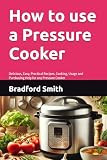
How to Use a Pressure Cooker (Book)
This guide addresses the most common barrier to entry: not knowing what to cook once the pot is in the pantry. It covers usage instructions, purchasing advice, and practical recipes applicable to any brand of pressure cooker.
- Pro: Universal applicability across stovetop and electric models means it outlasts a single-appliance manual.
- Pro: Extremely low entry price makes it a safe addition alongside any pot purchase.
- Con: No substitute for the specific safety warnings tied to a particular cooker’s valve system.
Skip this if you already own an electric model with a thorough companion app or recipe library built in.
T-fal Clipso 6.3 Quart
The Clipso is a stainless steel stovetop pressure cooker with an adjustable pressure valve and an easy-open lid. Its secure locking system and induction compatibility make it suited to cooks who prefer the tactile control of a stove burner over digital presets.
- Pro: Adjustable valve lets experienced cooks fine-tune pressure between low and high settings.
- Pro: Induction-ready base with even heat distribution across the full cooking surface.
- Con: At nearly a hundred dollars, it costs more than some comparable electric models with built-in presets.
Pass on it if you want hands-off, timer-based cooking with no burner monitoring.
COMFEE’ 12-in-1 Electric Pressure Cooker
This electric unit bundles twelve functions — pressure cooking, slow cooking, saut\u00e9ing, steaming, and more — into a six-quart body with a nonstick inner pot. It targets buyers who want to consolidate countertop appliances without paying a premium brand markup.
- Pro: Twelve preset modes reduce the need for a separate rice cooker or slow cooker.
- Pro: Nonstick pot simplifies cleanup compared to bare stainless interiors.
- Con: Nonstick coatings degrade faster under frequent high-pressure use than ceramic or stainless options.
Skip it if you plan daily use over several years and want the longest possible coating life.
Instant Pot Duo 6 Qt 7-in-1
The Duo remains one of the most widely owned electric pressure cookers, offering seven functions in a six-quart stainless steel body. Its strength lies in the enormous volume of community recipes, troubleshooting threads, and third-party accessories available for it.
- Pro: Unmatched recipe and support ecosystem reduces the learning curve dramatically.
- Pro: Stainless steel inner pot tolerates high-heat searing and acidic ingredients without coating concerns.
- Con: Slightly higher price than feature-equivalent competitors with identical capacity.
Skip it if your local store already stocks a well-reviewed alternative at a lower price.
Hawkins 4 Litre Classic
The Hawkins Classic uses an inner lid design that distributes steam evenly and whistles to signal pressure. Its four-litre capacity suits households cooking rice, dal, and mixed vegetables in bulk, and the stainless body handles gas and induction stovetops alike.
- Pro: Whistle signal eliminates guesswork about when pressure is reached.
- Pro: Inner lid design makes thorough cleaning easier than top-loaded gasket systems.
- Con: Whistle volume can startle first-time users who expect a silent electric unit.
Skip it if you prefer programmable timers and automatic shut-off with no stovetop attention.
Cosori 9-in-1 Pressure Cooker
Cosori’s six-quart electric cooker features a ceramic-coated inner pot and twelve safety features, aiming at buyers who want nonstick convenience without traditional coating materials. Nine preset modes cover the most common pressure cooking tasks.
- Pro: Ceramic coating offers nonstick performance with better heat tolerance than standard PTFE layers.
- Pro: Twelve safety features exceed the minimum found in budget electric models.
- Con: Ceramic pots can chip if struck against metal utensils, requiring careful handling.
Skip it if you frequently use metal spoons or immersion blenders directly inside the pot.
Deeluban 3.17 Quart Stainless Steel
This compact stovetop cooker targets one- and two-person households. Its thickened stainless body promotes even heat distribution, and the set of safety valves and safeguard devices provides multiple pressure-release paths.
- Pro: Small footprint fits tight countertops and stores easily in shallow cabinets.
- Pro: Multiple safety valves and safeguard devices add redundancy for a basic design.
- Con: Capacity is limiting for anyone cooking for three or more regularly.
Skip it if your household size exceeds two or you batch-cook for the week.
Hawkins 2 Litre Classic
The two-litre Hawkins is the smallest option in this roundup, built on the same inner-lid and whistle design as its larger sibling. It is sized for single portions, baby food, or small-batch grains.
- Pro: Lowest price in the group by a wide margin, making experimentation risk-free.
- Pro: Lightweight enough to lift and store without straining a small kitchen.
- Con: Too small for most adult meals beyond single servings, limiting long-term utility.
Skip it if you ever need to cook more than one portion at a time.
Buying Guide
Capacity vs. Household Size
Pressure cooker capacity is not a one-to-one match with pot volume. Most manufacturers recommend filling only two-thirds for general foods and one-half for items that expand, such as rice or beans. A six-quart cooker realistically yields about four quarts of finished food, which covers two to three adult portions. Singles and couples can operate comfortably in the three-quart range; families of four or more should look at six quarts or larger to avoid cooking in shifts.
Safety Mechanism Type
Stovetop models rely on weighted or spring-loaded valves and a pressure indicator window; electric units add internal sensors that cut heat automatically. Owner complaints cluster around two failure modes: gaskets that degrade and leak steam after one to two years, and float valves that stick in the raised position, trapping pressure. Look for models with replaceable gaskets and multiple pressure-release paths — at minimum a primary valve and a secondary safety vent — regardless of whether the unit is electric or stovetop.
Inner Pot Material
Stainless steel handles searing, acidic ingredients, and dishwasher cycles without degradation. Nonstick coatings reduce cleanup friction but lose effectiveness within a year or two under repeated high-heat use. Ceramic coatings sit between the two: better thermal tolerance than PTFE-based nonstick but still vulnerable to impact damage from metal tools. For long-term durability, stainless is the safe default; for low-maintenance cooking, ceramic offers a reasonable compromise.
Our Verdict
The Instant Pot Duo 6 Qt stands as the overall top pick because its stainless steel inner pot, seven-function coverage, and unmatched support ecosystem remove most of the friction that leads to abandoned appliances. For budget-conscious buyers who want a capable stovetop option, the Hawkins 4 Litre Classic delivers solid construction and the whistled signal at a fraction of the electric models’ cost. If household size is one or two and counter space is scarce, the Deeluban 3.17 Quart wins on footprint and safety redundancy over similarly priced options.
FAQ
Can I use any cookbook with my pressure cooker?
General pressure cooking guides apply across brands because core principles — liquid requirements, fill limits, and natural vs. quick release — are universal. Specific recipes calibrated to one cooker’s pressure level or wattage may need time adjustments when used in a different model.
How do I know when a stovetop pressure cooker has reached pressure?
Most stovetop models use either a rising indicator pin or a weighted valve that begins to rock and release steam in a steady rhythm. Whistle-style cookers like the Hawkins signal audibly, so the method depends on the design you own.
Are electric pressure cookers safer than stovetop models?
Electric units add automatic heat cutoff and multiple sensor-based locks, which reduce the chance of user error. Stovetop models have fewer electronic components but depend more on the cook watching for indicator signals. Both categories are safe when used according to the manufacturer’s instructions.
What is the difference between natural release and quick release?
Natural release means allowing the cooker to depressurize on its own over several minutes, which keeps liquids from splattering and helps delicate foods finish gently. Quick release vents steam manually through the valve, cutting total time but risking foaming with starchy or liquid-heavy contents.