What's inside
As an Amazon Associate I earn from qualifying purchases. This post may contain affiliate links at no extra cost to you.
What matters on a cabinet assembly line
High-volume cabinet assembly is less about maximum torque than repeatable depth, manageable weight, and keeping batteries ready through a shift. A driver that sinks one screw perfectly and the next too deep can split a narrow rail, strip a hinge hole, or leave a head proud. For assembly work, choose a tool with a controllable trigger, a clutch or torque setting that behaves consistently, and a comfortable grip for several hundred fasteners a day.
First, match the tool to the screws. Confirm the manufacturer’s recommended pilot-hole size and fastening method for the cabinet material. Particleboard and MDF are especially unforgiving: overdriving can crush the surface or strip the hole, while an undersized pilot can cause splitting near an edge. Run a small test on offcuts of the same material, then check screw seating and holding strength before setting up a production workflow.
As an Amazon Associate we earn from qualifying purchases at no extra cost to you.


Choose the right kind of cordless driver
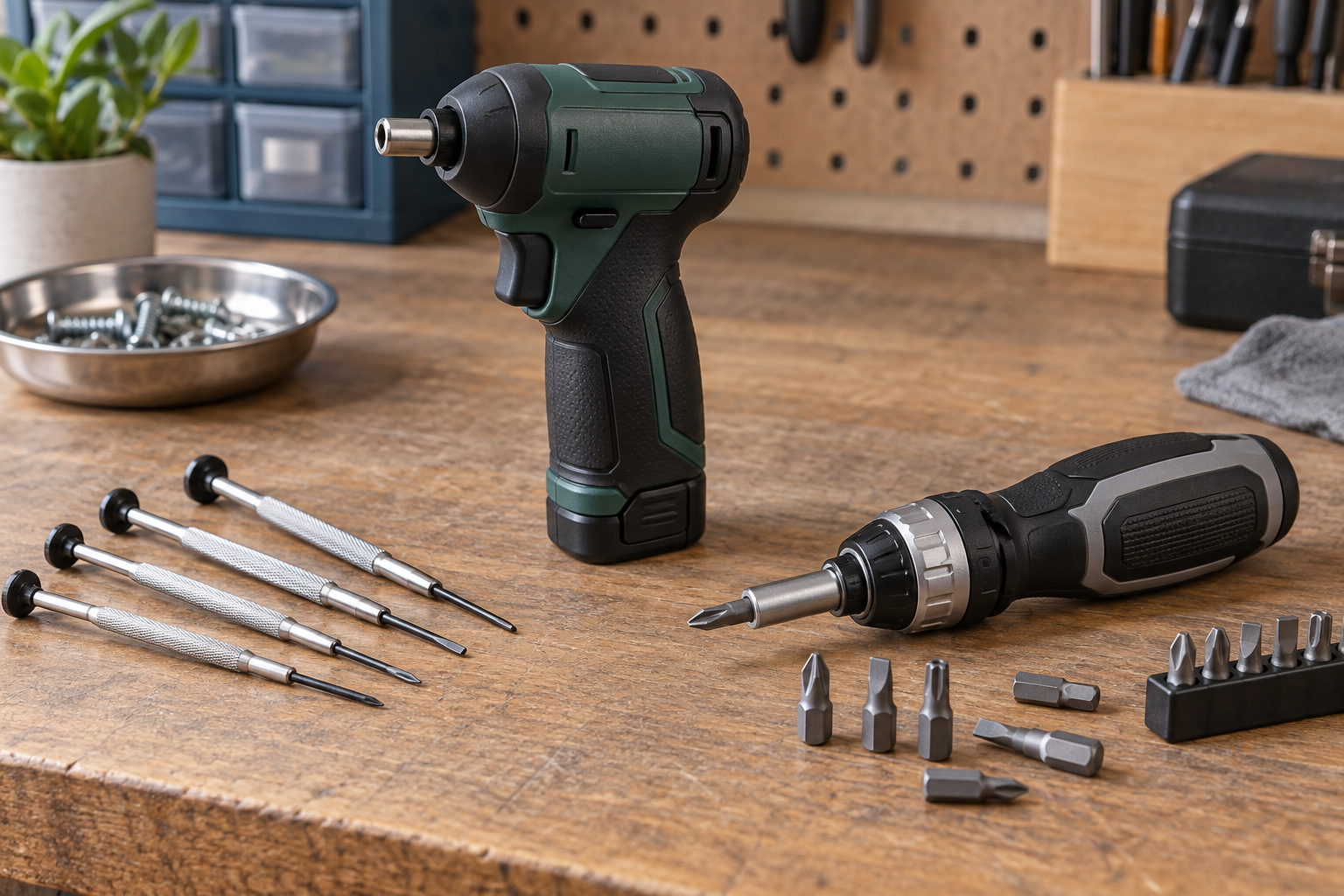
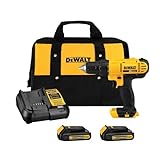
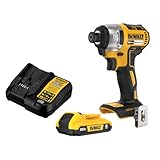
A compact drill/driver is the most versatile choice for a shop that also drills pilot holes. Its clutch helps limit overdriving, though clutch settings vary by tool and screw. A dedicated cordless screwdriver can be lighter and easier to control for repetitive assembly, but may lack the speed, chuck capacity, or torque needed for larger structural screws. An impact driver is useful for long or stubborn fasteners, but its hammering action and high output make it easier to damage cabinet material. It is rarely the best first choice for delicate, repetitive cabinet screws.
For most cabinet shops, start with a compact 18V drill/driver if you need one tool for assembly and drilling. If the work is almost entirely small screws, compare a cordless screwdriver with adjustable torque. Check that the tool accepts the bit style you use and that its lowest setting is gentle enough for your material.
Quick comparison
| Tool type | Best fit | Main trade-off |
|---|---|---|
| Compact drill/driver | Mixed drilling and screw assembly | Heavier than a dedicated screwdriver; clutch requires testing |
| Cordless screwdriver | Frequent small screws and light assembly | Less capable for drilling or large fasteners |
| Impact driver | Occasional long or resistant screws | More risk of stripping or crushing cabinet material |
| Corded screwdriver | Fixed bench, uninterrupted repetitive work | Cord limits movement and needs safe routing |
Plan batteries around the shift
Battery capacity is usually listed in amp-hours (Ah), but runtime depends on screw size, material, clutch setting, and how often the tool is used. A compact 2.0Ah pack reduces wrist fatigue; a larger pack can last longer but adds weight, which matters when driving overhead or reaching into a cabinet. Rather than buying the largest battery, test a representative pack through a normal work period and keep a charged spare available.
Battery and charger compatibility is platform-specific. If your shop already owns cordless tools, staying within that battery ecosystem can save money and reduce charger clutter. Verify the exact battery fit before ordering: brands may have different voltages, generations, or tool-only listings, and batteries are not universally interchangeable. For a new setup, compare the drill/driver kit with two batteries and a charger against bare-tool pricing plus the cost of packs you actually need. A bundled second charger is useful only if both charging points will be used.
Features worth paying for
A brushless motor can improve efficiency and service life, but it is not essential for every bench. In a fixed shop with moderate daily use, a less expensive brushed tool may be adequate if it has a good clutch and fits the operator. Brushless models often cost more; compare the complete kit price and warranty rather than assuming the motor label guarantees better assembly results.
Look for a short head length for working inside cabinet boxes, a belt hook or balanced grip if the tool is carried between stations, and a work light that reaches the screw location. A 1/4-inch hex chuck makes bit changes quick; a standard drill chuck gives more flexibility with round-shank bits. A two-speed gearbox is handy for switching between pilot drilling and driving. For production, a compatible compact right-angle attachment can help in tight corners, but it adds length and should be tested for access before purchase.
Set up to avoid rework
Use a fresh, correctly sized bit and replace it when it slips or rounds the screw recess. A worn bit wastes time and can make a good driver seem weak. Start with a low clutch setting, drive a sample screw flush, and increase only until it seats reliably. If clutch settings are too coarse or inconsistent, stop the tool as the head seats rather than relying on the number printed on the dial.
For high volume, keep screws sorted by length and head type, and use a magnetic bit holder only if it does not interfere with the screw or cabinet surface. Set the driver speed low enough to maintain control; maximum speed is not automatically faster when mistakes require repair. Check the first few assemblies after a material or screw change, then spot-check during the run. If screws repeatedly strip, investigate pilot size, screw choice, bit condition, and clutch setting before buying a more powerful tool.
When the cheaper option is enough
A lower-cost drill/driver is a sensible buy for occasional production, a small shop, or a tool that will see light daily use. It can assemble cabinets well if its clutch is predictable and the handle is comfortable. Spend more when operators use the tool for long shifts, the current one overheats or drains packs quickly, or poor depth control is causing measurable rework. For a stationary bench with a long, repetitive run, a corded screwdriver may also be worth considering: it avoids battery swaps, but the cord can snag, restrict movement, or become a trip hazard.
The practical choice is the lightest tool that drives your actual cabinet screws consistently, paired with enough batteries to keep work moving. Test before committing to a large fleet purchase; a short trial on real materials will reveal more than a torque figure on a box.
Related guides
- Longest Lasting Lawn Mower Battery: AGM vs Lithium vs Flooded Lifespan and Cost per Season
- Duralast Gold Lawn Mower Battery Review: U1 Fit, CCA and When to Pay for AGM
- Greenworks Pro 80V 21-Inch Mower Review: Runtime Math, Push vs Self-Propelled and Yard Fit
- Bosch High Pressure Washer Gun Replacement: Fittings, Adapters and What Fits Your Model