What's inside
As an Amazon Associate I earn from qualifying purchases. This post may contain affiliate links at no extra cost to you.
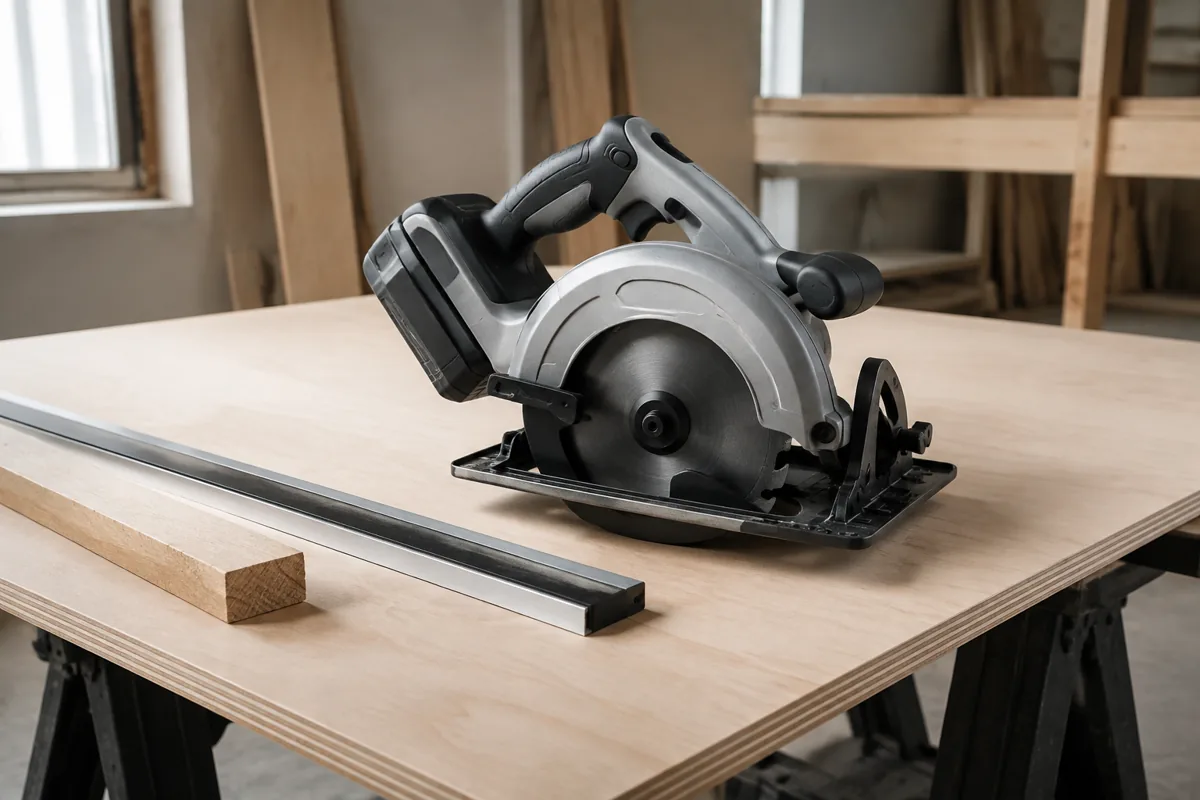
Pressure-treated lumber is wet, heavy, and often rougher on a saw than dry framing stock. A cordless circular saw can handle it, but blade choice, cutting depth, and battery capacity matter more than a long list of features. For most homeowners, a 7-1/4-inch saw on a 5.0Ah battery is the practical starting point. If you mostly cut 2-by lumber, a smaller saw can cost less and weigh less.
As an Amazon Associate we earn from qualifying purchases at no extra cost to you.


What to look for
Start with blade size and depth. A 7-1/4-inch saw typically cuts about 2-1/2 inches deep at 90 degrees, enough for a 2-by-8 laid flat, whose actual thickness is 1-1/2 inches. A 6-1/2-inch saw usually cuts around 2-1/8 inches deep, plenty for a 2-by-6 and most everyday deck work. Check the manufacturer’s depth specification; it varies by saw.
Pressure-treated boards can bind when wet or when their weight closes the kerf. A motor with good power helps, but no saw is immune to a pinched blade. Support the board on both sides of the cut, with the offcut free to fall away. Don’t force a slowing saw through the wood.
For battery-powered saws, a 5.0Ah battery is a useful baseline for sustained cutting. A compact 2.0Ah or 3.0Ah pack is lighter, but may run down quickly under repeated cuts in wet lumber. If you already own batteries, compare saws within that platform before buying into another system. A bare tool can be a good deal only if you have a compatible battery and charger.
Quick comparison
| Saw category | Best fit | Main trade-off |
|---|---|---|
| 7-1/4-inch, brushless | Frequent deck or framing cuts; thicker stock | More weight and higher tool cost |
| 7-1/4-inch, brushed | Occasional project work, especially if discounted | Usually less runtime or power under heavy load |
| 6-1/2-inch, brushless | Most 2-by cuts with less weight | Less depth for bevels and thick material |
| Compact 6-1/2-inch or smaller | Light-duty repairs and short cuts | Can bog down sooner in wet, dense boards |
Best all-around choice: 7-1/4-inch brushless
If you are buying a saw specifically for a deck, fence, or other project involving many treated boards, choose a brushless 7-1/4-inch model from a battery platform you plan to keep using. It offers the depth and blade availability of a corded-style saw while avoiding a cord around a lumber pile. Search within your existing battery system for a brushless 7-1/4-inch cordless circular saw.
Brushless motors are generally more efficient and tend to hold up better under repeated demanding cuts than basic brushed motors. That does not mean a brushless saw will cut faster in every board, or that it is worth a large premium for a handful of cuts a year. A sharp blade and a fully charged battery still make a noticeable difference.
Expect this size to feel substantial overhead or during long cutting sessions. If you are making many cuts from a stable work surface, that extra weight is less of a concern. If you are mostly trimming short pieces, a 6-1/2-inch saw may be easier to handle.
Lighter option: 6-1/2-inch saw
A 6-1/2-inch saw is a sensible choice for deck boards, 2-by-4s, and most cuts through 2-by-6s. It is often lighter and can be easier to control one-handed while positioning material, though you should still use two hands whenever the design allows. Look for a 6-1/2-inch cordless circular saw if reduced weight matters more than maximum cutting depth.
The limitation shows up at bevels and in thicker stock. Tilting the base reduces cutting depth, so a saw that clears a board at 90 degrees may not finish the same cut at 45 degrees. Check the depth chart before buying if angled cuts are part of the job.
Blade, battery, and practical setup
Use a sharp carbide-tipped framing blade suitable for the saw’s arbor and diameter. A general-purpose blade with roughly 24 teeth is a common choice for fast cuts in construction lumber; a higher tooth count can leave a cleaner edge but may cut more slowly. Replace a blade that burns wood, wanders, or needs heavy pressure. Treated lumber can be wet and abrasive, so a blade that was fine for a small indoor project may not stay sharp through a large build.
Buy a 5.0Ah pack or larger if the saw will be doing repeated cuts, particularly if that battery also powers a drill or other tools during the project. One battery can work for occasional trimming, but a second compatible pack avoids stopping in the middle of a cut list. If you are starting from scratch, compare kit pricing against the bare tool plus battery and charger; the kit is often better value when you need all three.
Battery voltage labels alone do not tell you how a saw will perform. Compare tested reviews where available, and check whether the battery is included. A higher-capacity pack adds weight, but it is less likely to run out halfway through a run of cuts.
Cutting treated lumber safely
Wear eye protection and a well-fitting dust mask or respirator, and cut outdoors or with effective dust collection where practical. Don’t burn treated offcuts, and follow local guidance for disposal. Keep the saw’s lower guard moving freely; sawdust and damp debris can interfere with its return.
Mark the cut, set the depth so the blade extends only slightly below the board, and let the saw reach full speed before entering the wood. Keep the base flat and the cord-free work area clear of offcuts. If the kerf starts closing, stop the saw and support the lumber differently rather than twisting the tool. For occasional work, a discounted brushed saw or a lighter 6-1/2-inch model is fine. For repeated cuts in wet, heavy stock, spend more on a brushless saw and a larger battery within a platform you already use.
Related guides
- Longest Lasting Lawn Mower Battery: AGM vs Lithium vs Flooded Lifespan and Cost per Season
- Duralast Gold Lawn Mower Battery Review: U1 Fit, CCA and When to Pay for AGM
- Greenworks Pro 80V 21-Inch Mower Review: Runtime Math, Push vs Self-Propelled and Yard Fit
- Bosch High Pressure Washer Gun Replacement: Fittings, Adapters and What Fits Your Model