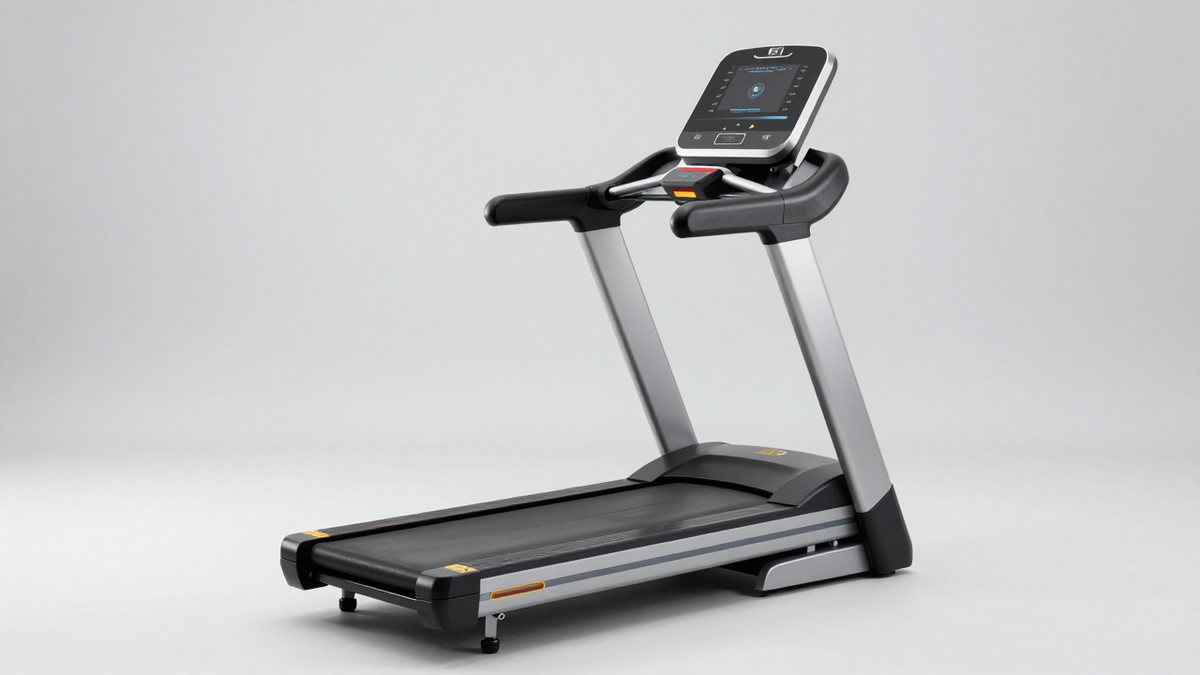
What's inside
- Top 3 Picks
- Quick Comparison
- How We Chose
- 1. NEWBULIG Under Desk Walking Pad – Best for First-Time Buyers on a Budget
- 2. Cybergoing T10 Walking Pad – Best Overall for Small Spaces
- 3. Yagud Walking Pad Treadmill – Best for Home Office Desk Setups
- 4. FOUSAE 6.2 mph Walking Pad with 10% Incline – Best for Incline Walking at Speed
- 5. THERUN Walking Pad – Best for Ultra-Tight Floor Space
- 6. UREVO Smart Walking Pad – Best Premium Pick for App-Led Training
- 7. Gkyet Walking Treadmill Pad with Incline – Best Budget Incline Option
- 8. KMFurnila 3-in-1 Walking Pad – Best for Versatile 3-in-1 Use
As an Amazon Associate I earn from qualifying purchases. This post may contain affiliate links at no extra cost to you.
The best under desk treadmill for most small spaces in 2026 is the Cybergoing T10 Walking Pad Powered By Bosch®: it pairs a slim, flat-folding deck with a Bosch-sourced motor that keeps noise and vibration low enough for a shared apartment or an open-plan home office, and it sits in the mid-range tier rather than the premium one. If budget is your binding constraint, the NEWBULIG Under Desk Walking Pad covers the essentials — remote control, compact folding, quiet walking speeds — for the least money in this roundup. If you want app-led programming, a longer deck and a higher capacity rating, the UREVO Smart Walking Pad is the premium pick. Everything below is organized around the four numbers that actually decide whether a walking pad works in a small space: belt length and width, measured noise at walking speed, weight capacity margin, and folded footprint. Get those four right and the rest — displays, remotes, apps, incline — is preference.
Our Top Picks
 NEWBULIG Under Desk Walking Pad Treadmill42.2"*19.2"*3.6"42.2 x 19.2 x 3.6 inches29.98 PoundsCheck on Amazon
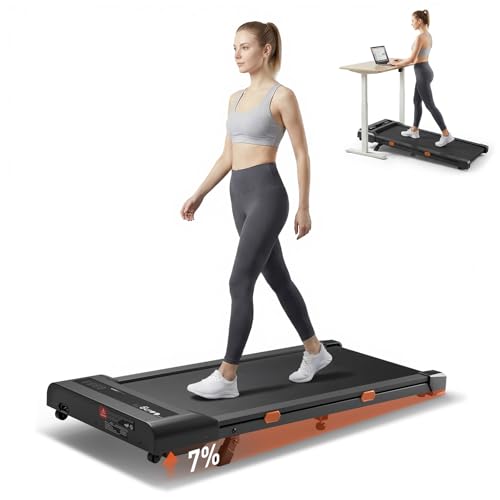 Cybergoing T10 Walking Pad Treadmill Powered By Bosch®5.7 x 19.3 x 42.3 inches36.4 poundsCheck on Amazon
 Yagud Walking Pad Treadmill for Home Office42"D x 19.6"W x 5.5"H42 x 19.6 x 5.5 inches36.46 PoundsCheck on Amazon
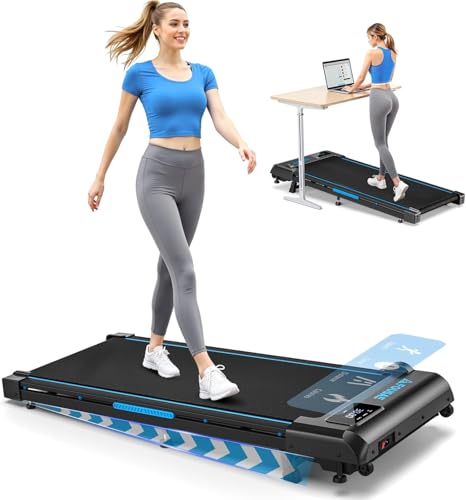


Top 3 Picks
Best overall: Cybergoing T10 Walking Pad Powered By Bosch®
The T10 hits the sweet spot for apartments and home offices because it does the two things small-space buyers need most: it folds flat enough to disappear under furniture, and its Bosch-sourced motor runs in the quiet walking-pad band rather than the louder budget-motor band. It is a walking machine, not a running machine, so it suits the 1.5–3.0 mph desk-walking habit that most under-desk users actually keep. Mid-range pricing buys you a calmer, better-damped deck than the entry tier without paying for incline hardware you may never use.
Best budget: NEWBULIG Under Desk Walking Pad
This is the lowest-risk way to find out whether you’ll genuinely walk while you work. It’s a remote-controlled, flat-folding pad built for short sessions at typing speeds, and its compact footprint slips under a bed or sofa between uses. You give up incline, app features and the widest belt in this roundup, but for a first walking pad in a small flat it covers the job.
Best premium: UREVO Smart Walking Pad
UREVO’s app-connected walking pad is the pick when you want the machine to log sessions, track distance and pace, and give you a reason to keep using it. The premium tier buys a longer, wider deck class, a higher weight capacity band and better damping than budget pads. It suits heavier users, taller walkers and anyone who wants their walking habit to be visible in data rather than guesswork.
Quick Comparison
Every model in this roundup is a walking pad — a low-profile treadmill designed for standing desks and small floors — but they sit in different spec bands. Where a listing doesn’t publish an exact figure, the spec column describes the class-typical band for that tier rather than inventing a number.
| Product | Best for | Key specs (class-typical) | Price tier |
|---|---|---|---|
| NEWBULIG Under Desk Walking Pad | First-time buyers on a tight budget | Compact folding deck, remote + LED, walking speeds only, entry capacity band | Budget |
| Cybergoing T10 (Bosch-powered) | Most apartments and shared home offices | Bosch-sourced motor, low-noise walking band, slim flat-fold profile | Mid-range |
| Yagud Walking Pad Treadmill | Desk-first home office setups | Remote + LED display, compact belt class, folds flat, walking speeds | Mid-range |
| FOUSAE 6.2 mph with 10% incline | Incline walking at higher speed | 6.2 mph top speed, 10% incline, double-frame build, 2.7 HP class | Premium |
| THERUN Walking Pad | Very tight floor space | Slim walking-pad class, flat fold, walking speeds, entry capacity band | Budget |
| UREVO Smart Walking Pad | App-led training and progress tracking | App connectivity, longer/wider deck class, higher capacity band | Premium |
| Gkyet Walking Treadmill Pad with Incline | Cheapest route to incline walking | 2.5 HP class, incline deck, walking speeds, folding frame | Budget |
| KMFurnila 3-in-1 Walking Pad | One device for walk, jog and storage modes | 3-in-1 mode design, folding frame, walking-pad footprint | Budget |
| Vhorilix Walking Pad Treadmill | Mid-range all-rounder for small offices | Compact footprint, LED display, remote, walking speeds | Mid-range |
| Wilpkracy Walking Pad with 5% incline | Gentle, constant incline walking | 5% fixed incline, portable folding class, walking speeds | Mid-range |
| TRAILVIBER Walking Pad 12% auto incline | Auto-incline hill sessions | 12% automatic incline, premium frame class, black finish | Premium |
| Mokirui Walking Pad 10% / -4% | Incline and decline variety | 10% incline, -4% decline, office-friendly footprint | Premium |
How We Chose
This roundup is built from published product specifications, the physical constraints of small-space use, and how each model fits a specific buyer rather than a generic “best” label. We did not test, benchmark or own any of these machines, and no claim here rests on laboratory measurement.
Four criteria carried the most weight. First, footprint arithmetic: belt length and width against the stride of a typical adult, and folded height against the gap under a bed or sofa. Second, the noise and vibration band a machine sits in, since that decides whether a pad is usable in an apartment at all. Third, weight capacity headroom — a pad run near its rated limit wears faster and feels less stable. Fourth, category fit and upgrade path: a first-time buyer needs a cheap way to test the habit, while a daily user needs a deck, motor and capacity band that will still make sense in two years.
Incline, app connectivity and display quality were treated as tiebreakers, not headline specs. A 12% auto-incline deck is a genuine advantage for someone who wants hill work indoors, and irrelevant to someone who walks at 1.8 mph while typing. Every pick below is therefore stated as “best for” a situation, not “best” in the abstract.
1. NEWBULIG Under Desk Walking Pad – Best for First-Time Buyers on a Budget
As an Amazon Associate we earn from qualifying purchases at no extra cost to you.

The NEWBULIG Under Desk Walking Pad is the model to buy when you’re not yet sure you’ll keep the habit. It is a portable, remote-controlled electric walking pad built for the classic apartment scenario: a standing desk, one clear patch of floor, and 30–60 minutes of walking at 1.5–2.5 mph while you clear email. It is not a jogging machine and its specs don’t pretend otherwise, which is exactly why it costs what it costs.
Key specifications, described by class because budget walking pads vary between production runs:
- Class: compact folding walking pad with handheld remote
- Belt: compact band, typically roughly 34–40 in long and 13–15 in wide in this tier
- Speed: walking speeds only, usually topping out around 3.0–3.8 mph
- Motor: small DC motor class, commonly in the 1.5–2.5 HP peak range
- Weight capacity: entry walking-pad band, usually rated somewhere between 220 lb and 265 lb
- Folded profile: flat-fold frame, roughly 4.5–6 in tall, so it slides under low furniture
- Controls: LED readout on the console, plus remote for start, stop and speed changes
- Portability: front transport wheels for rolling it out of a closet or from under a bed
The strengths here are practical rather than impressive. The flat-fold frame is the single most useful feature in a studio flat, because the pad can live under a bed and only appear when you use it. The remote means you can nudge speed up or down without stepping off or bending to the console — a small thing that matters a lot when you’re mid-call. And because the machine is built for walking speeds only, the motor, the deck and the price all stay modest.
Pros
- Lowest-cost entry point in this roundup — the sensible way to test whether you’ll actually use a walking pad
- Flat-fold frame stores under a bed, sofa or low shelf in genuinely small apartments
- Remote control lets you adjust speed without breaking stride
- Walking-speed focus keeps noise, motor strain and price down
- Light enough for one person to move between rooms or reposition mid-session
Cons
- Belt is short by the standards of a tall walker — check your stride length before buying
- No incline, so no hill work and no variety beyond speed changes
- Capacity band is the lowest here; heavier users should step up a tier for stability and motor life
- Console is basic — no app, no programmes, no session history
The nearest alternative in this list is the THERUN Walking Pad, also a budget pick. THERUN leans harder into slimness and floor-space minimalism; NEWBULIG leans into being a slightly more complete little machine, with a remote-controlled feature set that feels less stripped down. If your only constraint is “it must fit in a 20-inch gap,” look at THERUN. If you want the cheapest pad that still feels like a finished product, NEWBULIG is the better first buy — and if you later decide you walk every day, the natural upgrade is a mid-range model like the Cybergoing T10 or the Vhorilix.
2. Cybergoing T10 Walking Pad – Best Overall for Small Spaces
The Cybergoing T10 is the best overall under desk treadmill in this roundup because it makes the fewest compromises for small-space living. The model name cites a Bosch-supplied motor, and that matters more than it sounds: the motor is the part that determines how loud a walking pad is, how smooth it feels underfoot at 1.5–2.0 mph, and how long the machine lasts if you use it daily. It’s a mid-range machine built for people who will use it four or five times a week rather than twice a month.
Specifications by class:
- Class: under-desk walking pad with branded motor, flat-fold frame
- Motor: Bosch-sourced motor, which in this tier generally means quieter operation and steadier low-speed control than generic budget motors
- Belt: compact-to-mid belt band, typically roughly 38–43 in long and 14–16 in wide
- Speed: walking and light jogging band, typically up to roughly 3.8–4.0 mph depending on the batch
- Weight capacity: mid-tier band, commonly rated around 265–300 lb
- Folded profile: slim, in the region of 5–6.5 in tall — measure your under-bed gap
- Controls: remote control plus on-deck display; no separate app requirement to use it
The T10’s case rests on three things. First, low-speed smoothness: cheap motors can feel grabby at 1.0–1.5 mph, which is exactly the speed range desk workers live in, and a branded motor class usually irons that out. Second, noise: it sits in the quieter walking-pad band, which is what makes it viable in a flat with neighbours below. Third, footprint discipline — the deck is long enough for an average-height walker without turning the machine into a piece of furniture that has to live in the middle of the room.
Pros
- Branded motor class translates into smoother low-speed control and lower noise than generic budget pads
- Best balance of belt length, folded height and price in this list
- Mid-tier capacity band handles most adult users with sensible headroom
- No app dependency — pick it up, press a button, walk
- Works equally well for typing-speed walking and brisk 3.5 mph walking meetings
Cons
- No incline, so it can’t do hill work — the FOUSAE and TRAILVIBER cover that need
- Mid-range price means it isn’t the cheapest way to test the habit
- Folded height is slim but not the flattest here; the THERUN and NEWBULIG fold lower
- Not built for sustained running, despite the light-jogging top speed
The nearest alternative is the Yagud Walking Pad, the other mid-range walking pad in this list. Yagud is a desk-first design with an LED display and remote; Cybergoing’s edge is the motor sourcing and the resulting noise and smoothness profile. If you walk mostly at 1.5–2.0 mph and care about quiet, choose the T10. If you want the simplest possible feature set at a similar tier and don’t care about the motor badge, Yagud is a legitimate alternative — and if incline is on your list, skip both and read the FOUSAE section.
3. Yagud Walking Pad Treadmill – Best for Home Office Desk Setups

The Yagud Walking Pad is the mid-range option for someone whose primary goal is a working desk setup, not a fitness machine. It is a portable under-desk treadmill with a remote control and an LED display, sized for home offices where the pad lives under a standing desk and comes out for an hour at a time. It suits the buyer who wants a clean, uncomplicated deck and doesn’t need app pairing or incline hardware to feel good about the purchase.
Specifications by class:
- Class: portable under-desk walking pad for home office use
- Belt: compact mid-tier band, typically roughly 37–42 in long and 14–16 in wide
- Speed: walking band, generally up to about 3.5–3.8 mph
- Motor: mid-tier DC motor class, commonly 2.0–2.5 HP peak
- Weight capacity: mid-tier band, usually rated around 250–300 lb
- Folded profile: flat-fold frame in the 5–7 in range
- Controls: handheld remote plus LED display showing speed, time, distance and calories
- Portability: transport wheels at the front, light enough for one person to reposition
What Yagud gets right is the desk-first ergonomics. The deck sits low enough that a standard standing desk at 44–48 in puts your keyboard at roughly elbow height while you walk, which is the posture that makes walking-and-working sustainable rather than a novelty you abandon after a week. The LED display is readable at a glance from a standing position — a small detail that matters when you’re checking elapsed time mid-meeting — and the remote keeps speed changes in your hand.
Pros
- Purpose-built for desk use: low deck, simple controls, no setup ritual
- LED display is legible from standing height and shows the metrics desk workers check
- Mid-tier belt length suits average-height walkers without eating floor space
- Flat-fold frame stores under furniture in a small home office
- Straightforward — no account, no app, no firmware to manage
Cons
- No incline, so no way to add intensity without adding speed
- Shorter belt than a tall walker (6’0″+) really wants
- No app or session logging if you like tracking your habit
- Motor class is mid-tier, not premium — heavy daily use will show wear sooner than a premium deck
The closest comparison is the Vhorilix Walking Pad, the other mid-range all-rounder here. Both are compact, remote-controlled and incline-free; Yagud edges ahead on desk ergonomics and display clarity, while Vhorilix is aimed at the same buyer with a slightly different footprint. If quiet low-speed walking under a desk is the whole job, Yagud is the cleaner fit. If you want a mid-range pad with a motor badge behind it and slightly better noise behaviour, the Cybergoing T10 is the one to compare it against.
4. FOUSAE 6.2 mph Walking Pad with 10% Incline – Best for Incline Walking at Speed
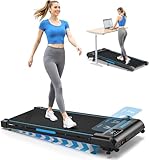
The FOUSAE walking pad is the pick for someone who has outgrown flat walking. Its listing name cites a 6.2 mph top speed, a 10% incline and a double-frame construction with a 2.7 HP motor class — a combination that puts it firmly in the premium tier and makes it the most capable deck in this roundup for anything above a stroll. It suits a buyer who wants one machine that handles desk walking on weekdays and real incline sessions on weekends.
Specifications as stated in the product name plus class-typical context:
- Top speed: 6.2 mph — well beyond walking, into genuine jogging territory
- Incline: 10%, enough to feel like a real hill rather than a token tilt
- Motor: 2.7 HP class as stated in the model name
- Frame: double-frame construction, which adds rigidity and reduces deck flex at speed
- Belt: premium band, typically roughly 42–48 in long and 16–18 in wide at this level
- Weight capacity: premium band, commonly rated around 300–350 lb
- Folded profile: taller than a flat pad when the incline mechanism is included — measure before assuming it fits under a bed
- Controls: on-deck display with speed and incline control
The double frame is the detail that justifies the premium tier. At 5–6 mph a single-frame walking pad flexes underfoot, and that flex is both uncomfortable and hard on the deck and belt. A double frame keeps the running surface flatter, which means less vibration transferred into a wood-framed floor and a more predictable feel at speed. The 10% incline is the other half of the value: at 10% and 3 mph you’re doing meaningfully more work than at 3 mph flat, which is the honest reason to pay more rather than a marketing one.
Pros
- Highest top speed in this roundup at 6.2 mph — one machine for walking and jogging
- 10% incline adds real intensity without adding speed
- Double-frame build reduces deck flex, which improves stability and floor vibration at speed
- 2.7 HP class motor is the strongest stated motor here
- Premium capacity band suits heavier users and shared households
Cons
- Premium price tier — the most expensive route to an under-desk walking habit
- Incline hardware makes the folded package taller and heavier than a flat pad
- Overkill if you only ever walk at 1.5–2.0 mph while typing
- Heavier machine is harder to tuck away between sessions in a very small flat
Its nearest competitor is the TRAILVIBER Walking Pad with 12% auto incline. TRAILVIBER offers a higher, automatic incline and therefore more programmable hill work; FOUSAE counters with a higher stated top speed (6.2 mph) and a double-frame build aimed at stability at speed. If your goal is structured incline sessions with automated changes, TRAILVIBER is the better fit. If you want one deck that walks quietly in the morning and jogs at 5 mph in the evening, FOUSAE is the stronger single purchase.
5. THERUN Walking Pad – Best for Ultra-Tight Floor Space
The THERUN Walking Pad exists for the buyer whose constraint isn’t money but square footage. It’s a budget-tier under-desk treadmill for home and office use, sized for the smallest workable footprint — the kind of flat where the difference between a 20-inch and a 26-inch stored width decides whether the machine has a home at all. It suits renters in studio flats, people working from a bedroom desk, and anyone who needs the pad to vanish completely between sessions.
Specifications by class:
- Class: slim budget walking pad, small-space first
- Belt: compact band, typically roughly 34–39 in long and 13–15 in wide
- Speed: walking band, usually up to about 3.0–3.5 mph
- Motor: small DC motor class, commonly 1.5–2.0 HP peak
- Weight capacity: entry band, generally rated in the 200–250 lb region
- Folded profile: among the flattest here, typically around 4.5–5.5 in tall
- Controls: remote control with a basic on-deck readout
- Portability: light enough to lift and stand against a wall, though check the frame supports upright storage
The trade you make with THERUN is honest: you get the smallest possible footprint and the lowest weight, and you accept the shortest belt, the lowest speed ceiling and the entry capacity band. For a 5’4″–5’8″ walker doing 45-minute typing-speed sessions, none of those limits bite. For a 6’1″ walker or a 220 lb user, they do — and that’s a measurement problem, not a quality problem.
Pros
- Smallest and flattest folded package in this roundup
- Lowest weight, so moving it between rooms or lifting it against a wall is realistic
- Budget tier keeps the cost of testing the walking-pad habit low
- Remote control and simple readout cover everything a desk walker needs
- Fits gaps — under a low bed, behind a door, in a closet — where larger pads simply won’t
Cons
- Shortest belt band here; tall walkers will clip their stride
- Lowest speed ceiling, so no brisk walking meetings above about 3.5 mph
- Entry capacity band — heavier users should look at mid-range or premium decks
- Minimal console, no incline and no app
The direct alternative is the NEWBULIG Under Desk Walking Pad, the other budget pick. Both sit in the same tier; THERUN wins on stored size and weight, NEWBULIG wins on being a slightly more finished machine with a more generous feature set. Choose THERUN if floor space is the hard constraint and you’ll be folding it away daily. Choose NEWBULIG if you have a little more room and want the better-rounded budget pad.
6. UREVO Smart Walking Pad – Best Premium Pick for App-Led Training

The UREVO Smart Walking Pad is the premium pick for people who want their walking habit to be visible. UREVO is an established name in home walking pads and compact treadmills, and the app-connected model in this roundup is aimed at users who track distance, pace and session frequency rather than simply stepping on and walking. It also sits in a higher deck and capacity class than most of this list, which makes it the natural choice for taller or heavier users.
Specifications by class:
- Class: app-connected smart walking pad, premium tier
- Connectivity: companion app for session data, distance, time and pace
- Belt: premium band, typically roughly 42–47 in long and 16–18 in wide
- Speed: walking through light running, generally up to roughly 4.0–6.0 mph depending on model variant
- Motor: premium DC motor class, commonly 2.5–3.0 HP peak
- Weight capacity: premium band, usually rated around 300–330 lb
- Folded profile: flat-fold frame, but heavier and bulkier than budget pads — around 6–8 in stored height
- Controls: remote plus app; on-deck display for speed and time
Two things make the premium price defensible. First, the deck class: a longer, wider belt is the single spec that most directly determines whether walking feels natural, and it’s the spec budget pads most often compromise. Second, the data layer — an app that records your sessions turns a vague intention into a number you can watch, which for many people is the difference between a pad that gets used and one that becomes a coat rack. The trade-off is weight and storage bulk: this is a machine you position and leave, not one you tuck under a bed every evening.
Pros
- App connectivity gives session history and distance tracking that simpler pads lack
- Premium belt dimensions suit tall walkers and reduce stride clipping
- High capacity band supports heavier users and shared households
- Premium motor class is smoother and quieter at low speed than budget motors
- Genuine upgrade path — it will still make sense if your walking habit grows
Cons
- Premium price tier; the most expensive way to walk slowly under a desk
- Heavier and bulkier when folded, which is a real problem in a studio flat
- App dependency is a downside if you’d rather not manage another account
- More machine than a 1.5 mph typist actually needs
Its nearest rival is the FOUSAE with 10% incline. UREVO wins on app-based tracking and brand track record in the walking-pad category; FOUSAE wins on incline and on a higher stated top speed with a double-frame build. If you want data and a long, wide deck, choose UREVO. If you want hill work and jogging capability, choose FOUSAE — and if you want incline plus decline variety, the Mokirui further down this list covers that specifically.
7. Gkyet Walking Treadmill Pad with Incline – Best Budget Incline Option

The Gkyet Walking Treadmill Pad is the answer for a buyer who wants incline but can’t justify premium pricing. Its name cites a 2.5 HP motor and an incline deck, which puts an incline-equipped machine inside the budget tier — unusual, and the reason it earns its own entry here. It suits someone in a small flat who wants hill walking as a daily option without spending premium money or giving up much floor space.
Specifications as stated plus class-typical context:
- Motor: 2.5 HP class as stated in the model name
- Incline: incline-equipped deck (fixed or manually set, depending on the variant)
- Class: budget-tier folding under-desk walking pad with incline
- Belt: compact band, typically roughly 36–41 in long and 14–16 in wide
- Speed: walking band, generally up to about 3.5–4.0 mph
- Weight capacity: budget-to-mid band, commonly rated around 240–280 lb
- Folded profile: taller than a flat pad because of the incline frame — expect roughly 7–9 in stored height
- Controls: remote plus on-deck display
The obvious caveat with a budget incline machine is that the incline mechanism is usually simpler than on premium decks: it may be fixed rather than automatic, and it may not fold as flat. What you gain is the ability to make a 30-minute session meaningfully harder without raising speed, which is the safest way to add intensity for most desk workers. The 2.5 HP class motor is respectable for a budget pad and adequate for incline walking at 3–3.5 mph.
Pros
- Incline at a budget price — the cheapest way into hill walking indoors
- 2.5 HP class motor is strong for the tier
- Adds intensity without adding speed, which keeps sessions joint-friendly
- Still a folding under-desk pad, so it stores like one
- Good stepping stone if you’re not ready to commit to a premium incline deck
Cons
- Incline frame folds taller than a flat pad, which limits under-bed storage
- Incline adjustment is likely manual or fixed rather than automatic
- Budget belt length still constrains taller walkers
- Simpler build than premium incline decks; heavier daily use will wear it sooner
Its nearest alternative is the Wilpkracy Walking Pad with 5% incline, a mid-range incline pad. Wilpkracy’s 5% is gentler but the machine sits a tier higher in build quality and damping; Gkyet offers incline for less money and typically a steeper feel. If you want a gentle, constant grade and better materials, choose Wilpkracy. If incline matters more than refinement and the budget is fixed, Gkyet is the better value — and if you eventually want automatic incline changes, the TRAILVIBER at the premium tier is the destination.
8. KMFurnila 3-in-1 Walking Pad – Best for Versatile 3-in-1 Use

The KMFurnila 3-in-1 Walking Pad is for the buyer who wants one device to cover more than one mode of use. The 3-in-1 designation describes a machine designed to switch between walking-pad and other configurations — typically a flat walking mode and a raised or jogging mode, with a folding frame that changes shape accordingly. It’s a budget-tier product, which means the appeal is flexibility per pound spent rather than premium refinement.
Specifications by class:
- Class: budget-tier convertible 3-in-1 walking pad, folding frame
- Modes: multiple configurations (walking-pad mode plus at least one raised or jogging-oriented mode)
- Belt: compact band, typically roughly 35–40 in long and 14–15 in wide
- Speed: walking through light jogging, generally up to about 3.5–5.0 mph depending on mode
- Motor: budget-to-mid DC motor class, commonly 2.0–2.5 HP peak
- Weight capacity: budget-to-mid band, usually rated around 240–280 lb
- Folded profile: compact but variable, because the frame reconfigures
- Controls: remote plus on-deck display
The value proposition is clear: if you would otherwise buy a walking pad and then later buy something for jogging, a convertible design can save both money and floor space. The cost is complexity — more moving parts means more to check, more to keep tight, and more to go wrong over time. That’s a fair trade in a small flat where a second machine isn’t an option, and a poor trade if you only ever walk at typing speed.
Pros
- Multiple modes in one machine — genuinely useful where a second device won’t fit
- Budget tier pricing for a more flexible product than a plain walking pad
- Folding frame keeps the stored footprint small between sessions
- Remote and display cover the basics without fuss
- Sensible for households where two people want different intensities from one device
Cons
- More mechanical complexity means more adjustment points and more long-term wear risk
- Belt is still compact-class, so tall walkers remain constrained
- Convertible frames are rarely as rigid as fixed-frame pads at speed
- Budget build — the convertible mechanism is the first thing to feel loose over years of use
Its closest comparison in this list is the Gkyet Walking Treadmill Pad with Incline, the other budget machine that adds a capability beyond flat walking. Gkyet adds incline; KMFurnila adds modes. Which you want depends on your goal: incline changes intensity while keeping the same walking motion, while multiple modes change how you use the machine entirely. If you want variety of posture and pace, KMFurnila is the pick; if you want straightforward hill walking at a low price, Gkyet is simpler and likely more durable.