Key takeaways
- Best dust collection hoses for woodworking: six 4-inch, 2.5-inch and tool-sized options compared by diameter, length and fittings.
What's inside
As an Amazon Associate I earn from qualifying purchases. This post may contain affiliate links at no extra cost to you.
The best dust collection hose for most woodworking shops is a 4-inch heavy-duty flexible PVC hose in the 10-foot length, because it matches the inlet on the typical stationary dust collector and is short enough to keep airflow strong. Dust collection hose is the flexible tube that carries chips and fine dust from a tool port to a collector or shop vacuum, so its diameter has to match both ends. If you run a shop vacuum with power tools instead, the Fulton 10-foot kit, the Cen-Tec 16-foot Quick Click hose and the Rockler expandable FlexiPort kit are built for small tool ports, while the 2-1/2-inch and 20-foot PVC options suit longer runs.
The six hoses below split into big-diameter collector hose and small-diameter tool hose, so pick the group that matches your machine first.
Quick List
- 4-Inch x 10-Foot Flexible PVC Hose – best for connecting a 4-inch dust collector to a single machine
- Fulton 11714 10-Foot Power Tool Hose Kit – best for sanders and handheld tools with mixed port sizes
- 2-1/2-Inch x 20-Foot Heavy PVC Hose – best for reaching across a shop with a 2.5-inch vacuum or collector port
- Cen-Tec Quick Click 16-Foot Hose – best for swapping between tools using bayonet adapters
- Rockler Dust Right FlexiPort Expandable Kit – best for compact storage and a lightweight tool connection
- 4-Inch x 20-Foot Heavy PVC Hose – best for longer 4-inch runs to a table saw or planer
Which One Is Right for You?
| If you… | Choose |
|---|---|
| sand with a random-orbit sander and need the hose to stay light and flexible | Rockler FlexiPort Expandable Kit |
| have a 4-inch collector and a machine just a few feet away | 4-Inch x 10-Foot PVC Hose |
| own several brands of power tool and want an adapter set that clicks on and off | Cen-Tec Quick Click 16-Foot Hose |
| need to reach a machine that sits far from the collector | 4-Inch x 20-Foot PVC Hose |
| run a 2.5-inch shop-vacuum or collector port and want extra length | 2-1/2-Inch x 20-Foot PVC Hose |
| want a straightforward 10-foot hose with a handful of tool fittings | Fulton 11714 Kit |
Work out the port size on both ends before you compare lengths, because hose that does not match the collector inlet or the tool shroud will leak or need a reducer. Then think about how often you move the hose. A stiff, heavy hose is fine bolted to a machine, but a handheld sander calls for something lightweight.
All 6 Picks in Detail
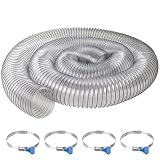
1. 4-Inch x 10-Foot Flexible PVC Hose – Best for a short run to a 4-inch collector
As an Amazon Associate we earn from qualifying purchases at no extra cost to you.

This unbranded hose is described as a puncture-resistant, flexible PVC fume hose in a 4-inch diameter and 10-foot length, suitable for 4-inch dust collection systems and shop vacuums. Four inches is the standard inlet size for most small-shop stationary collectors, so this hose can connect a bandsaw, jointer or planer directly to the collector. Ten feet is long enough to reach a machine but short enough to limit friction loss.
Because the listing does not name the hose wall thickness, bend radius or whether a grounding wire is embedded, those are items to check before you buy. For the cleanest airflow, keep the hose stretched with gentle curves rather than coiled. It is also worth thinking about how the hose will be supported: a short length hung from a hook or bracket keeps its shape and does not drag on the floor, which prolongs its life and keeps chips from collecting in sagging loops.
- Diameter and length: 4 inches by 10 feet, per the listing name
- Material: flexible PVC, described as puncture-resistant
- Intended for 4-inch dust collection systems and shop vacuums
- Wall thickness and bend radius: confirm on the listing
- Embedded grounding wire: confirm on the listing
Pros
- Standard 4-inch size fits common collectors
- Short length keeps airflow loss modest
Cons
- Specs are brief on the listing
- Too large for most handheld tool ports without a reducer
Compared with the 4-inch 20-foot option, it gives you better airflow and less bulk in exchange for less reach.
2. Fulton 11714 10-Foot Power Tool Hose Kit – Best for handheld tools with mixed ports

The Fulton 11714 is a 10-foot power tool hose kit with eight adapter fittings. Retail details describe a small-diameter hose of about 1.19 inches outside diameter with stretchable silicone ends, meant to fit different dust ports on sanders, biscuit joiners and similar tools. That makes it a fit for a woodworker who has a handful of handheld tools and one shop vacuum, and wants a single hose that can change from one tool to another.
Shop vacuum ports differ by manufacturer, so the listing advises checking the images and dimensions to confirm it will connect to yours. The hose is rated as puncture-resistant and built for shop use according to the seller. It is a good starter kit for someone who has just bought a shop vacuum and a couple of handheld tools, since eight fittings give you several chances to find a match without a trip to buy separate reducers.
- Length: 10 feet
- Includes eight adapter fittings, per the listing name
- Stretchable silicone ends to fit various dust ports
- Small-diameter hose, about 1.19 inches outside diameter per retailer details
- Vacuum-end compatibility: confirm against your shop vacuum
Pros
- Many fittings cover a range of tool ports
- Flexible ends are forgiving about size differences
Cons
- Not suited to a 4-inch collector without further adapters
- You must confirm vacuum connection compatibility
Next to the Cen-Tec kit, it is shorter and simpler, while the Cen-Tec adds length and a quick-swap bayonet system.
3. 2-1/2-Inch x 20-Foot Heavy PVC Hose – Best for long 2.5-inch runs

This heavy PVC hose measures 2-1/2 inches by 20 feet and is described as puncture-resistant and flexible. The 2.5-inch size is a common standard for wet/dry vacuums and for many small collectors, which makes this hose a practical way to extend reach across a garage. Twenty feet is generous, so it suits a shop where the vacuum lives in one corner and you work at a table saw or miter station several steps away.
Longer hose means more friction and more suction loss, so this is a convenience pick rather than a performance pick. If your vacuum is modest, keep the hose as short as you can by coiling only the excess loosely. It also works as a utility hose for general cleanup, such as vacuuming the floor around a machine at the end of the day, where the extra reach matters more than peak airflow.
- Diameter and length: 2.5 inches by 20 feet
- Material: heavy-duty flexible PVC, described as puncture-resistant
- Intended for 2.5-inch woodworking dust collection ports
- Wall thickness and grounding wire: confirm on the listing
- Cuffs or adapters: confirm on the listing
Pros
- Long reach for one-vacuum shops
- 2.5-inch size is a common standard
Cons
- Twenty feet adds friction and reduces suction
- May be heavy and stiff for handheld tools
Compared with the Cen-Tec hose, it is wider and longer but lacks a documented adapter set for power tools.
4. Cen-Tec Quick Click 16-Foot Hose – Best for multi-brand tool adapters

The Cen-Tec 94709 is a 16-foot hose with a multi-brand power tool adapter set. Retail details describe a 1-1/4-inch by 16-foot flexible hose in thermoplastic elastomer with a smooth interior, plus bayonet fittings in several small sizes and an extra 2-1/2-inch adapter so the same hose can reach a shop vacuum or a dust collection workstation. The bayonet system swaps in seconds and swivels so the hose resists kinking.
It is built around the idea of one hose for many tools: sanders, drywall sanders, track saws and others from major brands. A built-in air relief on the bayonet fitting lets you adjust airflow so the tool does not seal to the work surface. That matters for sanding, because a sander that clamps itself to the panel can stall the airflow and slow the cut. If you own tools from several brands, this kind of adapter system is the cleanest way to keep one hose in service across all of them.
- Length: 16 feet; hose diameter around 1-1/4 inches per retailer details
- Thermoplastic elastomer hose with a smooth interior
- Quick Click bayonet fittings in ¾, 1, 1-1/4 and 1-1/2 inch sizes
- Extra 2-1/2-inch standard wet/dry vacuum adapter
- Designed to fit many major power tool brands
Pros
- Fast adapter swaps and a swivel connection
- Smooth interior supports good airflow
Cons
- Narrow bore is not a replacement for 4-inch collector hose
- Sixteen feet can sag and snag in a small shop
Relative to the Rockler kit, it is longer and fixed in length, while the Rockler stores smaller and stretches to the job.
5. Rockler Dust Right FlexiPort Expandable Kit – Best for compact storage and light tool hose

The FlexiPort kit pairs an expandable hose that collapses to about 3 feet with a set of swiveling rubber ports. It stretches to roughly 12 feet, which is useful when the hose lives on top of a shop vacuum and only extends to reach the tool. The hose has a 1-1/2-inch inside diameter and is described as crush-resistant, and the lighter blue version reduces the pull on a handheld tool.
Four swiveling ports in graduated sizes and a Click-Connect adapter are part of the kit, and a standard vacuum-end port connects to shop vacuums. The expandable design means the hose retracts when you are not pulling it, instead of trailing across the floor. This is a strong match for a small workshop or a garage where floor space is tight, since a hose that retracts is less likely to be stepped on, snagged by a cart or caught under a workpiece.
- Expandable from about 3 feet to 12 feet
- 1-1/2-inch inside diameter hose, per retailer details
- Four swiveling rubber ports plus a Click-Connect adapter
- 2-1/4-inch outside-diameter port for the vacuum end
- Click-Connect adapter works only with the matching expandable hose
Pros
- Collapses small and stays out of the way
- Light enough for sanding and routing
Cons
- Narrow, ribbed hose restricts airflow compared with larger hose
- Not a fit for a 4-inch collector port
Compared with the Fulton kit, it offers stretch and compact storage while the Fulton relies on fixed length and a larger fitting count.
6. 4-Inch x 20-Foot Heavy PVC Hose – Best for longer 4-inch machine runs

This is the longer sibling of the 4-inch hose: 4 inches by 20 feet in heavy puncture-resistant flexible PVC, aimed at 4-inch dust collection systems, shop vacuums and woodworking tools. Twenty feet suits a shop where the collector sits in a corner and you need to reach a table saw or planer on a different wall, or where you move machines on mobile bases.
Because friction rises with length, use only what you need and keep the hose as straight as possible. If you have the space, running rigid duct for the long part of the run and using flexible hose only for the last few feet gives better airflow. Plan clamps at each end, because a heavy hose can work itself loose from a smooth port, and consider a hanger or bracket so the weight of a 20-foot span does not pull on the connection.
- Diameter and length: 4 inches by 20 feet
- Heavy flexible PVC, described as puncture-resistant
- Fits 4-inch collector and vacuum ports per the listing
- Wall thickness and grounding wire: confirm on the listing
- Bend radius and weight: confirm on the listing
Pros
- Reach for a corner-mounted collector
- Large bore moves chips better than small hose
Cons
- Bulky and heavy to store
- Extra length adds friction and loses suction
Beside the 10-foot version of the same hose, it trades some airflow for the ability to reach farther.
Specs Compared
| Model | Diameter | Length | Material | Fittings / adapters | Best port class |
|---|---|---|---|---|---|
| 4-Inch x 10-Foot PVC Hose | 4 inches | 10 feet | Flexible PVC | Confirm on listing | 4-inch collector |
| Fulton 11714 Kit | About 1.19 inches outside diameter (retail details) | 10 feet | Rubber hose, silicone ends (retail details) | Eight adapter fittings | Handheld tool ports |
| 2-1/2-Inch x 20-Foot PVC Hose | 2.5 inches | 20 feet | Heavy flexible PVC | Confirm on listing | 2.5-inch vacuum or collector port |
| Cen-Tec Quick Click Hose | About 1-1/4 inches | 16 feet | Thermoplastic elastomer | Bayonet set plus 2-1/2-inch adapter | Power tool ports |
| Rockler FlexiPort Expandable Kit | 1-1/2 inch inside diameter | 3 to 12 feet, expandable | Rubber, crush-resistant | Four swiveling ports plus Click-Connect | Handheld tool ports |
| 4-Inch x 20-Foot PVC Hose | 4 inches | 20 feet | Heavy flexible PVC | Confirm on listing | 4-inch collector |
How We Chose These
This list comes from desk research, not from running the hoses. We started with the six hoses in the product set and read the manufacturer pages and retailer listing fields for diameter, length, material, adapters and intended ports. We then grouped them by the problem they solve: large-bore hose for collectors, small-bore hose for handheld tools, and extendable options for storage. Where a listing did not state wall thickness, bend radius or grounding wire, we wrote that you should confirm it instead of guessing. We also leaned on published guidance about wood dust hazards to explain why airflow and sealed connections matter.
What to Look For
Diameter decides airflow
The inside diameter of a hose is the biggest factor in how much air it can move. As a rule of thumb, a typical shop vacuum moves about 100 cubic feet per minute at the hose, which gives roughly 2,900 feet per minute of air speed through a 2.5-inch hose but more than 8,000 through a 1-1/2-inch hose. Higher speed in a small hose helps carry fine dust, but it also adds friction, so small-bore hose is best kept short. A 4-inch hose on a stationary collector moving about 400 CFM gives about 4,600 feet per minute, which is in the range often recommended for carrying wood chips. These are illustrative figures, so check your collector’s rating.
Length and layout
Every extra foot of flexible hose adds friction, and every bend adds more. Use the shortest hose that reaches the tool, avoid sharp kinks and coils, and lay the hose so it does not trap chips in a low loop. For a permanent machine, a rigid duct run with a short flexible tail beats a long flex hose, because smooth metal or rigid plastic produces far less turbulence.
Wall construction and static
Flexible PVC hose with a rigid helix is crush-resistant and holds its shape under vacuum, but a thin wall can collapse at a tight bend. Moving dust through plastic hose can build static charge, which is a nuisance and, with very fine dust, a fire consideration. Look for hose that states an embedded grounding wire, and ground the wire to the collector or machine according to the manufacturer’s instructions. Where a listing is silent on grounding, treat that as unknown and confirm it.
Fittings and adapters
Most leaks happen at the ends. Measure the tool port and the vacuum or collector inlet, then choose a hose with fittings that cover both, or buy reducers and clamps. Quick-connect bayonet or click systems save time when you move a hose between tools, while clamped cuffs hold better on a permanent connection. Silicone or rubber cuffs flex to fit slightly oversized ports but should be pushed fully on and held with a clamp if they slip.
Matching the hose to the job
Think of hose in three tiers. Handheld tools such as sanders and routers need small, light, flexible hose in roughly the 1 to 1-1/2-inch range, and weight matters because you hold the tool all day. Stationary machines such as a planer, jointer or table saw need 2.5-inch to 4-inch hose, and the bigger the machine, the bigger the bore. A mixed shop usually ends up with two hoses: a small tool hose that stays on the vacuum, and a larger hose parked on the collector. Buying one hose to do both jobs usually leaves one of them underserved.
Questions
Can I use a 4-inch hose on a shop vacuum?
Only with a proper adapter, and usually it is a poor match. Most shop vacuums have 1-1/4 to 2-1/2-inch ports, so a 4-inch hose would need a reducer. The larger hose also pairs better with a collector that moves far more air than a vacuum.
Is longer hose better?
No. Length only adds friction and suction loss, so buy the shortest length that reaches your tool comfortably. For a long span, use rigid duct for most of it and a short flexible section at the machine.
Do I need a grounded hose?
Static can build up when dust moves through plastic hose, and a hose with a grounding wire gives that charge a path to ground. If the listing does not mention a wire, assume it is unknown and check with the seller before relying on it. Always follow the tool maker’s instructions.
What size fits my sander?
Random-orbit sanders usually have small ports, often around 1 to 1-1/2 inches, but they vary. Measure the port, then pick a hose kit with a fitting that matches or can be adapted. A multi-fitting kit like the Fulton, Cen-Tec or Rockler options covers many sizes.
Why does my hose collapse?
A thin-walled or poorly supported hose can flatten under suction at a tight bend. Use a hose with a rigid helix, avoid kinks, and keep the hose supported rather than hanging in a loop.
How do I stop leaks at the connection?
Push the cuff fully onto the port, add a clamp where possible, and wrap any gap with a layer of tape. Even a small leak at a hose end can cut suction noticeably.
Update History
- October 20, 2026 – Initial publication; product set drawn from current catalog listings.
- Check the product page for current specifications and availability before buying.
Sources
- Manufacturer product and specification pages for Rockler, Cen-Tec Systems and Fulton listings
- Retailer listing titles and specification fields for each product
- OSHA guidance on wood dust hazards and fire risk