Key takeaways
- Best cyclone dust separators for shop vacuums: six lid, tank and DIY picks compared by hose size, bin capacity and mounting style.
What's inside
As an Amazon Associate I earn from qualifying purchases. This post may contain affiliate links at no extra cost to you.
The best cyclone dust separator for most shop vacuums is the Dust Deputy Low-Pro Plus, a lid-style cyclone that snaps onto a standard 5-gallon bucket and uses 2.5-inch ports for good airflow. A cyclone separator sits between your hose and your vacuum and spins the air so most chips and fine dust drop into a bucket before they ever reach the vacuum filter. That keeps suction steady and saves you from cleaning or replacing filters every hour. If you want a bigger tank, the VEVOR and DEWALT models hold more, while the Mullet and the two do-it-yourself kits suit tighter budgets and tighter spaces.
The six separators below cover small 2-inch hobby setups, 2.5-inch lid-style kits and larger 4-inch tank designs, so check your hose size first.
Quick List
- 2-Inch DIY Cyclone Separator Kit – best for small 2-inch vacuums and tight shop corners
- Dust Deputy Low-Pro Plus – best overall for a low-profile bucket setup with 2.5-inch hose
- Oneida Dust Deputy DIY Anti-Static Retrofit – best for builders who want to mount a cyclone on their own bucket or barrel
- VEVOR Cyclone Separator with Metal Tank – best for larger capacity and 4-inch dust collector hose
- DEWALT 6 Gallon Dust Separator – best for a ready-to-roll tank that fits common wet/dry vacuum hoses
- Mullet Cyclone – best for a rigid, one-piece cyclone that locks to your vacuum
Which One Is Right for You?
| If you… | Choose |
|---|---|
| want a one-piece cyclone that bolts to the vacuum and empties by turning it over | Mullet Cyclone |
| run a standard wet/dry vacuum with a 2.5-inch hose and a spare 5-gallon bucket | Dust Deputy Low-Pro Plus |
| need to move a lot of material and want a wheeled tank with a lid and latches | DEWALT 6 Gallon Dust Separator |
| already own a 4-inch dust collector hose and want a metal drum on casters | VEVOR Cyclone Separator with Metal Tank |
| like building your own setup and want an anti-static cyclone body to mount on a bucket you choose | Oneida Dust Deputy DIY |
| have a small vacuum with 2-inch fittings and need something compact | 2-Inch DIY Cyclone Separator Kit |
Start with the hose on your vacuum, because ports and hose diameter decide almost everything else. Then pick a container size you are willing to empty regularly. A cyclone that is easy to dump gets used; one that is awkward ends up bypassed.
All 6 Picks in Detail
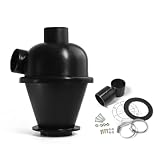
1. 2-Inch DIY Cyclone Separator Kit – Best for compact vacuums and small shops
As an Amazon Associate we earn from qualifying purchases at no extra cost to you.

This unbranded kit is aimed at hobbyists who run a small shop vacuum with 2-inch fittings and want a pre-filter in front of it without buying a full tank system. The listing describes a 2-inch cyclone with adapters and mounting hardware, sold as a DIY pre-filter for woodworking. Because the listing name does not state the body material, the container size or an efficiency rating, treat those details as items to confirm on the product page before you order.
A kit like this works best on a modest vacuum used for sanding, router cleanup and small benchtop tools. A 2-inch inlet limits airflow compared with a 2.5-inch port, so do not expect it to keep up with a large planer or table saw. If you pick it, plan to mount the container where it is easy to reach and check, and confirm that the adapters match the hose on your vacuum rather than assuming they will.
- Inlet class: 2-inch, per the listing name
- Includes adapters and mounting hardware, according to the listing
- Marketed as a pre-filter for woodworking vacuums
- Container, brand and separation efficiency: confirm on the listing
- Mounting: you supply or arrange the collection container
Pros
- Small footprint suits crowded garages
- Adapters in the box reduce extra parts hunting
Cons
- Narrow 2-inch ports restrict airflow on bigger tools
- Specs are thin on the listing, so verify before buying
Compared with the Dust Deputy Low-Pro Plus, it trades airflow and a documented spec sheet for a smaller port size and a lighter footprint.
2. Dust Deputy Low-Pro Plus – Best overall for bucket-based dust separation
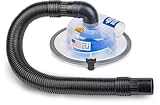
The Low-Pro Plus is a lid-style cyclone, which means the separator itself replaces the lid of a 5-gallon bucket instead of standing tall above it. That is a real advantage in a shop where the vacuum lives under a bench or on a cart, because the whole assembly only adds about 4 inches of height to the bucket. It is built for vacuums with 2.5-inch hoses, which is the most common size on mid-range wet/dry units.
The kit includes the lid separator, locking bucket latches, a short connecting hose, an elbow adapter and a gasket for the lid. You supply the bucket, and Oneida notes it should be a reinforced, airtight 12-inch-diameter pail, so a flimsy paint can will not do. Because the cyclone sits so low, it also pairs well with a rolling cart: the vacuum sits on the cart, the bucket sits beside it, and the short hose keeps airflow strong. If your workflow involves frequent emptying, a spare bucket and a second lid make swapping quick.
- Lid-style cyclone for standard 5-gallon buckets (bucket not included)
- 2.5-inch inlet and outlet, with a 2.5-inch adapter in the kit
- Manufacturer figure: removes over 99 percent of fine wood dust
- Airflow minimum of about 50 CFM per the maker; made in the USA
- Latches and a foam gasket in the box
Pros
- Very low profile fits under benches and in carts
- Clear body lets you see when the bucket is filling
Cons
- Needs a good bucket you provide yourself
- Only suited to 2.5-inch hoses, not 4-inch dust collector runs
If you want something that stands taller and can be built into a custom rig, the Oneida DIY version below is the nearest alternative from the same family.
3. Oneida Dust Deputy DIY Anti-Static Retrofit – Best for custom bucket and barrel builds

The Dust Deputy DIY is the classic stand-alone cyclone cone from Oneida Air Systems, sold for people who would rather mount it on their own container. The listing name calls it an anti-static retrofit cyclone separator for wet/dry shop vacuums. The original Dust Deputy style is a taller cone than the Low-Pro and is described by Oneida as suitable for hoses from roughly 1.5 to 2.5 inches, so it is flexible for different vacuums.
Because this is the do-it-yourself version, plan on sourcing a bucket or drum, cutting a lid, and picking a gasket and hose fittings. Check the listing for exactly which connectors come with it before you start shopping for parts.
- Stand-alone cyclone body intended for retrofit onto your own container
- Anti-static construction, per the listing name
- Designed for wet/dry shop vacuums
- Hose compatibility class: roughly 1.5 to 2.5 inches per the maker
- Container, lid and hoses: confirm what is included on the listing
Pros
- You choose the container size, so capacity is flexible
- Anti-static material is a sensible choice for fine dust
Cons
- Takes more setup than a complete kit
- Taller than a lid-style separator, so it needs headroom
Next to the Low-Pro Plus, it costs you more build time in exchange for freedom to use a bigger bin or a custom cart.
4. VEVOR Cyclone Separator with Metal Tank – Best for larger capacity and 4-inch hoses

VEVOR pairs an ABS cyclone with a steel drum, which gives you a wheeled collection tank that holds far more than a bucket. The listing describes a 4-inch retrofit cyclone for dust collectors with a 2-inch O.D. connector to adapt it for wet/dry shop vacuums. Retailer listings for this model show a drum of about 13 gallons and a manufacturer separation claim of about 99.6 percent, so it suits someone running a small dust collector or a high-capacity vacuum.
The wide 4-inch ports are friendlier to dust collector hose, and the reducer gives you a path to household-sized vacuum hose. Reviewers on retailer pages note the plastic necks are short, so budget for a secure clamp or coupler. Since the drum is steel, it also resists the dings and splits that can plague thin plastic buckets, though you should still empty it regularly rather than letting dust pile up.
- 4-inch retrofit cyclone in ABS, with a metal tank
- Adapter for 2-inch vacuum hose, per the listing
- Tank size listed around 13 gallons on retailer pages
- Manufacturer separation claim near 99.6 percent
- Casters on the drum; confirm count on the listing
Pros
- Large drum means fewer trips to empty
- Works with both 4-inch and smaller hoses via adapter
Cons
- Bulky for small shops
- Short inlet and outlet necks may need extra clamps
Compared with the DEWALT tank, it favors larger hose diameters and drum volume over a branded, ready-to-use shop vac pairing.
5. DEWALT 6 Gallon Dust Separator – Best for a ready-to-roll tank on common vacuum hoses

The DEWALT DXVCS002 is a complete cyclonic separator with a 6-gallon poly tank, a lid, latches and a four-caster base. It is not a vacuum and has no motor, so it works only when connected in line with an existing wet/dry vacuum. DEWALT lists compatibility with 1-7/8-inch and 2-1/2-inch hose connections, which covers most shop vacuums and many jobsite models.
This is the kind of product to buy if you want to hook up and go. The kit includes a short hose and hose holders, and the casters keep the tank steady on a shop floor. DEWALT states a 99.5 percent capture figure for the cyclone. It is a sensible pick for a mixed shop where one vacuum serves sanders, a miter saw shroud and general cleanup, since the tank is large enough to run through a long session without constant emptying.
- 6-gallon poly tank with latching lid
- Fits 1-7/8-inch and 2-1/2-inch hose connections
- Manufacturer capture figure of 99.5 percent
- Four-caster base and integrated hose holder
- Three-year limited warranty per the maker
Pros
- Complete kit with wheels and latches
- Fits both common hose sizes
Cons
- Larger footprint than a lid-style separator
- No separate motor, so you still need a vacuum
Against the Mullet Cyclone it is the more conventional tank-and-lid design, while the Mullet leans on a one-piece cyclone and rigid vacuum mount.
6. Mullet Cyclone – Best for a rigid one-piece unit that locks to your vacuum

The Mullet is a rotomolded, one-piece cyclone with an integrated 5-gallon bin, about 29-1/2 inches tall. Instead of using a loose hose between separator and vacuum, it connects with a cut-to-fit length of PVC pipe, a tee and a coupling so the two units form one rigid assembly. Mullet describes the connection as a job of under twenty minutes without straps or tape, and the whole pair rolls together on the vacuum wheels.
Emptying is simple: disconnect, pull the clean-out lid and turn it upside down. A translucent bin lets you check fill level at a glance, which keeps you from overfilling the cyclone. Because the vacuum and cyclone move as one unit, it suits a shop where the vacuum is wheeled from tool to tool, and it avoids the dragging and tipping that can happen when a loose bucket trails on a hose.
- One-piece rotomolded HDPE construction with a 5-gallon dump bin
- Cut-to-fit PVC connection hardware included, per the listing
- Designed to fit virtually any shop vacuum, via included hose adapters
- Maker claim of over 99 percent dust separation
- About 29-1/2 inches tall
Pros
- Rigid link means the cyclone never tips or pulls loose
- Fast to empty with a large clean-out lid
Cons
- Needs headroom, since the body stands tall
- The PVC fitting is semi-permanent once cut
Beside the Low-Pro Plus, it costs more height and more setup, but it handles a larger bin and travels as one unit with the vacuum.
Specs Compared
| Model | Style | Hose / port class | Container | Material | Efficiency claim |
|---|---|---|---|---|---|
| 2-Inch DIY Cyclone Separator Kit | DIY cyclone with adapters | 2-inch | Confirm on listing | Confirm on listing | Confirm on listing |
| Dust Deputy Low-Pro Plus | Lid-style, fits 5-gallon bucket | 2.5-inch | 5-gallon bucket (not included) | Clear resin | Over 99 percent (maker) |
| Oneida Dust Deputy DIY | Stand-alone cone, retrofit | Roughly 1.5 to 2.5-inch (maker) | Your own (confirm contents) | Anti-static plastic | Confirm on listing |
| VEVOR Cyclone with Metal Tank | Cyclone on steel drum | 4-inch, with 2-inch adapter | About 13-gallon drum (retail pages) | ABS cyclone, steel tank | About 99.6 percent (maker) |
| DEWALT 6 Gallon Dust Separator | Tank-and-lid cyclone | 1-7/8 and 2-1/2-inch | 6-gallon poly tank | Poly tank | 99.5 percent (maker) |
| Mullet Cyclone | One-piece rotomolded | Via included hose adapters | Integrated 5-gallon bin | HDPE | Over 99 percent (maker) |
How We Chose These
We built this list from research rather than shop trials. We started with the six separators on the product set and read manufacturer specification pages and retailer listing fields for hose size, container size, materials and what ships in the box. We compared those against the practical needs of a woodworker: matching the cyclone port to the vacuum hose, capacity between empties, how easily the bin is emptied, and how the unit mounts. Efficiency percentages are manufacturer claims, not independent measurements, and we say so wherever we cite them. Where a listing did not state a spec, we marked it for confirmation instead of guessing.
What to Look For
Match the hose size first
Shop vacuums come with 1-1/4, 1-7/8, 2-1/2 or 4-inch hoses depending on class, and a cyclone must be matched or adapted to your hose. A 2.5-inch inlet is the sweet spot for common wet/dry vacuums and is the reason lid-style kits like the Low-Pro Plus are popular. Smaller ports choke airflow, and a restrictive hose at the cyclone can cost more suction than the cyclone itself saves. If you run a 4-inch dust collector hose, look for a 4-inch cyclone body, and use reducers sparingly because every step down adds restriction.
Container size and emptying habit
A cyclone only works well when the bin has space for the dust to settle. As a rule of thumb, empty the bin when it is about two-thirds full, because a packed bin lets fine dust get pulled back into the airstream. A 5-gallon bucket holds roughly 0.67 cubic feet, so a day of sanding cabinet doors can fill it faster than you expect. Larger drums of 6 to 13 gallons reduce the number of trips but take more floor space. Pick the size you will actually carry to the dumpster.
Body style: lid, cone or one-piece
Lid-style separators sit directly on a bucket and are the most compact. Tall cone designs usually move air a bit more smoothly and fit custom builds, but they need headroom. One-piece rotomolded units like the Mullet remove the leaky joint between cyclone and bin, which is a common source of lost suction. Whichever you choose, check that the lid gasket and latches seal well, because an air leak at the bin lets dust bypass the cyclone and lowers suction.
Static, fire risk and personal protection
Fine wood dust can build static charge and is combustible in suspension, so choose anti-static plastics or metal where the maker offers them and keep ignition sources away from the bin. Empty dust into a metal container, not a plastic bag near a heater. Remember that a cyclone captures most of the dust, but the fine remainder still reaches the vacuum filter and the room. Wear a suitable respirator when sanding, and keep the vacuum filter clean.
Seals, fittings and hose runs
Most performance problems with a cyclone setup come from leaks and kinks, not from the cyclone body. Check that every hose cuff is a snug fit, wrap loose joints with a clamp or a layer of foil tape, and keep the hose between the cyclone and the vacuum as short and straight as you can. A long corrugated hose adds friction, so a smooth-bore hose is the better match for the intake side. Keep the tool-to-cyclone run flexible enough to reach your work but avoid tight loops, which collect chips and slow the air.
A simple worked example
Say your vacuum has a 2.5-inch hose and you sand for an hour at a time. A lid-style cyclone on a 5-gallon bucket gives you about two-thirds of a cubic foot of working room, which is enough for one or two sanding sessions. If you add a planer later, move up to a 4-inch cyclone and drum, because chips fill small buckets in minutes.
Questions
Does a cyclone separator really protect the vacuum filter?
Yes, that is its job. By spinning dust into a bin first, it keeps the bulk of chips and fine particles off the filter, so the vacuum holds its suction longer. It does not eliminate the need for a clean filter, because some fine dust still passes through.
Can any cyclone fit any shop vacuum?
Not automatically. Hose diameter varies, and some vacuums use proprietary connectors. Use the adapters in the kit, or buy a reducer, and confirm the diameter class listed for each product before ordering.
How often should I empty the bin?
A good habit is to empty it when it is about two-thirds full, or at the end of each work session. Waiting until it is packed can reduce separation efficiency and allow dust back into the airstream.
Is a bigger tank always better?
Not always. A bigger tank means fewer emptying trips, but it also takes more space and may be heavy to carry. Choose the largest size you can comfortably move and fit in the shop.
Do I still need a respirator with a cyclone?
Yes. A cyclone reduces dust load on the vacuum but does not make shop air safe on its own. Fine particles from sanding and sawing can still escape, so pair the cyclone with a proper respirator and good ventilation.
Can I use these for wet pickup?
That depends on the product. Some are built for wet and dry shop vacuums, but the listing details differ, so check the maker’s guidance before sending liquids through a cyclone and bin.
Update History
- October 20, 2026 – Initial publication; product set drawn from current catalog listings.
- Check the product page for current specifications and availability before buying.
Sources
- Manufacturer product and specification pages for Oneida Air Systems (Dust Deputy), DEWALT, VEVOR and Mullet Tools
- Retailer listing titles and specification fields for each product
- OSHA guidance on wood dust hazards