What's inside
As an Amazon Associate I earn from qualifying purchases. This post may contain affiliate links at no extra cost to you.
A small cordless collection usually needs three things: a drill/driver, an impact driver or compact saw, and a way to keep batteries charged without fuss. The best platform is rarely the one with the biggest catalog. It is the one that has the right tools for your jobs, batteries that fit them, and a price you can live with.
For a homeowner or occasional DIYer, a mainstream 18V/20V-max platform from DeWalt, Milwaukee, Makita, or Ryobi is a sensible starting point. The voltage labels are not directly comparable: “20V max” describes peak voltage, while the same class is commonly called 18V nominal. Pick by tool availability and kit value, not that label.
As an Amazon Associate we earn from qualifying purchases at no extra cost to you.


Start with the tools you will actually use
Write down the first three cordless tools you expect to buy, then check the platform’s current range and prices. A drill and impact driver cover many household tasks. Add a circular saw if you cut sheet goods or framing lumber; add an oscillating tool for trim, drywall patches, or awkward cuts. If the third tool is a lawn mower, shop for outdoor equipment too—the answer may change.
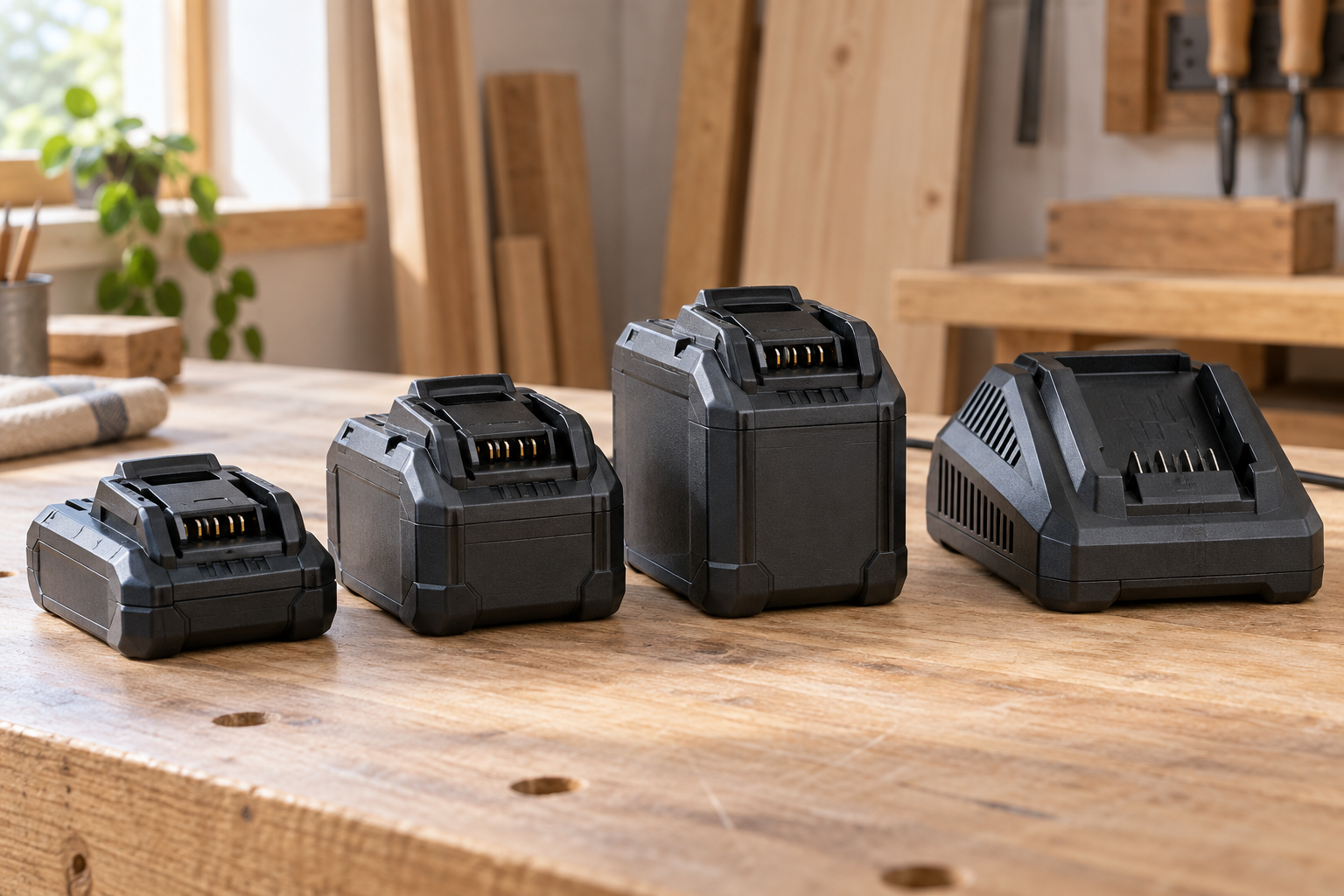
Buy a kit that includes two batteries if you will use a saw or work away from an outlet. A compact 2.0Ah battery keeps a drill light; a 4.0Ah battery generally provides more useful runtime for saws and other high-draw tools. Capacity is not a promise of exact work time: material, blade sharpness, tool load, and temperature all matter. A dull saw blade can drain a battery quickly and make a small tool feel underpowered.
For a starter set, compare 18V drill and impact-driver combo kits with the bare-tool prices for your next planned purchase. Kits are often the cheapest way into a platform, but a bargain kit is less useful if it comes with one undersized battery and no tool you need.
How the main platform choices differ
| Platform type | Best fit | Main trade-off |
|---|---|---|
| Ryobi 18V ONE+ | Homeowners building a broad, budget-conscious collection | Good range and frequent kit deals; some tools are less suited to sustained professional use |
| DeWalt 20V MAX | DIYers and tradespeople who want broad availability | Large selection, but batteries and specialty tools can raise the total cost |
| Milwaukee M18 | Users who expect to add jobsite or trade-specific tools | Strong specialty range; the platform can cost more than needed for occasional household work |
| Makita 18V LXT | Users who value a mature range of woodworking and trade tools | Check local pricing and availability for the exact tools you want |
These are broad tendencies, not guarantees about every tool. Compare the specific drill, saw, battery, and charger you plan to buy. A compact drill may suit cabinet assembly better than a heavier, more powerful model; a homeowner who cuts a few boards a year may not benefit from a premium saw-and-battery setup.
Battery and charger choices matter
For a small collection, two batteries are usually more useful than one oversized pack. One can run the tool while the other charges, and the smaller battery makes overhead drilling less tiring. If your main tool is a circular saw, hedge trimmer, or shop vacuum, plan for at least one higher-capacity pack. Some high-output tools work poorly with small batteries even if the pack physically fits.
Check what the kit’s charger can do. Basic chargers may take several hours to refill a large pack; rapid chargers reduce downtime but can cost more and generate more heat. Charging speed matters most when you have one battery and use the tool continuously. For weekend jobs with two packs, a standard charger is often adequate.
Battery compatibility is not the same as tool compatibility across every product line. Brands sometimes have separate systems for compact 12V tools, outdoor equipment, or higher-voltage machines. Confirm the battery series printed on the tool and pack before buying. Avoid relying on third-party adapters for routine use: they can add bulk, create poor electrical connections, and may complicate warranty claims.
When the cheaper option is fine
A lower-cost platform is a good choice if you use tools a few times a month, can buy a complete starter kit, and do not need specialized trade equipment. Ryobi is often worth considering for that role, especially when a sale bundles useful tools and batteries. The savings are real, but compare bare-tool prices before committing; a cheap first kit can lead to expensive batteries if later tools are rarely discounted.
Pay more for a professional-oriented platform when the tools will earn money, take daily use, or need to handle repeated high-load work. For occasional fastening, a budget impact driver is usually enough. For long runs of structural screws or frequent concrete drilling, tool performance, battery output, durability, and service support become more important.
Before buying into any ecosystem, price the whole first-year setup: starter kit, one additional battery, charger, and the next two tools. Search platform battery and charger bundles, but compare them with the manufacturer’s kit and local retailer promotions. A bundle is only a deal if its battery fits your tools and its charger suits your schedule.
Make the decision with a short checklist
Choose the platform that meets these checks: it has your first three tools; its starter kit includes at least two useful batteries; replacement batteries are easy to find; and the combined price beats buying equivalent tools separately. If two platforms are close, handle the drill and saw in person. Grip shape, balance, trigger control, and weight can matter more than a small difference in advertised torque.
For a typical small household collection, a 18V/20V-max kit with a drill, impact driver, two batteries, and a basic charger is a practical base. Add tools only when a job justifies them. Keeping the collection small avoids paying for duplicate batteries and specialty tools that sit unused—and makes it easier to keep the packs charged, stored dry, and ready for the next project.
Related guides
- Longest Lasting Lawn Mower Battery: AGM vs Lithium vs Flooded Lifespan and Cost per Season
- Duralast Gold Lawn Mower Battery Review: U1 Fit, CCA and When to Pay for AGM
- Greenworks Pro 80V 21-Inch Mower Review: Runtime Math, Push vs Self-Propelled and Yard Fit
- Bosch High Pressure Washer Gun Replacement: Fittings, Adapters and What Fits Your Model