What's inside
As an Amazon Associate I earn from qualifying purchases. This post may contain affiliate links at no extra cost to you.
A high-capacity battery can keep a cordless circular saw cutting longer, but amp-hours alone do not tell you whether it is the right pack. Voltage, battery design, saw compatibility, weight, and the material you cut all matter. For frequent framing or sheet-goods work, a larger pack can reduce interruptions. For short cuts or overhead work, the extra weight may be a poor trade.
As an Amazon Associate we earn from qualifying purchases at no extra cost to you.


What battery capacity means on a saw
A battery’s amp-hour rating (Ah) describes how much charge it stores. Within the same voltage platform, a 6.0Ah pack generally stores about twice the energy of a 3.0Ah pack. Watt-hours (Wh) make comparisons across voltages clearer: multiply nominal voltage by amp-hours. For example, a nominal 18V 6.0Ah battery is about 108Wh; a 36V 4.0Ah battery is about 144Wh.
That does not mean the saw will run for an exact number of minutes. Blade sharpness, cut depth, feed rate, wood species, and the saw’s motor all affect consumption. A dull blade or forcing the saw through wet lumber can drain a pack quickly and trigger overheating protection. A larger battery gives more stored energy, but it cannot fix a binding blade or an undersized saw.
Which capacity is worth buying?
For occasional cuts, a 4.0Ah or 5.0Ah pack is often a sensible starting point if it is approved for your saw. It is usually cheaper and lighter than the biggest option, and it suits trim work, small repairs, and cutting a few sheets. If your saw regularly stalls under load, first check the blade, depth setting, and cutting technique rather than assuming capacity is the problem.
For repeated framing cuts, ripping sheet goods, or working away from a charger, consider a high-output pack around 6.0Ah to 8.0Ah. Some brands offer still larger packs, but a bigger rating does not guarantee more power: the pack must also be designed to deliver the current a saw demands. Check the saw and battery maker’s compatibility guidance, especially if the tool has a high-power setting or uses a newer battery generation.
Compare high-output 6.0Ah batteries with the packs already in your system. A compatible battery from the same platform may be a better buy than switching ecosystems for a small runtime gain.
Battery size trade-offs
| Pack size | Best fit | Main advantage | Trade-off |
|---|---|---|---|
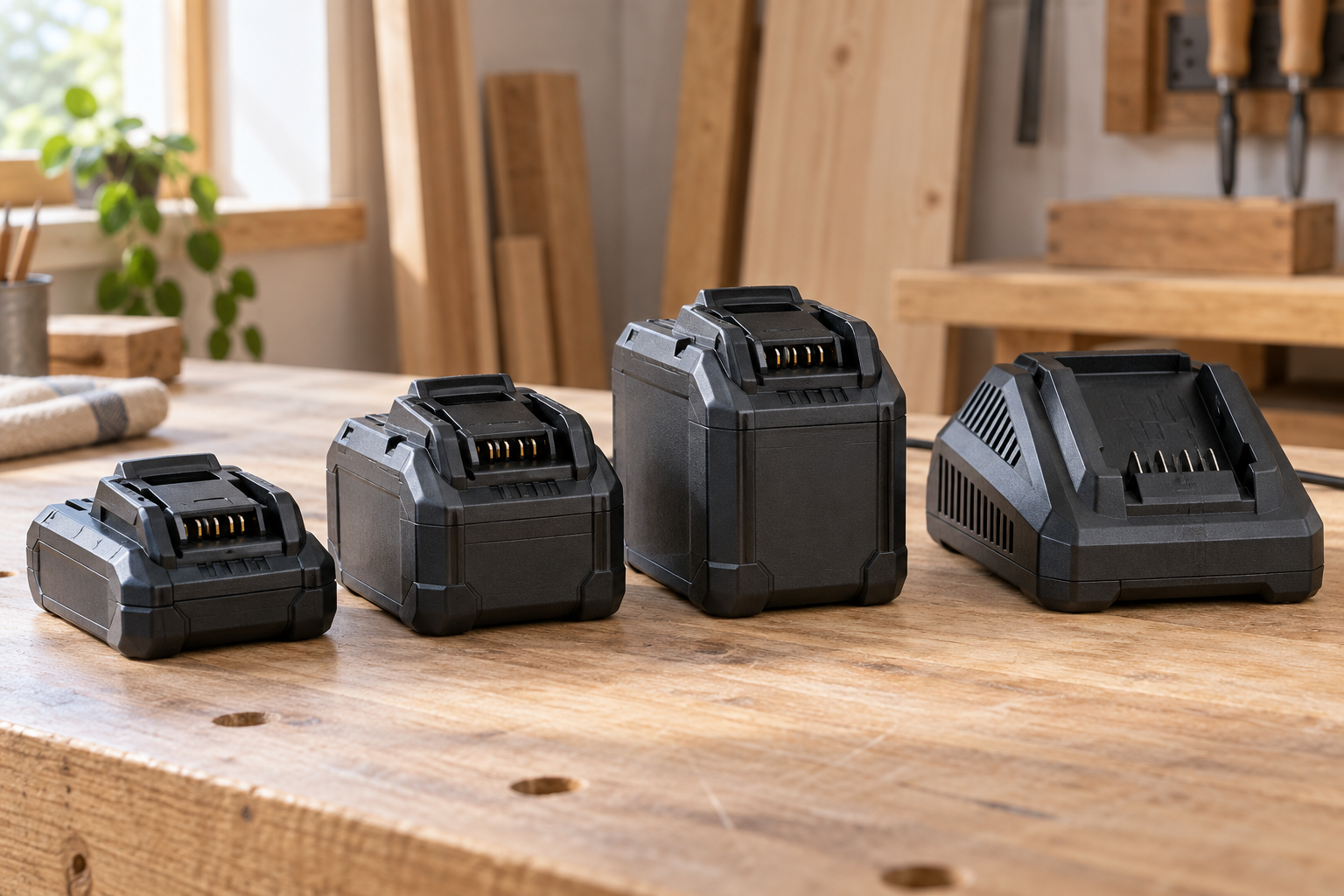
| 4.0–5.0Ah | Repairs, trim, occasional cuts | Lower cost and manageable weight | More frequent swaps during heavy work |
| 6.0–8.0Ah | Framing, sheet goods, longer sessions | More stored energy and often stronger output | Heavier; may cost substantially more |
| 9.0Ah and larger | Long, demanding work where weight is acceptable | Fewer battery changes | Bulky, expensive, and tiring for one-handed positioning |
These are practical ranges, not a guarantee of runtime or power. Battery construction differs by brand and generation. A compact high-output pack can sometimes run a saw better than a larger pack built mainly for extended runtime, so check the manufacturer’s stated use and tool compatibility.
Do not ignore weight and balance
A large battery adds weight at the rear of the saw. That can make the tool feel less nimble when starting a cut, working overhead, or reaching across a sheet. It can also make a saw harder to hold square at the end of a long cut. If possible, handle the saw with the intended pack installed before buying. A lighter battery is often the better choice for ladder work and short, controlled cuts.
For a saw that accepts different battery sizes, keep a smaller pack for awkward cuts and a larger one for bench or floor work. A high-capacity 8.0Ah pack can suit long cutting sessions, but it is not automatically the best everyday battery.
Check the platform and charger
Buy for the battery platform you already own unless there is a clear reason to change. Packs that share a voltage label may still be incompatible because of different connectors, electronics, or battery generations. Confirm compatibility with the exact saw, not just another tool from the same brand. Avoid unverified adapters: they can interfere with protection circuitry and may leave the tool or battery without the safeguards its maker designed.
Charging time matters when one pack must cover a full day. A high-capacity battery takes longer to recharge, and a basic charger may become the bottleneck. Check the charger’s rated charge time for the pack size, and consider a faster compatible charger or a second battery if you need continuous work. A compatible fast charger can reduce downtime, but faster charging may add cost and heat; use the maker-approved charger and avoid charging a hot battery immediately after heavy cutting.
Get more useful runtime
Use a sharp blade suited to the cut, set the depth so the teeth clear the work by roughly 1/8 inch, and let the saw reach speed before entering the material. Keep the offcut supported so it cannot pinch the blade. If the saw slows, stop and inspect rather than pushing harder. Repeated overloads can heat the battery and motor, and a pack may shut down until it cools.
Store batteries dry and away from extreme heat. If a pack is unusually hot, swollen, cracked, or has damaged contacts, stop using it and follow the maker’s instructions for service or disposal. For most buyers, the right high-capacity battery is the largest pack that delivers a worthwhile reduction in swaps without making the saw tiring or exceeding the budget.
FAQ
Which capacity is worth buying?
Related guides
- Longest Lasting Lawn Mower Battery: AGM vs Lithium vs Flooded Lifespan and Cost per Season
- Duralast Gold Lawn Mower Battery Review: U1 Fit, CCA and When to Pay for AGM
- Greenworks Pro 80V 21-Inch Mower Review: Runtime Math, Push vs Self-Propelled and Yard Fit
- Bosch High Pressure Washer Gun Replacement: Fittings, Adapters and What Fits Your Model