What's inside
As an Amazon Associate I earn from qualifying purchases. This post may contain affiliate links at no extra cost to you.
Charging a cordless tool battery is usually uneventful, but heat is the main thing that shortens lithium-ion battery life and can turn a damaged pack into a safety problem. The basic rule is simple: charge the pack with the correct charger, at a moderate temperature, on a hard nonflammable surface, and give both the battery and charger room to shed heat.
Why cordless tool batteries overheat
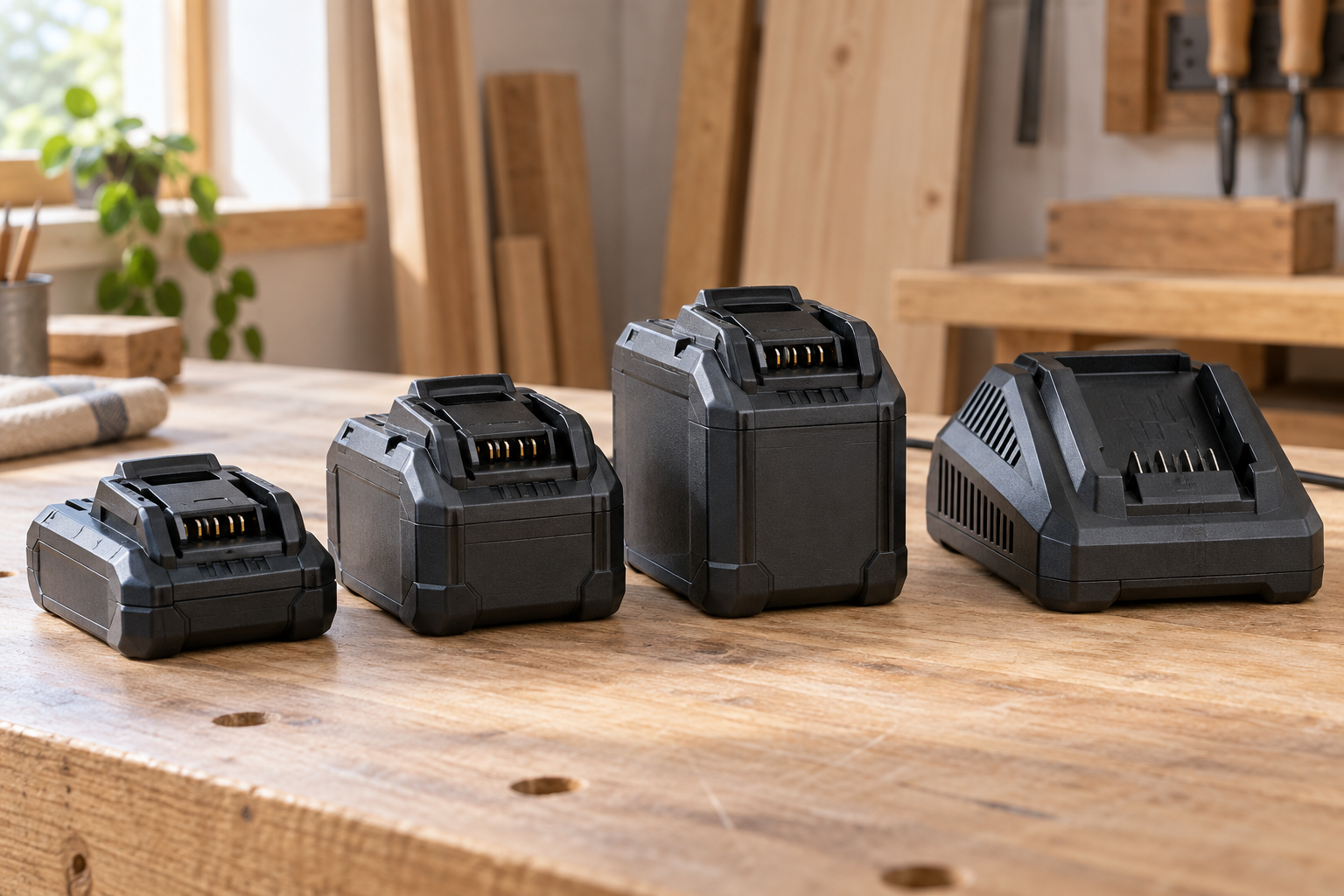
Lithium-ion cells warm up while charging, especially when the battery is nearly empty and the charger is delivering its highest current. A high-capacity pack, such as a 6.0Ah or 8.0Ah battery, can run warmer than a smaller 2.0Ah pack because it may accept more charging power and contains more cells.
Heat also comes from the charger itself. Fast chargers use higher current to reduce charging time, so their cooling fans may run loudly and the battery casing may feel noticeably warm. Warm is normal. Hot enough that you cannot comfortably hold the pack, a burning smell, deformation, or repeated charger shutdowns is not.
Charging in a hot garage, inside a vehicle, on a blanket, or in direct sun makes the problem worse. Dust-packed charger vents and blocked cooling fans have the same effect.
Use the right charger for the battery platform
Use the charger designed for your battery’s brand and voltage platform. A 20V Max, 18V, or 24V pack is not interchangeable merely because the battery slides into a similar-looking tool. The charger communicates with the pack’s battery-management system and controls charging based on cell voltage and temperature.
Do not use a generic adapter that connects directly to the battery terminals. It may lack cell balancing, temperature monitoring, and the cutoff protections built into the intended charger. Even within one brand, chargers can differ in speed and compatibility. Check the battery and charger manuals before buying a replacement.
If you need another charger, start with the manufacturer’s standard charger or a reputable cordless tool battery charger listed for your exact platform. The cheapest charger is only a bargain if it is genuinely compatible and has the required safety controls.
Control the battery temperature
Let a battery cool after demanding work before charging it. Cutting thick lumber, drilling large holes, or running a high-current tool can leave a pack warm even when the tool has stopped. Waiting 20 to 30 minutes is often enough, but use the battery’s actual temperature rather than the clock as your guide.
Most manufacturers specify a charging range roughly around 40°F to 104°F (5°C to 40°C), though the exact limits vary. A battery stored overnight in a freezing shed should warm indoors before charging. Charging a cold pack can be refused by the charger and may reduce performance or cause unnecessary stress. Do not heat it with a hair dryer, heater, or radiator; let it come up to room temperature naturally.
Likewise, do not charge a hot pack immediately after use. Put it in a shaded, ventilated area away from sawdust and solvents. Never place a battery in a freezer or refrigerator to cool it quickly because condensation can reach the electronics.
Set up a cooler charging area
Place the charger on a solid, level, nonflammable surface such as a workbench or concrete floor. Leave several inches of open space around its ventilation slots. Keep it out of direct sunlight and away from heaters, windows, welding areas, and hot vehicles.
Do not charge on a bed, couch, carpet, cardboard pile, or clothing. These surfaces can block vents and provide fuel if a defective pack vents or catches fire. Keep chargers and batteries dry, and do not charge where water, rain, or condensation can reach them.
A wall-mounted charging shelf can work well if it is made from a noncombustible material and does not trap heat. If you charge several packs, space the chargers apart instead of stacking them. A cordless tool battery charging station is useful for organization, but it does not automatically make simultaneous charging safe. Follow the charger manufacturer’s spacing and electrical requirements.
Standard versus fast charging
| Charging option | Heat and speed | Best use |
|---|---|---|
| Standard charger | Slower, generally cooler | Overnight charging, occasional DIY work, and maximizing convenience at low cost |
| Fast charger | Shorter charge time, more heat and fan noise | Multiple batteries, daily tool use, and jobs where downtime matters |
| Multi-port charger | Convenient, but total heat and power demand can be higher | Organized workshops with several compatible packs |
A fast charger does not automatically damage a battery. The pack’s electronics and the charger are designed to manage current and stop when charging is complete. However, frequent high-temperature charging can contribute to faster capacity loss than moderate charging, particularly when the pack is already hot. For a homeowner who uses one battery occasionally, the standard charger is usually the cheaper and sensible option. A fast charger earns its cost when you routinely run out of charged packs.
Inspect the battery before charging
Do not charge a pack that is swollen, cracked, leaking, badly dented, wet, or producing an unusual odor. Stop using it if the terminals are burned, loose, or heavily corroded. A battery dropped from a ladder may look normal outside while having damaged internal cells, so treat major impacts seriously.
Never tape over a swollen battery or try to open and repair the pack. Set it aside away from combustible materials, do not put it in household trash, and contact the tool manufacturer or a local battery-recycling program for disposal instructions. If a pack becomes extremely hot, smokes, hisses, or vents, leave the area and call emergency services if there is an active fire. Do not handle it with bare hands.
Charging habits that extend battery life
Do not deliberately run a lithium-ion tool battery completely flat every time. Recharge it when convenient rather than waiting for the tool to stop. For storage lasting several months, follow the brand’s instructions; a partial charge, often around 30% to 50%, is generally better than leaving the pack full and hot.
Unplug the charger when practical after the battery finishes, especially in a hot workshop or when nobody is home. The charger should stop active charging, but removing the pack avoids unnecessary standby heat and lets you notice problems sooner. Keep battery contacts clean and dry, and use a soft brush rather than metal tools to remove dust.
If a charger repeatedly reports a temperature fault, charges unusually slowly, or makes the battery hot every time, stop using that combination. Test with another known-good compatible battery if available. If the fault follows the original pack, replace the battery; if it follows the charger, replace the charger. For a complete setup, compare battery and charger kits only after confirming the platform you already own.
Related guides
- Longest Lasting Lawn Mower Battery: AGM vs Lithium vs Flooded Lifespan and Cost per Season
- Duralast Gold Lawn Mower Battery Review: U1 Fit, CCA and When to Pay for AGM
- Greenworks Pro 80V 21-Inch Mower Review: Runtime Math, Push vs Self-Propelled and Yard Fit
- Bosch High Pressure Washer Gun Replacement: Fittings, Adapters and What Fits Your Model