What's inside
As an Amazon Associate I earn from qualifying purchases. This post may contain affiliate links at no extra cost to you.
What a right-angle impact driver can do
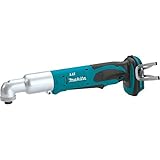
A cordless right-angle impact driver puts a powered socket or bit close to a 90-degree bend, where a conventional impact driver and its straight bit holder cannot fit. It is useful for fastening cabinet hardware, running screws between joists, and working inside equipment enclosures. Its compact head can save time and wrist strain, but it is not a substitute for a regular impact driver: the head still needs room to turn, and the tool’s reach may be limited.
Before buying, measure the gap where you will work. Check both the height of the tool head and the space needed to insert a socket or bit. A tool that fits by itself may not fit once a long fastener or socket is attached.
As an Amazon Associate we earn from qualifying purchases at no extra cost to you.


Choose the right tool type
“Right-angle driver” can refer to several different tools. A right-angle drill is designed mainly for drilling and may have a clutch, but it does not necessarily deliver impact action. A compact right-angle impact wrench accepts sockets and is suited to nuts and bolts. A right-angle impact driver generally takes hex-shank bits or an adapter for screws and small fasteners.
For screws in tight spaces, look for a genuine right-angle impact driver rather than assuming a drill or wrench will do the same job. For automotive fasteners, a compact right-angle impact wrench may be the better match. If you only need to reach around an occasional obstruction, an angle attachment for a standard impact driver costs less, but it adds length and can be awkward under high load.
Compare the main options
| Option | Best for | Main trade-off |
|---|---|---|
| Right-angle impact driver | Hex-bit screws and repeated fastening in narrow spaces | Specialized tool; check head size and bit access |
| Right-angle impact wrench | Bolts and nuts where a socket fits | Bulkier socket head; not the right interface for ordinary driver bits |
| Angle attachment | Occasional light fastening | Can increase overall reach and may not suit sustained high torque |
| Compact standard impact driver | Open areas and general screwdriving | Needs enough clearance for the straight tool body |
Buy the tool that matches the fastener and the tightest part of the job. If the work is mostly accessible, a standard impact driver is usually the better-value purchase.
What to check before buying
Head clearance: Compare the manufacturer’s head-height measurement with your available gap, leaving room to get the tool in and remove it. A few millimetres matter in a crowded cavity. Also consider the battery: a compact head paired with a large pack can still be hard to position.
Drive interface: Confirm whether the tool uses a 1/4-inch hex collet, a square drive for sockets, or an adapter. Adapters add length and another connection that can loosen or wobble. If you need both screws and nuts, verify what is included and whether the manufacturer supports the accessory you plan to use.
Speed and control: Multiple speed settings or a trigger with a broad control range help prevent stripped screw heads and damaged threads. Impact action is useful when a fastener resists turning, but it can also make it easy to overdrive a small screw. Start at low speed and finish by hand if the material is delicate.
Battery platform: If you already own cordless tools, staying within that battery ecosystem can make a less common specialty tool easier to justify. Compare bare-tool and kit prices, and check which batteries fit. A small pack can keep the tool more manageable; a larger pack may be preferable for extended work. Search the cordless right-angle impact driver category by platform and confirm dimensions in the manufacturer’s specifications before ordering.
Use it without damaging fasteners
Seat the bit fully, hold the tool square to the fastener, and use enough pressure to keep the bit engaged without forcing it. Begin at a low setting, especially with small screws, softwood, plastic, or sheet metal. If the bit starts camming out, stop rather than pushing harder; a slipping bit can round the head quickly. Check that the bit type and size match the screw.
For bolts, use a socket that fits cleanly and avoid using an impact tool on fasteners that require a specified torque unless you finish with a calibrated torque wrench. Impact tools do not provide a reliable torque reading. Do not use an impact driver to tighten a fastener beyond its intended limit just because the tool can keep hammering.
Common problems include a head that will not clear the workpiece, a battery that blocks access, and an extension or adapter that makes the setup too long. Mock up the tool with the actual bit or socket before committing to a purchase. If a straight driver with a short bit fits, it is usually simpler and steadier.
When a cheaper option is enough
For occasional repairs, a quality right-angle attachment may be adequate. It is a sensible budget choice for light screws and infrequent use, particularly if you already own a compatible impact driver. It is less attractive for repeated fastening in a cramped space: the combined tool can be long, access may be poor, and the attachment becomes another wear point. Follow its rated use and stop if it heats up, binds, or develops excessive play.
If your regular work involves repeated fastening in tight cavities, a dedicated tool is easier to position and less of a workaround. Search for a cordless right-angle impact wrench if your jobs use sockets, or compare cordless right-angle drills when drilling and clutch control matter more than impact fastening. Choose by fastener type, measured clearance, and battery compatibility—not by torque claims alone.
Related guides
- Longest Lasting Lawn Mower Battery: AGM vs Lithium vs Flooded Lifespan and Cost per Season
- Duralast Gold Lawn Mower Battery Review: U1 Fit, CCA and When to Pay for AGM
- Greenworks Pro 80V 21-Inch Mower Review: Runtime Math, Push vs Self-Propelled and Yard Fit
- Bosch High Pressure Washer Gun Replacement: Fittings, Adapters and What Fits Your Model