What's inside
As an Amazon Associate I earn from qualifying purchases. This post may contain affiliate links at no extra cost to you.
Charging two cordless tool batteries during a shift is mostly a scheduling problem. The key numbers are how long each pack takes to charge, how quickly your tools use that capacity, and whether you can keep a charger somewhere safe and powered. A second charger helps only if it reduces a real bottleneck; for some crews, a spare battery is the better buy.
Start with your work rate
Check the charge time for your exact battery and charger combination. Charging speed varies by platform, battery capacity, charger output, pack temperature, and state of charge. A compact pack may recharge in under an hour on a fast charger, while a large pack can take several hours on a basic one. Use the manufacturer’s charge-time chart rather than assuming all packs from the same brand charge at the same rate.
Then estimate how much battery capacity the job consumes between charging opportunities. If one battery reliably lasts two hours and a charging cycle takes an hour, two packs may be enough: use one while the other charges. If the work drains a pack in 30 minutes but charging takes 90 minutes, two packs alone will not maintain a continuous workflow. You’ll need more charged packs, a faster compatible charger, less demanding use, or access to another charging window.
Choose a setup that fits the shift
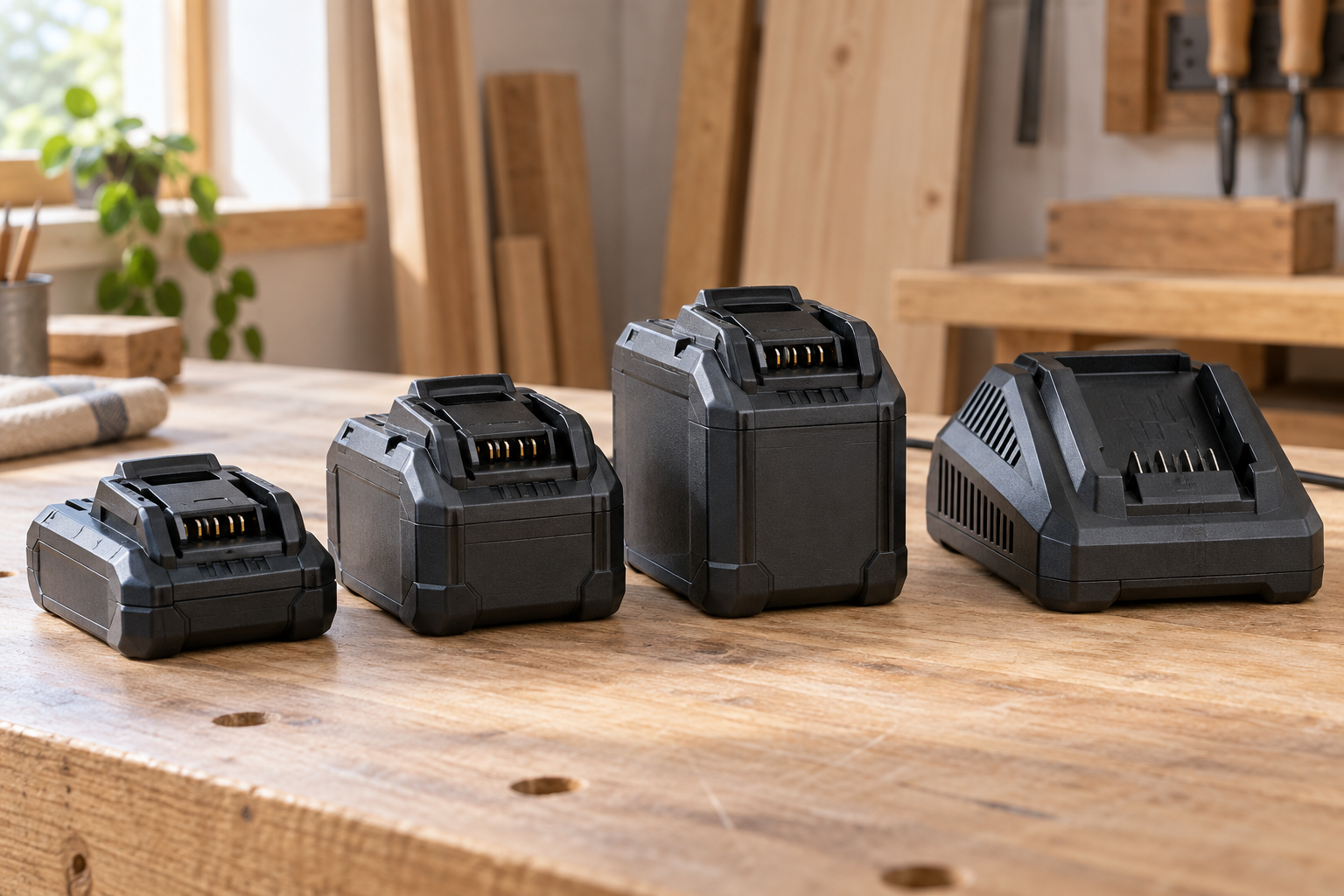
For two packs, there are three common arrangements: a single-port charger, a two-port charger, or two separate chargers. Check whether a two-port unit charges both batteries at once or charges them in sequence. Some designs prioritize one pack, so “two bays” does not necessarily mean both packs reach full charge sooner.
| Setup | Works well when | Main trade-off |
|---|---|---|
| One single-port charger | You can charge packs one after another during breaks or downtime | Only one pack charges at a time; a dead pack may wait in line |
| One two-port charger | You have space for one unit and both packs need charging together | May charge sequentially; usually costs more than a basic charger |
| Two single-port chargers | You need simultaneous charging or want a backup if one charger fails | Takes more outlets and bench space; check total power demand |
If your schedule has a predictable lunch break and one pack can recharge in that time, a basic compatible single-port tool battery charger may be all you need. If both packs routinely come off the tool nearly empty and the break is short, compare a dual-port charger for your battery platform with two separate chargers. Verify compatibility, charge rates, and simultaneous-charging behavior before buying.
Schedule the battery rotation
Label the packs A and B, or mark them with different colors. Start the shift with both charged. Use A first, then put it on the charger as soon as the work allows; switch to B rather than waiting beside the charger. At the next break, check the charge indicators and put the lower pack on charge. This simple rotation makes it easier to spot a pack that is losing capacity or a charger that is not charging properly.
Do not plan around running every battery to empty. Many tools cut power before a lithium-ion pack reaches a damaging discharge level, but repeated low-voltage cutoffs still interrupt work and leave no reserve for an unexpected task. Swap packs when performance drops or at a planned task change. Keep one usable pack available if the shift involves critical work that cannot stop.
Battery capacity affects the length of the cycle, but a higher amp-hour rating also adds weight and cost. A larger pack can make sense on a saw or grinder that draws heavily; on an overhead drill or impact driver, a lighter pack may reduce fatigue. If you need longer runtime but cannot pause to charge, compare the cost and handling of an extra pack with that of a compatible higher-capacity battery pack.
Keep charging safe and reliable
Charge indoors or in a dry, protected area within the temperature limits in the battery manual. Cold packs may charge slowly or refuse to charge; hot packs from heavy use may need time to cool. Let them return to an acceptable temperature instead of trying to force a charge. Keep vents clear, set chargers on a stable surface, and keep batteries away from rain, metal debris, and combustible clutter.
Use the charger specified for the battery platform. A physically similar pack or third-party charger is not automatically compatible, and an incorrect charger can cause charging faults or damage. Avoid powering several high-output chargers through a lightly rated extension lead or overloaded outlet. If the charger flashes an error, the pack is unusually hot, swollen, cracked, or has damaged contacts, stop using it and follow the manufacturer’s service or disposal guidance. Do not open a battery pack to repair it.
Charging a hot battery immediately after cutting or grinding is a common source of delays: the charger may pause until the pack cools. Build that cooling time into the rotation, especially in warm weather. Likewise, dust packed into charger vents can contribute to overheating. Keep the charger clean using the manufacturer’s instructions; do not blow debris into its electronics with uncontrolled high-pressure air.
What to buy first
If two packs already cover the work and one can recharge during scheduled downtime, keep the cheaper single charger. If a pack sits idle waiting for the only charging bay, buy a second compatible charger or a true simultaneous dual-port unit. If both packs are charging but the tools are still waiting, another charger will not solve the shortage; you need more battery capacity in circulation or a change in work sequence. Match the purchase to the actual bottleneck, and confirm the charger’s published charge time for the pack size you use most.
Related guides
- Longest Lasting Lawn Mower Battery: AGM vs Lithium vs Flooded Lifespan and Cost per Season
- Duralast Gold Lawn Mower Battery Review: U1 Fit, CCA and When to Pay for AGM
- Greenworks Pro 80V 21-Inch Mower Review: Runtime Math, Push vs Self-Propelled and Yard Fit
- Bosch High Pressure Washer Gun Replacement: Fittings, Adapters and What Fits Your Model