
What's inside
- Which Husqvarna 3200 PSI Pressure Washer Do You Have?
- What Does 3200 PSI Mean?
- What You Need Before Starting
- How to Start a Husqvarna 3200 PSI Pressure Washer
- Which Nozzle Should You Use?
- How to Clean Common Outdoor Surfaces
- How to Use Detergent Correctly
- How to Shut Down the Pressure Washer Safely
- Troubleshooting a Husqvarna 3200 PSI Pressure Washer
- Maintenance Tips for Longer Service Life
- Safety Rules You Should Never Ignore
- Frequently Asked Questions
- Final Verdict
As an Amazon Associate I earn from qualifying purchases. This post may contain affiliate links at no extra cost to you.
A Husqvarna 3200 PSI pressure washer can help remove dirt, mud, algae, and other buildup from suitable outdoor surfaces, but getting good results depends on more than maximum pressure. The correct nozzle, water flow, cleaning technique, and distance from the surface all matter.
This guide explains how to set up, start, operate, and shut down a Husqvarna 3200 PSI gas pressure washer, along with practical cleaning advice and troubleshooting steps. Because Husqvarna has sold multiple pressure washers rated at 3,200 PSI, identify your exact model before following model-specific fuel, oil, maintenance, or operating instructions.
Which Husqvarna 3200 PSI Pressure Washer Do You Have?
The name “Husqvarna 3200 PSI pressure washer” can refer to different machines. Their specifications and controls should not automatically be treated as interchangeable.
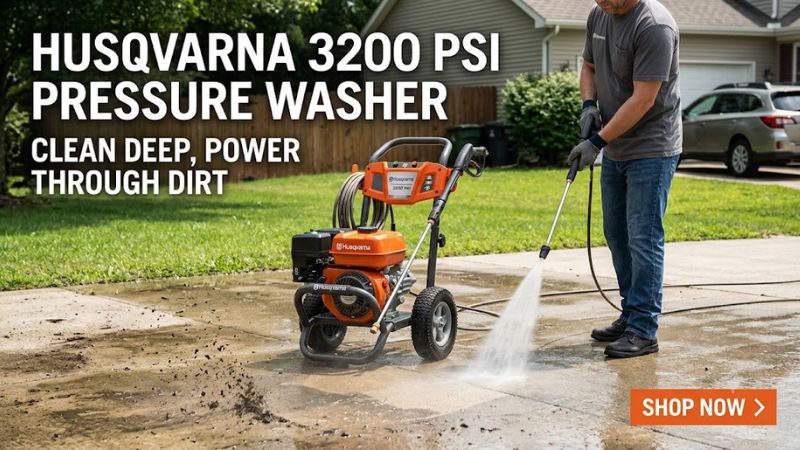
| Model or product identification | Verified specifications | Important distinction |
| Husqvarna 3200 PSI Horizontal Shaft Gas Pressure Washer, SKU 967 05 89-01 | 3,200 PSI maximum pressure; 30-foot hose; axial-cam pump; Briggs & Stratton engine rated at 3.5 hp | An older horizontal-shaft model with its own product support documentation. |
| Husqvarna HB32, SKU 967 97 93-01 | Axial-cam pump; gasoline power; Briggs & Stratton engine rated at 6.4 hp; listed weight of 67 lb | A separate model whose specifications should not be combined with those of the older horizontal-shaft washer. |
| Husqvarna 3200 PSI Gas Powered Pressure Washer, model 022007 | 3,200 PSI maximum pressure; 2.5 GPM maximum flow; 208 cc Briggs & Stratton CR950 OHV engine; 30-foot hose | A different product configuration listed by Costco. |
Sources: Husqvarna product support documentation and Costco’s product listing.
Find the model number on the machine’s identification label, then obtain its matching operator’s manual. This is especially important if you are buying a used unit, replacing a hose or nozzle, or preparing the engine for seasonal storage.
What Does 3200 PSI Mean?
PSI stands for pounds per square inch. It measures water pressure, which influences how forcefully the water strikes a surface.
Another important specification is GPM, or gallons per minute, which measures water flow. For example, the model 022007 is listed at a maximum of 3,200 PSI and 2.5 GPM. These are maximum product ratings, not a guarantee that every nozzle, operating condition, or cleaning task will deliver those figures simultaneously.
The practical difference is straightforward:
- Pressure helps loosen stubborn deposits. Excessive pressure can also damage paint, wood fibers, mortar, seals, and other vulnerable materials.
- Water flow helps rinse away loosened dirt. Flow rate influences how efficiently debris and cleaning solution can be carried off a surface.
- Nozzle selection changes the spray pattern. A narrow spray concentrates the water, while a wider fan spreads it over a larger area.
A 3,200 PSI rating does not mean you should use maximum pressure on every surface. For residential cleaning, start with a wider spray pattern and a conservative distance, then adjust only when necessary.
What You Need Before Starting
Prepare the machine and work area before starting the engine.
Equipment checklist
- The correct operator’s manual for your exact model.
- A garden hose and water supply that meet the machine’s requirements.
- The supplied or manufacturer-approved high-pressure hose, spray gun, wand, and compatible nozzle.
- Fresh fuel and the correct engine oil, where required by the specific engine and its manual.
- Safety glasses or goggles, suitable footwear, and hearing protection appropriate for the machine and working conditions.
- A cleaning product specifically intended for pressure washers, if detergent is needed.
- A stable, well-ventilated outdoor work area.
Inspect the high-pressure hose for cuts, bulges, abrasion, damaged fittings, or leaks. Check the spray gun, trigger lock, nozzle connection, and visible hoses and fittings. Do not operate the machine if a safety component is missing or damaged.
Gas-powered pressure washers also produce exhaust. Never run one inside a home, garage, shed, or other enclosed or poorly ventilated space, even with a door open.
How to Start a Husqvarna 3200 PSI Pressure Washer
Follow the sequence below as a general setup guide. The exact choke, throttle, fuel valve, engine switch, and starting procedure depend on the installed engine and model.
Step 1: Check the engine and fuel
Place the washer on a level, stable surface outdoors.
- Check the engine oil level using the method specified in the engine manual.
- Confirm the fuel type and grade required by that engine.
- Inspect fuel lines and connections for leaks.
- Verify that the pump, hose, spray gun, and fittings are properly connected.
Some machines require oil to be added before the first start. Do not assume a new or recently purchased pressure washer is ready to run without checking its oil level.
Step 2: Connect the water supply
Attach a suitable garden hose to the water inlet. Turn on the water and confirm that the supply meets the minimum flow and pressure requirements in your model’s manual.
A restricted water supply can cause poor performance and may damage the pump.
Step 3: Remove trapped air
Before starting the engine, follow the manufacturer’s priming procedure. On conventional gas pressure washers, this generally involves turning on the water supply and squeezing the spray-gun trigger until water flows steadily without significant air spurts.
Keep the spray gun pointed toward a safe, unobstructed area. Do not start the pump without the required water supply.
Step 4: Select the starting controls
Set the fuel valve, engine switch, choke, and throttle as instructed in the engine manual. Some engines require a cold-start choke position; a warm engine may require a different setting.
Do not force a control or guess at its position if the markings are unclear.
Step 5: Start the engine
Use the specified recoil-start procedure, keeping your footing stable and the machine on level ground. Once the engine starts, adjust the choke as directed by the manual.
If the engine fails to start after the recommended attempts, stop and troubleshoot rather than repeatedly pulling the starter or making unverified adjustments.
Step 6: Check operation before cleaning
With water flowing, inspect the connections for leaks and check that the spray gun operates normally. Keep both hands on the gun and wand when operating the trigger because the reaction force can cause the wand to move unexpectedly.
If the pump makes unusual noises, the pressure surges, or water leaks from a damaged high-pressure fitting, stop the machine and investigate the cause.
Which Nozzle Should You Use?
Choose the spray tip based on the material and cleaning task, not simply on which nozzle produces the strongest jet.
The exact nozzle set varies by model and package. Never assume that every Husqvarna 3200 PSI washer includes the same tips.
| Spray pattern | Typical use | Important precaution |
| 40-degree wide fan | Gentle rinsing and more delicate surfaces | Still test an inconspicuous area first. |
| 25-degree fan | General cleaning on suitable, durable surfaces | Start at a greater distance and adjust gradually. |
| 15-degree fan | More concentrated cleaning on compatible hard surfaces | Can damage soft wood, paint, and other vulnerable finishes. |
| 0-degree pinpoint jet | Highly concentrated, specialized cleaning where explicitly appropriate | Avoid ordinary household surfaces, people, animals, and fragile materials. |
| Low-pressure soap nozzle | Applying compatible detergent | Use only the detergent method approved for the machine. |
These are general spray-pattern principles, not a guarantee that your specific machine includes every nozzle listed.
For most household jobs, begin with a wider fan. A narrow jet concentrates energy in a small area and can cut into wood, strip coatings, damage mortar, or cause serious injury.
A turbo nozzle creates a rotating concentrated jet. Use one only if it is compatible with the washer and the surface manufacturer permits it. Its cleaning action can be too aggressive for delicate materials.
How to Clean Common Outdoor Surfaces
The safest and most effective approach is to use the least aggressive combination of pressure, spray pattern, distance, and cleaning solution that achieves the result.
Cleaning a concrete driveway
- Remove loose leaves, gravel, and other debris.
- Test a wide-fan nozzle on a small, inconspicuous section.
- Keep the wand moving in consistent, overlapping passes.
- Maintain a reasonably even distance to avoid creating visible stripes.
- Rinse loosened dirt away without directing the jet toward people, vehicles, or nearby windows.
Concrete can tolerate more aggressive cleaning than many painted or wooden surfaces, but damaged concrete, exposed aggregate, cracked areas, and deteriorated joints may still be vulnerable.
A compatible surface-cleaner attachment may help produce a more uniform result on large, flat areas. Confirm its pressure rating, connection type, and compatibility with your exact washer before use.
Cleaning a wood deck
Wood requires more caution because concentrated water can raise the grain, remove soft fibers, or damage the finish.
- Begin with a wide spray pattern and a relatively long working distance.
- Test a hidden area before cleaning the main surface.
- Move steadily along the grain rather than lingering on one spot.
- Avoid directing the spray into gaps, joints, damaged boards, or beneath loose coatings.
- Consider a deck cleaner and gentle rinsing when the dirt does not require aggressive pressure.
If the surface begins to look fuzzy, splintered, or visibly etched, stop and reassess the technique.
Washing a car or truck
A 3,200 PSI washer can be more aggressive than necessary for routine vehicle washing. Use a wide fan, keep a safe distance, and follow the vehicle manufacturer’s cleaning guidance.
Avoid spraying directly into electrical connectors, damaged seals, exposed intake openings, or vulnerable trim. Do not use a concentrated jet on tires, paint chips, or damaged bodywork.
Use a vehicle-compatible detergent and rinse thoroughly. The goal is to remove contamination without damaging the finish or forcing water into sensitive components.
Cleaning siding, patio furniture, and outdoor equipment
Check the surface manufacturer’s recommendations before applying high pressure. Vinyl siding, painted trim, outdoor electrical equipment, furniture cushions, and equipment with exposed bearings or seals can all be damaged by an overly aggressive spray.
Where appropriate, apply a compatible cleaner, allow it to work according to its label, and rinse with a wide spray from a conservative distance.
Avoid spraying upward beneath siding or directly into vents, electrical equipment, and other openings.
How to Use Detergent Correctly
Detergent can help loosen oily residue, organic dirt, and other deposits that water alone may not remove efficiently.
- Check the pressure washer manual for the approved detergent application method.
- Select a cleaner formulated for the surface you are washing.
- Prepare the solution according to its label; do not assume every product can be diluted or used the same way.
- Install the correct low-pressure soap nozzle or use the approved detergent system.
- Apply the cleaner evenly without allowing it to dry on the surface.
- Rinse the surface thoroughly using the appropriate spray pattern.
Never draw bleach, solvents, acids, or other aggressive chemicals through the machine unless the manufacturer explicitly approves the specific chemical and application method.
Follow the chemical label’s PPE, ventilation, handling, and disposal instructions. Never mix cleaning chemicals unless the product instructions explicitly permit it.
How to Shut Down the Pressure Washer Safely
Correct shutdown helps reduce the risk of accidental discharge and damage from trapped pressure.
- Release the spray-gun trigger and switch off the engine according to the manual.
- Close the water supply.
- Point the gun toward a safe area and squeeze the trigger to release residual pressure, following the manufacturer’s procedure.
- Engage the trigger lock when the gun is not in use.
- Allow hot engine components to cool before handling or storing the machine.
- Disconnect the hoses only after pressure has been relieved.
- Drain and store the equipment according to the model’s instructions, including any cold-weather protection requirements.
Never disconnect a pressurized hose or loosen a fitting to release pressure. Do not touch the muffler or other hot engine parts.
High-pressure injection injuries can occur even when the external wound appears small. If a jet penetrates the skin, seek emergency medical evaluation immediately; do not treat it as an ordinary cut.
Troubleshooting a Husqvarna 3200 PSI Pressure Washer
Use the following table to identify sensible first checks. A symptom alone does not confirm the underlying fault.
| Problem | Initial checks | Next step |
| Engine will not start | Check the fuel level, engine switch, fuel valve, oil level, and cold-start procedure specified in the manual. | If the engine still will not start, consult the engine troubleshooting guide or a qualified service technician. |
| Low or inconsistent pressure | Check the water supply, kinked hoses, nozzle obstruction, and visible leaks. | Shut down and relieve pressure before inspecting or cleaning the nozzle. If the problem persists, arrange pump or valve inspection. |
| Pressure surges | Confirm adequate water supply and check for air entering the system or a partially blocked nozzle. | Follow the model’s priming procedure. Seek service if surging continues. |
| Water leaks from a connection | Inspect accessible fittings and seals after shutting down and relieving pressure. | Replace only approved, compatible parts. Do not operate with a leaking high-pressure hose or fitting. |
| Detergent will not draw | Confirm that the approved detergent system and low-pressure nozzle are being used correctly. | Consult the manual for the specific injector or detergent-system checks. |
| Engine runs but cleaning is weak | Check nozzle selection, water supply, surface suitability, and whether the chosen cleaning method is appropriate. | If the machine remains weak despite normal supply and a clear, compatible nozzle, seek service. |
What to do if pressure is low
Start with the water supply rather than immediately assuming the pump has failed.
- Make sure the water source is fully open and meets the model’s requirements.
- Inspect the garden hose for kinks or restrictions.
- Check for visible leaks.
- Shut down the engine and water supply, then relieve pressure before inspecting the nozzle.
- Clean or replace the nozzle only as directed by the manufacturer, using a compatible replacement.
Do not open the pump, adjust internal pressure-control components, or disassemble pressurized equipment unless you are qualified and following the proper service procedure.
Stop using the washer if the hose is damaged, the gun malfunctions, the engine leaks fuel, or the machine develops unusual mechanical noises or severe vibration.
Maintenance Tips for Longer Service Life
A gas pressure washer has both an engine and a water pump, so maintenance must address both systems.
Before each use
- Inspect the high-pressure hose, spray gun, fittings, and visible connections.
- Check the engine oil and fuel as specified in the manual.
- Confirm that the water inlet and nozzle are free of visible obstructions.
- Look for fuel leaks, damaged parts, or loose hardware.
After use
- Flush detergent from the system using the procedure in the manual.
- Shut down and relieve pressure before disconnecting hoses.
- Clean exterior surfaces without directing water at vulnerable engine or electrical components.
- Store the hose without sharp bends or crushing.
- Follow the manufacturer’s instructions for draining, storage, and protection against freezing.
Engine and pump maintenance
Oil changes, air-filter servicing, spark-plug inspection, fuel-system care, and winterization must follow the exact engine and pressure-washer documentation. Do not apply an oil capacity or maintenance interval from one Husqvarna model to another.
For example, the official HB32 support page identifies its operator’s manual and parts information separately from the older horizontal-shaft model. Use the documentation that matches your machine’s identification label.
Safety Rules You Should Never Ignore
A pressure washer rated at 3,200 PSI can cause serious injuries and property damage. Follow these precautions every time you operate it.
- Never point the spray at a person or animal. High-pressure water can penetrate skin and cause severe internal injury.
- Keep both hands on the spray gun and wand when operating the trigger.
- Never use a gasoline-powered washer indoors or in a partially enclosed area. Carbon monoxide can accumulate quickly and may be fatal. Keep the engine outdoors and away from building openings and air intakes.
- Never run the pump without an adequate water supply.
- Never inspect or repair a pressurized hose or fitting. Shut down and release pressure first.
- Wear appropriate eye and hearing protection and footwear suitable for wet, slippery surfaces.
- Keep bystanders clear of the spray, flying debris, exhaust, and wet work area.
- Avoid electrical hazards. Do not spray electrical equipment or connections, and keep clear of exposed wiring and damaged outdoor electrical installations.
- Do not bypass trigger locks, guards, or other safety features.
If fuel leaks, the engine behaves abnormally, or a high-pressure component fails, stop the machine and correct the problem before resuming work.
Frequently Asked Questions
1. Can a Husqvarna 3200 PSI pressure washer clean a concrete driveway?
Yes, a compatible 3,200 PSI gas pressure washer can be suitable for many concrete driveway cleaning tasks. Start with a wide spray pattern, test a small area, and increase cleaning intensity only when needed. Damaged concrete and deteriorated joints require extra caution.
2. What type of gas does a Husqvarna 3200 PSI pressure washer use?
The correct fuel depends on the engine installed in your specific model. Check the engine identification and operator’s manual for the required gasoline grade and any fuel restrictions. Do not confuse the fuel requirements of one Briggs & Stratton engine with those of another.
3. Why does my Husqvarna 3200 PSI pressure washer have low pressure?
Low pressure can result from inadequate water supply, a kinked hose, a blocked nozzle, air in the system, leaks, or a pump-related fault. Check the water supply and accessible external components first, shutting down and relieving pressure before inspecting the nozzle.
4. Can I use a turbo nozzle with a Husqvarna 3200 PSI pressure washer?
Only if the turbo nozzle is compatible with your exact washer, wand connection, flow requirements, and operating pressure. A turbo nozzle concentrates cleaning action and can damage wood, paint, mortar, and other vulnerable surfaces. Use it only on suitable materials and according to the accessory manufacturer’s instructions.
Final Verdict
A Husqvarna 3200 PSI pressure washer can be a useful option for demanding outdoor cleaning jobs, including suitable driveways, durable patios, and heavily soiled equipment. However, the maximum PSI rating alone does not determine cleaning quality or surface safety.
For the best results, identify the exact model, follow its starting and maintenance instructions, maintain an adequate water supply, and choose the least aggressive nozzle that gets the job done. If pressure problems persist after basic external checks, or a high-pressure component is damaged, stop operating the machine and seek qualified service.
Next step: Locate the model number on your pressure washer and use its matching operator’s manual before performing engine maintenance, replacing accessories, or troubleshooting internal components.
Related guides
- Ryobi 2300 PSI Pressure Washer Review: Price, Specs, Performance, and Is It Worth Buying?
- DEWALT 4000 PSI Pressure Washer Review: Price, Specs, and Is It Worth Buying?
- Electric Pressure Washer 3000 PSI: How to Choose and Use One
- Briggs and Stratton Pressure Washer: How to Use, Maintain, and Troubleshoot It
Write Your Review
No reviews yet. Be the first to share your experience!