
What's inside
- Quick Verdict
- Ryobi RY803023 / RY803023A
- Ryobi 3100 PSI Pressure Washer Specifications
- Features and Design
- Real-World Cleaning Performance: What Can You Expect?
- Price and Value: Is the Ryobi 3100 PSI Worth the Money?
- Pros and Cons
- Ryobi 3100 PSI vs. an Electric Pressure Washer
- Important Safety and Maintenance Considerations
- Who Should Buy the Ryobi 3100 PSI Pressure Washer?
- Frequently Asked Questions
- Final Verdict: Is the Ryobi 3100 PSI Pressure Washer Worth Buying?
As an Amazon Associate I earn from qualifying purchases. This post may contain affiliate links at no extra cost to you.
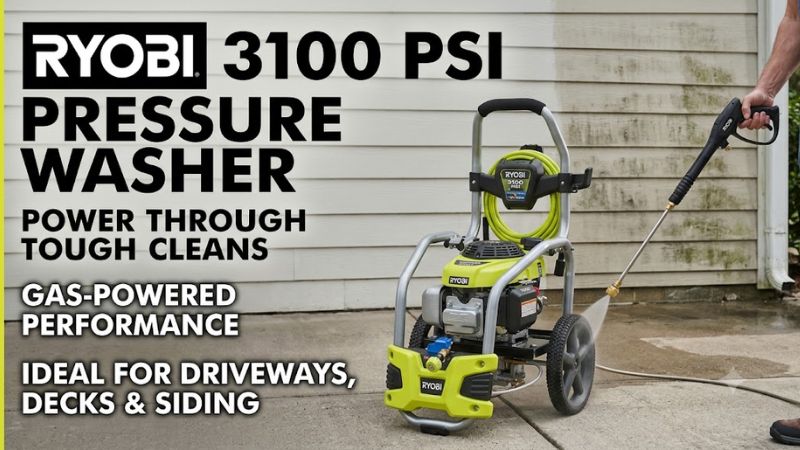
The Ryobi 3100 PSI pressure washer is worth considering for homeowners who regularly clean driveways, concrete patios, fences, and other outdoor surfaces. Its gasoline engine and relatively high water flow make it better suited to demanding outdoor cleaning than many compact electric pressure washers. However, the right buying decision depends on the exact model, current price, and how much cleaning power you actually need.
There is one important distinction: Ryobi has sold multiple pressure washers rated at 3,100 PSI. This review focuses primarily on the Ryobi RY803023 3100 PSI 2.3 GPM Cold Water Gas Pressure Washer, along with the updated retail listing RY803023A. The older RY80940 is a different model and should not be treated as having identical specifications.
Quick Verdict
Ryobi RY803023 / RY803023A
Gas-powered pressure washer for residential cleaning
A practical option for homeowners who want strong cleaning performance without moving into a commercial pressure-washer system.
Best for
Driveways, sidewalks, concrete patios, fences, and periodic exterior cleaning.
Main drawbacks
Gasoline, engine maintenance, operating noise, and the risk of damaging delicate surfaces with excessive pressure.
The current Home Depot listing for the RY803023A showed a price of $449 in the US market when researched on October 26, 2026. The older RY80940 listing showed $429, but its age and different engine configuration make it a separate purchase decision. Prices and availability can change.
Our recommendation: Consider the RY803023A if you need a gas-powered washer for substantial outdoor cleaning and can justify its cost over a smaller electric model. For occasional car washing or patio furniture, it may be more machine than you need.
Ryobi 3100 PSI Pressure Washer Specifications
The following specifications apply to the RY803023 model family. Check the product label and included equipment before buying because package details can vary by listing.
| Specification | Ryobi RY803023 |
| Product type | Gas-powered, cold-water pressure washer |
| Maximum advertised pressure | 3,100 PSI |
| Maximum advertised flow | 2.3 GPM |
| Engine | Honda GCV170, 167 cc |
| Nozzle | 5-in-1 quick-connect nozzle |
| High-pressure hose | 35 feet, non-marring design |
| Detergent system | Onboard detergent tank |
| Frame | Hand-truck-style frame |
| Wheels | 12-inch flat-free wheels |
| Starting and storage features | Verify against the exact retail configuration |
| Battery platform | Not applicable; gasoline powered |
These figures are based on Ryobi’s product information for the RY803023. The current retail listing uses the model suffix RY803023A, so confirm the full model number and supplied accessories before ordering.
What do 3,100 PSI and 2.3 GPM mean?
PSI measures water pressure, while GPM measures water flow. Both matter, but they serve different purposes.
- 3,100 PSI: The advertised maximum pressure indicates the washer’s pressure capability under its specified rating conditions. It is not a guarantee that every nozzle or operating setup will deliver that pressure continuously at the cleaning surface.
- 2.3 GPM: The advertised maximum flow indicates the volume of water delivered per minute under the relevant rating conditions. Water flow affects how quickly loosened dirt and detergent can be rinsed away.
- Cold-water operation: This machine is designed for cold-water cleaning, not steam cleaning or hot-water degreasing.
The pressure and flow figures should be treated as manufacturer ratings, not independent measurements of real-world cleaning speed. Ryobi identifies the RY803023 as tested and rated according to Pressure Washer Manufacturers’ Association standards.
Features and Design
1. Honda gasoline engine
The RY803023 uses a Honda GCV170 167 cc engine. This gives it a separate gasoline power source rather than requiring a household electrical outlet or a compatible battery system.
That arrangement makes sense when cleaning large outdoor areas where an extension cord would be inconvenient. The trade-off is that you must manage fuel, engine oil, exhaust, starting procedures, and routine maintenance.
Ryobi’s product listing describes this model as suitable for demanding residential cleaning, but that does not establish that it is appropriate for every commercial workload.
2. Five-in-one quick-connect nozzle
The RY803023A retail package includes a 5-in-1 nozzle with selectable spray patterns, including 15°, 25°, 40°, fan-soap, and jet-soap settings. A turbo nozzle is also listed among the included accessories.
The nozzle selection is useful because different surfaces need different combinations of pressure, spray coverage, and cleaning technique.
- 15° spray: For appropriate durable surfaces and more concentrated cleaning.
- 25° spray: A useful starting point for many general outdoor cleaning jobs.
- 40° spray: For broader coverage when a gentler spray is appropriate.
- Soap settings: For applying compatible cleaning solutions according to the detergent and washer instructions.
- Turbo nozzle: For concentrated rotating spray on compatible, durable surfaces.
A narrower spray is not automatically the best choice. It can cut into wood, damage paint, strip mortar, or mark concrete. Start with the gentlest suitable setting at a safe distance and increase cleaning intensity gradually.
3. Thirty-five-foot high-pressure hose
The listed 35-foot hose provides useful reach around vehicles, patios, and larger exterior areas. Ryobi describes it as a non-marring hose, but this does not mean it cannot scuff delicate finishes or become damaged through dragging, kinking, or poor storage.
The hose length is a practical advantage over shorter setups, although the washer itself still needs to remain on a stable surface with adequate ventilation and access to water.
4. Onboard detergent tank
The integrated detergent tank allows compatible cleaning solutions to be carried with the washer. It can simplify cleaning jobs that benefit from detergent before rinsing.
Use only detergents permitted by the manufacturer and suitable for the surface being cleaned. Do not assume that every chemical is safe for the pump, seals, painted surfaces, plants, or nearby drainage.
5. Wheels and storage
The hand-truck-style frame, 12-inch flat-free wheels, and quick-release handle help with transport and storage. These are useful features for homeowners who move a pressure washer between the driveway, yard, and garage.
However, a wheeled frame does not eliminate the need to lift safely over steps or secure the machine during transport.
Real-World Cleaning Performance: What Can You Expect?
The RY803023’s specifications suggest that it is designed for more substantial cleaning than many small electric washers. Its combination of advertised pressure and flow is particularly relevant to concrete and other durable exterior surfaces.
However, advertised specifications alone cannot establish how quickly the washer will remove a specific stain. Cleaning speed also depends on the surface, dirt type, nozzle, detergent, distance, water supply, and technique.
Driveways and concrete patios
This is one of the strongest use cases for the Ryobi 3100 PSI model.
It is a reasonable candidate for cleaning dirt buildup, grime, and some surface staining from suitable concrete. A compatible surface cleaner can help cover broad, flat areas more evenly than repeatedly sweeping a narrow spray across the ground.
Do not assume it will remove every oil stain, deep discoloration, or embedded contaminant. Some stains require an appropriate pretreatment, repeated cleaning, or a specialized cleaning method.
Before using a concentrated nozzle, check the concrete’s condition. Weak, cracked, spalling, or decorative concrete can be damaged by aggressive pressure washing.
Fences and wooden decks
The washer can be useful for cleaning suitable exterior wood, but maximum pressure is rarely the best starting point.
Wood can develop fuzzy fibers, gouges, and permanent spray marks when exposed to excessive pressure or an overly concentrated nozzle. Begin with a broad spray, maintain a conservative distance, and test an inconspicuous section.
For older decks, painted wood, or soft timber, a lower-pressure cleaning method may be a better choice.
House siding
The advertised power can help with exterior maintenance, but siding requires more care than concrete.
Use the manufacturer’s recommended procedure for the siding material. Avoid directing high-pressure water into seams, vents, electrical fixtures, or openings around windows and doors. Do not spray upward beneath siding or into other areas where water could penetrate the building envelope.
For two-story houses, working from the ground is not a guarantee of safe access to every area. Avoid using ladders while operating a pressure washer, because trigger reaction forces and hose movement can affect balance. Consider a suitable extension accessory or a professional service instead.
Cars and other vehicles
The RY803023 can wash vehicles when fitted with an appropriate spray setting and used carefully, but its high maximum pressure is unnecessary for many routine car-washing jobs.
Use a vehicle-safe detergent, a broad spray pattern, and sufficient distance from the paint. Avoid concentrated jets around weather seals, sensors, decals, tires, and damaged paint. A smaller electric washer may be more convenient if car washing is your main application.
Cleaning performance summary
| Cleaning task | Suitability | Important consideration |
| Concrete driveway | Good candidate | A compatible surface cleaner may improve coverage |
| Concrete patio | Good candidate | Check for weak or decorative surfaces |
| Fence cleaning | Conditional | Use a gentle spray on wood |
| Deck cleaning | Conditional | Excessive pressure can damage fibers |
| House siding | Conditional | Follow material-specific cleaning guidance |
| Vehicle washing | Suitable with care | Use a broad spray and safe distance |
| Heavy commercial work | Not established | Confirm duty requirements and service support |
These are application-based assessments, not claims of independently measured performance on the RY803023.
Price and Value: Is the Ryobi 3100 PSI Worth the Money?
As of October 26, 2026, the US Home Depot listing showed the RY803023A at $449 before tax. This is a retail listing price, not a guarantee of local stock or a price available in every US market.
The value question is less about whether 3,100 PSI sounds impressive and more about whether you will use the machine often enough to justify its ownership costs.
What the purchase includes
The listed RY803023A package includes:
- The RY803023 pressure washer.
- Trigger handle and metal spray wand.
- 35-foot high-pressure hose.
- Detergent tank.
- Five-in-one quick-connect nozzle and turbo nozzle.
- Engine lubricant and operator’s manual.
Confirm the contents of the exact package being sold. Do not assume accessories from an older or similarly named Ryobi model will be included.
Costs beyond the purchase price
The purchase price is only part of the total cost of ownership. Budget for the following where applicable:
- Gasoline and engine oil.
- Routine maintenance and seasonal storage preparation.
- Replacement hoses, nozzles, seals, or other wear parts.
- Detergent and compatible cleaning accessories.
- Repairs outside the applicable warranty coverage.
Ryobi lists a three-year limited warranty for the pressure washer and a two-year engine warranty on the RY803023A retail listing. Review the applicable terms, exclusions, and proof-of-purchase requirements before buying.
Is $449 a fair price?
At the listed price, the machine makes the most sense for buyers who regularly clean larger outdoor areas and specifically want gasoline-powered equipment.
It is less compelling for someone who only washes a car a few times per month or cleans a small patio occasionally. In those cases, the convenience of a smaller electric washer may outweigh the higher advertised pressure and flow of a gas model.
Pros and Cons
Pros
- Useful cleaning capacity: The advertised 3,100 PSI and 2.3 GPM ratings make it a candidate for demanding residential outdoor cleaning.
- Gas-powered operation: No household electrical outlet is needed to power the washer.
- Honda engine: The GCV170 provides a recognized engine platform, although engine branding alone does not guarantee long-term reliability.
- Versatile nozzle options: The five-in-one nozzle and included turbo nozzle provide different approaches to suitable cleaning jobs.
- Long hose: The 35-foot hose gives useful working reach.
- Convenient transport: The wheeled frame supports movement around typical residential outdoor areas.
- Integrated detergent tank: Simplifies detergent application for compatible cleaning tasks.
Cons
- More maintenance than an electric washer: Fuel and engine care add ownership responsibilities.
- Operating noise and exhaust: Gasoline operation is less suitable for noise-sensitive areas and enclosed spaces.
- Potentially excessive power: Delicate paint, wood, siding, and weak masonry can be damaged.
- Higher purchase commitment: At $449, occasional users may not get enough value from the extra capacity.
- Model confusion: Multiple Ryobi pressure washers share similar PSI ratings, making exact model verification essential.
- Not a substitute for commercial equipment: The advertised ratings do not establish continuous-duty capability for every professional workload.
Ryobi 3100 PSI vs. an Electric Pressure Washer
The main alternative is a corded electric pressure washer. The right choice depends on how often you clean, where you work, and whether convenience or higher water flow matters more.
| Factor | Ryobi RY803023A | Corded electric washer |
| Power source | Gasoline | Household electricity |
| Outdoor mobility | No power cord required | Requires a suitable electrical supply |
| Engine maintenance | Yes | No gasoline engine |
| Noise and exhaust | Engine noise and exhaust | Generally quieter, with no engine exhaust |
| Cleaning capacity | 3,100 PSI / 2.3 GPM advertised | Depends on the exact model |
| Best fit | Larger outdoor cleaning jobs | Routine residential cleaning |
| Ownership considerations | Fuel, oil, service, storage | Electrical supply, hose, pump, and accessory care |
A higher PSI rating does not automatically mean faster cleaning. A model with lower pressure but suitable water flow and a compatible surface-cleaning attachment may be adequate for many household jobs.
Choose by the combination of pressure, flow, accessories, maintenance, and actual workload rather than the headline PSI figure alone.
Important Safety and Maintenance Considerations
A pressure washer can cause serious injuries and property damage. The machine’s maximum advertised pressure is not an appropriate setting for every surface.
Before operating the Ryobi 3100 PSI washer:
- Read the manual for the exact model and follow its setup, starting, operating, and shutdown instructions.
- Inspect the hose, trigger handle, connections, and nozzle for damage before use.
- Connect the water supply and follow the manufacturer’s priming procedure before starting the engine.
- Wear suitable eye protection, closed-toe footwear, and other PPE specified by the manual.
- Keep hands and other body parts away from the spray. Never use the jet to clean skin or clothing.
- Keep bystanders and pets away from the working area.
- Never operate a gasoline-powered pressure washer inside a home, garage, or other enclosed or partially enclosed space because carbon monoxide can accumulate.
- Shut down and depressurize the system according to the manual before changing accessories or performing maintenance.
High-pressure injection injuries can appear deceptively minor on the skin while causing serious internal damage. Seek immediate medical attention if a high-pressure jet penetrates the skin.
Fuel and storage
Use the fuel specified in the exact operator’s manual. For the older RY80940, the manual specifically prohibits E15 and E85 fuel and fuel containing more than 10% ethanol. Do not automatically transfer instructions between model generations; verify the RY803023A manual for its exact requirements.
For storage, follow the applicable instructions for fuel, engine oil, pump protection, and freezing conditions. Water left inside the pump or hose can cause damage in freezing weather. Do not improvise a winterization procedure based on instructions for another pressure washer.
Who Should Buy the Ryobi 3100 PSI Pressure Washer?
Buy it if:
- You regularly clean a large driveway, concrete patio, or other durable exterior surfaces.
- You want a gasoline-powered machine with no electrical power cord.
- You will use the washer frequently enough to justify engine maintenance and fuel costs.
- You value the included hose, nozzle selection, and onboard detergent tank.
- You can store and operate a gasoline engine safely.
Skip it if:
- You only need to wash a car or clean a small patio occasionally.
- You want minimal maintenance and quieter operation.
- You primarily clean delicate wood, paint, or siding that requires gentler treatment.
- You do not have suitable outdoor storage or a safe, ventilated operating location.
- You expect commercial-duty performance without verifying the machine’s workload limitations.
Frequently Asked Questions
Is the Ryobi 3100 PSI pressure washer good?
Yes, it is a reasonable option for homeowners who need a gasoline-powered washer for larger outdoor cleaning tasks. Its 3,100 PSI and 2.3 GPM advertised ratings, Honda engine, and included nozzle options suit a range of demanding residential jobs. Whether it is the best value depends on your workload and current price.
How much does the Ryobi 3100 PSI pressure washer cost?
The Home Depot US listing showed $449 for the RY803023A on October 26, 2026. Prices and availability vary by location and retailer, and the older RY80940 is a different model.
Can the Ryobi 3100 PSI pressure washer clean concrete?
Yes, it is suitable for many concrete-cleaning applications when used with the correct nozzle and technique. For large, flat areas, a compatible surface cleaner can help produce more uniform coverage. Test carefully on damaged, decorative, or weak concrete.
Is the Ryobi 3100 PSI pressure washer suitable for cars?
It can be used for vehicle washing, but the maximum pressure is more than many routine car-washing jobs require. Use a broad spray pattern, a safe working distance, and vehicle-compatible detergent. If vehicle washing is your primary use, a smaller electric model may be more convenient.
Final Verdict: Is the Ryobi 3100 PSI Pressure Washer Worth Buying?
The Ryobi 3100 PSI pressure washer is worth considering for homeowners who need substantial outdoor cleaning capacity and are comfortable maintaining a gasoline-powered machine. The RY803023A offers a useful combination of advertised pressure, water flow, a Honda engine, a long hose, and versatile nozzle options.
At the researched US price of $449, it is harder to justify for occasional light-duty cleaning. A smaller electric pressure washer may provide better convenience and value for cars, patio furniture, and modest outdoor areas.
Before purchasing, confirm the full model number, package contents, current price, warranty terms, and manual. Those checks matter more than the 3,100 PSI headline alone.
Related guides
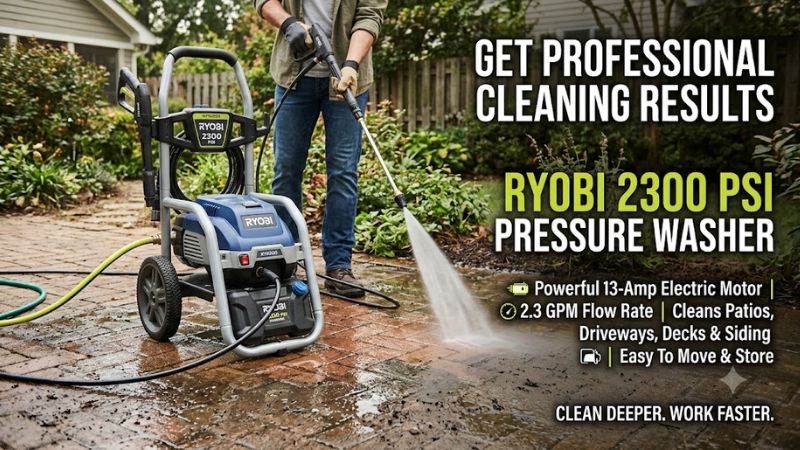
- Ryobi 2300 PSI Pressure Washer Review: Price, Specs, Performance, and Is It Worth Buying?
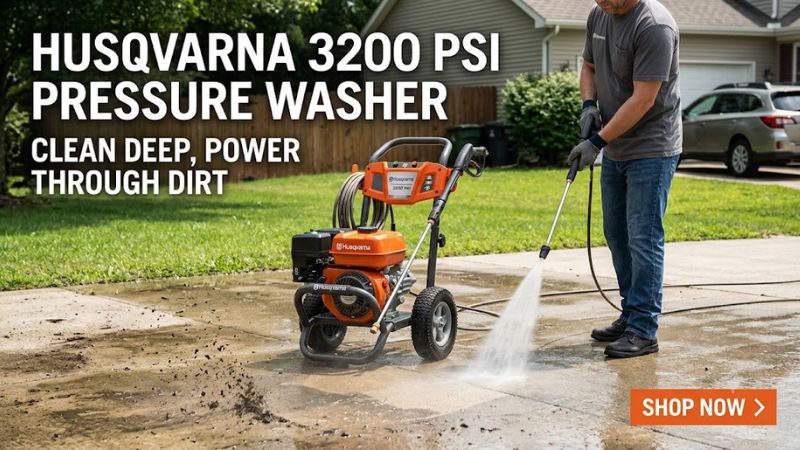
- How to Use a Husqvarna 3200 PSI Pressure Washer: Setup, Cleaning, and Troubleshooting
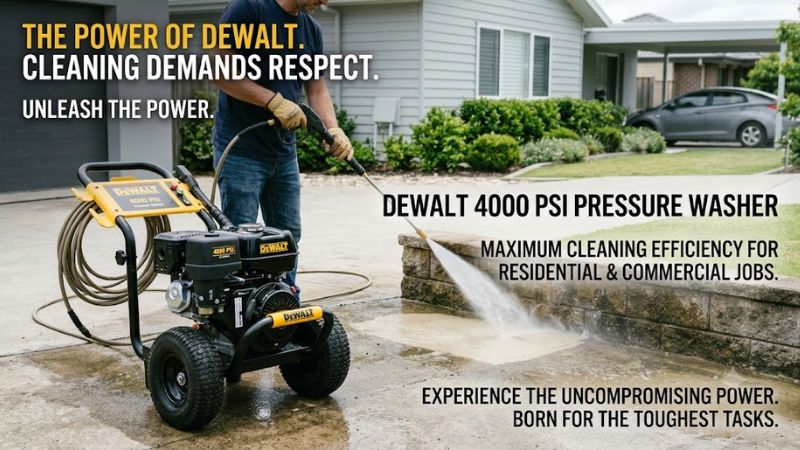
- DEWALT 4000 PSI Pressure Washer Review: Price, Specs, and Is It Worth Buying?
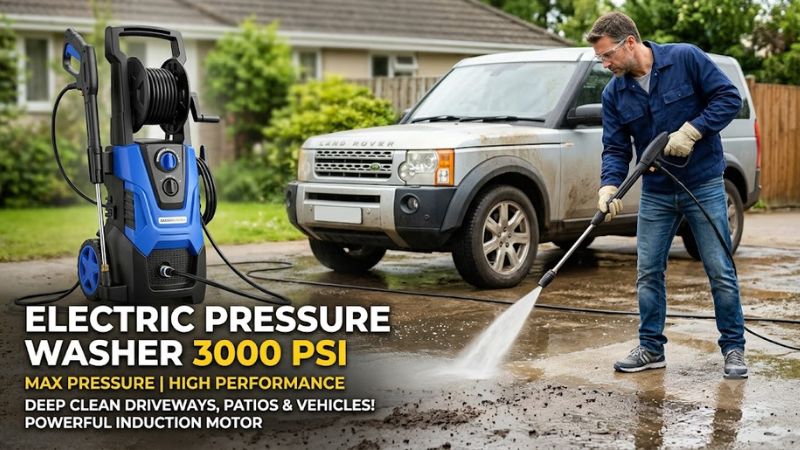
- Electric Pressure Washer 3000 PSI: How to Choose and Use One
Write Your Review
No reviews yet. Be the first to share your experience!