What's inside
- Which BLACK+DECKER Pressure Washer Should You Choose?
- What Do PSI and GPM Mean?
- How to Set Up a BLACK+DECKER Pressure Washer
- Choosing the Right Nozzle and Cleaning Method
- BLACK+DECKER Pressure Washer Troubleshooting
- Pressure Washer Safety and Maintenance
- How to Choose the Right BLACK+DECKER Pressure Washer
- Frequently Asked Questions
- Final Verdict
As an Amazon Associate I earn from qualifying purchases. This post may contain affiliate links at no extra cost to you.
A BLACK+DECKER pressure washer can simplify outdoor cleaning tasks, including washing patio furniture, garden equipment, vehicles, and suitable hard surfaces. Choosing the right model depends on the cleaning workload, available water supply, power source, and accessories included with the machine.
For homeowners considering a traditional electric pressure washer, the BLACK+DECKER BEPW1600 and BEPW2000 are two models worth comparing. The BEPW1600 has a maximum advertised pressure of 1,600 PSI, while the BEPW2000 is rated at 2,000 maximum PSI. Both are corded electric models intended for household cleaning rather than heavy commercial work.
These pressure ratings do not tell the entire story. Water flow, nozzle selection, surface condition, and cleaning technique also influence performance. Before purchasing either model, confirm its specifications, package contents, and compatibility with your intended application.
Which BLACK+DECKER Pressure Washer Should You Choose?
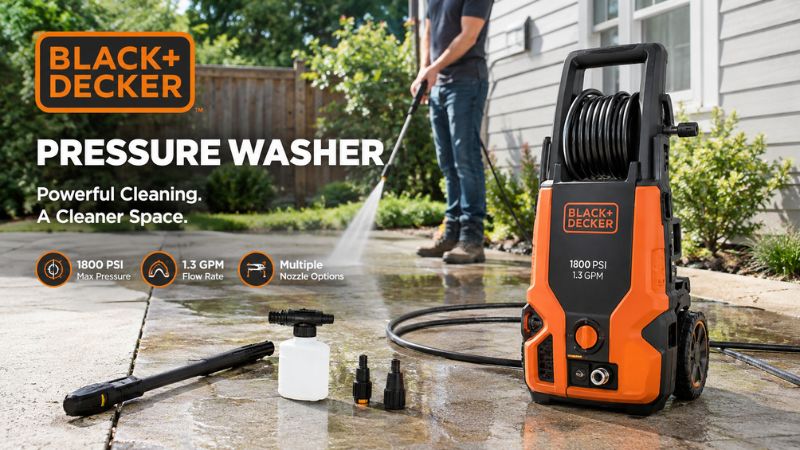
The best choice depends on the surfaces you clean and how frequently you use the machine.
| Feature | BLACK+DECKER BEPW1600 | BLACK+DECKER BEPW2000 |
| Power source | Corded electric | Corded electric |
| Maximum advertised pressure | 1,600 PSI | 2,000 PSI |
| Advertised water flow | 1.2 GPM | 1.2 GPM |
| Included nozzle options | Turbo and 40-degree nozzles | Turbo, 15-degree, and 40-degree nozzles |
| Additional accessories | Verify the specific package | Soap bottle included in the listed configuration |
| Best suited for | Routine household cleaning | Household cleaning requiring additional nozzle choices |
| Main limitation | Lower advertised maximum pressure | Higher pressure still requires careful surface selection |
Specifications and included accessories can vary by package or regional version. Confirm the exact model number before purchasing.
BLACK+DECKER BEPW1600
The BEPW1600 is a corded electric pressure washer with a maximum advertised pressure of 1,600 PSI and a listed water flow of 1.2 GPM.
Its included turbo and 40-degree nozzles provide options for different cleaning tasks. The wider spray pattern is a sensible starting point for suitable outdoor surfaces, while the turbo nozzle can provide more concentrated cleaning on compatible, durable materials.
Buy it if you need a household pressure washer for occasional cleaning of suitable patio items, outdoor equipment, and other residential surfaces.
Consider another option if you regularly clean large areas with stubborn deposits or need a particular accessory that is not included in the package.
BLACK+DECKER BEPW2000
The BEPW2000 is a corded electric model rated at 2,000 maximum PSI and 1.2 GPM. Its listed accessories include a turbo nozzle, 15-degree nozzle, 40-degree nozzle, and soap bottle. The specified power cord is 35 feet long, and the high-pressure hose is 25 feet long.
The additional nozzle options give homeowners more flexibility when matching the spray pattern to a cleaning task. However, a narrower spray can damage paint, wood, seals, and other vulnerable materials when used too aggressively.
Buy it if you want additional nozzle choices and more flexibility for cleaning suitable outdoor surfaces.
Consider another option if you need a cordless machine, a hot-water pressure washer, or equipment designed for sustained commercial workloads.
What Do PSI and GPM Mean?
PSI and GPM describe different characteristics of a pressure washer.
| Specification | Meaning | Practical importance |
| PSI | Pounds per square inch, a measure of pressure | Helps indicate how forcefully water strikes the surface. |
| GPM | Gallons per minute, a measure of water flow | Indicates the volume of water delivered over time. |
| Nozzle angle | The shape and spread of the spray | Influences how concentrated the water stream is. |
| Power source | The electrical or battery supply | Determines mobility and operating requirements. |
The BEPW1600 and BEPW2000 are listed at 1.2 GPM. The BEPW2000’s maximum advertised pressure is specified with its 15-degree nozzle. Maximum ratings should not be interpreted as constant output under every operating condition.
Higher PSI does not automatically mean faster cleaning. Water flow, dirt type, detergent, nozzle selection, and working distance all affect results. A suitable cleaning technique can matter more than choosing the highest available pressure.
How to Set Up a BLACK+DECKER Pressure Washer
Correct setup helps reduce the risk of pump damage, leaks, electric shock, and injury. The following procedure is a general guide for compatible corded electric models. Always follow the instructions supplied with your exact pressure washer.
Before starting, prepare a compatible garden hose, the supplied high-pressure hose and spray gun, an appropriate nozzle, a suitable cold-water supply, and the required electrical connection. Wear eye protection and closed-toe footwear.
Step 1: Inspect the Machine
Check the power cord, plug, high-pressure hose, fittings, spray gun, and nozzle for visible damage.
Make sure the hose connections are secure and that the accessories are approved for your model. Do not operate equipment with damaged electrical insulation, cracked components, or leaking high-pressure connections.
Step 2: Connect the Water Supply
Connect the garden hose to the water inlet and attach the high-pressure hose and spray gun according to the manufacturer’s instructions.
Turn on the water supply and confirm that the required flow is available. Use the specified water temperature and supply conditions. Do not assume the washer can draw water directly from a bucket or tank.
Step 3: Remove Trapped Air
With the machine switched off and disconnected from electrical power, follow the manual’s procedure for purging air from the system.
This commonly involves turning on the water and squeezing the spray-gun trigger until water flows steadily. Do not run the pump dry unless the exact manual expressly permits the procedure.
Step 4: Connect Electrical Power Safely
Check the model’s rating plate and use the specified electrical supply. For a US household model, follow the manufacturer’s instructions concerning a ground-fault circuit interrupter (GFCI).
Keep plugs and electrical connections protected from water. Avoid extension cords unless the manufacturer explicitly permits an appropriate type and configuration.
Step 5: Start the Washer and Test the Spray
Follow the model-specific startup procedure and maintain a secure grip on the spray gun.
Begin with the widest suitable spray pattern and a conservative working distance. Test an inconspicuous area before cleaning the entire surface. Adjust your technique gradually while checking for signs of damage.
Choosing the Right Nozzle and Cleaning Method
The nozzle affects how water reaches the surface. Using an overly concentrated spray can damage a workpiece even when the pressure washer is operating normally.
| Nozzle or accessory | Typical application | Main limitation |
| 40-degree nozzle | Broad cleaning on suitable surfaces | May be less effective against stubborn deposits. |
| 15-degree nozzle | More concentrated cleaning on durable materials | Greater risk of damaging paint, wood, seals, and softer surfaces. |
| Turbo nozzle | Faster coverage of suitable hard surfaces | Can damage delicate materials and should never be aimed at people or animals. |
| Detergent bottle | Applying compatible cleaning solutions | Use only approved detergents and the application method specified for the model. |
The BEPW1600’s listed configuration includes a turbo nozzle and a 40-degree nozzle. The BEPW2000’s listed configuration includes those options plus a 15-degree nozzle and soap bottle. Verify the contents of your particular package before buying additional accessories.
Cleaning a Car
Use a vehicle-compatible detergent and a suitable wide spray pattern. Start at a conservative distance and avoid directing concentrated pressure at tires, seals, electrical components, or damaged paint.
Rinse thoroughly and follow the vehicle manufacturer’s cleaning recommendations. A pressure washer should not be treated as automatically safe for every paint finish or exterior component.
Cleaning a Patio or Driveway
Remove loose debris before washing. Work in consistent, overlapping passes rather than concentrating the spray on one spot.
Older concrete, loose mortar, painted surfaces, and deteriorating joints may be damaged by concentrated pressure. Test a small area first, especially when the surface condition is uncertain.
Cleaning Wood, Furniture, and Fences
Begin with a wide spray pattern and a relatively long working distance. Excessive pressure can strip coatings, raise wood fibers, or leave visible lines.
For delicate, weathered, or painted wood, a garden hose and suitable cleaner may be a safer option.
Applying Detergent
Use a pressure-washer-compatible cleaning product and follow the product label for dilution, surface suitability, and rinsing.
The correct application method depends on the machine and its attachments. Do not assume that every detergent bottle works with every nozzle or pressure setting.
BLACK+DECKER Pressure Washer Troubleshooting
If your pressure washer will not start, loses pressure, or produces an inconsistent spray, begin with external checks.
Before inspecting fittings or accessories, switch off the machine, disconnect electrical power, shut off the water supply, and release residual pressure according to the manual.
| Symptom | Possible cause | First action |
| Motor will not start | No power, tripped GFCI, or incorrect switch setting | Check the outlet, plug, GFCI, and controls as directed by the manual. |
| Low or fluctuating pressure | Restricted water supply, trapped air, blocked inlet filter, or clogged nozzle | Check the water supply and hose for restrictions; inspect accessible components. |
| Leak at a garden-hose connection | Loose fitting or missing or worn washer | Shut off the water and inspect the connection and washer. |
| Motor hums but does not run | Electrical supply problem, residual pressure, or internal fault | Switch off, release pressure safely, and verify the specified supply. Stop if the issue persists. |
| Detergent is not drawn in | Incorrect nozzle or setting, blocked pickup tube, or unsuitable detergent | Check the detergent instructions, attachment, and accessible pickup components. |
These are possible causes, not confirmed diagnoses. Troubleshooting instructions vary between pressure-washer models, so follow the procedure in the manual for your specific unit.
Stop using the machine if the power cord is damaged, the pump housing is cracked, water reaches electrical components, electrical protection trips repeatedly, or a high-pressure leak persists.
Never open energized equipment, bypass electrical protection, or attempt an internal repair without appropriate service instructions and qualifications.
Pressure Washer Safety and Maintenance
A pressure washer can cause serious injection injuries, eye injuries, electric shock, and surface damage. A high-pressure jet can penetrate skin even when the external wound looks small.
Follow these precautions during operation:
- Wear appropriate protection. Use eye protection, closed-toe slip-resistant footwear, and clothing suitable for the task.
- Keep the spray away from people and animals. Never use your hand to locate a leak. Seek urgent medical attention if a high-pressure jet penetrates the skin, even if the injury initially appears minor.
- Protect electrical connections. Inspect cords and plugs before use. Follow the specified electrical protection requirements and keep connections away from standing water.
- Do not modify the equipment. Never remove required guards, bypass safety devices, or use unapproved nozzles and hose connections.
- Release pressure before servicing. Switch off and unplug the machine, shut off the water, and squeeze the trigger as directed by the manual before disconnecting hoses or cleaning the nozzle.
- Prevent freezing damage. Store the washer in a dry, protected location and follow the model’s instructions for draining and winterizing the pump.
Routine Maintenance Checklist
| Component | Maintenance action |
| Water inlet filter | Inspect and clean according to the manual. |
| Spray nozzle | Check for blockages and clean using the approved method. |
| Hoses and fittings | Inspect for leaks, cracks, abrasion, and damaged seals. Replace damaged components with compatible parts. |
| Exterior and storage | Disconnect power, drain water as instructed, and store under the specified conditions. |
| Pump and electrical components | Seek qualified service for persistent leaks, abnormal noises, electrical faults, or internal damage. |
Follow the manufacturer’s model-specific maintenance instructions instead of applying a universal service interval. Improper repairs or unapproved replacement parts may create safety problems or affect warranty coverage.
How to Choose the Right BLACK+DECKER Pressure Washer
Consider these factors before purchasing.
Cleaning Workload
For occasional cleaning of garden furniture, bicycles, and outdoor tools, a compact electric model may be sufficient. Larger patios and stubborn deposits may benefit from a higher-pressure model, but the material being cleaned and the water flow remain important.
Hose Length and Storage
Compare the high-pressure hose length, power cord length, handles, wheels, and onboard accessory storage.
Adequate reach reduces the need to reposition the machine. However, longer cables and hoses still need careful management to prevent tripping, tangling, and accidental damage.
Included Accessories
Check which nozzles, detergent attachments, hoses, and connectors come with the package.
Confirm that replacement accessories are compatible with the exact model. A similar appearance or matching brand name does not establish compatibility.
Power and Water Requirements
A corded electric model requires a suitable electrical supply and a water source that meets its specifications.
A battery-powered pressure cleaner may offer greater mobility, but its pressure, flow, and intended applications can differ substantially from those of a full-size electric pressure washer. Compare the complete operating specifications rather than PSI alone.
Price and Warranty
Compare the exact model and package contents, including accessories and replacement parts you may need.
Warranty terms vary by product and market. Confirm the applicable warranty before purchasing, especially for refurbished units or products sold through third-party retailers.
Frequently Asked Questions
1. How many PSI is a BLACK+DECKER pressure washer?
The BLACK+DECKER BEPW1600 is rated at 1,600 maximum PSI, while the BEPW2000 is rated at 2,000 maximum PSI. These are advertised maximum values, not guaranteed operating pressure at every nozzle setting.
2. Can you use a BLACK+DECKER pressure washer to clean a car?
Yes, a suitable BLACK+DECKER pressure washer can clean a car when used with an appropriate nozzle, vehicle-safe detergent, and a conservative working distance. Avoid directing concentrated pressure at tires, seals, electrical components, or damaged paint.
3. Why is my BLACK+DECKER pressure washer losing pressure?
A BLACK+DECKER pressure washer may lose pressure because of restricted water flow, trapped air, a clogged filter or nozzle, or a leak. Check the water supply and accessible connections first, then follow the troubleshooting sequence in the manual for your exact model.
4. Can a BLACK+DECKER pressure washer draw water from a bucket?
A BLACK+DECKER pressure washer can draw water from a bucket only if the specific model and its instructions permit that method. Some models support suction from an external source, while others require a suitable pressurized water supply.
Final Verdict
A BLACK+DECKER pressure washer is worth considering for household outdoor cleaning when its pressure, water flow, accessories, and water-supply requirements match the job.
The BEPW1600 is a practical option for routine cleaning, while the BEPW2000 offers a higher advertised maximum pressure and a broader selection of included nozzles.
Before purchasing, confirm the exact model and package contents. Before operating the machine, read the manual, start with a suitable wide spray pattern, and test an inconspicuous area. These steps help you choose equipment that meets your cleaning needs while reducing the risk of damage to the surfaces you want to clean.
Related guides
- DEWALT 3300 PSI Pressure Washer Review: Specs, Price, and Is It Worth Buying?
- Sun Joe Electric Pressure Washer: How to Choose, Use, and Troubleshoot One
- Greenworks 1800 PSI Pressure Washer Review: Price, Specs, and Is It Worth Buying?
- DEWALT 4400 PSI Pressure Washer Review: Price, Specs, and Is It Worth Buying?