What's inside
As an Amazon Associate I earn from qualifying purchases. This post may contain affiliate links at no extra cost to you.
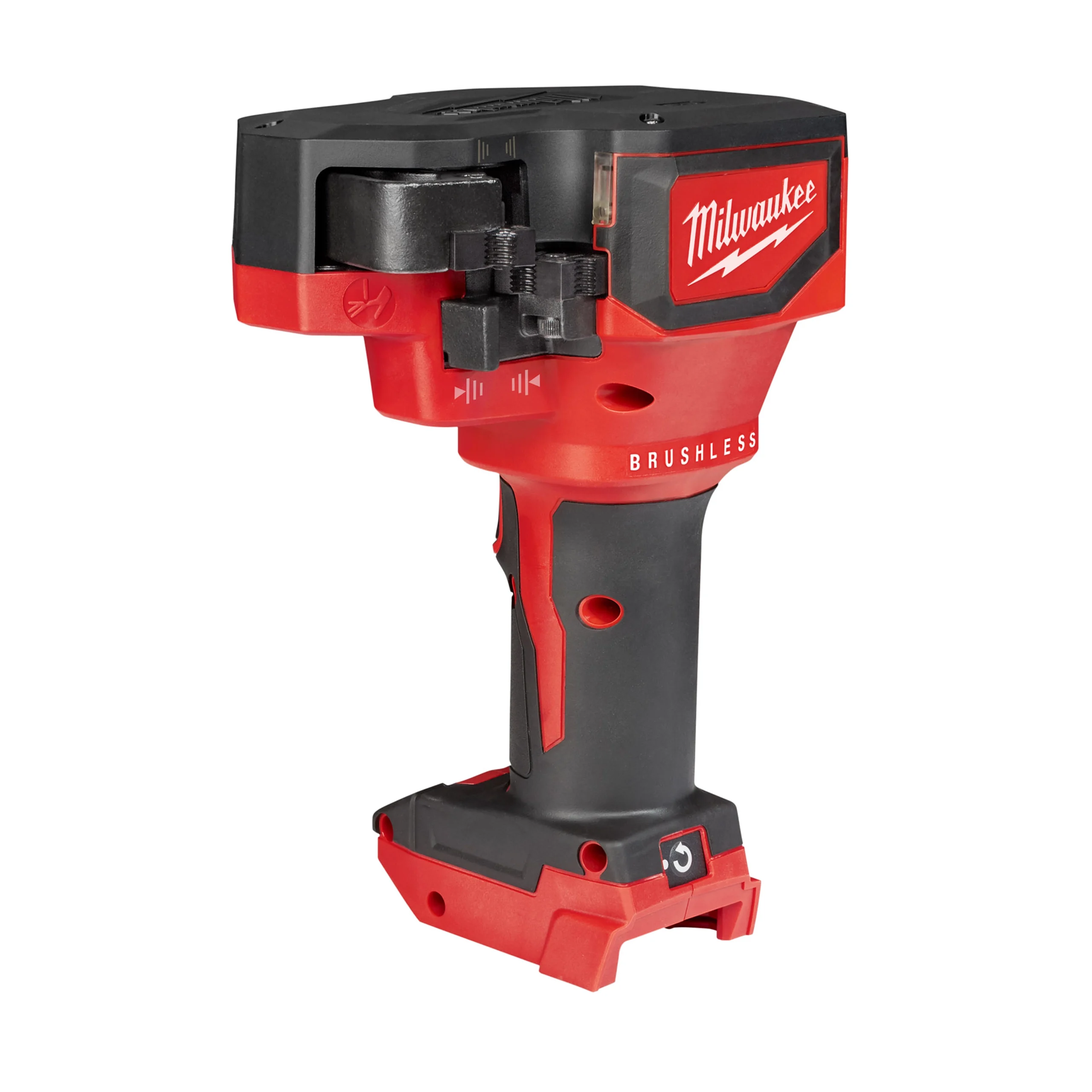
Threaded rod cutters are specialist tools, but they can save a surprising amount of time on electrical installation work. A good cordless cutter makes clean, burr-free cuts without a hacksaw, grinder, or extension cord. That matters when installing trapeze supports, conduit racks, cable tray, threaded drop rods, and all-thread anchors above a ceiling.
The right choice depends less on cutting speed than on your existing battery platform. These tools are expensive compared with a manual cutter, and the charger and batteries can add considerably to the purchase price. If your crew already runs one cordless system, staying within that ecosystem is usually the sensible decision.
As an Amazon Associate we earn from qualifying purchases at no extra cost to you.


What a threaded rod cutter does
A cordless threaded rod cutter uses a hardened cutting head and a geared motor to shear threaded rod, normally without damaging the threads at the cut. Most tools in this category are designed for common electrical sizes such as 1/4-inch, 3/8-inch, and 1/2-inch rod. Some heads also handle metric sizes, commonly M6, M8, and M10.
These are not general-purpose rebar cutters. The jaws are made for relatively soft threaded rod, typically mild steel. Cutting stainless steel, hardened rod, or oversized all-thread can damage the blades, overload the gearbox, and void the warranty. Check the tool’s stated material and capacity before using it on anything other than standard zinc-plated rod.
Best cordless platform choices
Milwaukee’s M18 platform is one of the strongest choices for electrical contractors who already own several M18 tools. Its cordless rod cutter format is compact enough for overhead work and has the advantage of a large battery range, from slim packs for lighter weight to high-capacity packs for repeated cutting. Search current availability here: Milwaukee M18 threaded rod cutters.
DeWalt users should look first at the 20V MAX threaded rod cutter. It makes the most sense for installers already carrying DeWalt batteries, chargers, impact drivers, and lights. The tool is relatively specialized, so buying into the platform solely for rod cutting is harder to justify unless the installation volume is high. See available options through this DeWalt 20V MAX rod cutter search.
Makita’s cordless system is another practical route, particularly for crews invested in 18V LXT tools. Makita offers broad battery compatibility across its contractor range, but availability of specialty cutting tools can vary more by seller and region. Verify that the listing includes the correct cutting head and not just replacement blades. Browse Makita cordless threaded rod cutters before committing.
| Platform | Best for | Main advantage | Main drawback |
|---|---|---|---|
| Milwaukee M18 | High-volume electrical contractors | Large battery ecosystem and strong specialty-tool support | Tool and battery cost can be high |
| DeWalt 20V MAX | Crews already using DeWalt | Convenient compatibility with existing packs | Less attractive as a one-tool platform purchase |
| Makita 18V LXT | Makita-equipped installers | Good balance of size, battery choice, and ergonomics | Specialty-tool availability may vary |
| Manual cutter | Occasional or low-volume work | Low purchase price and no battery maintenance | Slower and more tiring for overhead cutting |
What to check before buying
Capacity comes first. A tool that cuts 1/4-inch and 3/8-inch rod may not accept 1/2-inch rod. Confirm both imperial and metric ratings if your projects use mixed hardware. A cutter that cannot handle the rod size on your next job is not a bargain.
Look at the cutting head. Replaceable blades are important because blades eventually become dull or chipped. Confirm that replacement parts are sold separately and that the cutting head can be serviced without sending the complete tool away. A chipped blade can leave a distorted thread that refuses to accept a nut.
Check the cut quality. The best tools produce a square cut with little thread deformation. Even then, run a nut onto the rod before installation when possible. If the nut catches, do not force it with an impact driver. Back it off, clean the end, and chase the thread with a die or use a fresh cut.
Consider weight overhead. A high-capacity 5.0Ah or 6.0Ah battery provides longer runtime but adds fatigue at arm’s length. For intermittent cuts, a compact battery is often the better choice. Keep a larger pack available for production work rather than leaving a heavy battery on the tool all day.
Battery runtime and charging
Runtime varies with rod diameter, battery condition, temperature, and how frequently the cutter is cycled. A healthy 4.0Ah or 5.0Ah pack should handle a useful day of intermittent installation work, but continuous cutting can drain it much sooner. Cold batteries also deliver less power and may trigger overload protection.
Bring at least two charged packs per active cutter on a busy job. Use the manufacturer’s rapid charger only if the site power supply can support it; a charger constantly tripping a generator or temporary panel is not saving time. Store batteries out of direct sun and do not leave them in a freezing vehicle overnight.
Using the cutter safely
Support the loose end of the rod before cutting. A long, unsupported length can swing when the cut completes, and a short offcut can fall from overhead work. Wear eye protection because small metal fragments can be expelled from damaged or dirty threads.
Keep fingers clear of the jaws and release the trigger as soon as the cut is complete. Do not twist the tool sideways while the blades are loaded. Side loading is a common cause of chipped blades and premature gearbox wear. If the tool stalls, release the trigger, inspect the rod, and follow the manufacturer’s reverse procedure rather than repeatedly pulling the trigger.
When a cheaper option is better
A manual ratcheting threaded rod cutter is still the better buy for a homeowner, service electrician, or installer making fewer than a few dozen cuts per project. It costs far less, works in confined spaces, and eliminates battery and charger compatibility questions. A hacksaw is cheaper still, but it commonly leaves damaged threads, sharp burrs, and slow cleanup.
Buy cordless when the work involves repeated overhead cuts, multiple rooms, or hundreds of support points. The time saved and reduced wrist fatigue can justify the price. For everyone else, buy the manual tool and put the savings toward a quality thread-cleaning die, spare nuts, and proper eye protection.
Related guides
- Longest Lasting Lawn Mower Battery: AGM vs Lithium vs Flooded Lifespan and Cost per Season
- Duralast Gold Lawn Mower Battery Review: U1 Fit, CCA and When to Pay for AGM
- Greenworks Pro 80V 21-Inch Mower Review: Runtime Math, Push vs Self-Propelled and Yard Fit
- Bosch High Pressure Washer Gun Replacement: Fittings, Adapters and What Fits Your Model