
Our Top Picks
 KATA 25 Piece Hole Saw Kit with 3/4"-6"3/4"-6"(19-152mm)9.4 x 9.05 x 2.36 inches3.12 PoundsCheck on Amazon


What's inside
- Top Picks at a Glance
- Quick Comparison of the Hole Saw Kits
- 1. Spyder 18-Piece Tungsten Carbide Tipped Kit: Best Overall
- 2. Diablo Carbide Teeth Hole Saw Set (13 pieces): Best for Wood, Metal and Plastics
- 3. Milwaukee BIG HAWG 10-Piece Kit (49-56-9290): Best Heavy-Duty Pro Kit
- 4. Greenlee 660 Quick-Change Carbide-Tipped Set: Best for Electricians
- 5. METOTY 19-Piece Carbide Kit: Best Value Carbide for Metal
- 6. Milwaukee Hole Dozer Bi-Metal 20-Piece Kit: Best Bi-Metal Kit
- 7. Lenox T3 Electricians and Plumbers Kit (1786647): Best Bi-Metal for Trades
- Also Consider
- How We Chose
- Buying Guide
- Common Mistakes With Hole Saws
- Frequently Asked Questions
- A Simple Way to Compare Cost Per Hole
- Speed, Feed and Setup: Why Diameter Matters
- Care and Storage: What Wears First
- Which Kit for Which Job: A Quick Matrix
- Which One Should You Buy?
- Sources
As an Amazon Associate I earn from qualifying purchases. This post may contain affiliate links at no extra cost to you.
For cutting steel, stainless and other hard metal, carbide tipped hole saws are the better buy, and the Spyder 18-piece tungsten carbide tipped kit is the most complete starting point. For wood, plastic, drywall and thin sheet metal, a good bi-metal set such as the Milwaukee Hole Dozer 20-piece kit or the Lenox T3 electricians and plumbers kit costs less and does the job. This guide explains the best carbide tipped hole saws, where best bi-metal hole saws still win, and how to pick sizes, arbors and kits, including the carbide metal-cutting hole saws used for commercial door lock installation.
This is a research-based guide. We did not personally use these hole saws. Details come from the product listings and the makers’ published documentation, and anything we could not confirm is marked “not listed.” We also avoid cut-count promises, because the number of holes a saw makes depends on the drill, speed, lubricant, material and operator.
As an Amazon Associate we earn from qualifying purchases at no extra cost to you.



Top Picks at a Glance
- Best Overall Carbide Kit: Spyder 18-Piece Tungsten Carbide Tipped Hole Saw Kit (12 hole saws, 2 arbors, 4 pilot bits)
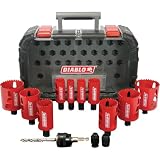
- Best for Wood, Metal and Plastics: Diablo Carbide Teeth Hole Saw Set, 1 in. to 3 in., 13 pieces
- Best Heavy-Duty Pro Kit: Milwaukee BIG HAWG 10-piece hole saw kit with carbide teeth (49-56-9290)
- Best Quick-Change for Electricians: Greenlee 660 6-piece quick-change carbide-tipped hole cutter set, 7/8 in. to 2 in.
- Best Value Carbide for Metal: METOTY 19-piece carbide hole saw kit, 1/2 in. to 2-1/8 in.
- Best Bi-Metal Kit: Milwaukee Hole Dozer bi-metal 20-piece kit
- Best Bi-Metal for Trades: Lenox T3 electricians and plumbers 13-piece kit (1786647)
Quick Comparison of the Hole Saw Kits
| Kit | Best for | Key specs (as listed) | Watch for | Price tier |
|---|---|---|---|---|
| Spyder 18-pc carbide tipped | Mixed metal work | 12 hole saws, 2 arbors, 4 pilot bits, rapid core eject | Sizes in each saw: check the chart | Premium |
| Diablo carbide teeth 13-pc | Wood, metal and plastics | 8 hole saws, 1 in. to 3 in., 2-3/8 in. depth | Not aimed at thick stainless | Premium |
| Milwaukee BIG HAWG 10-pc | Daily professional use | 10 pieces, carbide teeth | Individual sizes: not listed in title | Premium |
| Greenlee 660 6-pc | Electricians, panels, enclosures | 7/8 in. to 2 in., quick-change, carbide-tipped | Small number of sizes | Premium |
| METOTY 19-pc carbide | Budget metal cutting | 1/2 in. to 2-1/8 in., TCT, titanium pilot bits | Brand has less track record; check the case and arbor | Budget |
| Milwaukee Hole Dozer bi-metal 20-pc | General contractors | 20 pieces, bi-metal | Wears faster in stainless | Mid-range |
| Lenox T3 13-pc | Electricians and plumbers | 13 pieces, bi-metal | Check the size list for your fittings | Mid-range |
1. Spyder 18-Piece Tungsten Carbide Tipped Kit: Best Overall
- 12 hole saws, 2 arbors, 4 pilot bits
- Tungsten carbide tipped teeth, per the listing
- Rapid core eject feature named in the title
- Comes as a boxed kit
Best for: general contractors, maintenance crews and serious DIY users who cut steel, stainless and aluminum as well as wood. Skip if: you only drill the occasional hole in pine; the cost is hard to justify.
A tungsten carbide tipped saw uses brazed carbide teeth on a steel body, rather than high-speed steel teeth. Carbide is harder, so it retains its edge in abrasive or hard materials. The trade-off is brittleness: carbide teeth can chip if the saw is forced, if the work moves or if you start on an angled surface. A kit with two arbors and multiple pilots, like this one, covers the usual shop scenarios from 3/4 inch conduit holes to larger recessed lighting sizes.
The core eject feature is what makes a kit like this efficient on the job. Instead of prying a slug out with a screwdriver, the plug pushes out of the cup, which saves time in a repetitive task such as drilling a row of holes in a steel stud track or a metal door. Pair it with a corded drill that has a low-speed gear; hole saws turn slower than twist bits, and a drill at full speed in steel overheats the teeth.
Pros: carbide teeth, plenty of arbors and pilots, versatile in wood and metal, quick core removal. Cons: premium price, carbide can chip if abused, sizes limited to the set list.
2. Diablo Carbide Teeth Hole Saw Set (13 pieces): Best for Wood, Metal and Plastics
- 8 hole saws from 1 in. to 3 in. diameter
- 2-3/8 in. cutting depth, per the listing
- Carbide teeth for wood, metal and plastics
- Includes arbor and pilot hardware
Best for: remodelers who cut door bores, recessed light holes and the occasional metal plate with one set. Skip if: you need many small sizes for conduit or thick stainless work.
The size range runs from 1 inch to 3 inches, which spans the common 2-1/8 inch door bore and a range of can lights. Because carbide teeth survive nails and screws that would ruin a bi-metal saw, this is a remodel set: cutting through a stud wall that might hide fasteners is the scenario where it earns its keep. The 2-3/8 inch depth is enough for most framing and door stock but can limit some thick-wall cuts; when you need more depth, work from both sides.
Pros: broad material coverage, carbide survives embedded fasteners, useful range for building work. Cons: limited number of small sizes, premium price compared with bi-metal.
3. Milwaukee BIG HAWG 10-Piece Kit (49-56-9290): Best Heavy-Duty Pro Kit
- 10-piece kit with carbide teeth
- Designed for professional jobsite use, per the maker
- Sizes and arbor type: not listed in the title
Best for: trade professionals who drill every day and want a name with strong accessory support. Skip if: you need to compare exact sizes before buying and cannot confirm the contents.
Milwaukee’s carbide hole saw line is aimed at tough materials such as thick wood, fiber-cement and metal. Since the listing title gives only the count, check the maker’s spec page for the diameters, the arbor’s thread and the depth of cut. If you already own Milwaukee quick-change arbors, compatibility is a real advantage, because the arbor determines how fast you can swap saws.
Pros: pro-grade brand, carbide teeth, accessory compatibility. Cons: premium price, kit details need confirming.
4. Greenlee 660 Quick-Change Carbide-Tipped Set: Best for Electricians
- 6 carbide-tipped hole cutters
- 7/8 in. to 2 in. range
- Quick-change system
- Unfinished (not plated) cutter bodies, per the title
Best for: electricians who cut knockouts and holes in enclosures, panels and junction boxes. Skip if: you need larger sizes for plumbing or ventilation.
The 7/8 inch to 2 inch range lines up with conduit and fitting sizes. The quick-change system matters in a trade where hole changes happen all day; swapping cutters without fumbling for tools saves real time. At this price it is a specialist kit rather than a general purpose set, so consider it a complement to a larger kit.
Pros: trade-specific sizes, quick-change design, carbide cutting edges. Cons: premium price for six cutters, narrow size range.
5. METOTY 19-Piece Carbide Kit: Best Value Carbide for Metal
- 19 pieces, 1/2 in. to 2-1/8 in.
- TCT carbide for metal, per the listing
- Titanium-coated pilot bits
- Broad size count for the price
Best for: maintenance work, fabrication shops and DIY users who need a wide size range of carbide saws for steel on a budget. Skip if: you want a major brand’s warranty and long record.
The appeal is clear: many sizes, carbide teeth and a small price. The compromise is consistency; budget kits can vary in brazing quality, case quality and arbor fit. Check the arbor fit and the pilot bit runout, and use cutting fluid when drilling steel. The 2-1/8 inch top size lines up with the standard cross bore for a commercial door lock, making this a reasonable kit for hardware installers.
Pros: low price per size, carbide teeth, wide size range. Cons: brand record is limited, finish and consistency vary, check arbor quality.
6. Milwaukee Hole Dozer Bi-Metal 20-Piece Kit: Best Bi-Metal Kit
- 20-piece bi-metal hole saw kit
- Bi-metal construction with a flexible alloy body and a hard tooth edge
- Sizes: not listed in the title
Best for: contractors who cut through wood, plastic, drywall and thin metal on one job. Skip if: your work is mostly stainless steel or thick plate.
Bi-metal saws weld a high-speed steel tooth strip to a flexible alloy back. They tolerate flex, they are cheaper than carbide and they handle most mixed-material tasks. The limitation shows up in abrasive material or in hard metals; the teeth dull faster than carbide. For sheet metal, plumbing and electrical work in wood framing, bi-metal remains the standard answer.
Pros: broad usefulness, pro brand, lower cost than carbide. Cons: faster wear in hard metals, fasteners can damage the teeth.
7. Lenox T3 Electricians and Plumbers Kit (1786647): Best Bi-Metal for Trades
- 13-piece bi-metal kit
- Selected for electrician and plumber sizes
- Specific sizes: not listed in the title
Best for: tradespeople who need the right sizes for fittings with a durable bi-metal edge. Skip if: you primarily cut stainless steel or heavy plate.
Lenox is a long-established maker of saw blades, and the T3 line is described by the maker as a variable-pitch design intended to cut faster and last longer in mixed work. Treat those maker claims as design intent, not a guarantee; real results depend on speed, feed and lubrication. For electricians and plumbers, a curated kit makes more sense than a giant mixed kit because you rarely need more than a dozen sizes.
Pros: trade-focused sizing, established brand, bi-metal flexibility. Cons: premium bi-metal price, not for hard alloys.
Also Consider
- EZARC 16-piece bi-metal kit: M42 bi-metal with 8 percent cobalt, 3/4 in. to 2-1/2 in., ten hole saws and arbors. A budget-friendly bi-metal option.
- Diablo bi-metal set, 7/8 in. to 2-9/16 in.: ten saw cups that fit the Snap-Lock Plus mandrel system, handy if you already own Diablo arbors.
- DEWALT Rapid Load arbor (DAH9912PBM) and Milwaukee 49-56-7240 large arbor: replacement arbors for quick changes; confirm the saw’s thread size before ordering.
- Staten Tools 22-piece carbide kit, 9/16 in. to 2-1/8 in.: an alternative carbide metal kit with a wide size range.
How We Chose
This guide is research-based. We did not personally use these hole saws. We began with kits listed in the product store, then compared the specifications in each listing with the makers’ published documentation and with coverage from trade publications such as Pro Tool Reviews and Fine Homebuilding. Models were included only if they are currently sold and can be named exactly. We separated carbide kits from bi-metal kits because the two groups answer different jobs.
Our criteria were tooth material, size range, arbor and pilot quality, ease of core removal, and suitability to the tasks readers search for. We left out claims about number of holes per saw, and we do not quote prices; the tier words in the comparison table are relative.
Buying Guide
Carbide tipped vs bi-metal: how to decide
Bi-metal saws use a high-speed steel tooth edge on a flexible alloy body. They cut wood, plastic, drywall, aluminum and mild steel at a reasonable price. Carbide tipped saws use brazed tungsten carbide teeth. They last longer in stainless, hard steel, cast iron, fiber-cement and wood with hidden nails, but cost more and can chip under shock. A practical rule: if more than a quarter of your holes go into steel thicker than 1/8 inch, or you drill through stainless, buy carbide. If your work is mostly wood and thin sheet, bi-metal is the sensible choice.
Sizes and depth
Match the kit to the holes you actually cut. A 7/8 inch hole fits 1/2 inch conduit, 1-1/8 inch fits 3/4 inch conduit, and 2-1/8 inch is the standard door lock cross bore, with a 1 inch hole commonly used for the latch bore. Recessed light holes often fall between 3 and 6 inches, which many small kits do not cover. Cutting depth around 1-1/2 inches is typical of standard saws, while 2-3/8 inch deep saws such as the Diablo set handle thicker stock, so check this against the stock you drill.
Arbors and pilot bits
The arbor, also called a mandrel, holds the saw and drives it. Small saws use a smaller arbor, and larger saws use a larger arbor with a different thread, commonly 1/2-20 or 5/8-18 on the thread side. Quick-change arbors let you swap saws without tools. Pilot bits should be sharp and straight; a worn pilot makes the hole wander. Buy a spare pilot and a hex-shank arbor that fits your impact driver or drill chuck.
Metal cutting technique
Slow down. Use low speed, firm steady pressure and cutting oil or paste for steel and stainless. Clamp the work, drill a pilot, and keep the saw square. In thin metal, back the cut with scrap wood to reduce burrs. Back off periodically to clear chips. Never force a carbide saw; chipped teeth cannot be repaired.
Commercial door lock installation
Installers cutting door preps for commercial locks usually need a 2-1/8 inch hole saw for the cross bore and a 1 inch saw or spade for the latch hole, along with a door-prep jig. In steel doors, a carbide saw handles the thicker skin better than bi-metal. Follow the lock maker’s template and check the door’s fire rating, since some fire-rated doors have restrictions on field modifications.
Common Mistakes With Hole Saws
- Running the drill at full speed in metal; the teeth overheat and dull.
- Skipping cutting oil in steel.
- Starting a hole on an angled or uneven surface without a guide, which chips carbide.
- Buying a huge kit with sizes you never use.
- Using worn arbors or pilots that wobble.
Frequently Asked Questions
Are carbide tipped hole saws better than bi-metal?
For hard metals and abrasive materials, yes. They hold an edge longer than bi-metal teeth. For wood, plastic and thin metal, bi-metal is cheaper and usually good enough.
What is the best hole saw for stainless steel?
Carbide tipped kits such as the Spyder and METOTY sets are designed for stainless and hard steel, with low speed, firm feed and cutting fluid. Verify the maker’s recommended material list before drilling.
What are the best bi-metal hole saws for general work?
The Milwaukee Hole Dozer and Lenox T3 kits are the established professional choices, and the EZARC M42 kit is a budget alternative with cobalt content. Match the kit sizes to your work.
Which hole saw size is used for commercial door locks?
A 2-1/8 inch hole saw is the usual size for the cross bore and a 1 inch hole for the latch bore, but always use the lock maker’s template. Carbide metal cutting hole saws are preferred for steel doors.
Can I use a hole saw in an impact driver?
Some arbors are designed for impact drivers, but a drill with a low-speed gear and a side handle gives more control, especially in metal. Check the arbor and saw ratings before using impact tools.
Why does my hole saw burn or stop cutting?
Typically the speed is too high, the feed is too light or there is no lubricant. Slow down, add cutting oil, apply steady pressure and clear chips often.
Do I need a separate arbor for each size?
Not always. Most kits include one small arbor and one large arbor. Check the size ranges each arbor covers.
A Simple Way to Compare Cost Per Hole
Because makers do not publish reliable cut counts, use your own numbers. Suppose, purely as an illustration, that a bi-metal saw costs one unit and a carbide saw of the same size costs three units. If the carbide saw makes at least three times as many holes in your material before it dulls, it is the cheaper option per hole, and it also saves the time spent changing saws and the frustration of a stalled cut. If your material is soft, the bi-metal saw may last long enough that the carbide premium never pays back. The only way to know is to track your own jobs: note how many holes the first saw makes in your typical material, then decide. As a rule of thumb, repetitive work in steel favors carbide, while occasional work in framing lumber favors bi-metal.
Speed, Feed and Setup: Why Diameter Matters
Surface speed is the reason a big saw needs a slower drill than a small one. A 3/4 inch saw turning at a given speed travels much slower at the tooth tip than a 2-1/8 inch saw at the same speed, so the larger saw overheats first. Makers publish speed charts by material and diameter; follow them. As a general direction, use the lowest gear on your drill for metal and larger diameters, and a higher gear only for small saws in wood.
Feed is the other half. Light, hesitant pressure rubs the teeth instead of cutting, which glazes the edge and generates heat. Firm, steady pressure produces a continuous chip. In stainless steel this is especially important, because stainless work-hardens when you rub it. Start on a punched mark, keep the drill perpendicular, and let the pilot bit lead the cut for the first few seconds.
Setup matters for safety. Clamp or brace the workpiece; a hole saw that snags can twist the drill out of your hands, and a corded drill in particular has the torque to injure a wrist. Wear eye protection and gloves suited to hot, sharp swarf, and use a side handle. When cutting overhead, such as ceiling holes in joists, a vacuum attachment or a dust shroud keeps the debris out of your face, and a cordless drill with a clutch reduces the risk if the saw binds.
Finally, think about the drill. A hole saw kit is only as good as the tool driving it. A compact 12 volt drill may stall with a 2-1/8 inch saw in steel, and a heavy right-angle drill gives more control for large diameters in tight spaces. Matching drill torque to saw size matters as much as the choice of carbide or bi-metal.
Care and Storage: What Wears First
The teeth are the obvious wear item, but pilot bits, arbors and the cup walls fail too. Pilot bits dull and bend, so replace them as soon as the hole starts to wander. Arbors collect chips in the thread, and a clogged thread causes the saw to seat unevenly, which makes the cut wobble. Clean them after each job. Store saws in the case, not loose in a bucket, since carbide teeth chip when they bang against other tools. After cutting steel, wipe the saw dry and apply a light oil to prevent rust on the cup. If a bi-metal saw loses a few teeth, retire it; a saw with missing teeth cuts a rough, oversized hole and can grab and kick back.
Core removal is another practical factor. Wood and plastic slugs often jam in the cup; a saw with side slots lets you pry them out with a screwdriver, while a saw with a core eject mechanism pushes them out. Metal slugs get hot, so wait for them to cool or use pliers. For deep holes, withdraw the saw periodically to clear the chips, because packed chips raise friction and heat.
Which Kit for Which Job: A Quick Matrix
| Your work | Material | Kit to look at first |
|---|---|---|
| Door bores and remodeling holes | Wood, hidden fasteners | Diablo carbide teeth set |
| Electrical enclosures and panels | Sheet steel, aluminum | Greenlee 660 or Lenox T3 |
| Steel studs, plate and stainless | Hard metal | Spyder 18-piece or METOTY 19-piece |
| General jobsite use | Mixed materials | Milwaukee Hole Dozer bi-metal or BIG HAWG carbide |
| Light DIY | Wood, plastic, drywall | EZARC or Diablo bi-metal |
Which One Should You Buy?
Buy the Spyder 18-piece carbide kit if you cut metal regularly and want one kit with arbors and pilots included. Choose the Diablo carbide set for remodeling, the Greenlee 660 for electrical enclosures, and the METOTY kit when you need many carbide sizes on a budget. If your work is mostly wood, drywall and thin metal, the Milwaukee Hole Dozer or Lenox T3 bi-metal kits make more financial sense. Whichever you choose, use low speed, a sharp pilot and lubricant in metal.
Sources
- Spyder Products hole saw product pages
- Milwaukee Tool hole saw and arbor documentation
- Lenox and Greenlee product pages
- Diablo Tools (Freud) product pages
- Pro Tool Reviews and Fine Homebuilding tool coverage
Last updated: October 2026
Related guides
More from Amazon
Programs that pair well with the guide above. Offers and eligibility are set by Amazon and may change.
A free business account with business pricing and bulk-buying tools for work, shop or home office.
Create a business accountFree shipping on eligible items, Prime Video and more. Eligible new members can start with a free trial.
Start a Prime free trialAudiobooks and podcasts to listen to on the go. Eligible new members can start with a free trial.
Try Audible freeAd-free music streaming. Eligible new subscribers can start with a free trial.
Try Music Unlimited freeAs an Amazon Associate we earn from qualifying purchases.


Write Your Review
No reviews yet. Be the first to share your experience!