
Our Top Picks
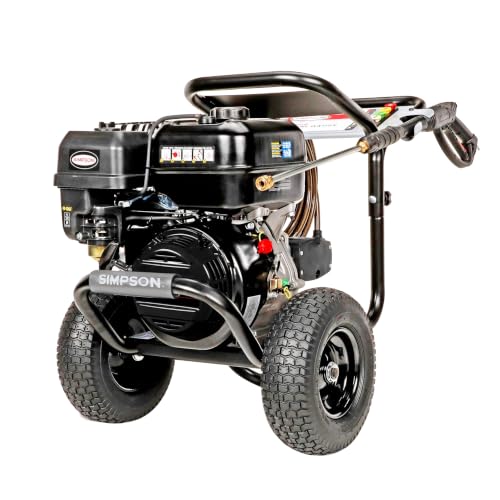 Simpson PowerShot 4400 PSI Gas Pressure Washer4400 psi At 4.0 GPM8 x 3 x 50 inches135 PoundsCheck on Amazon
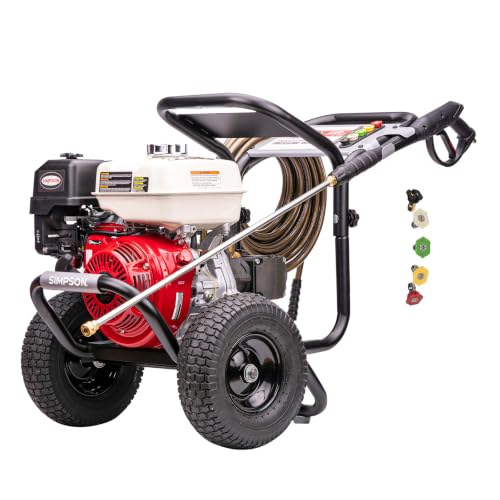 Simpson Cleaning PS60869 PowerShot 4000 PSI Gas PressureNo Size38 x 23.5 x 29 inches120 PoundsCheck on Amazon


What's inside
- Top Picks at a Glance
- Quick Comparison of the Gas Pressure Washers
- 1. Simpson Aluminum Series 4200 PSI (Honda GX390): Best Overall
- 2. Simpson PowerShot 4000 PSI (Honda GX270): Best Value Professional
- 3. TechSweepPro 4400 PSI (420cc, Electric Start): Best Maximum Output
- 4. Steupoek 4000 PSI, 4 GPM (212cc): Best Budget High-Flow
- 5. Homdox 4200 PSI, 4.0 GPM (209cc): Best Budget Alternative
- 6. Westinghouse WPX3400: Best Lower-Pressure Workhorse
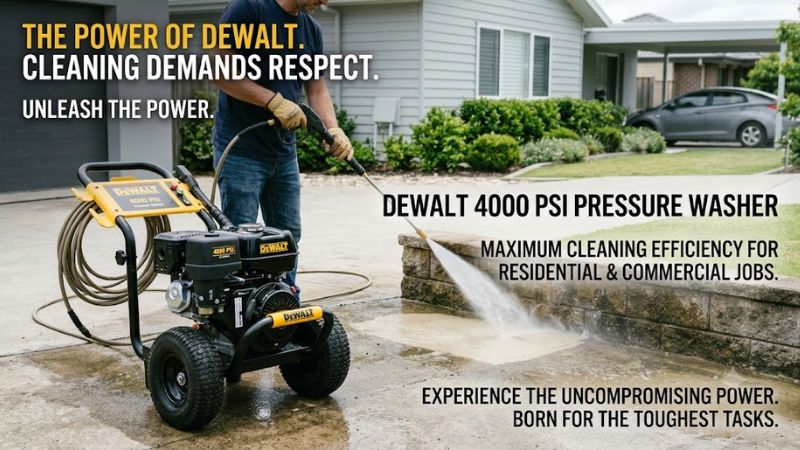
- 7. DEWALT DXPW3300: Best for Homeowners Who Want a Known Brand
- Also Consider
- How We Chose
- Buying Guide
- Common Mistakes When Buying a Commercial Pressure Washer
- Worked Example: Matching a Machine to a Job
- Nozzle Guide: Which Tip for Which Surface
- Maintenance Schedule for Long Pump Life
- Safety Basics
- Frequently Asked Questions
- Which One Should You Buy?
- Sources
As an Amazon Associate I earn from qualifying purchases. This post may contain affiliate links at no extra cost to you.
For commercial-style cleaning, the Simpson Aluminum Series 4200 PSI with a Honda GX390 engine is the strongest all-round choice among the gas pressure washers we looked at, and the Simpson PowerShot 4000 PSI with a Honda GX270 is the better value if you can live with a little less flow. If you need to spend far less, a 4000 PSI, 4 GPM washer with a 212cc engine such as the Steupoek is the budget route, with the trade-off that its long-term support is unproven. This guide covers the best commercial pressure washers in the gas 3000 to 4400 PSI range, how pump type, engine and flow rate decide real cleaning speed, and which antifreeze or pump saver to keep in the storage kit.
A note on method: this is a research-based guide. We did not personally use these machines. Specifications come from the listings and the makers’ documentation, and anything we could not confirm is marked “not listed.” We do not make performance claims from PSI numbers alone, because advertised pressure is a maker rating, not a result from our own work.
As an Amazon Associate we earn from qualifying purchases at no extra cost to you.


Top Picks at a Glance
- Best Overall: Simpson Aluminum Series 4200 PSI, 4.0 GPM, Honda GX390
- Best Value Professional: Simpson PowerShot 4000 PSI, 3.5 GPM, Honda GX270
- Best Maximum Output: TechSweepPro 4400 PSI, 4.5 GPM, 420cc electric-start
- Best Budget High-Flow: Steupoek 4000 PSI, 4 GPM, 212cc, 7.0 HP
- Best Lower-Pressure Workhorse: Westinghouse WPX3400, 3400 PSI, 2.6 GPM
- Best for Homeowners Who Want a Known Brand: DEWALT DXPW3300, 3300 PSI, 2.4 GPM
- Best Budget Alternative: Homdox 4200 PSI, 4.0 GPM, 209cc, 7HP
Quick Comparison of the Gas Pressure Washers
| Model | Best for | Key specs (as listed) | Cleaning units (PSI x GPM) | Watch for | Price tier |
|---|---|---|---|---|---|
| Simpson Aluminum 4200 | Daily contractor use | 4200 PSI, 4.0 GPM, Honda GX390, triplex pump | 16,800 | Heavy; plan transport | Premium |
| Simpson PowerShot 4000 | Pro use on a tighter budget | 4000 PSI, 3.5 GPM, Honda GX270, triplex pump | 14,000 | Lower flow than 4.0 GPM units | Mid-range |
| TechSweepPro 4400 | Highest rated output | 4400 PSI, 4.5 GPM, 420cc, 15 HP, electric start | 19,800 | Brand support unproven; pump not listed | Mid-range to Premium |
| Steupoek 4000 | Budget high flow | 4000 PSI, 4 GPM, 212cc, 7.0 HP, 9 in. wheels | 16,000 | Engine and pump details not fully listed | Budget |
| Homdox 4200 | Budget high flow | 4200 PSI, 4.0 GPM, 209cc, 7 HP | 16,800 | Check hose and wand quality | Budget |
| Westinghouse WPX3400 | Property maintenance | 3400 PSI, 2.6 GPM, onboard soap tank | 8,840 | Lower flow for large areas | Budget to Mid-range |
| DEWALT DXPW3300 | Light commercial and home | 3300 PSI, 2.4 GPM, axial pump | 7,920 | Residential-rated per the listing | Mid-range |
The cleaning-units column is a simple calculation: pressure multiplied by flow. It is a rough way to compare speed across machines, not a precise measure, because nozzle choice and pump efficiency also matter.
1. Simpson Aluminum Series 4200 PSI (Honda GX390): Best Overall
- 4200 PSI, 4.0 GPM
- Honda GX390 engine
- CAT triplex-style pump as shown in the listing
- Aluminum frame series, positioned for professionals
Best for: contractors and property-maintenance crews who run the machine many hours a week. Skip if: you wash a driveway twice a year; this is more machine than you need.
The key spec is the combination of a 4.0 GPM flow rate and a triplex pump. Flow, not pressure, determines how fast a surface rinses clean, and 4.0 GPM is the level many professional washers target for flatwork such as parking lots and concrete. A 389cc class Honda engine is a common choice for this tier, with strong parts support and a reputation for long service life under routine maintenance.
A triplex pump, in which three plungers move in sequence, is the standard for commercial washers because it is built to be serviced and run for long hours. We cover how that compares with axial cam pumps below. In this class, pay attention to ownership details: regular oil changes for the pump and engine, a fresh fuel stabilizer program and a pump saver before storage matter more than the badge.
Pros: strong engine, professional pump, high flow, serviceable. Cons: premium price, heavy, overkill for light use.
2. Simpson PowerShot 4000 PSI (Honda GX270): Best Value Professional
- 4000 PSI, 3.5 GPM
- Honda GX270 engine
- Triplex pump named in the listing
- Sold for professional use per the maker
Best for: small contractors and serious homeowners who want a brand with parts support at a mid-range cost. Skip if: you need 4.0 GPM or more for large flatwork.
This model trades a little flow and engine size for a lower price than the 4200 PSI units. With 14,000 cleaning units, it runs about 17 percent below the 16,800 of the Aluminum Series, a gap you notice on big slabs but not on siding, fences or decks. The Honda GX270 is a well-known engine size, so parts and service knowledge are easy to find.
Pros: reputable engine, triplex pump, good balance of cost and capability. Cons: less flow than the top units, still not cheap.
3. TechSweepPro 4400 PSI (420cc, Electric Start): Best Maximum Output
- 4400 PSI, 4.5 GPM
- 420cc engine, listed as 15 HP, 4-cycle
- Electric start
- Pump type: not listed in the title
Best for: large-area cleaning where rated output and electric start matter. Skip if: you need a long-established service network.
On paper this is the strongest machine here: 19,800 cleaning units and electric start. The questions to resolve before buying are the pump type, the engine maker and the warranty terms, because none is stated in the listing title. Ask for the pump specification and confirm that replacement parts are available. A powerful engine on a weak pump is a bad pairing, because the pump is the part that fails under hours of use.
Pros: highest rated pressure and flow, electric start. Cons: pump details not listed, brand support unproven, heavier fuel use.
4. Steupoek 4000 PSI, 4 GPM (212cc): Best Budget High-Flow
- 4000 PSI, 4 GPM
- 212cc engine, 7.0 HP
- 9 inch wheels, 5 nozzles, 25 ft hose
Best for: seasonal use on driveways, fences and equipment where cost matters most. Skip if: you need daily commercial reliability.
A 212cc engine producing about 7 HP is typical of consumer-grade gas washers, and a 7 HP engine is hard pressed to drive a pump at a true 4000 PSI and 4 GPM; the 7 HP class more commonly pairs with 3000 to 3200 PSI at 2.5 GPM. Treat advertised output with caution and look for the maker’s pump data. The listing is useful because it includes 9 inch wheels and a long hose, but longevity is the main unknown.
Pros: low price, big wheels, accessories included. Cons: ratings need verification, support unproven, engine small for the rated output.
5. Homdox 4200 PSI, 4.0 GPM (209cc): Best Budget Alternative
- 4200 PSI, 4.0 GPM
- 209cc, 7 HP engine
- Portable frame with wheels, 5 nozzles, 25 ft hose
Best for: homeowners and small crews who want a large-looking spec sheet at a low cost. Skip if: you need warranty and parts support to be certain.
The same caution applies as for the Steupoek: with about 7 HP on tap, a 4200 PSI and 4.0 GPM claim should be read as a maximum rating. If the washer arrives and the pump, unloader and hose fittings look sturdy, it can be a practical entry unit. Compare the pump specification with the maker before buying.
Pros: low cost, wheels and accessories included. Cons: output rating needs verification, long-term support unclear.
6. Westinghouse WPX3400: Best Lower-Pressure Workhorse
- 3400 PSI, 2.6 GPM
- Onboard soap tank, spray gun and wand
- 5 nozzle set
Best for: property maintenance such as siding, decks, patios and equipment. Skip if: you wash large parking areas.
At 8,840 cleaning units, the WPX3400 is well suited to household and light commercial work. The onboard soap tank is practical for routine detergent application. Engine and pump details: not listed in the title, so check the maker’s sheet.
Pros: sensible output for most jobs, soap tank, accessible price. Cons: lower flow for big areas, details to confirm.
7. DEWALT DXPW3300: Best for Homeowners Who Want a Known Brand
- 3300 PSI, 2.4 GPM
- Axial cam pump per the listing
- Residential-rated model per the listing title
Best for: homeowners and light-duty crews who want a recognized brand. Skip if: you need true commercial duty cycle.
The listing explicitly labels this model as residential, so it is a useful reference point for what commercial machines add: higher flow, a triplex pump and a larger engine. Axial cam pumps keep cost down and are fine for occasional use.
Pros: known brand, simple design, lower cost than commercial units. Cons: residential duty cycle, lower flow.
Also Consider
- Simpson PowerShot 4400 PSI, 4.0 GPM, CRX 420cc: a step up in engine size from the 4200 PSI class at a similar tier.
- Simpson PowerShot 3500 PSI, 2.5 GPM, Honda GX200: an entry-level professional machine with a well-known engine.
- Evernexta 3800 PSI, 2.7 GPM: a budget unit with a longer hose, listed at 35 ft.
- Pump saver and antifreeze products: see the winter care section below.
How We Chose
This guide is research-based. We did not personally use these pressure washers. We began with the gas models in the product store with ratings between 3000 and 4400 PSI, compared the specifications in each listing with the makers’ published documentation, and checked those against independent coverage from trade publications such as Pro Tool Reviews. We then grouped the machines by duty level and pump type.
The criteria were rated PSI and GPM, engine brand and size, pump type, frame and wheels, and what ownership requires. We did not include exact prices, and we avoided cleaning-speed claims that depend on the nozzle and surface. Where a listing did not state the pump or engine maker, we wrote “not listed.”
Buying Guide
Pump type: triplex or axial cam
Pump type is the biggest difference between commercial and consumer washers. Triplex plunger pumps run at lower RPM, are designed to be serviced, and are the usual choice for professional machines. Axial cam pumps are compact and cost less, and many consumer machines use them; they are generally treated as lighter-duty. A triplex pump costs more, but a service kit can restore it in many cases, while axial pumps are often replaced as a unit. We compare them in detail in a separate guide.
Engine: size, brand and start system
A professional gas washer usually has an engine in the 196cc to 420cc range from a maker with dealer support, such as Honda. Engine size should match pump demand: roughly speaking, a pump needs more horsepower as GPM and PSI go up. A small engine paired with a big rated pump is a warning sign. Electric start is convenient for crews who stop and restart often, but a recoil start is more common and simple.
PSI vs GPM: what cleans what
PSI strips and lifts; GPM carries the dirt away. For rinsing concrete, flow matters a lot: a 4.0 GPM machine can rinse an area faster than a 2.5 GPM unit at similar pressure. For stripping paint or removing stubborn stains, pressure matters. Be cautious with 4000 PSI on wood, siding, vehicles or soft masonry: the pressure can gouge, etch or push water behind siding. Use wide-angle nozzles and keep the wand moving. The worked comparison in the table, PSI times GPM, helps you compare machines, but it is not a substitute for choosing the right nozzle.
Hose, wand and accessories
Commercial work needs a hose that handles hours of use: a 50 ft rubber or high-pressure thermoplastic hose with brass fittings is common. Check the unloader valve, the quick-connect fittings and the spray gun. Surface cleaners and extension wands often matter more than the machine for flatwork. Check the machine’s hose connection size before buying accessories.
Winter care: pump saver and antifreeze
Water left in a pump can freeze and crack the manifold, and freeze damage is not repairable by a nozzle swap. Before storage in cold climates, run a pump saver or antifreeze formula through the pump according to the product label. Options listed in the store include Kärcher Pump Guard, Briggs and Stratton Pump Saver, JB Industries Pump Guard and STA-BIL Pump Protector. Always choose a pressure-washer-specific product and follow its directions; do not run automotive antifreeze through the pump unless the pump maker approves it. Also drain hoses, disconnect the water supply and keep the machine somewhere frost-free if possible. Fuel stabilizer for the engine is the other end-of-season step.
Common Mistakes When Buying a Commercial Pressure Washer
- Choosing by PSI alone and ignoring GPM.
- Believing a high rating on a small engine without checking pump specs.
- Skipping oil changes on the pump, which is a leading cause of failure.
- Using the wrong nozzle on wood or siding.
- Not buying a pump saver before winter.
- Running the pump without water, which can damage seals within seconds.
Worked Example: Matching a Machine to a Job
Take a 1,200 square foot concrete lot. A crew with a 2.4 GPM, 3300 PSI washer and a surface cleaner might cover a given area in a certain time; a 4.0 GPM, 4200 PSI machine with the same surface cleaner covers noticeably more because the cleaner head can run faster and still keep up with rinsing. The point is not an exact figure, since it varies by soil, nozzle and operator, but that doubling flow often matters more than adding a few hundred PSI. Surface cleaners are rated for a maximum flow, so check that your machine and cleaner head match; a 12 inch head is meant for roughly the 2.5 to 3 GPM class, while larger 18 to 24 inch heads are meant for 4 GPM and up, per most maker sheets.
For a siding wash on a two-story house, a 2.6 GPM machine at 3400 PSI is plenty, and in practice you will use a wide-angle nozzle and a low-pressure soap tip, not the full rated pressure. For fleet or equipment washing, a hot-water machine is a different category and beyond this guide.
Nozzle Guide: Which Tip for Which Surface
| Nozzle (color code) | Spray angle | Typical use | Caution |
|---|---|---|---|
| Red | 0 degrees | Spot removal on concrete and steel | Can cut skin and etch most surfaces; use rarely |
| Yellow | 15 degrees | Stripping and heavy cleaning of hard surfaces | Keep distance on wood and masonry |
| Green | 25 degrees | General cleaning of decks, fences and equipment | Try the pattern on scrap first |
| White | 40 degrees | Rinsing, vehicles, siding | Lowest risk of damage among high-pressure tips |
| Black | Low-pressure soap | Applying detergent through the siphon or soap tank | Does not rinse |
Color codes are a convention used by most makers; confirm in your manual. Start with the widest tip and move to a narrower tip only when needed.
Maintenance Schedule for Long Pump Life
- Before each use: check engine oil, pump oil (if the pump has a sight glass), fuel and hose connections; run water through the pump before starting the engine so the pump never runs dry.
- After each use: release trigger pressure, shut off water, and drain the hose. Clean the inlet screen.
- Each season: change engine oil and the pump oil per the manual, inspect O-rings and quick-connect seals, and replace worn nozzles; a worn orifice lowers pressure and makes the pump work harder.
- Before storage: add fuel stabilizer, run a pump saver through the pump, and store in a frost-free place.
Most failures in gas washers come from running dry, freezing, or ignoring pump oil. A machine with a serviceable pump, such as the triplex units here, can often be restored with seals and valves, while a budget axial pump is more often replaced.
Safety Basics
Gas pressure washers produce exhaust that contains carbon monoxide; run them only outdoors, away from windows, doors and vents. High-pressure water can cut skin, so never point the wand at people or animals and never check the stream with your hand or foot. Wear eye protection, hearing protection and sturdy footwear, and use a ground-fault protected setup for any electrical equipment nearby. Follow the maker’s manual for fuel handling: stop the engine and let it cool before refueling. Use a ladder stabilizer or a telescoping wand rather than stretching at the top of a ladder, since the wand has recoil.
Frequently Asked Questions
What are the best commercial pressure washers for contractors?
Professional-grade machines such as the Simpson Aluminum Series 4200 PSI with a Honda GX390, and the Simpson PowerShot 4000, are built around triplex pumps and engines with parts support. Budget units can work for seasonal use, but verify their pump and engine information.
What are the best commercial grade gas pressure washers at 4000 PSI?
The Simpson PowerShot 4000 PSI with a Honda GX270 is the established option at that rating, and several budget 4000 PSI units exist as well. Check the pump type, engine size and warranty before buying.
Is 4000 PSI too much for home use?
For most home tasks, 2500 to 3300 PSI is enough, and 4000 PSI can damage wood, siding and vehicle paint if misused. A 4000 PSI machine with the right nozzle and technique can still be used safely.
How much GPM do I need?
For large flat surfaces, 3.5 to 4.0 GPM improves speed. For siding and decks, 2.4 to 2.6 GPM is common. Higher flow also needs a bigger water supply, so check your spigot’s flow.
What is the best antifreeze to use with pressure washer pumps?
Use a pump saver made for pressure washers, such as Kärcher Pump Guard, Briggs and Stratton Pump Saver, JB Industries Pump Guard or STA-BIL Pump Protector, following the label. Compatibility depends on your pump maker’s recommendation.
How often should I service a gas pressure washer?
Follow the manual. Common routine tasks are changing engine oil, checking the pump oil level, cleaning the inlet filter and replacing worn nozzles and O-rings each season.
Can I use a gas pressure washer in a garage?
No. The engine produces carbon monoxide, so operate it only outdoors with good ventilation, away from doors, windows and vents.
Which One Should You Buy?
Buy the Simpson Aluminum Series 4200 if the machine earns its keep every week and you want serviceable components. Choose the Simpson PowerShot 4000 when you want professional components at a lower cost. Consider the TechSweepPro 4400 only after you confirm its pump and warranty. Go with the Steupoek or Homdox if you need a seasonal machine at the lowest cost and accept the support risk. For light commercial or household work, the Westinghouse WPX3400 or DEWALT DXPW3300 delivers enough output without the commercial price. Whatever you pick, buy a pump saver before the first freeze.
Sources
- Simpson Cleaning product pages
- Honda Engines specifications
- Westinghouse Outdoor Power Equipment product pages
- DEWALT pressure washer product pages
- Kärcher, Briggs and Stratton, JB Industries and STA-BIL pump care product pages
- Pro Tool Reviews pressure washer coverage
Last updated: October 2026
Related guides
More from Amazon
Programs that pair well with the guide above. Offers and eligibility are set by Amazon and may change.
A free business account with business pricing and bulk-buying tools for work, shop or home office.
Create a business accountFree shipping on eligible items, Prime Video and more. Eligible new members can start with a free trial.
Start a Prime free trialAudiobooks and podcasts to listen to on the go. Eligible new members can start with a free trial.
Try Audible freeAd-free music streaming. Eligible new subscribers can start with a free trial.
Try Music Unlimited freeAs an Amazon Associate we earn from qualifying purchases.
Write Your Review
No reviews yet. Be the first to share your experience!