What's inside
As an Amazon Associate I earn from qualifying purchases. This post may contain affiliate links at no extra cost to you.
A cordless oscillating multi-tool is useful for cuts that are awkward to make with a circular saw or too close to a wall for a reciprocating saw: trimming door jambs, cutting out grout, shortening baseboard, and making plunge cuts in drywall. The right choice depends less on maximum speed than on the jobs you expect to do, the batteries you already own, and how the tool handles vibration and dust.
As an Amazon Associate we earn from qualifying purchases at no extra cost to you.


Start with your renovation tasks
List the materials and cuts before comparing tools. A basic model can handle occasional cuts in softwood, drywall, plastic, and thin trim. Repeated cuts in hardwood, nail-embedded framing, or cement board put more demand on the motor, battery, blade, and your hands.
For trimming a door jamb, a flush-cut blade and a scrap piece of flooring as a height guide are often more important than extra power. For removing grout, check whether the tool accepts the appropriate carbide or diamond accessory and whether its speed can be controlled. If you only need to undercut one doorway, renting or borrowing may cost less than buying a tool and blades.
Check your battery platform first
If you already own cordless tools, start with that battery system. A bare tool usually costs less than a kit, and sharing batteries and chargers can save money and storage space. Confirm that the exact tool uses the battery family you own; brands sometimes have multiple battery lines, and batteries are not always cross-compatible.
For occasional renovation work, a compact battery around 2.0 Ah is usually manageable and adequate for short cuts. Longer sanding sessions, cutting dense material, or a full day of work can drain it quickly; a 4.0 Ah battery or a spare reduces interruptions but adds weight. More capacity does not make a weak tool powerful, and a large battery can make overhead cuts tiring.
Compare the bare tool in your existing platform with a kit if you need a battery and charger. A kit can be a better deal when its included battery is useful for other tools, but not if it locks you into an ecosystem you do not plan to use. Browse bare-tool cordless oscillating multi-tools in your battery system before deciding.
Features that matter on site
Variable speed helps match the tool to the accessory and material. Lower speeds can give better control in plastic or when starting a cut; higher speeds can cut faster in wood. Speed markings are not a substitute for a light touch: pressing hard can overheat a blade and stall the tool.
Vibration control and grip matter during long cuts and sanding. If possible, hold a tool before buying. A comfortable grip and a trigger or switch you can operate without shifting your hand are more useful than a long feature list. Some tools include a vibration-reduction mechanism, but comfort varies by user.
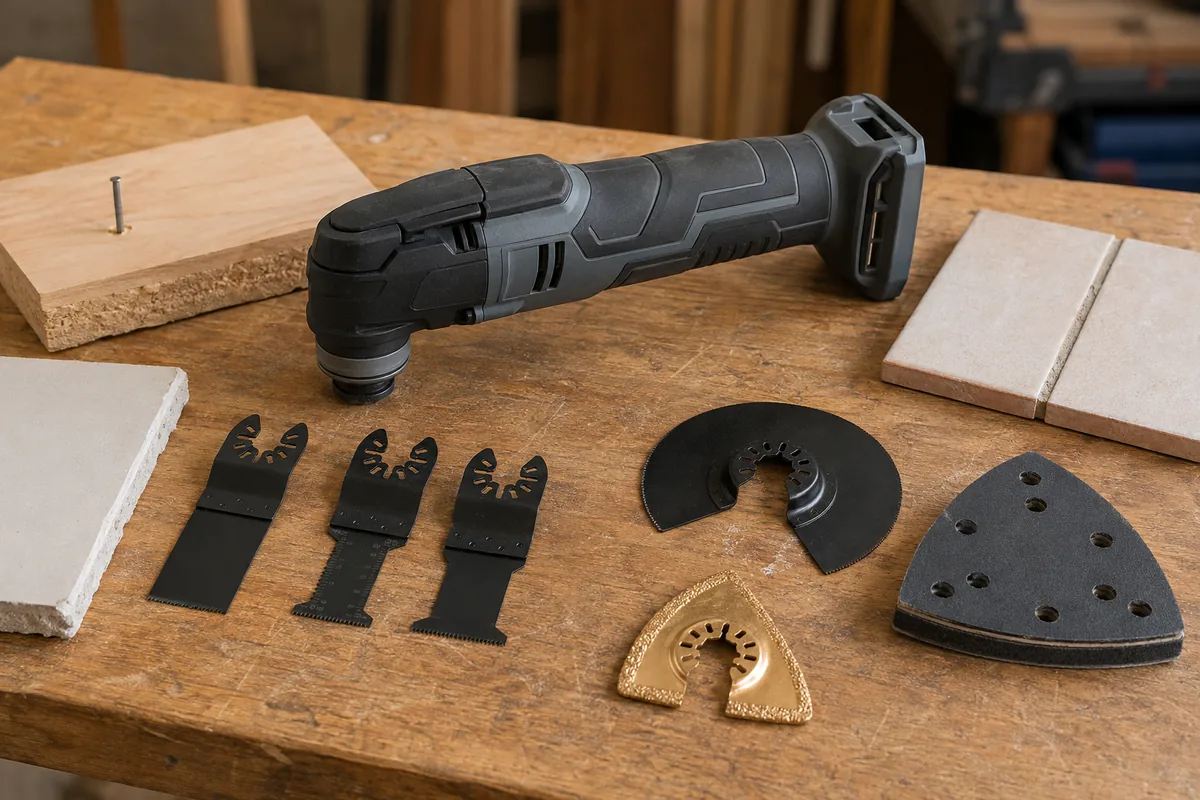
Blade changes should be quick and secure. Tool-free clamps are convenient when changing accessories often, though the clamp must still hold the blade firmly. Check compatibility before assuming every accessory will fit: many tools accept common universal-fit blades, but some older or proprietary mounts need an adapter. A mixed set of wood-and-metal oscillating blades is a practical starting point, but inexpensive blades can dull quickly in nails or dense materials.
Compare the main options
| Option | Best fit | Main trade-off |
|---|---|---|
| Compact cordless tool | Occasional trim, drywall, and small repair cuts | Lower weight and cost; can be slower in demanding cuts |
| Higher-output cordless tool | Frequent renovation work and tougher materials | Often heavier and more expensive; still needs suitable blades and batteries |
| Corded oscillating tool | Long sessions where an outlet is close | No battery breaks, but the cord can snag or limit access |
A higher-output model is worth considering if you regularly cut hardwood or nail-embedded material. For a handful of trim cuts a year, a less expensive tool can be enough. You can compare variable-speed cordless tool kits against bare tools, but compare included battery capacity and charger as well as the tool price.
Budget for accessories and dust
The tool is only part of the cost. Blades wear, and the right blade matters: a wood blade is not the right choice for cutting through nails, while a metal-rated blade may cut clean wood more slowly. For grout, use a grout-rated carbide or diamond accessory and keep the tool moving. A small accessory assortment is useful, but buying a large low-cost set can mean owning blades that are poorly suited to your materials.
Sanding attachments can turn the tool into a detail sander, but they are best for tight corners and small patches, not large walls or floors. Dust extraction can improve visibility and reduce cleanup, though the adapter and hose may make the tool harder to maneuver. Wear eye protection and hearing protection, and use a respirator appropriate to the dust; avoid dry sanding or cutting materials whose dust you cannot safely control.
Avoid common cutting problems
Let the blade do the work. Excessive pressure slows the cut, heats the accessory, and can trip a battery tool’s overload protection. If a blade gets hot, stop and let it cool. A short blade often gives better control, but keep enough length to clear the workpiece without pushing the tool body against the surface.
Before cutting into a wall or floor, check for wiring, plumbing, and other hidden services. Set the depth carefully for plunge cuts; a depth stop or a marked blade can help prevent cutting too far. Secure loose material, keep the shoe or tool base steady, and start at a speed you can control.
Make the final choice
Choose a bare tool in your existing battery platform if you already have compatible batteries and charger. For occasional household jobs, prioritize comfortable handling, variable speed, and a usable blade clamp over premium power claims. If renovation work is frequent or includes dense materials, pay for a better-performing tool and keep a spare battery ready. Either way, budget for suitable blades: the wrong or worn accessory is a common reason a capable tool feels slow.
Related guides
- Longest Lasting Lawn Mower Battery: AGM vs Lithium vs Flooded Lifespan and Cost per Season
- Duralast Gold Lawn Mower Battery Review: U1 Fit, CCA and When to Pay for AGM
- Greenworks Pro 80V 21-Inch Mower Review: Runtime Math, Push vs Self-Propelled and Yard Fit
- Bosch High Pressure Washer Gun Replacement: Fittings, Adapters and What Fits Your Model