What's inside
As an Amazon Associate I earn from qualifying purchases. This post may contain affiliate links at no extra cost to you.
A 40V battery can keep a saw running through demanding cuts, but the voltage alone tells you little about runtime. Capacity, the tool’s power draw, the material, and how you work all matter. For extended cutting, compare watt-hours, check which packs your tool accepts, and consider whether the added weight is worth the extra runtime.
What 40V tells you—and what it doesn’t
“40V” is a platform label, not a guarantee of a particular runtime or cutting speed. Battery capacity is usually listed in amp-hours (Ah). To estimate energy, multiply nominal voltage by amp-hours: a 40V, 4Ah pack is roughly 160 watt-hours; an 8Ah pack is roughly 320 watt-hours. Actual usable energy varies with pack design, temperature, age, and load.
A larger pack can deliver more work between charges, but it does not necessarily make a compatible saw cut faster. The motor and tool electronics set performance limits. Also confirm compatibility with your exact tool: batteries within one brand may not fit every generation or product line, and voltage platforms are not interchangeable.
Choose capacity for the job
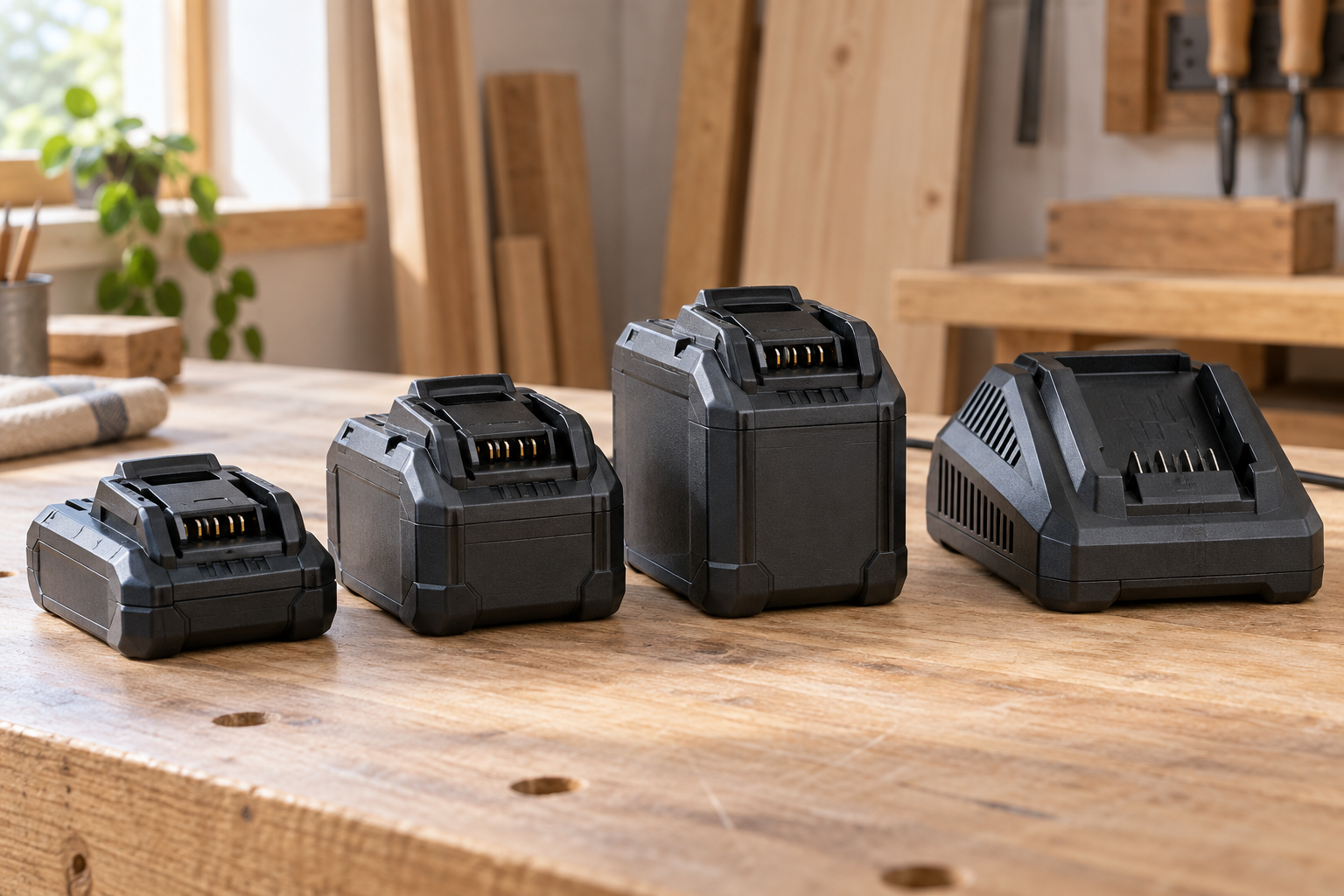
For pruning, occasional crosscuts, or short sessions near a charger, a smaller pack is often the sensible buy. It costs less and reduces tool weight. If you are cutting firewood, framing lumber, or thick branches for hours, a higher-capacity pack—or two moderate packs that can rotate through a charger—can reduce interruptions.
More capacity has costs. A high-Ah battery can make a chainsaw or circular saw noticeably heavier and more tiring to control, especially overhead or at arm’s length. It may also take longer to recharge. Check the battery’s weight and the charger’s stated charge time, not just its Ah rating. A fast charger helps only if the pack is approved for it and the circuit can supply the charger as intended.
Battery choices for extended cutting
| Battery approach | Best fit | Main trade-off |
|---|---|---|
| Small capacity, roughly 2–4Ah | Light tools, short cuts, occasional use | Less runtime; may need frequent swaps under heavy load |
| Mid capacity, roughly 4–6Ah | Mixed cutting and general jobsite work | Balances runtime and weight, but may not last through a long, demanding session |
| High capacity, roughly 6–10Ah or more | Long cutting sessions and high-draw tools | More runtime, weight, cost, and often charging time |
| Two compatible mid-capacity packs | Continuous work with a suitable charger | Requires pack swaps and enough charging time to keep up |
These ranges are buying guidelines, not universal performance ratings. A compact pack from one platform may differ substantially from another pack with the same Ah label. Look at the manufacturer’s compatibility chart and published pack weight. If you need a replacement or spare for a specific platform, compare 40V cordless tool batteries against your tool’s exact battery requirements before ordering.
Why real runtime varies
Battery estimates are easy to overread. Cutting a thick, knotty hardwood branch can demand far more power than trimming small, dry limbs. A dull chain, blade, or cutting edge adds load and wastes energy. Pinching a chainsaw bar in a kerf can stall the tool and trigger its protection system; repeatedly forcing the cut can drain a pack quickly and heat both battery and tool.
Keep the cutting equipment sharp and suited to the material, support the work so the kerf stays open, and let the tool do the cutting rather than leaning on it. In cold weather, batteries can deliver less runtime and may need to warm up. If a pack shuts down under load, let it cool and check the tool for binding or an overly demanding cut before assuming the battery is defective.
One large pack or two smaller ones?
A single large pack is convenient when you want fewer swaps and the added weight is manageable. Two smaller packs are often better when balance matters, when one can charge while the other is in use, or when you already own compatible batteries for other tools. The two-pack strategy only works if charger turnaround keeps pace with consumption; a slow charger can leave both packs empty during a long shift.
When buying into a platform, price the battery and charger together. A bare tool may look inexpensive but cost more once you add a high-capacity pack and a charger suitable for your schedule. If you have no batteries yet, a kit can be the better value. If your existing pack is compatible and healthy, a cheaper tool-only purchase may be enough.
What to check before buying
Confirm the exact platform and tool compatibility, then compare Ah, battery weight, charger time, and warranty. Prefer an official pack or a replacement explicitly listed as compatible by the tool maker; an uncertain fit can cause poor contact, unreliable protection, or a pack that will not charge. For demanding cutting, a high-capacity 40V battery makes sense if the tool accepts it and you can manage the weight. For lighter, intermittent work, a 40V battery-and-charger kit with a moderate pack is often the more economical choice.
Do not store packs in a hot vehicle or leave them charging unattended if the manufacturer advises against it. Keep contacts clean and dry, use the specified charger, and stop using a battery that is cracked, swollen, unusually hot, or damaged. For long cutting days, the practical choice is the lightest compatible setup that reliably covers your work, with a spare pack or charging plan for the times it does not.
FAQ
One large pack or two smaller ones?
Related guides
- Longest Lasting Lawn Mower Battery: AGM vs Lithium vs Flooded Lifespan and Cost per Season
- Duralast Gold Lawn Mower Battery Review: U1 Fit, CCA and When to Pay for AGM
- Greenworks Pro 80V 21-Inch Mower Review: Runtime Math, Push vs Self-Propelled and Yard Fit
- Bosch High Pressure Washer Gun Replacement: Fittings, Adapters and What Fits Your Model