Our Top Picks
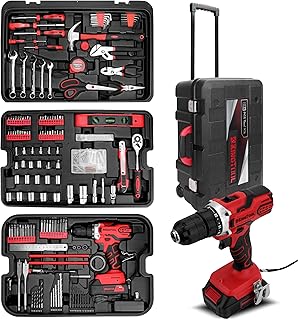
 KingTool 276-Piece Tool Set Kit with 12V Cordless276 Count (Pack of 1)16.4 x 13.1 x 6.57 Inches1.76 PoundsCheck on Amazon
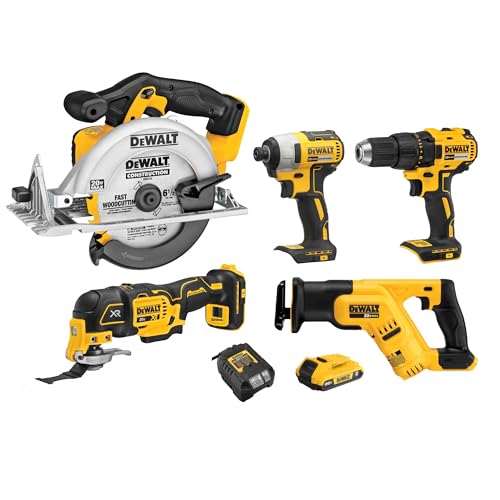
 DEWALT 20V MAX Cordless Drill and Impact DriverOne Size15.06 x 6.4 x 9.88 inches3.6 PoundsCheck on Amazon
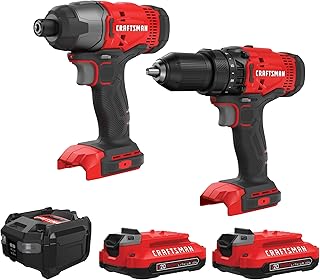
 Cordless Drill Impact Driver Brushless Power Tool ComboSmall5.5 x 2 x 8 inches2.1 poundsCheck on Amazon

What's inside
As an Amazon Associate I earn from qualifying purchases. This post may contain affiliate links at no extra cost to you.
Owning a house means a slow, endless stream of small jobs: a sticking door, a shelf that needs hanging, a fence panel, a leaking trap, a room that needs painting properly. You do not need a contractor’s kit for that. You need seven tools.
The expensive mistake is not buying cheap tools. It is buying the wrong seven, in the wrong order, usually in one guilty afternoon after a job went badly — and ending up with three things that overlap and nothing that solves the problem actually in front of you. The best power tools for homeowners are the ones that keep unlocking new jobs for years, on one battery, with consumables you can buy anywhere.
As an Amazon Associate we earn from qualifying purchases at no extra cost to you.


So this list is ordered by purchase priority, not by price and not by how good the tool feels in your hand in the aisle. Each entry says what it unlocks, what separates a good buy from a bad one at that level, and who can skip it entirely. If a tool is not standing between you and a finished job, it can wait.
Here they are in the order I would buy them.
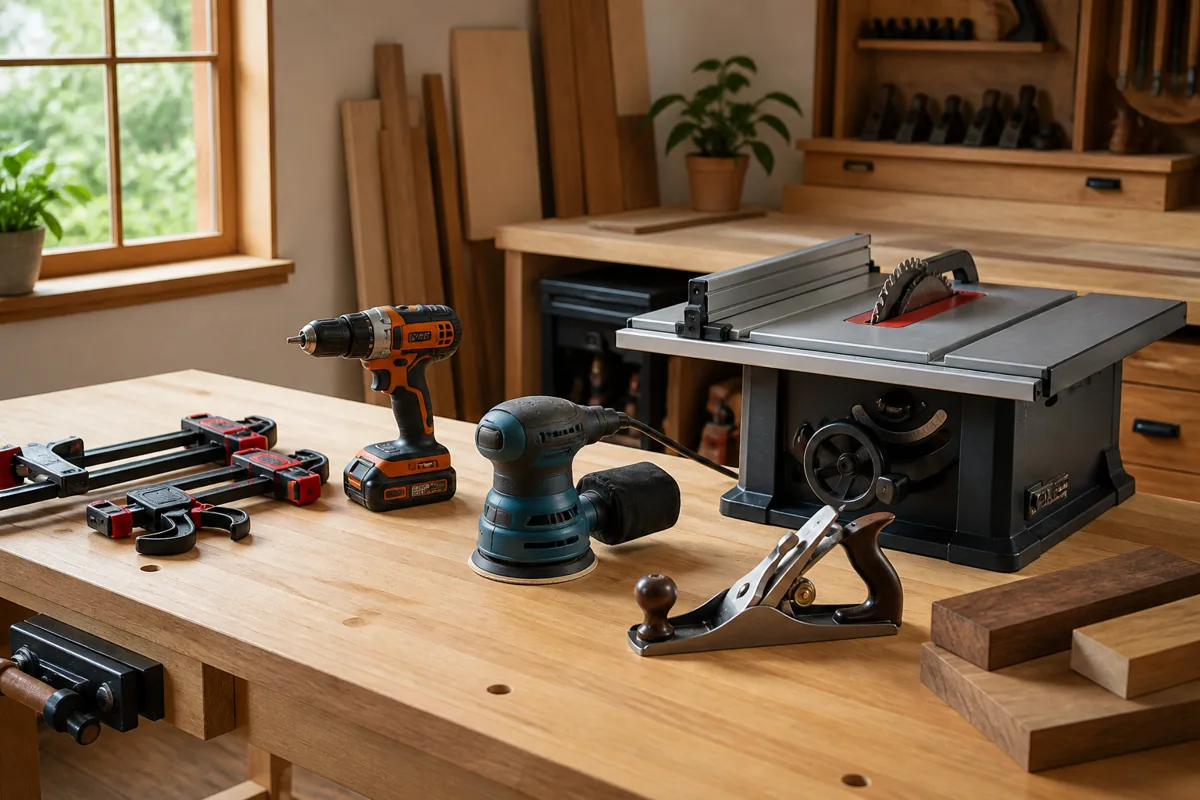
The seven, in buying order
1. Cordless drill/driver
The tool that does the most. Compact, brushless, on a platform with a wide range so you can grow into it. Everything else on this list is optional until you own this.
The number that matters least here is torque. The thing that matters most is not printed on the box at all: how many other tools the platform sells, and how easily and cheaply you will be able to buy a replacement battery for it years from now. You are not choosing a drill. You are choosing the socket that every future purchase plugs into, and switching later means paying for batteries twice.
After the platform, weigh features in this order: two batteries rather than one, an all-metal keyless chuck that will not creep loose under a large bit, a two-speed gearbox, a clutch with enough settings to be useful on soft material, and a head short enough to fit inside a kitchen cabinet. A compact 12V-class drill suits flats, furniture assembly, curtain rails and overhead work where weight punishes you. Step up to the 18V/20V class if you have a garden, a fence, a deck or masonry walls in your future.
Who should skip it: nobody. This is the one tool on the list with no substitute.
Compact brushless drill kits
Look for two batteries, an all-metal chuck and at least 15 clutch settings. Do not overspend — homeowner use rarely stresses a modern drill.
2. Impact driver
The moment you build a fence, a deck or flat-pack furniture at scale, this earns its place. Buy it on the same battery platform, ideally as a combo with the drill because that is cheaper.
What you are buying is not more power, it is a different kind of power. The rotational hammering drives long screws and lags without twisting your wrist and without the drill’s tendency to cam out and chew up the screw head. Two things follow from that. First, the 1/4-inch hex collet only accepts impact-rated bits — standard bits will eventually shatter in it, which is why bit sets sit at number seven on this list. Second, an impact driver has no clutch, so it is the wrong tool for cabinet hinge screws, brass hardware and anything that strips or snaps if you look at it wrong. Keep the drill for finesse and the impact for everything long, rusted or structural.
Who should skip it: if you have no outdoor structures, no decking and no repeated flat-pack builds ahead, defer this one and put the money into the sander instead.
3. Random orbital sander
Refinishing furniture, prepping walls, smoothing a repair. A cheap orbital sander is genuinely fine here — this is not a tool that rewards spending.
The buying criteria are short: 5-inch hook-and-loop pad because discs are available everywhere, a dust port that fits a vacuum hose, and a body you can hold comfortably for twenty minutes without your fingers going numb. Vibration and grip shape are worth more than motor watts. Corded is completely defensible here — sanding is a long, sustained-load job and it will empty batteries faster than anything else on this list.
Most sanding disappointment is technique, not tool. Work through grits without skipping more than one step, let the weight of the machine do the cutting instead of leaning on it, keep it moving, and change discs when they stop cutting rather than when they look worn. If you only ever sand filler before painting, a hand block and a pole sander will do it, and you can skip this until a piece of furniture needs saving.
Random orbital sanders
5-inch, hook-and-loop discs, dust bag or vacuum port. Buy a variety pack of grits at the same time — you will use more than you think.
4. Circular saw or jigsaw
Pick one based on what you cut. Straight cuts in sheet material: circular saw. Curves, cutouts and general shape work: jigsaw. Most homeowners are better served by the jigsaw first — it is less intimidating and more forgiving.
On a jigsaw, spend your attention on the base plate and the blade. A thin, flexible base is what makes cheap jigsaws feel bad, and blade drift in thick stock is the tool’s real limitation — the blade leans, and the cut comes out square on top and angled underneath. Match the blade to the job: fine teeth for clean edges, down-cut teeth for laminate and veneer, coarse teeth when you just need speed in framing timber.
If your work is mostly sheet goods — a shelving unit, a subfloor patch, a workbench top — buy the circular saw instead and always cut against a clamped straightedge. Judge the depth and bevel levers rather than the motor, and remember that a fresh, decent blade transforms a budget saw more than any spec on the label. Either way, support the offcut so it cannot pinch the blade. If you cut sheets once a year, most home centers will break them down for you and you can skip this entirely.
Jigsaws for home use
Tool-free blade change and variable speed are the only two features that matter at this level.
5. Oscillating multi-tool
The tool nobody buys first and everybody loves once they own it. Undercutting door jambs, flush-cutting pipe, cutting out grout, plunge-cutting drywall. It gets you out of problems no other tool solves.
The buying decision is the blade mount, not the motor. Check that the tool takes a widely stocked accessory standard and that blades clamp without a hex key, because you will change them constantly and mid-job. Variable speed matters — grout and metal want it slower than wood. Then accept that the blades are the real running cost: bargain blades go blunt in one cut, glaze over and burn, which is exactly what makes people think the tool is useless. Let it cut at its own pace instead of pushing, and it will last.
Who should skip it: nobody permanently, but if you are not remodelling anything soon this can trade places with the bit set at number seven.
6. Shop vacuum
Wet spills, blocked drains, sawdust, car interiors, the aftermath of every project on this list. A mid-size 6-gallon unit is the sweet spot for a garage.
Ignore the inflated horsepower figures on the drum. Hose diameter, hose length and filtration are what you actually live with. Look for a hose that fits your sander’s dust port, a fine-dust filter plus collection bags if drywall is in your future, big casters that do not tip when you drag the hose, and a power-tool port with auto-start if the price is close. Remember to take the paper filter out before wet pickup, and buy a spare filter with the vac — a clogged filter is what makes a good vacuum feel weak.
7. A proper bit and blade set
Cheap consumables make good tools feel bad. One decent drill bit set, one impact-rated driver bit set, a couple of quality saw blades. This is the cheapest upgrade in the entire list.
Coverage beats piece count. You want twist bits for metal, brad-point bits for clean holes in wood, a couple of spade bits or a small hole saw for pipe and door hardware, impact-rated drivers in the two or three tips your house actually uses, and a magnetic bit holder. On blades, a higher tooth count gives cleaner crosscuts and better results in plywood, while fewer teeth clear waste faster when ripping. A sharp blade will always beat a bigger motor.
Drill and driver bit sets
Titanium or cobalt twist bits for metal, brad-point for wood, impact-rated drivers. Skip the 200-piece bargain sets — most of the pieces are filler.
How to weigh the criteria against each other
When two options look similar, decide in this order. The list is ranked by how much each factor changes your experience over years of ownership, not by how much it changes the price.
- Platform range and battery availability — the single decision you cannot cheaply undo.
- What is in the box — two batteries and a real charger are worth more than any feature on the tool itself.
- Consumable quality — bits, discs and blades decide how the tool feels far more than the motor does.
- Weight, balance and head length — the tool you can hold overhead is the tool you will actually use.
- Dust control — a working dust port is the difference between a project and a cleanup.
- Brushless motor — worth it for run time and heat on the drill and impact, close to irrelevant on the sander.
- Headline specs — torque, amps, peak horsepower. Last, always.
What actually changes as you spend more
The bottom band. Bare-minimum kits with a single small battery, a plastic chuck, a slow charger and no case. The tool usually works; the battery is the problem, and it will be dead or unavailable when you need it. This is the one band to avoid.
The middle band. Where homeowners should live. Brushless motors, two usable batteries, metal chucks, tool-free blade changes, decent dust ports, accessories stocked in every store. Everything on this list has a good option here.
The pro band. You are paying for sealed switches, sustained all-day duty cycles and abuse tolerance you will never inflict on a Saturday. Buy into it only if you already own the batteries or if a specific tool genuinely gets used weekly.
Mistakes that cost homeowners the most
- Two half-platforms instead of one whole one. A drill on one battery system and a saw on another means two chargers, two sets of dead batteries and double the cost of the next tool.
- Buying the tool without the consumable. A saw with no spare blade or a sander with one grit of disc is a tool you will put down mid-job and resent.
- Using the impact driver for everything. It strips small screws, snaps brass and cracks trim. Reach for the drill and its clutch.
- Forcing a dull blade. Burning smells, smoke and wandering cuts are consumable problems that people solve by buying a bigger tool.
- Skipping protection. Eye protection for every cut, hearing protection for the impact driver and the saw, a mask for sanding and drywall dust. It costs less than one blade.
- Storing batteries badly. Not fully flat, not in a freezing garage all winter, not left cooking on the charger for months.
Buying rules for homeowners
- ✔ Buy one battery platform and stay on it
- ✔ Buy the drill and impact driver as a combo kit — always cheaper
- ✔ Spend on consumables, save on tool tier
- ✔ Buy the tool when you have the job, not before
- ✘ Do not buy a 200-piece “homeowner kit” full of unusable filler
- ✘ Do not buy professional-tier tools for weekend use
- ✘ Do not buy corded and cordless versions of the same tool
- ✘ Do not buy the cheapest kit with 1.3Ah batteries
FAQ
What is the best budget platform? For homeowners specifically, Ryobi ONE+ is hard to argue with — huge range, cheap batteries, covers lawn and garden too. The pro platforms are better tools, but their advantage shows up in duty cycles you will not reach. Pick the platform whose batteries you can buy locally without ordering.
Do I need a hammer drill? Only if your walls are brick, block or concrete. In a timber-framed house, no. If you hit masonry once a year, masonry bits and patience will get you through; if every shelf goes into block, buy the hammer function on the drill rather than a separate tool.
Corded or cordless? Cordless for everything on this list except the shop vac. The exception worth considering is the sander, where sustained running drains packs quickly and cords cost less.
What should I buy eighth? Whatever your next job demands, and not before. For most people that is a miter saw once trim and skirting arrive, a trim router for edges and hinge mortises, or a pressure washer if you have a driveway, decking and fencing to keep on top of.
See starter kit prices →