What's inside
As an Amazon Associate I earn from qualifying purchases. This post may contain affiliate links at no extra cost to you.
Start with the work, not the brand
A useful remodeling kit is built around the jobs you expect to do: drilling holes, driving fasteners, cutting trim, opening walls, and handling cleanup. For a typical room-by-room residential remodel, begin with a drill-driver and impact driver, then add tools as the work demands. Buying a large bundle before you know what you’ll use can leave you with duplicate tools, small batteries, and a charger that takes up space.
For routine work in wood and drywall, a compact drill-driver and impact driver cover most fastening tasks. The drill is easier to control for small bits, pilot holes, and hole saws; the impact driver is quicker for long screws and repeated fastening. Neither is a substitute for a hammer drill when drilling masonry. If your work is mostly cabinet installation and trim, a standard drill-driver may be enough, and you can buy an impact driver later.
Choose a battery platform you can keep using
Pick a cordless platform based on the tools you are likely to add, not just the cheapest two-tool kit on the shelf. Check whether it offers the saws, lights, vacuums, and specialty tools you might need, and compare bare-tool prices. A low-cost starter kit can become expensive if the batteries are hard to replace or the tools you want are scarce.
Before buying, check battery voltage, capacity, weight, charger compatibility, and warranty terms. Batteries generally work only within their own brand’s compatible platform, and sometimes only within a specific voltage family. Avoid assuming a battery from one brand will fit another, or that every battery in a brand’s lineup works with every tool.
Two batteries are a practical starting point: one can charge while the other is in use. A 2.0Ah battery is lighter and often comfortable for overhead work; a 4.0Ah battery usually provides more runtime for saws and extended drilling, at the cost of added weight. Amp-hours indicate stored capacity, not tool power by themselves. Tool design and battery electronics also affect performance.
Compare the starter-kit trade-offs
| Kit choice | Best fit | Trade-off |
|---|---|---|
| Drill-driver only | Occasional repairs, shelves, and light installation | Slower for repeated long screws; requires more effort than an impact driver |
| Drill-driver and impact driver | General remodeling and regular fastening | Good coverage, but the impact driver can overdrive screws or damage delicate materials |
| Drill, impact driver, and saw bundle | Frequent cutting and demolition work | Often costs less than buying tools separately, but bundle batteries may be small |
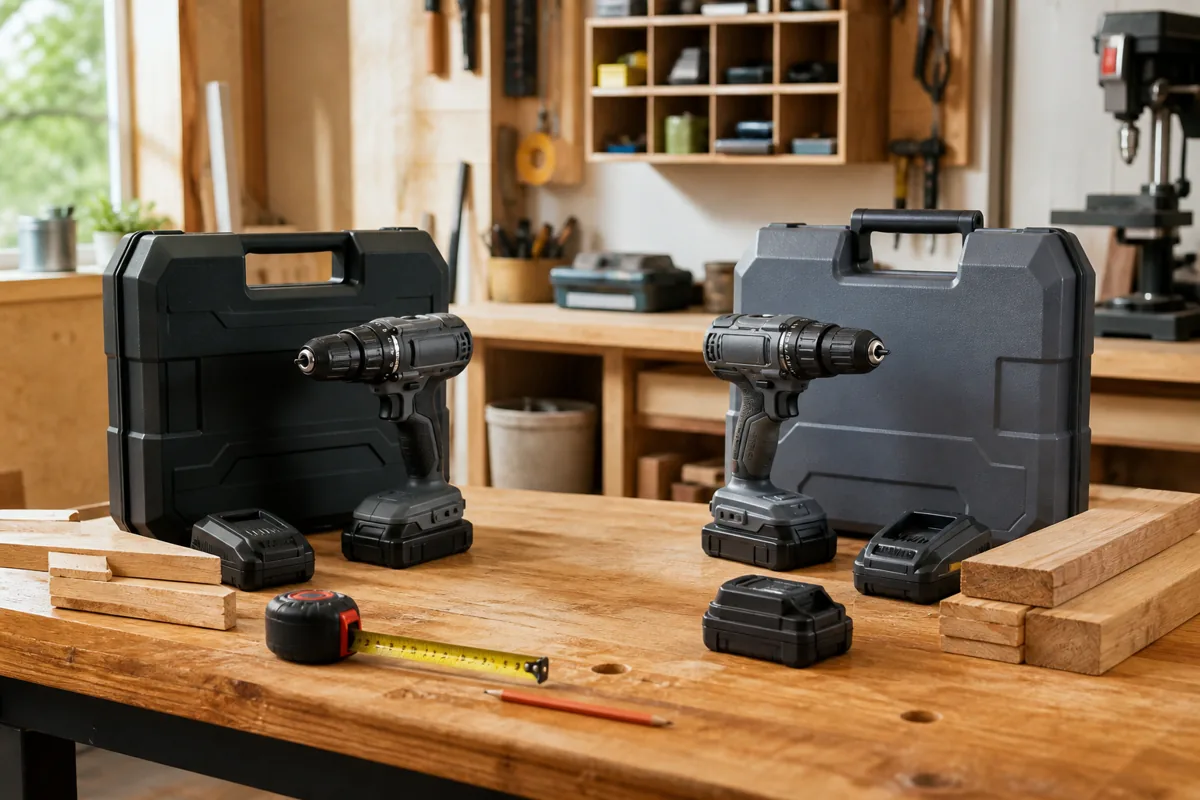
Compare what is actually included: battery count and capacity, charger, case, and tool type. A kit with two small batteries can be a better value for light work than one with a single large battery, while a saw kit intended for long cuts benefits from a higher-capacity pack. If you need a starting point, compare cordless drill and impact-driver combo kits, but verify the included batteries and charger before choosing.
Add tools in the order jobs require them
For cutting trim, plywood, and framing lumber, a circular saw is the most versatile next purchase. A 6½-inch cordless saw is manageable for many remodeling cuts; check its cutting depth against the material you need to cut. A jigsaw is more useful for curves and cutouts, but it is slower for long, straight cuts. A miter saw is convenient for repeated accurate crosscuts, yet it is bulky and unnecessary if you only cut a few pieces at a time.
An oscillating multi-tool is handy for flush cuts, removing grout, trimming jambs, and working in tight spaces. It is not a fast substitute for a circular saw. Blade cost and wear add up, especially when cutting nails or other hard material. A reciprocating saw suits rough demolition, but it can damage wiring, plumbing, and framing hidden behind a wall. Confirm what is inside before cutting, and use a controlled tool and blade for the material.
For sanding, a cordless random-orbit sander is convenient for smaller areas and touch-ups. Long sanding sessions drain batteries quickly, so a corded sander may be the cheaper and less disruptive choice if an outlet is available. Similarly, a corded shop vacuum can make more sense than buying into a cordless vacuum system for cleanup that lasts all day.
Plan batteries and charging around the job
Battery demand varies sharply by tool. A drill doing intermittent pilot holes may run for hours on a small pack; a circular saw making repeated cuts can empty it much sooner. Keep one charged spare for the tool doing the heaviest work. If batteries cannot keep up, a second charger or larger-capacity packs may help, but a corded tool can be the more economical answer for stationary, all-day work.
Use the charger specified for the battery platform, and keep vents clear. Charging speed depends on the charger and battery, not just the outlet. Hot batteries may need to cool before charging; forcing them onto a charger or leaving packs in extreme heat can shorten service life. Store batteries dry and away from loose metal objects that could bridge the terminals.
Buy for control, and plan for failure points
Weight matters more than it seems when installing ceiling fixtures or driving overhead. Try the tool with its battery attached if you can. A compact tool can reduce fatigue in tight rooms, while a larger battery may balance a saw better but make a drill cumbersome. Match the tool to the job, use the right bit, and start screws slowly to avoid stripping heads or splitting trim.
One common kit failure is assuming a tool is ready for every material. A drill bit meant for wood will struggle in masonry; a wood-cutting blade can bind or burn in the wrong material. Another is relying on a single battery during a long task. Keep spare packs charged, and stop if a tool or battery becomes unusually hot. For general remodeling, a cordless circular saw that matches your chosen battery platform is a sensible add-on when cutting becomes routine.
Start with the two tools you will use most, buy a second battery if runtime is a problem, and add specialty tools only when a job justifies them. That approach keeps the kit useful without paying for a collection of tools that may spend most of their lives in a case.
Related guides
- Longest Lasting Lawn Mower Battery: AGM vs Lithium vs Flooded Lifespan and Cost per Season
- Duralast Gold Lawn Mower Battery Review: U1 Fit, CCA and When to Pay for AGM
- Greenworks Pro 80V 21-Inch Mower Review: Runtime Math, Push vs Self-Propelled and Yard Fit
- Bosch High Pressure Washer Gun Replacement: Fittings, Adapters and What Fits Your Model