What's inside
As an Amazon Associate I earn from qualifying purchases. This post may contain affiliate links at no extra cost to you.
Choosing between Kobalt 24V and FLEX 24V is less about the number printed on the battery and more about which cordless ecosystem fits your work. Both platforms are sold through Lowe’s, use slide-on lithium-ion batteries, and cover drills, impact drivers, saws, lights, inflators, and outdoor equipment. Their batteries are not interchangeable, however. Buying into one system means your chargers, batteries, and bare tools will stay within that brand.
Kobalt is usually the value-oriented choice, with a larger selection of affordable tools and frequent kit promotions. FLEX targets higher performance, especially for demanding saws, grinders, and construction tools. For occasional repairs and general DIY work, Kobalt can be the better buy. For daily remodeling, framing, or heavy cutting, FLEX’s stronger tools and larger high-output batteries can justify the added cost.
As an Amazon Associate we earn from qualifying purchases at no extra cost to you.


Battery platform differences
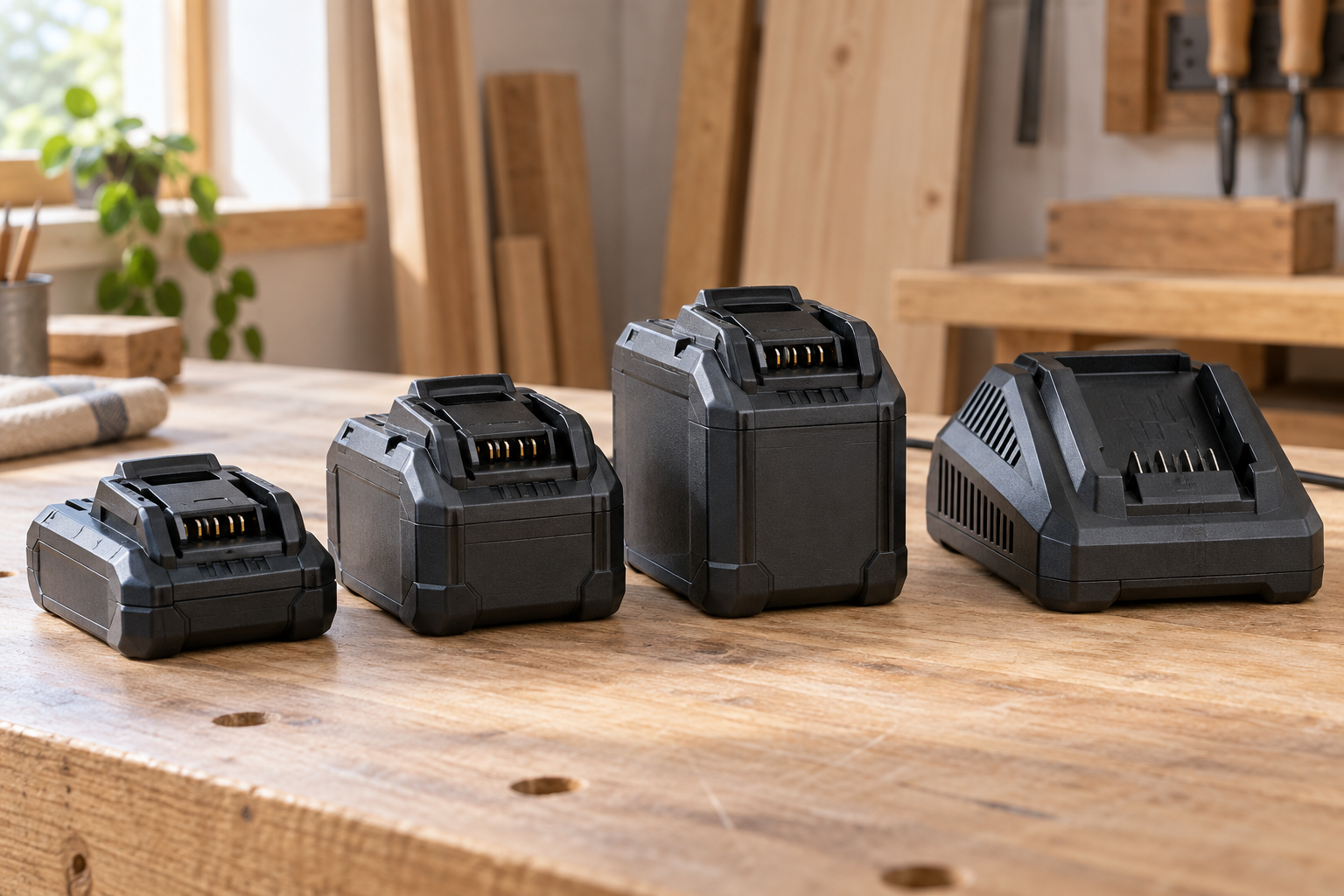
Kobalt 24V batteries are available in several capacities, commonly ranging from compact packs around 2.0Ah to larger packs around 8.0Ah. FLEX also offers compact and high-capacity 24V packs, including batteries designed to deliver higher current for saws and other demanding tools. Amp-hours indicate stored energy, not direct power: a 4.0Ah battery can theoretically run twice as long as a 2.0Ah pack on the same tool, although real runtime depends on load, temperature, and battery age.
FLEX puts more emphasis on high-output battery electronics and its “Turbo” performance modes. These can make a noticeable difference with circular saws, reciprocating saws, and grinders, but they do not turn every tool into a professional-grade machine. A high-output battery is also heavier and more expensive. On a drill driving cabinet screws, the advantage may be difficult to notice.
Kobalt’s batteries are often the easier price to swallow when buying several packs. Its system also has a long-running presence in Lowe’s stores, which can help when you need a replacement charger or want to inspect a tool locally. Before buying, check the exact kit contents: some packages include a small battery that is fine for a drill but frustrating on a blower or saw.
| Feature | Kobalt 24V | FLEX 24V |
|---|---|---|
| Best fit | DIY, maintenance, mixed household work, value buying | Heavy DIY, remodeling, construction, higher-demand cutting |
| Battery compatibility | Works with Kobalt 24V tools only | Works with FLEX 24V tools only |
| Typical advantage | Lower tool and battery cost; broad basic lineup | Strong performance and high-output battery options |
| Main drawback | Some heavy tools feel less refined under sustained load | Higher purchase cost and heavier high-capacity packs |
| Charging consideration | Buy an extra charger if several batteries are in rotation | High-output packs can take longer and cost more to replace |
Drills and impact drivers
For drilling pilot holes, assembling furniture, installing hardware, and driving ordinary construction screws, either platform is capable. A compact Kobalt drill and impact driver kit is often enough for a homeowner and can cost substantially less than buying separate tools and batteries. If that describes your work, compare Kobalt 24V drill and impact driver kits by battery size and included accessories rather than chasing the highest torque rating.
FLEX becomes more compelling when the drill will regularly mix large hole saws, long auger bits, masonry drilling, or structural screws. Its more powerful brushless tools can maintain speed better under load. That extra output also means more wrist reaction and faster battery consumption. For delicate work, a high-torque tool is not automatically an advantage; clutch range and trigger control matter more.
Saws, grinders, and demanding tools
The gap is easier to see in high-draw tools. A cordless circular saw cutting wet lumber, a reciprocating saw cutting metal, or an angle grinder removing rust can pull substantial current. A small battery may shut down from thermal or overload protection before it is empty. This is not necessarily a defect: protection prevents cell damage and excessive heat. The practical fix is using a larger, high-output battery and allowing it to cool.
FLEX is generally the stronger choice for repeated heavy cutting. Its high-output packs and high-performance tools are designed around sustained power, though runtime still depends on the material. Expect a circular saw to use a battery much faster than a drill. If you are comparing FLEX 24V high-output batteries, remember that a larger pack can add roughly a pound or more to the tool. That weight is worthwhile for floor framing but tiring for overhead work.
Kobalt remains perfectly reasonable for occasional sawing. A homeowner cutting a few sheets of plywood or building a deck over a weekend may not recover the FLEX premium. Buy a second battery instead of expecting one pack to run every tool continuously. Two medium batteries usually provide better workflow than one oversized battery that keeps the entire job waiting on a charger.
Outdoor tools and handheld equipment
Both systems include outdoor tools such as blowers, trimmers, and other yard equipment, but runtime is a key limitation. A blower operated at maximum speed can drain a compact battery quickly, especially when clearing wet leaves. For lawn maintenance, choose the platform with the battery capacity you can afford and the local tool selection you actually need.
Kobalt often makes more financial sense for light yard work, particularly when a tool is used for 15 to 30 minutes at a time. FLEX is worth considering for larger properties, thicker vegetation, or users who already own its high-output batteries. A second battery and a separate charger are more useful than a premium motor if the job regularly outlasts one pack.
Cost, warranty, and long-term value
Compare complete ownership cost, not bare-tool price. A tool that appears $50 cheaper can lose that advantage if it requires a new battery, charger, belt hook, or specialty blade. Battery replacement is the largest long-term expense because lithium packs wear with cycles, heat, and storage at full charge. Avoid leaving batteries in a hot vehicle; repeated heat exposure can shorten their useful life.
Warranty terms vary by tool, battery, and promotion, so read the current registration requirements before relying on them. Keep receipts and record purchase dates. Also check whether replacement batteries are readily available in your area. A platform is a poor bargain if a failed pack leaves several expensive bare tools unusable.
For a broader basic system, compare Kobalt 24V cordless tools. For a performance-focused system built around demanding saws and grinders, compare FLEX 24V cordless tools.
Which system should you buy?
Choose Kobalt 24V if price, everyday availability, and a broad set of household tools matter most. It is the sensible option for repairs, furniture assembly, light construction, and occasional yard work. Choose FLEX 24V if you routinely push cordless saws, grinders, and reciprocating saws hard, or if minimizing performance compromises matters more than initial cost.
Do not buy both platforms without a specific reason. The batteries and chargers cannot be shared, and maintaining two ecosystems quickly erases any sale-price advantage. Pick the tool you will use most, price its battery and charger, then confirm that the next three tools you expect to buy are available on the same platform.
FAQ
Which system should you buy?
Related guides
- Longest Lasting Lawn Mower Battery: AGM vs Lithium vs Flooded Lifespan and Cost per Season
- Duralast Gold Lawn Mower Battery Review: U1 Fit, CCA and When to Pay for AGM
- Greenworks Pro 80V 21-Inch Mower Review: Runtime Math, Push vs Self-Propelled and Yard Fit
- Bosch High Pressure Washer Gun Replacement: Fittings, Adapters and What Fits Your Model