What's inside
- Milwaukee M12 Rotary Tool vs Dremel 8220 at a glance
- Which one is better for detail sanding?
- Bit compatibility: the important distinction is the shank
- Grip comfort for engraving and sanding
- Choose by your actual situation
- Runtime and ownership costs
- Maintenance mistakes that shorten rotary-tool life
- Final verdict
- Milwaukee M12 Rotary Tool vs Dremel 8220 at a glance
- Which one is better for detail sanding?
- Bit compatibility: the important distinction is the shank
- Grip comfort for engraving and sanding
- Choose by your actual situation
- Runtime and ownership costs
- Maintenance mistakes that shorten rotary-tool life
- Final verdict
As an Amazon Associate I earn from qualifying purchases. This post may contain affiliate links at no extra cost to you.
For most woodworkers, buy the Milwaukee cordless rotary tool if you already own M12 batteries; choose the Dremel 8220 if you want the higher top speed, the broadest accessory ecosystem, and a more traditional pencil-style grip for engraving. The two tools overlap heavily, but their strengths differ once you compare sanding control, bit compatibility, and how long the tool remains comfortable in your hand.
As an Amazon Associate we earn from qualifying purchases at no extra cost to you.
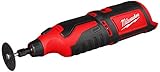
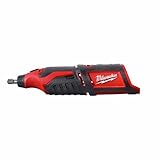
Milwaukee M12 Rotary Tool vs Dremel 8220 at a glance
This comparison uses Milwaukee’s M12 FUEL rotary tool, model 2520-20, and Dremel’s 8220 cordless rotary tool. Batteries, chargers, cases, and included accessories vary by kit, so check the exact package before comparing prices.
| Feature | Milwaukee M12 FUEL 2520-20 | Dremel 8220 |
|---|---|---|
| Power system | 12V-class M12 lithium-ion battery | 12V-class lithium-ion battery |
| No-load speed | 5,000–32,000 RPM | 5,000–35,000 RPM |
| Collet capacity | Accepts common 1/32–1/8-inch shanks with the appropriate collet | 1/32–1/8-inch collet range |
| Motor design | Brushless | Brushed |
| Tool-only weight | About 1.3 lb, battery excluded | About 1.3 lb, battery excluded; battery adds weight during use |
| Speed control | Variable-speed trigger | Variable-speed control |
| Typical market range | About $150–$220 for a tool or kit, depending on battery contents | About $100–$180 for a tool or kit, depending on accessories |
RPM figures are no-load maximums, not a guarantee that either tool will maintain that speed while sanding a hard edge or cutting dense material. The effective speed depends on the bit diameter, pressure, material, battery charge, and how well the accessory is balanced.
Which one is better for detail sanding?
Milwaukee: better for sustained material removal
The Milwaukee’s brushless motor and M12 battery platform make it the stronger choice for repeated sanding, light grinding, and cutting work. A brushless motor generally wastes less energy as heat and avoids brush replacement, which matters when the rotary tool is used frequently rather than occasionally.
Its 5,000–32,000 RPM range covers the useful speeds for woodworking: low speed for plastic or heat-sensitive finishes, medium speed for shaping, and high speed for small sanding drums and abrasive discs. The trigger also makes it easier to vary speed while working around a corner or approaching a pencil line.
The tradeoff is bulk. The M12 battery sits at the rear of the tool, so the complete unit feels more like a compact power tool than a long, slim hobby grinder. That balance is helpful for two-handed control but less ideal when you are engraving lettering for several minutes at a time.
Dremel: better for fine, pencil-like control
The Dremel 8220 reaches approximately 35,000 RPM, giving it a small speed advantage for fine engraving, polishing, and very light sanding. More important than the extra 3,000 RPM is the familiar rotary-tool shape and the large supply of Dremel-compatible accessories, mandrels, brushes, burrs, and sanding attachments.
For detail sanding, the 8220 is especially comfortable when you hold it like a thick pencil near the nose. That grip gives precise control over a small abrasive drum or flap wheel. However, the battery adds noticeable length and weight, and the brushed motor may become warmer during long, demanding sessions.
Bit compatibility: the important distinction is the shank
Both tools are designed around small rotary-tool accessories, and both can use many accessories with shanks up to 1/8 inch. The key measurement is not the brand printed on the package but the shank diameter and whether the tool has the correct collet.
- 1/8-inch shanks: common for sanding drums, engraving cutters, small grinding stones, and many polishing accessories.
- 1/32-, 3/64-, and 1/16-inch shanks: useful for very small engraving and jewelry-style detail work when the matching collet is installed.
- Oversized router or drill bits: unsuitable unless the manufacturer specifically lists them. A rotary tool is not a substitute for a trim router or drill press.
- Accessory attachments: Dremel offers a larger established range of branded guides and specialty attachments. Milwaukee’s tool accepts many standard accessories, but its ecosystem is less extensive.
Before buying a specialty bit, check three things: its shank diameter, the tool’s rated use, and the bit’s maximum RPM. A large abrasive wheel can become dangerous if run at a speed intended for a tiny engraving cutter.
Grip comfort for engraving and sanding
For engraving names, patterns, or small lettering, the Dremel 8220 usually has the ergonomic edge because its nose encourages a close pencil grip. The Milwaukee is still controllable, but its trigger and rear battery can make it harder to keep the tool perfectly neutral during very small movements.
For sanding inside corners or removing a larger amount of material, the Milwaukee’s more substantial body can be an advantage. You can brace it with both hands and use the trigger without shifting your grip. The brushless motor also makes it a better fit for frequent sessions where heat, runtime, and motor wear matter.
Neither tool should be forced into the work. Let the abrasive do the cutting, use several light passes, and keep the accessory moving. Heavy pressure slows the motor, overheats sanding drums, rounds edges, and drains a small battery quickly.
Choose by your actual situation
| Your situation | Better choice | Why |
|---|---|---|
| You already own M12 batteries | Milwaukee | A tool-only purchase can reduce duplicate battery and charger costs. |
| You engrave small designs occasionally | Dremel 8220 | The pencil-style handling and accessory selection suit light detail work. |
| You sand, grind, or cut every week | Milwaukee | The brushless motor and compact power-tool design favor repeated use. |
| You have limited storage space | Depends on your battery platform | Buying into an existing system avoids another charger and battery format. |
| You are new to rotary tools | Dremel 8220 | Its familiar controls, manuals, and accessory range make setup easier. |
| You need maximum top speed for tiny cutters | Dremel 8220 | Its approximately 35,000 RPM maximum is slightly higher. |
Runtime and ownership costs
Runtime depends heavily on the accessory and pressure, so advertised battery capacity does not translate directly into minutes of sanding. As a practical planning estimate, a small 12V battery may provide roughly 20–40 minutes of intermittent light work, while aggressive sanding can reduce that substantially. Treat this as a scheduling guide, not a guaranteed figure.
For example, if you use the tool for three 10-minute sanding sessions during a project, a second battery is more useful than chasing the highest RPM. The Milwaukee becomes particularly economical for existing M12 owners: a tool-only purchase may cost less than a complete kit, and the same batteries can serve other M12 tools. New buyers should compare the full system cost, which commonly lands around $150–$220 for Milwaukee and $100–$180 for a Dremel 8220 kit, depending on battery capacity and included accessories.
Maintenance mistakes that shorten rotary-tool life
- Overtightening the collet: tighten it firmly, but do not crush the accessory shank or damage the collet threads.
- Leaving a bit installed: remove accessories after use so dust does not bind the collet and so a dropped tool is less likely to bend the bit.
- Blocking the vents: keep sanding dust away from the intake openings and brush them clean after each session.
- Using a bent accessory: discard bits that wobble. Vibration damages the collet and makes precise engraving difficult.
- Running sanding drums until they are glazed: replace worn sleeves rather than increasing pressure. A fresh abrasive removes material faster with less heat.
- Ignoring battery storage: store lithium-ion batteries cool and dry, not fully depleted, and use the manufacturer’s charger.
Final verdict
Buy the Milwaukee cordless rotary tool if your priority is frequent sanding, light cutting, better long-term motor durability, or compatibility with an existing M12 collection. Its 32,000 RPM ceiling is ample for woodworking, and its brushless motor makes it the more robust workshop choice.
Buy the Dremel 8220 if your work is mainly engraving, polishing, miniature shaping, or occasional detail sanding. Its slightly higher 35,000 RPM maximum, pencil-friendly handling, and wider accessory ecosystem make it easier to select and control specialized bits.
If you are choosing without an existing battery platform, the decision comes down to use: Dremel for precision-first hobby work, Milwaukee for a tougher cordless tool that will also handle regular workshop duty.