
Our Top Picks
What's inside
As an Amazon Associate I earn from qualifying purchases. This post may contain affiliate links at no extra cost to you.
Choosing a contractor saw is really a decision about how you work. If the saw rides in a truck bed and gets set up on a driveway each morning, weight, stand design and setup speed matter most. If it will sit in one corner of a garage shop, rip capacity and fence quality take over. All four saws below use 10-inch blades, yet they split sharply on those points, so the right pick depends on your routine rather than on a single headline number.
This roundup is written for remodeling contractors, trim carpenters, cabinet installers and serious home woodworkers who need more capacity than a compact bench saw offers. Every model was selected from the names and specifications published on its Amazon product page, and the details quoted here — motor size, rip capacity, stand type and fence design — come straight from those listings rather than from manufacturer brochures.
Quick Picks
As an Amazon Associate we earn from qualifying purchases
| Product | Best for | Key spec from title |
|---|---|---|
| DEWALT DWE7491RS 10-Inch Table Saw | Ripping wide sheet goods on changing jobsites | 32-1/2-inch rip capacity |
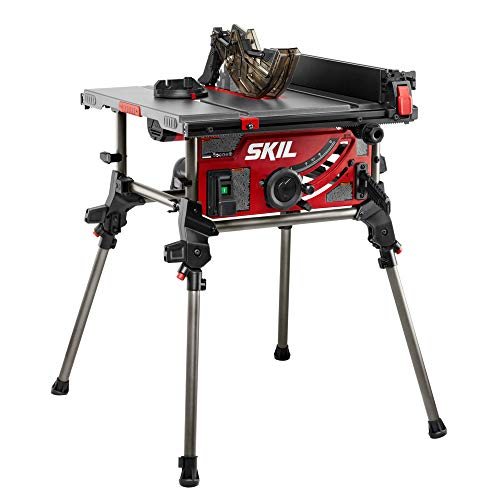
| SKIL TS6307-00 Jobsite Table Saw | Solo remodelers who carry the saw room to room | 15 Amp motor with folding stand |
| SawStop CNS175-TGP252 Contractor Saw | A permanent spot in a garage or shop | 52-inch Professional T-Glide fence system |
| Bosch 4100XC-10 Worksite Table Saw | One-person setup on rough or sloped ground | Gravity-Rise wheeled stand |
How to Choose
Rip Capacity Decides Which Jobs You Can Take
Rip capacity is the widest board you can cut between the blade and the fence, and it sets the ceiling on the work a saw can handle. A 24-inch rip covers most cabinet parts and shelving, while plywood and MDF sheets push you toward 30 inches or more so panels can be broken down without support tricks. In this group the spread is wide: the SKIL stops at 25-1/2 inches, the Bosch reaches 30 inches, the DEWALT manages 32-1/2 inches, and the SawStop fence runs out to 52 inches. Match the number to the sheet goods you actually buy, not the largest sheet you might meet once a year.
The Stand Matters More Than You Think
Contractor saws earn their keep by moving, and the stand decides how painful that movement is. A foldable rolling stand, like the one under the DEWALT, lets one person tip the saw back and wheel it through doorways. Bosch takes a different route with its Gravity-Rise stand, which uses leverage so the saw lifts and folds with little effort on uneven ground. The SKIL builds its folding legs into the saw body, cutting weight to 51.2 pounds. The SawStop points the other way: it is built around a wide fence system and a stationary setup. Think about stairs, truck beds and thresholds before you think about motors.
Motor Output and Blade Speed
Three of these saws run 15 Amp motors, while the SawStop uses a 1.75 HP motor, and the figures are not directly interchangeable, so treat them as a rough guide rather than a precise comparison. Blade speed adds useful context: the DEWALT spins at 4,800 RPM and the Bosch at 3,650 RPM, a gap that affects how each saw feels pushing thick hardwood through the cut. In practice, a sharp blade and a steady feed rate matter more than small differences on the spec sheet. If you rip thick oak or maple all day, favor the stronger setups and keep spare blades on the truck.
Fence Design and Repeatable Cuts
A contractor saw lives or dies by its fence, because most cuts are rips repeated at the same setting. Rack and pinion fences, fitted to the DEWALT and the SKIL, move both ends of the fence together, which keeps it parallel to the blade and makes small adjustments quick. The Bosch uses its SquareLock rip fence, designed to lock down square to the table. The SawStop Professional T-Glide system glides on a rail and suits long, heavy workpieces. Whichever style you choose, check that the fence locks firmly and that the scale is easy to read in poor light.
The 4 Best Options
DEWALT DWE7491RS
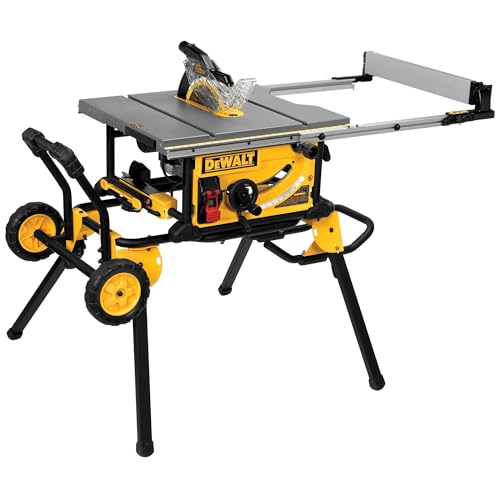
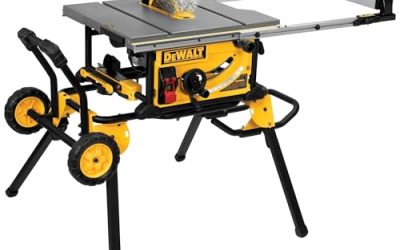
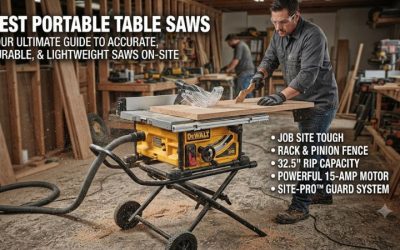
The DEWALT is the pick for crews who break down sheet goods wherever the work happens to be. Its 32-1/2-inch rip capacity is the widest of the rolling-stand models here, so full plywood sheets can be ripped without repositioning the fence mid-cut. The rack and pinion telescoping fence adjusts quickly and stays parallel, which speeds up repetitive rips of cabinet parts and flooring. The foldable rolling stand folds flat enough for truck beds and storage units, and the 15 Amp motor spinning at 4,800 RPM gives it the pace to keep up with a busy site day.
Specs
- Blade: 10 inches
- Motor: 15 Amp
- Blade speed: 4,800 RPM
- Rip capacity: 32-1/2 inches
- Stand: foldable rolling stand included
- Fence: rack and pinion telescoping fence
Best for: Crews ripping plywood and MDF on site who need the widest rip capacity in a rolling package.
Watch out for: The wide rip setup takes up more room in the truck and on the floor than the compact SKIL.
SKIL TS6307-00
The SKIL suits remodelers who carry their saw up stairs and through finished rooms, where a heavy rolling stand becomes a liability. At 51.2 pounds with folding legs built into the body, it is the easiest of the four to move by hand and quick to set up on a hallway floor or driveway. The 25-1/2-inch rip capacity still covers cabinet sides, shelving and most trim work, and the listing’s 4×4 cutting capacity at 90 degrees handles fence posts and framing lumber. Its rack and pinion fence keeps rip settings honest without constant measuring.
Specs
- Motor: 15 Amp
- Blade: 10-inch, 24-tooth carbide
- Rip capacity: 25-1/2 inches
- Stand: integrated folding legs
- Cutting capacity: 4×4 at 90 degrees
- Bevel range: 2 to 47 degrees
- Max depth of cut: 3-1/2 inches at 0 degrees
- Fence: rack and pinion
- Weight: 51.2 lb
Best for: Solo remodelers and finish carpenters who move the saw by hand between rooms, floors and houses.
Watch out for: The 25-1/2-inch rip capacity is the narrowest here, so full sheets call for a second pair of hands and a careful workaround.
SawStop CNS175-TGP252

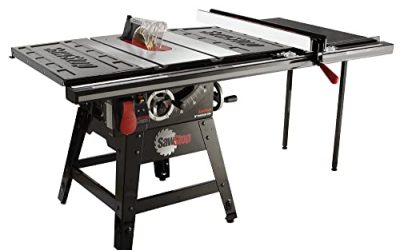
The SawStop contractor saw is the one to choose when the saw will live in a shop rather than travel. Its Professional T-Glide fence system opens up 52 inches of rip capacity, far beyond the portable models, which makes it the natural fit for wide panels, door slabs and long rips in hardwood. The 1.75 HP motor suits steady, all-day work rather than quick site cuts, and the contractor-style frame gives the saw a planted feel during long cuts. Buyers who measure twice and keep the same setup for years will get the most from it.
Specs
- Blade: 10 inches
- Motor: 1.75 HP
- Rip capacity: 52 inches
- Fence: Professional T-Glide fence system
Best for: Woodworkers with a permanent shop corner who rip wide panels and want the largest capacity in this group.
Watch out for: Order the 52-inch fence version specifically — the 36-inch variant is a separate listing — and accept that this saw gives up the grab-and-go portability of the rolling-stand models.
Bosch 4100XC-10
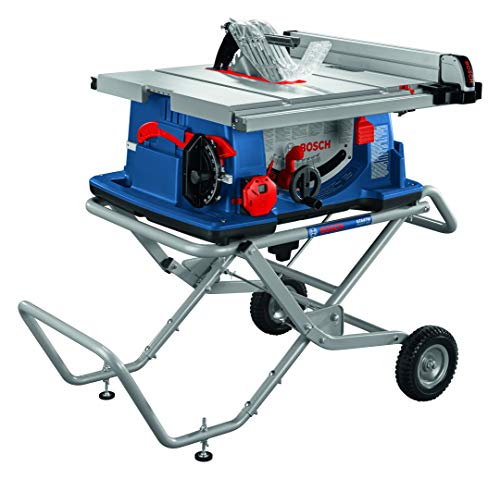
The Bosch is built around its Gravity-Rise wheeled stand, which uses leverage to raise and lower the saw so one person can set it up on gravel, grass or a sloped driveway without wrestling the frame. Its 30-inch rip capacity sits between the SKIL and the DEWALT, enough for most sheet breakdown with room to spare. Soft-start circuitry brings the blade up to speed gently, and Constant Response circuitry works to hold speed under load, while the SquareLock rip fence is designed to lock in square. At 3,650 RPM it trades outright pace for control.
Specs
- Motor: 15 Amp
- Blade: 10 inches
- Rip capacity: 30 inches
- Blade speed: 3,650 RPM
- Stand: Gravity-Rise wheeled stand
- Electronics: soft-start and Constant Response circuitry
- Fence: SquareLock rip fence
Best for: Contractors who set up alone on rough ground and want a stand that does the heavy lifting.
Watch out for: The lower blade speed means thick hardwood feeds more slowly than on the DEWALT, so budget extra time for long rips in dense stock.
Which One Fits Your Situation
You Set Up Somewhere New Every Morning
If your saw unloads at a different address each day, look first at the DEWALT DWE7491RS. The rolling stand folds for transport, the fence adjusts quickly, and the 32-1/2-inch rip capacity means sheet goods rarely force a workaround. The Bosch is the alternative if your sites have rough ground, since its Gravity-Rise stand handles slopes and gravel with less effort from you.
You Work Alone in Finished Homes
Carrying a saw through someone’s home calls for the SKIL TS6307-00. At 51.2 pounds it goes up stairs without a second person, the folding legs set up quickly in a single room, and the smaller footprint keeps it clear of finished floors and door frames. Its narrower rip capacity rarely matters for trim, shelving and cabinet repairs.
The Saw Stays in Your Shop
A fixed workshop changes the priorities completely, and that is where the SawStop CNS175-TGP252 makes sense. The 52-inch T-Glide fence handles wide panels that the portable saws cannot, the heavier contractor frame stays planted during long rips, and you never pay a portability penalty because the saw never leaves the building. Pair it with a dedicated spot and a flat floor.
Your Sites Have Slopes, Gravel and Mud
Outdoor setup on rough ground is the Bosch 4100XC-10’s home turf. The Gravity-Rise stand lifts the saw into position with leverage rather than muscle, the wheeled frame rolls across uneven surfaces, and the SquareLock fence locks down square once you are level. The soft-start circuitry also brings the blade up to speed gradually.
Common Mistakes
- Choosing by motor size alone and discovering the rip capacity is too small for the sheet goods you buy every week.
- Assuming every wheeled stand handles stairs and thresholds equally well; stand geometry matters as much as wheel size.
- Ignoring bevel range and depth of cut, then finding the saw cannot finish a 4×4 or a steep bevel in one pass.
- Ordering the SawStop 36-inch fence variant when you wanted the 52-inch model — they are separate listings with separate codes.
- Forgetting to measure the folded footprint, so the saw no longer fits the truck bed or storage corner it was bought for.
Frequently Asked Questions
What separates a contractor saw from a jobsite saw or a cabinet saw?
Contractor saws sit in the middle of the range. They are heavier and more capable than compact jobsite saws, with wider rip capacity and sturdier fences, yet they stay lighter and simpler than cabinet saws built for permanent industrial use. The four models here show the spread: three travel on stands, while the SawStop leans toward a fixed shop setup.
How much rip capacity do I need for plywood and MDF?
A standard sheet is 48 inches wide, so halving it needs at least 24 inches of rip capacity plus a little clearance. The SKIL’s 25-1/2 inches just covers that job, the Bosch and DEWALT add working room, and the SawStop’s 52 inches lets you rip off-center cuts without flipping the sheet. Match capacity to how you break sheets down.
Can these saws cut a 4×4 in a single pass?
Only the SKIL listing states a 4×4 cutting capacity at 90 degrees, backed by a maximum depth of cut of 3-1/2 inches at 0 degrees. The other three listings do not publish a 4×4 figure, so if posts and beams are regular work, check the depth-of-cut specification on the product page or plan on flipping the workpiece for a second pass.
Which fence style is easiest to keep accurate?
Rack and pinion fences, used on the DEWALT and the SKIL, are the simplest to live with because both ends move together and stay parallel to the blade. The Bosch SquareLock fence is built to clamp down square, and the SawStop T-Glide glides along its rail for long work. Any of them stays accurate if you check the fence against the blade after transport.
Related guides
More from Amazon
Programs that pair well with the guide above. Offers and eligibility are set by Amazon and may change.
A free business account with business pricing and bulk-buying tools for work, shop or home office.
Create a business accountFree shipping on eligible items, Prime Video and more. Eligible new members can start with a free trial.
Start a Prime free trialAudiobooks and podcasts to listen to on the go. Eligible new members can start with a free trial.
Try Audible freeAd-free music streaming. Eligible new subscribers can start with a free trial.
Try Music Unlimited freeAs an Amazon Associate we earn from qualifying purchases.




Write Your Review
No reviews yet. Be the first to share your experience!