Our Top Picks


What's inside
As an Amazon Associate I earn from qualifying purchases. This post may contain affiliate links at no extra cost to you.
Most people buy a brad nailer because they got tired of clamping trim and waiting for glue, or because their first casing job came out looking like a dog chewed it. The gun solves that. What it does not solve is a bad choice of platform, and that is where most of the money gets wasted. Buy the wrong 18 gauge nailer and you end up owning a compressor you hate hauling, or a cordless gun that misfires every fourth nail into 3/4-inch poplar.
This ranking of the best 18 gauge brad nailer options is ordered by what to buy first, not by price. Each slot exists because it unlocks a specific kind of work. If a tool does not unlock new work, it does not earn a place, and there is a what-to-skip section at the end for the categories that keep separating beginners from their money.
As an Amazon Associate we earn from qualifying purchases at no extra cost to you.


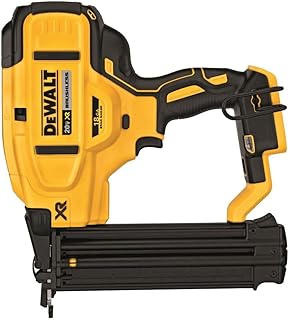


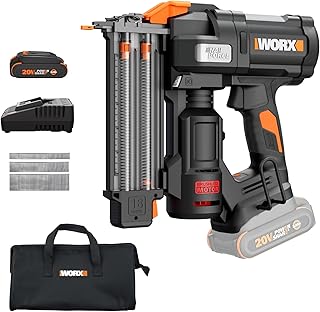

| Rank | Type | The job it unlocks | Who should stop here |
|---|---|---|---|
| 1 | Cordless brad nailer (major battery platform) | Trim, casing, and punch-list work anywhere in the house | Most DIYers and remodelers |
| 2 | Pneumatic brad nailer + small compressor | All-day trim and shop production nailing | Anyone already running air tools |
| 3 | Cordless combo (brad + narrow crown stapler) | Cabinet backs, drawer bottoms, upholstery frames | Furniture and cabinet builders |
| 4 | Budget pneumatic gun | Occasional single-room projects | Renters and one-project owners |
1. Cordless brad nailer on a battery platform you already own
This is first for one reason: it removes the hose, and the hose is what stops people from using the tool. A cordless 18 gauge gun lives in the truck, comes out for a loose baseboard, and goes back. No compressor to drag up stairs, no coiled line catching on a table leg, no waiting for pressure to build for a six-nail repair.
The catch is platform lock-in. DeWalt XR, Milwaukee FUEL, Makita LXT, and Ryobi ONE+ all offer 18 gauge brad nailers, and buying outside the batteries you own means paying for a charger and cells you do not need. Pick the gun that matches your drill. That single decision matters more than any spec sheet difference between brands at this size.
Expect a bare-tool price in the range of a good cordless drill kit, plus a real weight penalty. Cordless brad nailers are top-heavy compared to pneumatics because the motor and battery sit above your hand. For overhead crown work that gets tiring fast. For everything at waist height it is a non-issue.
One thing to actually check before buying: how the tool handles depth adjustment and jam clearing. Tool-free depth dials and front-latch nose access are standard on current-generation guns and painful to live without on older or off-brand ones.
Cordless 18 Gauge Brad Nailer (Match Your Battery Brand)
Search by your existing battery brand, then buy the bare tool. The gun bodies across major platforms are close enough in performance that battery compatibility should decide it. Look for tool-free depth adjustment, a dry-fire lockout, and a jam release you can open without a hex key. Skip extended-capacity magazine claims; standard 100-nail magazines are plenty.
2. Pneumatic brad nailer plus a pancake compressor
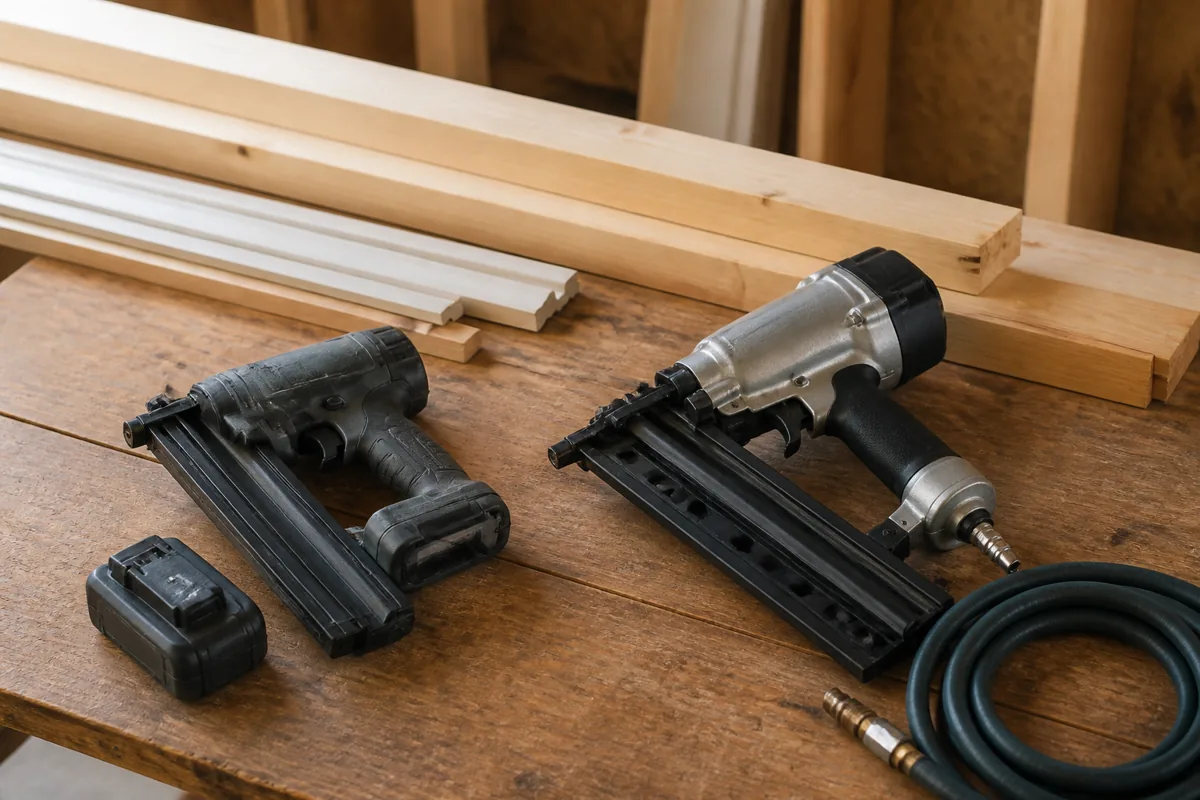
Second, not first, and the reason is friction rather than performance. A pneumatic 18 gauge gun is the better tool in the hand: lighter, better balanced, cheaper, and effectively immortal since there is no motor or electronics to fail. If you are trimming out a whole house or standing at a bench all day, air wins.
The cost is the ecosystem. You need a compressor, a hose, fittings, and a place to put all of it. A small pancake or hot dog unit in the 1 to 6 gallon range is more than enough air for one brad nailer since these guns use very little per shot. Where people go wrong is buying a large stationary compressor for trim work, which is like buying a dump truck to move a bookshelf.
Buy oil-free unless you specifically want quiet operation and do not mind maintenance. Oil-lubricated compressors run quieter and last longer, but they need attention and they do not like being stored on their side in a truck bed.
- ✔ Lightest guns in the category, best for overhead and long sessions
- ✔ Consistent driving power with no battery sag
- ✔ Guns cost a fraction of cordless equivalents
- ✔ Almost nothing to break long term
- ✘ Compressor, hose, and fittings add real cost and bulk
- ✘ Not practical for a two-minute repair
- ✘ Noise makes it awkward in occupied homes
- ✘ Hose management is a constant annoyance in finished rooms
Pneumatic 18 Gauge Brad Nailer Kit
If you already own a compressor, this is where your money goes furthest. A quality air brad nailer costs less than a mid-tier cordless and drives more consistently. Prioritize a magnesium body, a swiveling air fitting, and a rubber non-marring nose tip. Combo kits that bundle a compressor with two or three guns are usually a better deal than buying the compressor alone.
3. The 18 gauge plus narrow crown combo for shop work
Third place goes to pairing your brad nailer with an 18 gauge narrow crown stapler, because that combination unlocks casework. Brads hold trim. Staples hold sheet goods. Cabinet backs, drawer bottoms, and plywood panels want the extra holding surface a staple crown provides, and a brad through 1/4-inch plywood will pull through under stress in a way a staple will not.
Both tools use 18 gauge wire, so the wire diameter and hole size are similar. What differs is the head. If you build furniture, cabinets, shop fixtures, or anything with a plywood back, running only brads means eventually explaining to a customer why the back panel is loose.
Buy these as separate tools rather than chasing a single gun that claims to do both. Two-in-one nailer-staplers exist and they work, but they compromise on magazine reliability and are generally not worth the compromise unless space is genuinely tight.
Choosing the best 18 gauge brad nailer for your actual work
Nail length range is the spec that matters most. Look for a gun covering roughly 5/8 inch through 2 inches. That range handles shoe molding at the short end and 1x casing into studs at the long end. Guns that stop at 1-1/4 inches will frustrate you the first time you hang jamb extensions.
Sequential versus contact actuation matters less here than on a framing gun, but sequential-only firing is safer and more accurate for trim, since each nail requires a deliberate trigger pull. Most 18 gauge guns are sequential by design and that is correct for the work.
Pay attention to the nose. A narrow nose profile lets you place nails tight into an inside corner or against a reveal. Fat noses force you to nail further from the edge than you want, which is how casing ends up loose at the miter. A non-marring tip is not a luxury either, since a bare steel nose will dent pre-finished baseboard on the first bounce.
Finally, consider nails themselves. 18 gauge brads are cheap and widely stocked at Home Depot, Lowes, and Amazon, and most guns accept generic strips. Do not buy a nailer that requires proprietary fuel cells or brand-specific collated nails. That is a recurring tax with no benefit.
What to skip
Gas-powered and fuel-cell brad nailers. They solved the cordless problem before lithium batteries got good. They no longer do, and you are buying a consumable supply chain for no reason.
Electric corded brad nailers under a hundred dollars. These are solenoid-driven, slow, and famously weak in hardwood. A cord is not meaningfully better than a hose, and you get worse performance than either air or modern cordless.
2-in-1 18 gauge nailer-staplers as your only gun. Fine as a secondary tool, poor as a primary. The dual magazine design is the part that jams.
Unbranded pneumatic guns with no parts availability. The gun body may be fine, but when the driver blade or O-ring kit fails in year three there is nowhere to buy the rebuild kit. Stick to lines you can find seals for.
16 gauge as a substitute. A 16 gauge finish nailer is a great second gun, not a replacement. The bigger hole shows on delicate trim and the stiffer nail splits thin stock. If you own one gun for trim, 18 gauge is the correct one.
Frequently asked questions
Is an 18 gauge brad nailer strong enough for baseboard and casing? Yes, for standard 1/2 to 3/4-inch trim with glue where appropriate. Brads hold the piece while adhesive or the wall does the structural work. For thick built-up crown or heavy jamb assemblies, step up to 16 or 15 gauge.
Cordless or pneumatic if I am buying my first one? Cordless, if you already own batteries in a major platform. The convenience means you will actually use it. Go pneumatic if you own a compressor already or expect to trim out multiple rooms in a stretch.
Why does my brad nailer keep leaving nails sticking up? Usually depth adjustment set too shallow, low air pressure or a weak battery, or hitting a hard knot. Adjust depth first, verify pressure at the gun rather than the tank, and check for a worn driver blade if the problem is constant across materials.
Buy in the order above. A cordless gun on the platform you already own covers the overwhelming majority of trim and repair work, and it is the purchase least likely to sit unused in a case.
Check prices on Amazon →