What's inside
As an Amazon Associate I earn from qualifying purchases. This post may contain affiliate links at no extra cost to you.
Start with the symptom
Intermittent power can come from the battery, the tool, or the connection between them. A tool that cuts out under load points to a different problem from one that shuts off when you bump it, and neither symptom proves the battery is bad. Check when the fault occurs before buying a replacement.
Remove the battery before inspecting contacts. Look for packed dust, metal shavings, corrosion, cracked plastic, or contacts that appear pushed back or bent. Don’t probe battery terminals with a metal tool, bridge contacts, or open the battery pack. Lithium-ion packs can deliver enough current to cause burns or start a fire.
Match the fault to the cause
| What happens | Likely causes | Useful next check |
|---|---|---|
| Tool cuts out only during heavy work | Low charge, aging cells, excessive load, overheating, or a poor connection | Try a known-good, fully charged compatible battery on the same task |
| Tool stops when you move or bump it | Loose fit, dirty contacts, worn latch, or damaged tool-side connection | Check whether the pack locks firmly and inspect both sets of contacts |
| Tool stops, then works again after a pause | Battery or tool thermal protection | Let both cool; note whether the pack or tool feels unusually hot |
| Several tools fail with the same pack | Battery fault, low charge, or pack protection activating | Test the pack in a second compatible tool |
| One tool fails with several packs | Tool fault, worn contacts, switch, or motor problem | Test a known-good pack and inspect the tool without disassembling it |
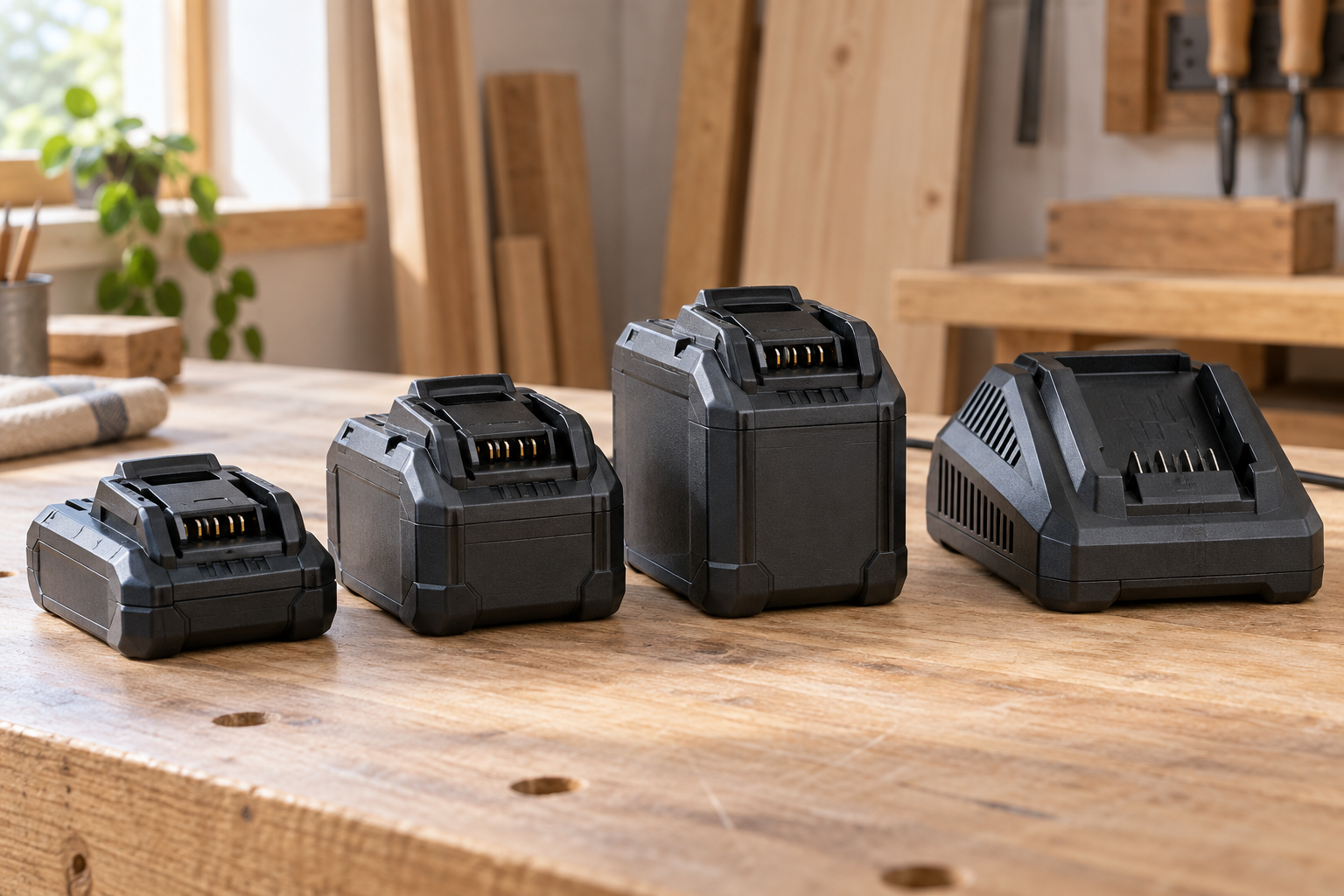
Compare like with like: use a fully charged battery that the tool manufacturer lists as compatible. A small, older pack may run a drill in light work but sag in voltage on a demanding cut. That does not automatically mean it is defective; it may be undersized for the job or near the end of its useful life.
Test the battery and tool separately
If you own another tool on the same battery platform, test the suspect pack there. Then put a known-good pack in the suspect tool. This cross-check is more useful than repeatedly trying the same combination. If the problem follows the battery, focus on the pack or charger. If it stays with the tool, focus on the tool.
Keep the test brief and ordinary. Don’t deliberately stall a motor or push the tool until it overheats. Use the same task and similar battery charge for each comparison. Note whether cutouts happen with a full pack, only near empty, after a particular length of work, or when the tool is turned or shaken.
A battery that runs one tool but not another may still be healthy: the tools draw different amounts of current. A high-demand saw can expose a weak pack that appears fine in a light-duty driver. Conversely, a tool may have a faulty switch or motor even if its battery indicator looks normal.
Check contacts and fit
With the pack removed, wipe accessible battery and tool contacts with a clean, dry, lint-free cloth. If debris is lodged in a recess, use a soft, dry brush. Avoid sandpaper, abrasive files, sprays, and wet cleaners; they can remove plating or leave residue. Don’t force contacts into position.
Slide the battery back in and confirm that the latch engages fully. A pack that wiggles more than other packs on the same tool, releases too easily, or has a cracked latch can lose contact during vibration. Stop using a pack or tool with melted plastic, scorch marks, visible corrosion, or terminals that move. Have it inspected or replace it rather than trying to bend or repair the contacts.
Rule out overheating and excessive load
Most cordless platforms have protective electronics that can shut down a battery or tool during excessive temperature or current draw. Heat can come from extended heavy use, a clogged tool, a binding blade, a dull accessory, or poor airflow. Release the trigger, remove the battery when safe, and let the pack and tool cool naturally. Don’t put a hot battery in a refrigerator or on a heater.
Try again with a sharp, suitable accessory and a lighter feed rate. If cutouts stop, the original load may have been too high. If they recur quickly during normal work, or the pack becomes unusually hot, stop testing. A battery that is swollen, leaking, hissing, or smells unusual should not be charged or used; move away from it if safe and follow local guidance for hazardous battery disposal.
Check the charger, too
A weak or faulty charger can leave a pack undercharged, making it seem as though the tool has a power problem. Confirm the charger is intended for that battery platform, the outlet works, and the pack’s charge indicator reaches its normal full-charge state. If another compatible charger is available, compare results. Never charge a damaged or unusually hot pack.
For an intermittent fault, a charger is usually not the first purchase unless charging is also inconsistent. A compatible replacement charger is a reasonable option when the original clearly fails to charge multiple healthy packs, but confirm platform and voltage compatibility before ordering.
Decide whether to replace
Replace the battery when the fault consistently follows that pack across compatible tools, while other packs run those tools normally. Replacement is also the safer choice for a damaged, swollen, or repeatedly overheating pack. For older packs, compare the cost of a genuine compatible battery with a tool-and-battery kit; a kit can be better value if you also need another tool, but not if it creates another incompatible platform.
For occasional light work, a lower-capacity compatible battery may be cheaper and entirely adequate. For saws, grinders, or long work sessions, a higher-capacity pack may hold up better under load, though it adds weight and cost. Buy only a battery listed as compatible by the tool maker; avoid packs with unclear specifications or no credible safety and warranty information. A replacement battery for your exact platform should match the required voltage and fit, not just the brand name printed on a listing.
If the fault stays with one tool across several known-good batteries, a repair may be sensible if the tool is otherwise in good condition. A worn switch, damaged battery interface, or motor issue needs proper diagnosis; don’t bypass protection circuits or dismantle a tool while a battery is installed. For a tool still under warranty, contact the manufacturer before opening it. Keep a short record of the pack used, charge level, task, and time to failure: those details help separate a repairable tool fault from normal overload or a worn battery.
Related guides
- Longest Lasting Lawn Mower Battery: AGM vs Lithium vs Flooded Lifespan and Cost per Season
- Duralast Gold Lawn Mower Battery Review: U1 Fit, CCA and When to Pay for AGM
- Greenworks Pro 80V 21-Inch Mower Review: Runtime Math, Push vs Self-Propelled and Yard Fit
- Bosch High Pressure Washer Gun Replacement: Fittings, Adapters and What Fits Your Model