What's inside
As an Amazon Associate I earn from qualifying purchases. This post may contain affiliate links at no extra cost to you.
The best area rugs for music rooms are low-to-medium pile rugs (under 0.5 inch) made from wool or dense wool blends, sized large enough to cover the primary playing zone plus at least 2 feet of surrounding floor, with a felt or felt-and-rubber pad underneath. That combination tames flutter echo, keeps instrument feet and pedals stable, and still lets chairs and wheeled stands move without dragging. Everything below explains why those specs matter and how to match them to your specific setup.
As an Amazon Associate we earn from qualifying purchases at no extra cost to you.


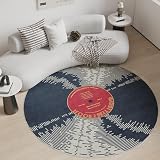
Why Rugs Change How a Music Room Sounds and Works
Bare floors – hardwood, laminate, tile – reflect high and mid frequencies back into the room almost instantly. In a practice space or home studio, that creates harsh flutter echo, makes recorded vocals sound boxy, and amplifies footfall and pedal noise. A rug interrupts the first reflection points between you and the walls, and the pad underneath absorbs impact vibration that would otherwise travel through the floor structure to rooms below.
But the same rug that fixes acoustics can wreck stability. A grand piano’s casters can sink into plush pile, a drummer’s kick pedal can creep across a slippery backing, and a rolling chair can destroy a looped-weave rug in months. The right choice is a trade-off between absorption and function – which is why each spec below matters independently.
The Four Specs That Decide Everything
Size: Cover the Zone, Not the Room
Measure your active footprint first: for a pianist, that’s the bench arc plus pedal area; for a drum kit, the full kit plus throne and 12-18 inches on all sides; for a mixing or teaching desk, the desk plus the chair’s full roll-back radius. As a rule:
- 8×10 ft minimum for an upright piano or small ensemble corner
- 6×9 ft for a solo practice setup, desk, or keyboard rig
- 5×8 ft only under a kit alone – too small if the stool or mic stands also need to sit on it
A rug should reach roughly 60-70% coverage of the hard floor to meaningfully change reflections. Covering the whole room (or wall-to-wall carpet) often over-deadens the space, which is why area rugs beat carpet for most music rooms – you keep some reflective surface for a live feel.
Pile Height: Lower Than You Think
High pile and shag absorb more sound but create three problems: instrument feet sink unevenly, pedalboard hinges and double-bass endpins wobble, and rolling chairs grind to a halt. The sweet spot is 0.25-0.5 inch cut pile or a dense flatweave. Flatweave kilim-style rugs absorb less but are nearly indestructible under chairs and easy to reposition.
Backing: The Overlooked Failure Point
Latex and jute backings behave very differently. Latex-backed rugs grip hard floors well but the latex degrades and powders after 5-8 years, especially under rolling loads. Jute or cotton backings last longer but slide – they require a separate pad regardless. For heavy instruments, always use a dense felt pad (at least 1/4 inch, ideally felt-and-rubber dual-surface) to prevent caster divots and add acoustic mass.
Fiber: Wool Wins on Durability, Synthetics on Spill Risk
Wool is naturally flame-resistant, dense, springy under compression (it recovers from caster dents), and slightly porous, which helps absorption across a wider frequency range. Nylon handles traffic and cleans easier but builds static near electronics and microphones. Polypropylene (olefin) is the budget choice – stain-proof and cheap – but it crushes permanently under piano casters and shows chair-track wear within a year or two.
Spec Comparison by Rug Type
| Type | Typical Pile | Absorption (relative) | Chair Roll | Instrument Stability | Typical Price (8×10) | Realistic Lifespan Under Daily Use |
|---|---|---|---|---|---|---|
| Dense wool cut-pile | 0.3-0.5 in | High | Good | Excellent (recovers from dents) | $800-2,500 | 10-20 years |
| Wool/synthetic blend cut pile | 0.3-0.5 in | Medium-high | Good | Very good | $400-900 | 7-12 years |
| Nylon low-pile (e.g., Loloi, Safavieh machine-made lines) | 0.2-0.35 in | Medium | Excellent | Good | $250-700 | 6-10 years |
| Flatweave wool kilim/dhurrie | <0.2 in | Low-medium | Excellent | Good (needs pad) | $300-1,000 | 8-15 years |
| Polypropylene | 0.25-0.5 in | Medium | Good | Poor (permanent crush) | $120-400 | 2-5 years |
| Interlocking foam/carpet tiles | ~0.3 in | Medium | Fair | Fair (tiles shift) | $100-250 equivalent | 3-6 years (replace tiles individually) |
Decision Matrix: Match the Rug to Your Setup
| Your situation | Best choice | Why |
|---|---|---|
| Grand or upright piano | Dense wool cut pile + 1/4-in felt pad | Absorbs reflected sound off the lid’s underside; wool recovers from caster dents; felt pad protects hardwood |
| Drum kit / percussion | 6×9 nylon low-pile or dedicated drum rug (e.g., Ahead, Protection Racket mats) | Non-slip surface stops kick-pedal and hi-hat creep; tight weave survives beater-side traffic |
| Home studio desk + rolling chair | Flatweave or low-pile nylon + thin rubber pad, chair mat overlay if needed | Low friction for chair movement; still kills desk-area reflections that color monitor sound |
| Teaching/rehearsal space with kids | Wool/synthetic blend, medium pile | Stain resilience plus enough comfort for floor seating |
| Rented room, tight budget, may move | Polypropylene rug + separate felt-rubber pad | Cheap to replace; the pad does most of the acoustic and grip work and moves with you |
| Apartment upstairs – need impact control | Any low-pile rug over a 1/2-in rubber-felt pad | Impact noise is mostly structural; the pad’s mass matters far more than the rug itself |
A Quick Coverage Calculation
For a 12×14 ft room (168 sq ft), target 60-70% coverage: roughly 100-118 sq ft. An 8×10 rug gives 80 sq ft (48% – noticeably live but workable); a 9×12 gives 108 sq ft (64% – the sweet spot for a balanced, not-dead sound). If you’re also placing a rug pad, remember the pad is cut about 1-1.5 inches short of the rug edge on each side, so it adds no usable coverage – size the rug itself correctly.
For cost-per-use thinking: a $600 wool-blend rug used daily in a teaching studio over 8 years works out to about $0.21/day. A $150 polypropylene rug replaced every 3 years costs about $0.14/day plus the hassle of three replacements – the gap is smaller than it looks.
Ownership Realities: What Wears First
- Chair tracks: Rolling chairs create visible wear lanes in under a year on looped or cut-pile rugs. Fix: chair mat overlay, or choose flatweave.
- Binding/fringes: Fringes catch vacuum beater bars and chair wheels. Surge-bound edges last far longer in working rooms – avoid fringed rugs under desks.
- Latex backing degradation: White dust under the rug means the backing is failing – usually years 5-8. The rug may still look fine on top but will shed and slide.
- Caster dents: Even wool needs weeks to recover. Use caster cups (wood or clear plastic) under piano and cabinet feet to spread the load.
- Pedal creep: Drum pedals and sustain pedals walk forward on smooth backings. Velcro strips or a rubberized pad under the contact zone solves this.
- Cleaning: Vacuum with suction only – beater bars accelerate wear on wool. Blot rosin dust and spilled drinks immediately; rosin bonds to fibers and attracts dirt if left.
Common Mistakes
- Buying shag for “more absorption” – it destabilizes stands, swallows small accessories, and mats down under weight within months.
- Skipping the pad because the rug “feels thick” – the pad provides most of the impact reduction and floor protection.
- Centering the rug on the room instead of on the playing position – reflections bounce hardest at the first reflection point near the musician, not at the room’s center.
- Covering the entire floor – you lose all natural room brightness; leave some hard floor exposed.
FAQ
Do rugs replace acoustic panels?
No. A rug controls floor reflections and impact noise, but wall and ceiling reflections still need panels or diffusion if you’re recording critically. Think of the rug as one layer of treatment, not the whole solution.
Can I put a rug over existing carpet?
Yes, and it’s useful in rentals – layer a dense flatweave over plush carpet to get a stable surface for stands and pedals. Use a rug-to-carpet grip pad to prevent wrinkling.
What’s best for a double bass or cello endpin?
Low pile is essential – endpins can punch through or slip on thick pile. Many cellists place a small endpin anchor board on top of the rug, which is cheap insurance and stops the pin walking mid-performance.