What's inside
As an Amazon Associate I earn from qualifying purchases. This post may contain affiliate links at no extra cost to you.
Why use a cordless caulk gun?
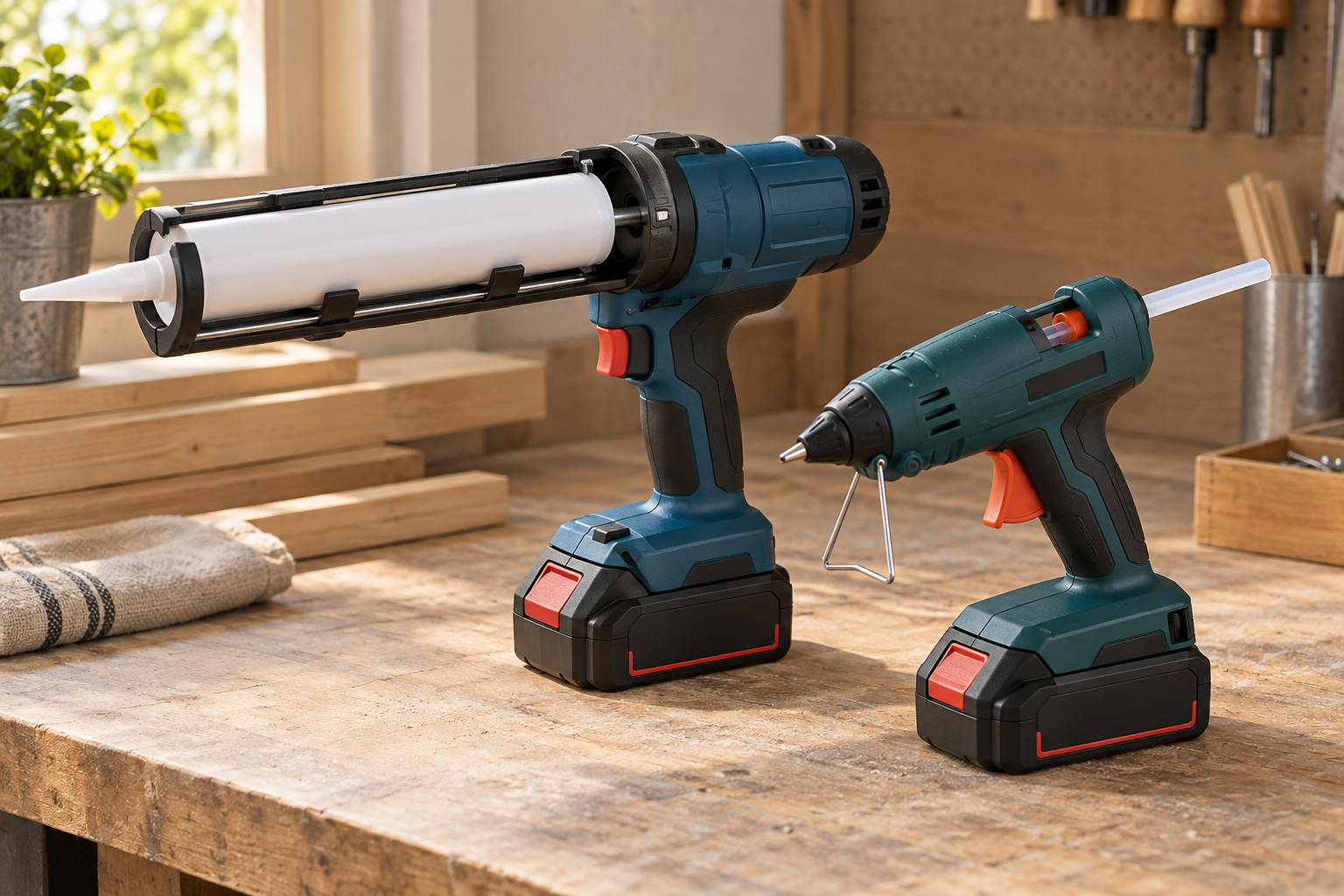
For a single window or a short run of trim, a hand gun is usually cheaper, lighter, and quick enough. A cordless gun earns its place when you have several openings to seal, are working overhead or from a ladder, or need a steadier bead over long joints. The motor pushes the cartridge plunger, so you spend less effort squeezing and can focus on keeping the nozzle at a consistent angle.
That control is useful, but it does not make the tool foolproof. A fast setting can still lay down too much sealant, and the plunger may keep pressure on the tube after you release the trigger. Look for a model with variable-speed control and an anti-drip feature that retracts the plunger slightly when you let go.
As an Amazon Associate we earn from qualifying purchases at no extra cost to you.


What matters for window and door work
Start with cartridge capacity. Many cordless guns accept standard 10-ounce cartridges; some also take larger cartridges or sausage packs with a conversion kit. For routine exterior window and door joints, a 10-ounce tube is generally enough. A larger barrel adds size and weight that may be unwelcome when reaching along a header or standing on a ladder.
Force ratings are commonly given in pounds. More force can help with thick sealant in cold weather, but a high rating alone does not mean the gun will produce a better bead. For typical window and door sealants, smooth trigger control and a useful low-speed range matter more than maximum force. Check that the tool is rated for the material you use, especially if you work with viscous construction adhesive as well as sealant.
Weight and balance affect fatigue. The battery sits behind the handle on many designs, and a large pack can make the gun feel tail-heavy. If you already own batteries for a cordless platform, compare the tool-only option with a kit. Buying into a second battery system just for occasional caulking rarely makes sense.
Cordless caulk gun types compared
| Type | Best fit | Main trade-off |
|---|---|---|
| Compact 10-ounce cordless gun | Window and door cartridges, trim, occasional repair work | Less capacity and sometimes less force than larger tools |
| Heavy-duty cordless gun | Frequent use, thicker sealants, long production runs | More weight and bulk; extra capacity may go unused |
| Manual caulk gun | A few joints or occasional household maintenance | More hand effort; bead speed depends entirely on your trigger control |
For most homeowners and small crews sealing windows and doors, a compact gun on a battery platform they already own is the sensible cordless choice. A heavy-duty model is worth considering if you regularly run multiple tubes or encounter materials that strain a lower-force tool. If the job is just one or two cartridges a year, a manual gun is still a reasonable buy.
Buying options by platform
If you already own batteries from a major tool brand, start by checking that brand’s cordless caulk gun and whether it is sold tool-only. A bare tool can be a better value than a kit, but confirm the exact battery platform and included barrel parts before ordering. Browse tool-only cordless caulk guns to compare options that may fit a battery system you already use.
If you do not own a compatible battery, compare the full kit price with the cost of a quality manual gun. The battery, charger, and tool can add up quickly for a task that uses only a few tubes. A cordless caulk gun kit with battery and charger makes more sense if you will also use that platform for drills, lights, or other cordless tools.
Setup and technique matter as much as the gun
Use a sealant intended for the joint and substrate. Exterior window and door work often calls for a paintable or weather-resistant sealant, but compatibility varies: some silicone products are not paintable, and some sealants need a specific primer. Follow the product label for temperature limits and joint dimensions. Applying sealant to a wet, dirty, or loose surface is a common cause of early failure, regardless of the gun.
Cut the nozzle to suit the joint rather than making a large opening by default. A roughly 1/8- to 1/4-inch opening covers many trim gaps, though the correct size depends on the joint. Cut at an angle, start small, and test the bead on scrap or an inconspicuous section. Set the gun to its lowest practical speed, keep the nozzle moving, and maintain steady contact with the joint. It is easier to make a second pass on a small gap than to remove an overfilled bead.
After releasing the trigger, give the gun’s anti-drip feature a moment to retract pressure. If material continues to ooze, check whether the tool has a manual pressure-release switch and use it before setting the gun down. Do not leave a loaded cartridge under pressure for a long break; seal the nozzle according to the sealant maker’s directions.
Common failure modes to avoid
A battery-powered gun can push a cartridge faster than you can smooth it. That leads to blobs, wasted material, and sealant smeared across glass or siding. Slowing the tool down is usually more effective than trying to wipe away a large bead after it skins over. Keep a rag and the appropriate cleanup solvent or water nearby, following the sealant label.
Another mistake is buying on maximum force alone. Excess force can make a tool heavier, while poor speed control remains a problem on delicate joints. Also check whether the gun accepts the cartridges you actually buy; an adapter for sausage packs or larger tubes may be sold separately. If you work mostly on ladders, prioritize balance, a secure way to set the tool down, and manageable battery weight over maximum capacity.
Choosing the right setup
Choose a compact cordless model if you seal windows and doors often enough to value reduced hand fatigue and already own its batteries. Step up to a higher-capacity or higher-force gun only when your workload or sealant requires it. For occasional maintenance, the cheaper manual option is entirely adequate. In either case, careful surface preparation, a properly sized nozzle, and controlled bead speed have more to do with a durable, tidy joint than the tool’s headline force rating.
FAQ
Why use a cordless caulk gun?
Related guides
- Longest Lasting Lawn Mower Battery: AGM vs Lithium vs Flooded Lifespan and Cost per Season
- Duralast Gold Lawn Mower Battery Review: U1 Fit, CCA and When to Pay for AGM
- Greenworks Pro 80V 21-Inch Mower Review: Runtime Math, Push vs Self-Propelled and Yard Fit
- Bosch High Pressure Washer Gun Replacement: Fittings, Adapters and What Fits Your Model