What's inside
As an Amazon Associate I earn from qualifying purchases. This post may contain affiliate links at no extra cost to you.
What a drywall cut-out tool does
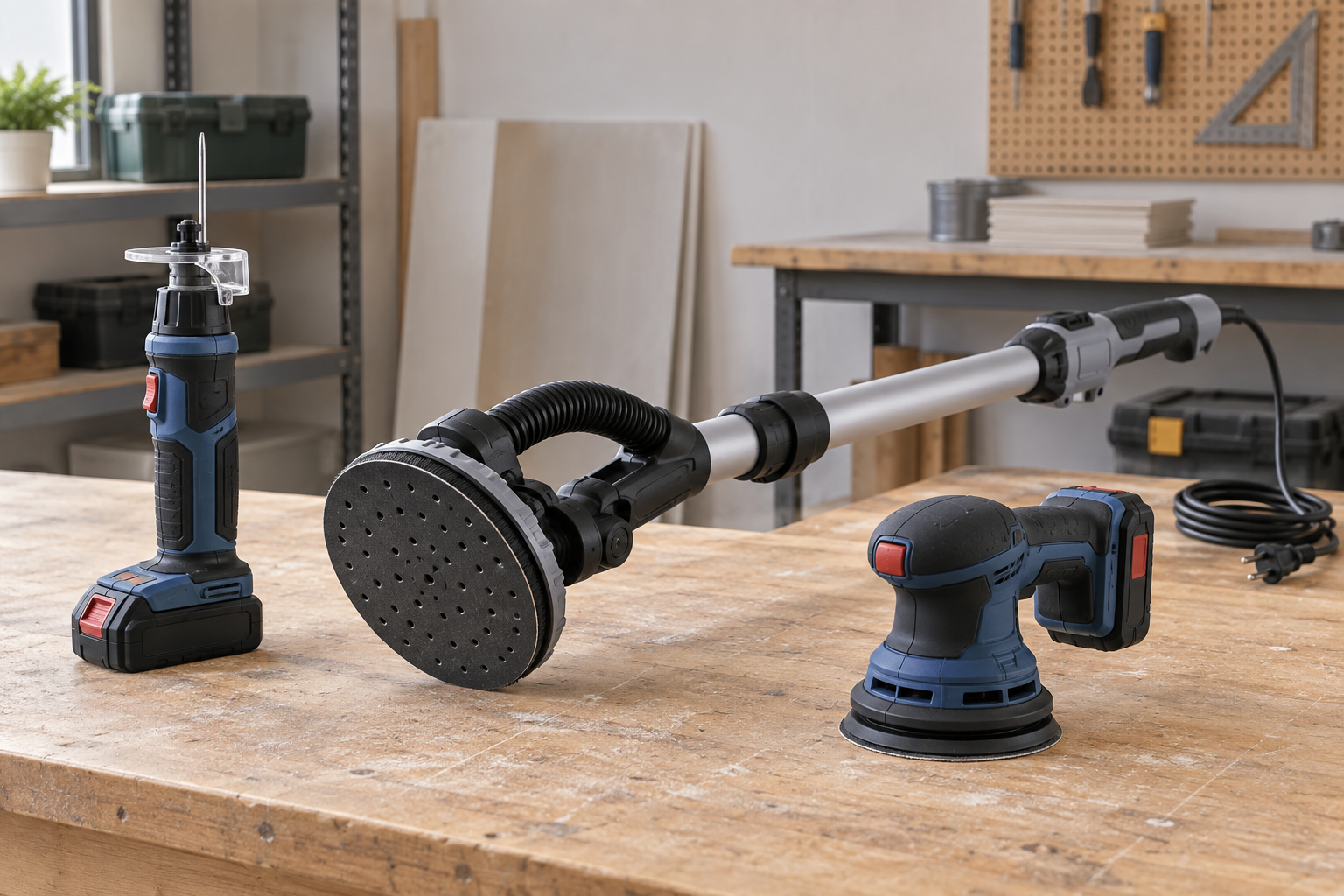
A cordless drywall cut-out tool uses a small rotating bit to make openings for electrical boxes, switches, and recessed lights. Unlike a jigsaw, it can plunge into the sheet and follow a box outline without a pilot hole at each corner. That makes it quick for repeated openings, but it also makes accuracy dependent on setup and feel: the bit can wander, tear paper, or hit a cable or pipe hidden behind the board.
For occasional work in a finished room, a corded tool or a jab saw may be cheaper and entirely adequate. Cordless makes more sense when you are moving room to room, working from a ladder, or already own compatible batteries.
As an Amazon Associate we earn from qualifying purchases at no extra cost to you.


What to look for before buying
Battery platform: Start with the batteries you already own. A bare tool usually costs less than a kit, but only if its battery and charger are useful to you. If you are starting fresh, compare the full cost of tool, battery, and charger—not just the tool price. A compact battery keeps the tool lighter overhead; a larger pack may run longer but can make a small tool awkward to control.
Speed and control: These tools commonly run at high no-load speeds, often around 25,000 to 30,000 rpm. High speed cuts drywall cleanly, but it does not forgive a heavy hand. A variable-speed trigger or dial can help, though careful grip and a correct bit matter more than a long feature list.
Depth setting and visibility: A depth guide helps keep the bit from reaching far into the cavity, but it cannot guarantee that nothing is behind the sheet. Look for a base that sits flat and gives you a clear view of the bit and mark. Dust collection is useful, but it will not catch every particle; wear eye protection and a suitable dust mask.
Cordless tool or cheaper alternative?
| Option | Best for | Main trade-off |
|---|---|---|
| Cordless rotary cut-out tool | Multiple openings, ladder work, or an existing battery platform | Higher upfront cost; requires practice and safe depth control |
| Corded cut-out tool | Many openings near power, without needing another battery system | Cord management can be inconvenient on ladders and in finished rooms |
| Jab saw | One or two openings, repairs, or a tight budget | Slower, and corners may need careful trimming |
A jab saw is a sensible purchase if you have just one box to cut. A cordless tool earns its keep when setup time repeats across a room or project. For a first tool in a platform, compare the bare tool with a kit that includes a compact battery and charger; the kit is not automatically better if you already have compatible packs.
Buying by platform and job size
If your cordless tools already share a battery system, choose a cut-out tool on that platform unless its weight, visibility, or price is a poor fit. Keeping one battery ecosystem avoids buying another charger and makes a small job easier to start. Search by platform and “drywall cut-out tool” rather than relying on vague “rotary tool” listings, which may describe a different kind of tool.
For a platform you already own, browse cordless drywall cut-out tools sold as bare tools. If you need a battery and charger as well, compare the kit price against buying those separately. Check that the listing includes a depth guide and the bit type you need; included accessories vary.
If you are buying into a battery system, do not pick a platform for this one tool alone unless the price is compelling. Think about whether you will use the same batteries in a drill, impact driver, or light. A compact-platform kit may be easier to handle for overhead cuts, while a larger system can make more sense if you already own its packs. Compare cordless drywall cut-out tool kits with batteries and chargers and check the exact battery platform before ordering.
How to cut an electrical box opening
First, turn off the circuit and verify it is de-energized with an appropriate tester. Confirm the box location from both sides when possible. Check for wiring, plumbing, and framing before plunging the bit; a depth guide is not a substitute for knowing what is behind the drywall. If you cannot establish a safe path, use a jab saw carefully or open the wall in a controlled way.
Mark the box outline accurately. For a new-work box, account for the box’s outside dimensions and how its lip will cover the cut. For an old-work box, follow its template or measure the opening required by that specific box; a hole that is too large can leave the clamps without enough drywall to grip. Make a small test cut in scrap board if you are unsure about the bit or setting.
Fit the correct bit, set a conservative depth, and keep the base flat against the board. Start the tool before touching the drywall, plunge only far enough to enter the sheet, then guide it around the marked opening. Do not force it around corners. Stop at the start point rather than making a wide overlap, and test-fit the box before enlarging the cut in small amounts.
Common problems and how to avoid them
Bit hits something behind the wall: Stop immediately. Do not keep cutting in the hope that it is only a stud. Check the cavity and adjust the route or method. A cut-out tool can damage cable insulation quickly.
Paper tears or the cut wanders: The bit may be dull, the tool may be tilted, or the box mark may be hard to see through dust. Keep the base level, clear dust, and take the cut in a controlled pass. Do not try to correct a wandering cut by leaning hard on the tool.
The box will not sit or clamp securely: The opening may be undersized, which is usually fixable by trimming a little at a time, or oversized, which is harder to repair. Test-fit before removing more material. For one opening, a hand saw may be slower but gives a beginner more feedback; for repeated openings, a cordless cut-out tool is faster once you have practiced on scrap.
Related guides
- Longest Lasting Lawn Mower Battery: AGM vs Lithium vs Flooded Lifespan and Cost per Season
- Duralast Gold Lawn Mower Battery Review: U1 Fit, CCA and When to Pay for AGM
- Greenworks Pro 80V 21-Inch Mower Review: Runtime Math, Push vs Self-Propelled and Yard Fit
- Bosch High Pressure Washer Gun Replacement: Fittings, Adapters and What Fits Your Model