What's inside
As an Amazon Associate I earn from qualifying purchases. This post may contain affiliate links at no extra cost to you.
Start with the repair, not the brand
When a machine stops working far from an outlet, the useful battery platform is the one that can run the tools you need for the whole repair. That may mean an impact wrench and work light for a trailer axle, or a drill, grinder and compact saw for a farm gate. Buying into a platform before listing those jobs can leave you with several batteries but no suitable tool—or with heavy, expensive packs that rarely leave the shop.
Write down the tools you expect to carry, their voltage, and how long they may run. Then check whether the platform offers those tools, compatible batteries, and a charger you can power at home or in a vehicle. Voltage alone does not predict performance or runtime: motor design, tool settings, battery capacity and the work itself all matter.
As an Amazon Associate we earn from qualifying purchases at no extra cost to you.


Battery capacity, runtime and weight
A battery’s amp-hour (Ah) rating describes capacity within its voltage class. A 5 Ah pack stores roughly twice the energy of a 2.5 Ah pack at the same voltage, but it also tends to be larger and heavier. For intermittent repairs, a compact pack can make a drill or impact driver easier to handle. For grinding, cutting or repeated high-torque work, a larger pack usually means fewer interruptions and less voltage sag under load.
Runtime is hard to promise with a single number. Driving a few screws uses little energy; holding a grinder against steel can drain a pack quickly and generate enough heat to trigger a shutdown. Cold weather reduces available output, while a hot battery may need to cool before it will charge. Carrying two moderate-capacity batteries is often more practical than relying on one large pack: one can work while the other cools or charges.
Look for protection against overload, overheating and deep discharge, both in the battery and tool. These safeguards prevent damage, but they can stop work in the middle of a job. Keep a spare pack dry and out of direct sun, and do not put a hot battery straight onto a charger if its instructions call for cooling first.
Compare platforms by the tools you actually need
Platform families often divide into compact and higher-voltage lines. A compact system can be a sensible choice for service work centered on drilling, fastening and lighting. Larger platforms offer more options for demanding tools, but the packs add bulk and cost. The table is a screening guide, not a claim that every brand’s tools perform alike.
| Platform type | Good fit away from power | Main trade-off |
|---|---|---|
| Compact 12V class | Inspection, light fastening, small drills, compact lights | Limited choice for sustained heavy cutting or grinding |
| 18V/20V-class mainstream | General repair work, impacts, drills, saws and many specialty tools | Pack size and performance vary; check tool-by-tool |
| Higher-voltage professional class | Repeated heavy-duty work and tools designed for higher loads | More expensive packs and chargers; often unnecessary for occasional repairs |
| Mixed-platform kit | Keeping a favorite specialty tool while standardizing core tools | More chargers, spare packs and inventory to manage |
Before choosing, check the platform’s current tool catalog for the exact tool types you need—not just drills and impacts. Confirm that the batteries fit the tools in the same product family. Some brands sell batteries with similar branding across different voltage lines that are not interchangeable. Avoid unverified adapters for high-current tools: poor contacts can overheat, and an adapter may bypass protections.
Buy packs and chargers for the work pattern
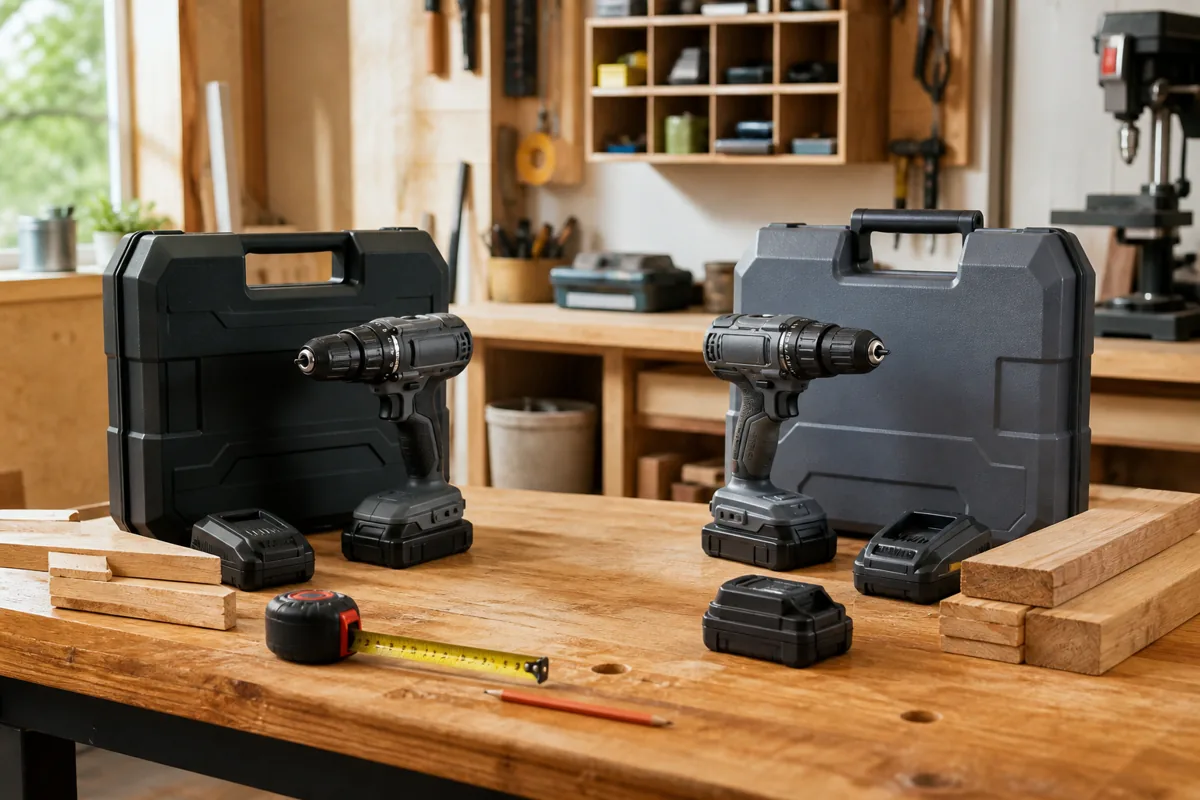
A starter kit with two batteries and a charger can be cheaper than buying those pieces separately, especially if you are entering a platform. Compare the included pack capacities, though. A kit with two small packs may suit a drill and light, but it can be frustrating if the same batteries must feed a grinder. For a first set of cordless tools, a cordless tool starter kit with two batteries is worth comparing against bare tools plus larger packs.
Fast chargers reduce downtime but are not automatically the best field choice. They can be louder, larger and less convenient to pack; charging speed may also be limited when a battery is hot or near full. A basic charger is fine for occasional repairs when you can recharge overnight. For a work vehicle, verify the charger’s input requirements before planning to run it from an inverter. A charger designed for household AC is not the same as a vehicle DC charger, and an undersized inverter may shut down under load.
Keep one battery in reserve rather than running every pack flat. If the tool slows noticeably, trips its protection, or the battery becomes unusually hot, stop and inspect the setup. A jammed bit, dull blade or binding accessory can create excessive load that looks like a weak battery. Fix the cause instead of repeatedly restarting the tool.
Choose tools around likely failure points
For vehicle and equipment repair, an impact wrench can save time on stubborn fasteners, but it is not a substitute for a torque wrench during final tightening. Check the fastener’s required torque and the wrench’s actual capability in the size and material you are working with; headline torque figures do not guarantee a seized bolt will break free. A drill/driver, light and impact driver cover a broad range of lighter tasks. A grinder or reciprocating saw is useful only if the job list justifies its higher battery demand.
Buy the tool and battery as a system. A heavy-duty tool paired with a small pack may work, but it can run hot or cut out sooner under sustained load. Conversely, putting the largest pack on a compact drill adds weight without much benefit for light work. If fastening is the priority, compare cordless impact wrenches for your battery platform by drive size, weight, speed control and stated fastening guidance, not torque claims alone.
Keep spare bits, sockets, blades and a manual release or hand tool for critical adjustments. Cordless tools can fail through a depleted pack, damaged connector, overheated motor or broken accessory. A backup hand wrench or compact ratchet is cheaper than carrying another large battery for a job that takes only a few turns.
A practical buying check
Before paying, price one realistic setup: the tool you need, two suitable batteries, a charger and any essential accessories. Check replacement-pack availability and warranty terms, and read the platform’s compatibility chart rather than relying on a listing headline. If you already own reliable batteries in a mainstream platform, staying with it is usually the economical choice—even if another brand’s bare tool looks attractive.
If your repairs are infrequent and light, a lower-cost compact kit is fine. Spend more when downtime is costly, the tools will see sustained heavy use, or the platform offers a specific tool that solves a recurring problem. The best field setup is not the one with the most batteries; it is the smallest dependable kit that covers the work, with enough spare capacity to finish when the first pack gets hot or runs down.
Related guides
- Longest Lasting Lawn Mower Battery: AGM vs Lithium vs Flooded Lifespan and Cost per Season
- Duralast Gold Lawn Mower Battery Review: U1 Fit, CCA and When to Pay for AGM
- Greenworks Pro 80V 21-Inch Mower Review: Runtime Math, Push vs Self-Propelled and Yard Fit
- Bosch High Pressure Washer Gun Replacement: Fittings, Adapters and What Fits Your Model