What's inside
As an Amazon Associate I earn from qualifying purchases. This post may contain affiliate links at no extra cost to you.
For a small electrical contractor, the best cordless platform is usually the one that keeps the crew working with the fewest battery swaps—not the one with the longest list of tools. Match the battery system to your daily loads, choose a charger that fits your work rhythm, and check that the brand makes the specialist tools you actually use. A few extra batteries and a second charger can matter more than a premium drill.
As an Amazon Associate we earn from qualifying purchases at no extra cost to you.


Start with the work
List the cordless tools used in a typical week: drill/driver, impact driver, oscillating multi-tool, bandsaw, hammer drill, vacuum, or cable cutter. Then estimate which tools run hard and which are occasional-use. Drilling pilot holes and fastening device boxes are modest battery loads; large-hole drilling, concrete work, and cutting threaded rod can drain small packs quickly.
For general electrical work, compact 18V-class tools are a sensible starting point. They are easier to carry overhead and usually offer enough power for routine installation. If the crew regularly drills large holes in framing or concrete, a higher-output tool or a larger battery may be worth the added weight. Do not buy the biggest battery for every tool: a heavy pack on a drill used all day can tire a worker and make overhead work awkward.
Compare the platforms you’ll actually use
Battery voltage labels do not tell the whole story. Tool design, battery capacity, and electronics affect runtime and performance. Compare bare tools and batteries in person if possible, and check local availability for replacement packs and service. The table below is a practical starting point, not a claim that every tool in a brand’s range is equally strong.
| Platform | Good fit for | Trade-off to check |
|---|---|---|
| Milwaukee M18 | Crews wanting a broad range of electrical and installation tools | Tool and battery choices can make a full setup costly; buy into the system only if its specialist tools suit your work |
| DeWalt 20V MAX | Contractors who want a large general-purpose tool range and broad retail availability | Check the exact battery and tool combination; compact and high-output options can differ noticeably in runtime and weight |
| Makita 18V LXT | Crews valuing a mature 18V lineup and a range of compact tools | Confirm that the tools you need are available on the battery system you plan to standardize on |
| Ryobi 18V ONE+ | Solo operators and budget-conscious crews with lighter daily workloads | Lower tool prices can be attractive, but verify fit, durability, and service support for demanding commercial use |
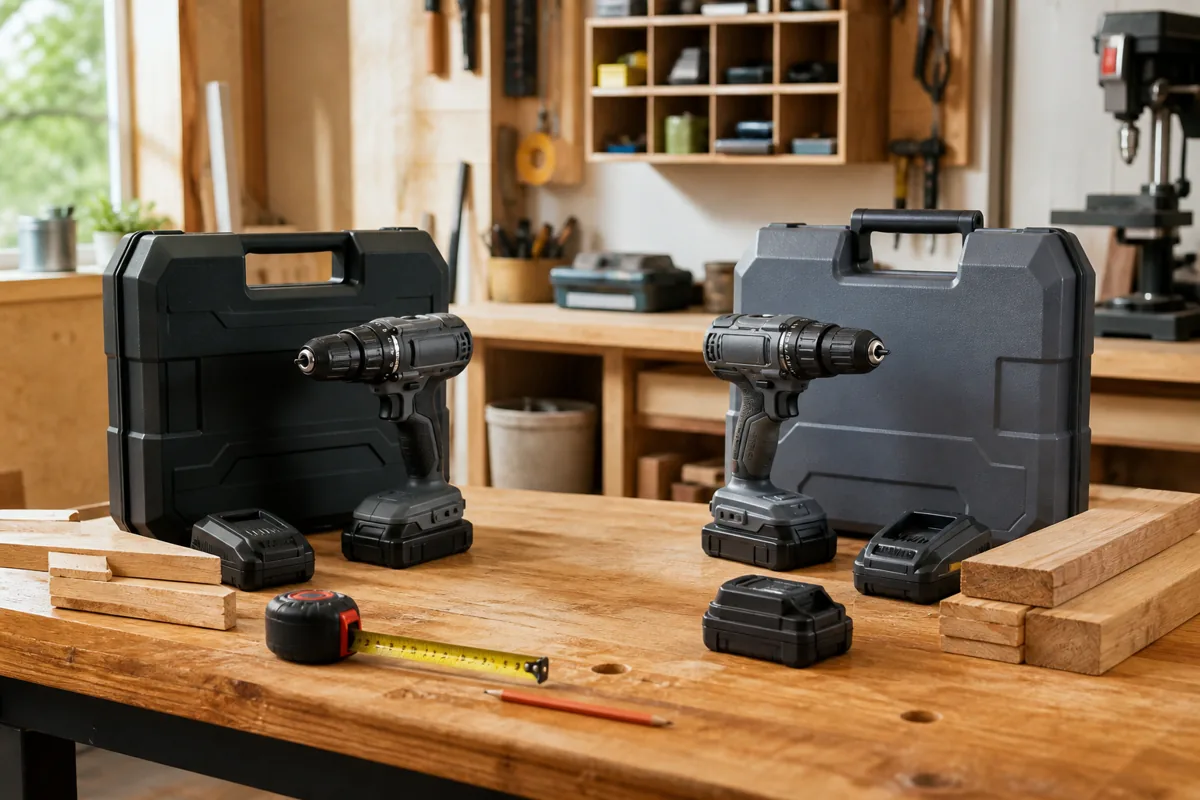
For a new setup, compare a drill and impact-driver kit by the included batteries, charger, and warranty—not just the advertised tool count. A kit with two usable batteries is often more helpful than one with several low-use tools.
Build a battery and charger plan
Battery capacity is commonly stated in amp-hours (Ah). A 5Ah pack has more stored capacity than a 2Ah pack in the same system, but it is also heavier and may not deliver the same practical benefit on every tool. A useful starting point for a small crew is two batteries per frequently used tool set, with a larger pack available for high-draw work. The exact count depends on how far the crew is from a charger and whether the tools are used continuously.
Charger speed matters only if it fits the workday. If packs can charge at the shop overnight, a standard charger may be enough. On-site, one charger shared among several workers can become a bottleneck: the last person to return a depleted pack may start the next task with no ready battery. Consider a battery-and-charger setup that leaves at least one charged spare for the tools in rotation. Keep packs out of extreme heat, and stop using batteries with cracked cases, damaged terminals, or unusual swelling.
Cold weather, clogged tools, oversized bits, and blunt blades all shorten runtime. If batteries seem to disappear unusually fast, first check the load: a dull hole saw or an overloaded drill can waste more energy than an older pack. Avoid treating a battery’s fuel gauge as a precise runtime forecast.
Choose specialist tools around the system
For electrical contractors, availability of the right specialty tools may decide the platform. Compare options for cable cutting, knockout work, compact bandsaws, right-angle drilling, and dust extraction before buying into a battery family. A tool used once a month should not dictate the entire fleet, but a tool that saves repeated setup time can justify paying more.
For occasional concrete anchors or a few holes through masonry, a corded rotary hammer or rented tool can be more economical than buying a cordless platform’s premium hammer drill and extra batteries. Conversely, repeated work across occupied buildings can make cordless convenience worthwhile. A compact cordless compact bandsaw can reduce handling of a reciprocating saw for conduit or threaded rod, but it still needs the right blade and a stable, safe cut.
Avoid common buying mistakes
Do not mix battery platforms casually just because an adapter is available. Adapters add bulk, may not support every tool feature, and can complicate charging or warranty support. A second platform can make sense for one specialty tool, but it brings another charger, spare-battery inventory, and a new system to track.
Also check what “bare tool” means before pricing a purchase. It usually excludes both battery and charger, so a low sticker price can be misleading if you are starting from zero. Read the warranty terms, confirm that batteries are included when expected, and make sure replacement packs can be bought locally. For a small contractor, a slightly cheaper tool is not a bargain if a failed battery leaves the crew idle or the needed replacement is hard to source.
If most work is light installation and the crew already owns compatible batteries, staying within that system is usually the economical choice. If starting fresh, shortlist two platforms, price the same core kit plus two spare batteries and a charger, then compare the specialty tools and service options. That total is a better measure of cost than the drill price alone.
Related guides
- Longest Lasting Lawn Mower Battery: AGM vs Lithium vs Flooded Lifespan and Cost per Season
- Duralast Gold Lawn Mower Battery Review: U1 Fit, CCA and When to Pay for AGM
- Greenworks Pro 80V 21-Inch Mower Review: Runtime Math, Push vs Self-Propelled and Yard Fit
- Bosch High Pressure Washer Gun Replacement: Fittings, Adapters and What Fits Your Model